
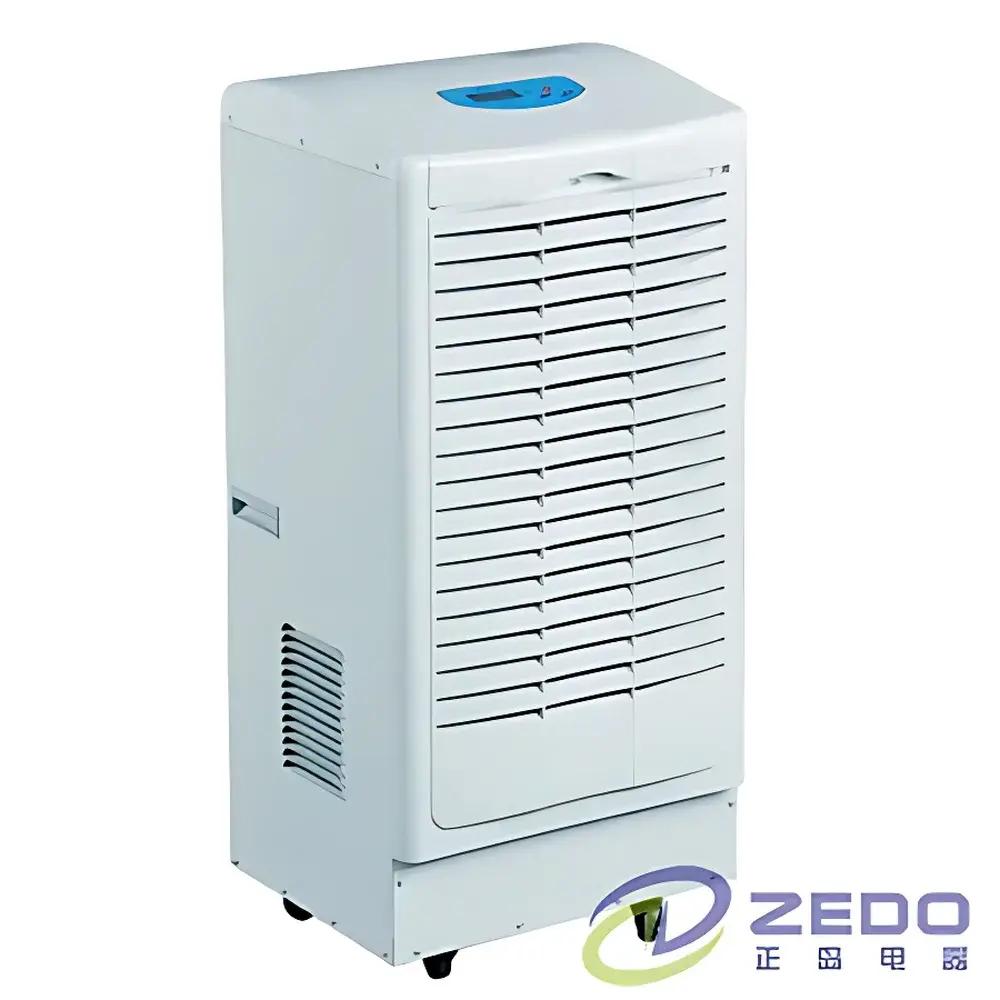
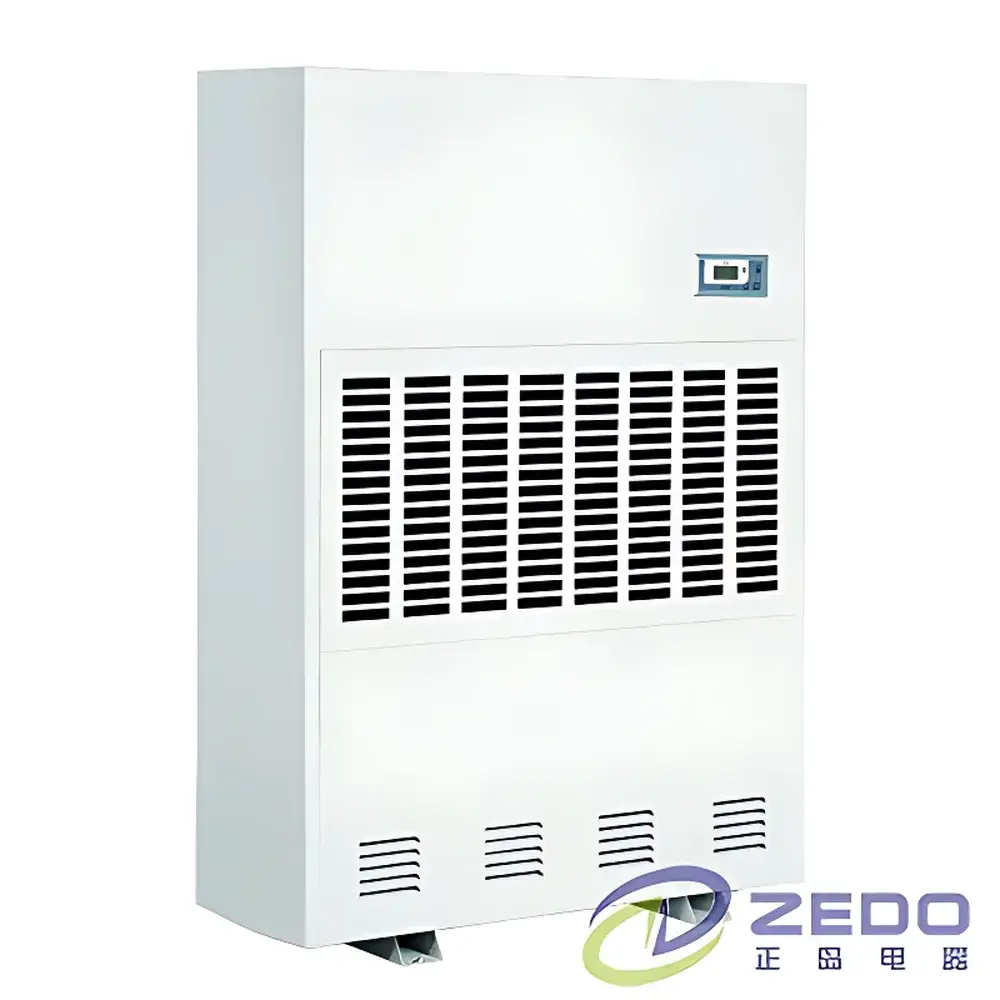
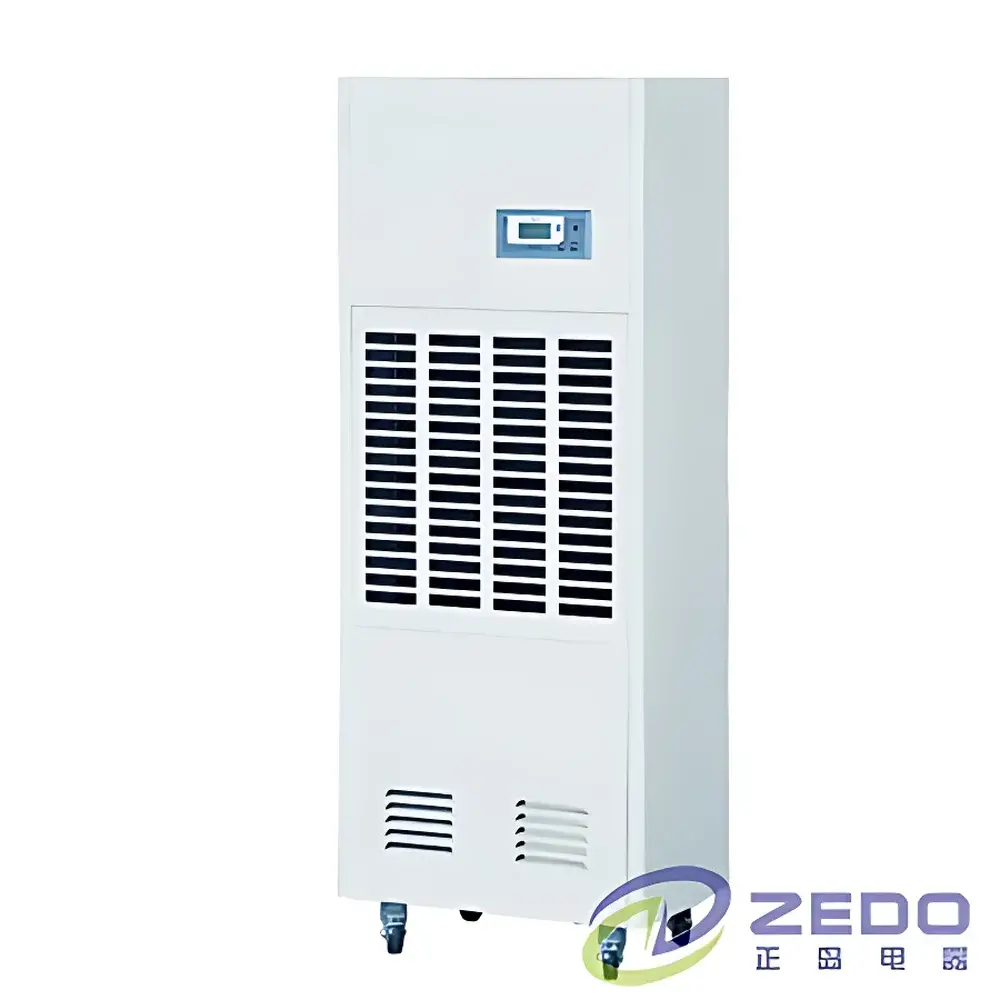
ZEDO ZD-8138C Industrial Automatic Dehumidifier
| Brand | ZEDO |
|---|---|
| Model | ZD-8138C |
| Type | Compressor-Based Desiccant-Style Refrigerant Dehumidifier |
| Dehumidification Capacity | 138 L/day (36.5 gal/day) |
| Power Input | 2000 W |
| Operating Temperature Range | 5–38 °C |
| Noise Level | ≤50 dB(A) |
| Airflow Rate | 720 m³/h |
| Control System | Microprocessor-Based Humidity Setpoint Control with Japanese Shinyo High-Accuracy RH/T Sensor |
| Drainage | Continuous via PVC Hose |
| Dimensions (W×D×H) | 480 × 430 × 1100 mm |
| Net Weight | 58 kg |
| Compliance | CE-marked per EN 60335-1 & EN 60335-2-40 |
| Safety Protections | High/Low Pressure Cut-off, Overload, Phase Loss, Delayed Compressor Restart (3-min) |
Overview
The ZEDO ZD-8138C Industrial Automatic Dehumidifier is a high-capacity, compressor-driven refrigerant dehumidification system engineered for precise, continuous humidity control in mission-critical laboratory, pharmaceutical, archival, and precision manufacturing environments. It operates on the principle of condensation-based air drying: ambient air is drawn across a refrigerated evaporator coil where moisture is condensed below its dew point, collected as liquid water, and drained continuously. The now-dry air is reheated via the condenser coil to near-original temperature before discharge—minimizing thermal load impact on conditioned space while maintaining stable dry-bulb conditions. This thermodynamic cycle ensures consistent dew point suppression without desiccant regeneration or consumables, delivering long-term operational reliability and low lifecycle cost of ownership.
Key Features
- Industrial-grade scroll compressor with R410A refrigerant—optimized for efficiency, low vibration, and extended service life under continuous 24/7 operation.
- Dual centrifugal impeller air handling system with external rotor motor—provides 720 m³/h airflow at low acoustic signature (≤50 dB[A]) suitable for noise-sensitive labs and cleanrooms.
- High-accuracy Japanese Shinyo capacitive humidity sensor (±2% RH, 10–90% RH range) integrated into closed-loop feedback control for ±3% RH setpoint stability.
- Structural separation of refrigeration and airflow paths—enabling independent access for maintenance, coil cleaning, and component replacement without system shutdown.
- Comprehensive electrical protection suite: high/low pressure switches, thermal overload relays, phase failure detection, and 3-minute compressor anti-short-cycle delay.
Microprocessor controller with intuitive touch interface and real-time display of relative humidity (%RH), ambient temperature (°C), runtime hours, and fault diagnostics.
Sample Compatibility & Compliance
The ZD-8138C is designed for integration into controlled environments where hygroscopic stability is essential—including ISO Class 7–8 cleanrooms, GLP-compliant analytical laboratories, USP compounding pharmacies, and archival storage vaults (ISO 11799:2015 compliant). Its sealed refrigerant circuit and non-corrosive internal materials (aluminum fin-tube heat exchanger with hydrophilic coating, stainless steel drain pan) prevent outgassing or metallic contamination—critical for semiconductor fabrication support spaces and optical instrument storage. Unit meets CE safety directives (EN 60335-1, EN 60335-2-40) and conforms to RoHS 2011/65/EU restrictions on hazardous substances. Optional data logging module supports audit-ready humidity trend records aligned with FDA 21 CFR Part 11 requirements when paired with validated software.
Software & Data Management
While the base unit features embedded microcontroller logic without network connectivity, optional RS-485 Modbus RTU interface enables integration into BMS (Building Management Systems) or centralized environmental monitoring platforms. When deployed with ZEDO’s optional Z-Log Pro data acquisition module, users can configure scheduled humidity logging (1–60 min intervals), generate CSV exportable reports, and trigger email/SMS alerts upon deviation from user-defined RH thresholds (e.g., >55% RH in a calibration lab). All logged data includes timestamp, sensor ID, and checksum verification—supporting traceability for ISO/IEC 17025 accredited facilities requiring documented environmental controls.
Applications
- Pharmaceutical QC labs: Maintaining ≤40% RH during stability testing per ICH Q1A(R2) and preventing moisture-induced degradation of reference standards.
- Electron microscopy suites: Preventing condensation on cryo-stage optics and reducing charge buildup on TEM sample holders.
- Museum conservation labs: Stabilizing RH between 45–55% for parchment, photographic emulsions, and cellulose acetate film storage per ISO 18934:2020 guidelines.
- Calibration laboratories: Ensuring ASTM E509-22 compliance for dimensional metrology by limiting diurnal RH swings to <±5% RH in CMM rooms.
- Biorepository cold rooms: Supplementing primary cooling systems to suppress frost formation on ULT freezer door gaskets and prevent ice bridging in -80°C anterooms.
- High-precision weighing areas: Eliminating static-induced drift in microgram-scale analytical balances (USP recommended RH: 40–60%).
FAQ
What is the minimum ambient temperature at which the ZD-8138C remains effective?
The unit maintains rated dehumidification capacity down to 5 °C ambient. Below this threshold, frost accumulation on the evaporator may reduce efficiency; optional hot-gas defrost kit (ZD-DF-01) is available for sub-5 °C operation.
Can the ZD-8138C be ducted for remote air intake/exhaust?
Yes—integrated 160 mm diameter duct collars are provided on both inlet and outlet plenums, supporting flexible aluminum ducting up to 8 m total length with ≤15° bend allowance.
Is condensate pump included as standard equipment?
No—the unit relies on gravity drainage via supplied 1.5 m PVC hose. An optional 5 L/min head-up condensate pump (ZD-PUMP-24V) is available for installations where floor-level drainage is unavailable.
How often does the activated carbon filter require replacement?
Under typical laboratory use (8–10 hrs/day), the pre-installed carbon-impregnated polyester filter should be inspected quarterly and replaced every 6 months to maintain VOC adsorption performance and airflow integrity.
Does the unit support remote monitoring via Ethernet or Wi-Fi?
Not natively—but the RS-485 port allows connection to third-party IoT gateways (e.g., Siemens Desigo CC, Schneider EcoStruxure) for cloud-based visualization and alarm forwarding through existing facility infrastructure.
Related Products



