
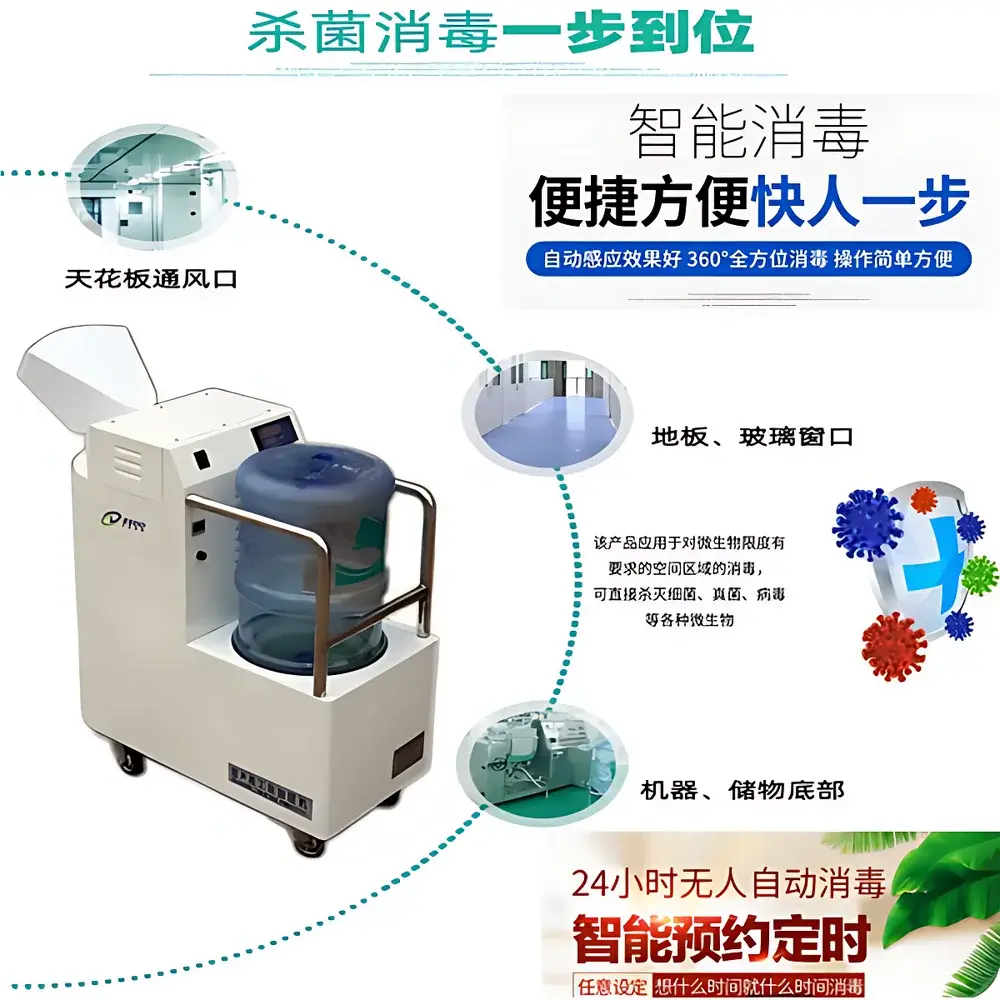
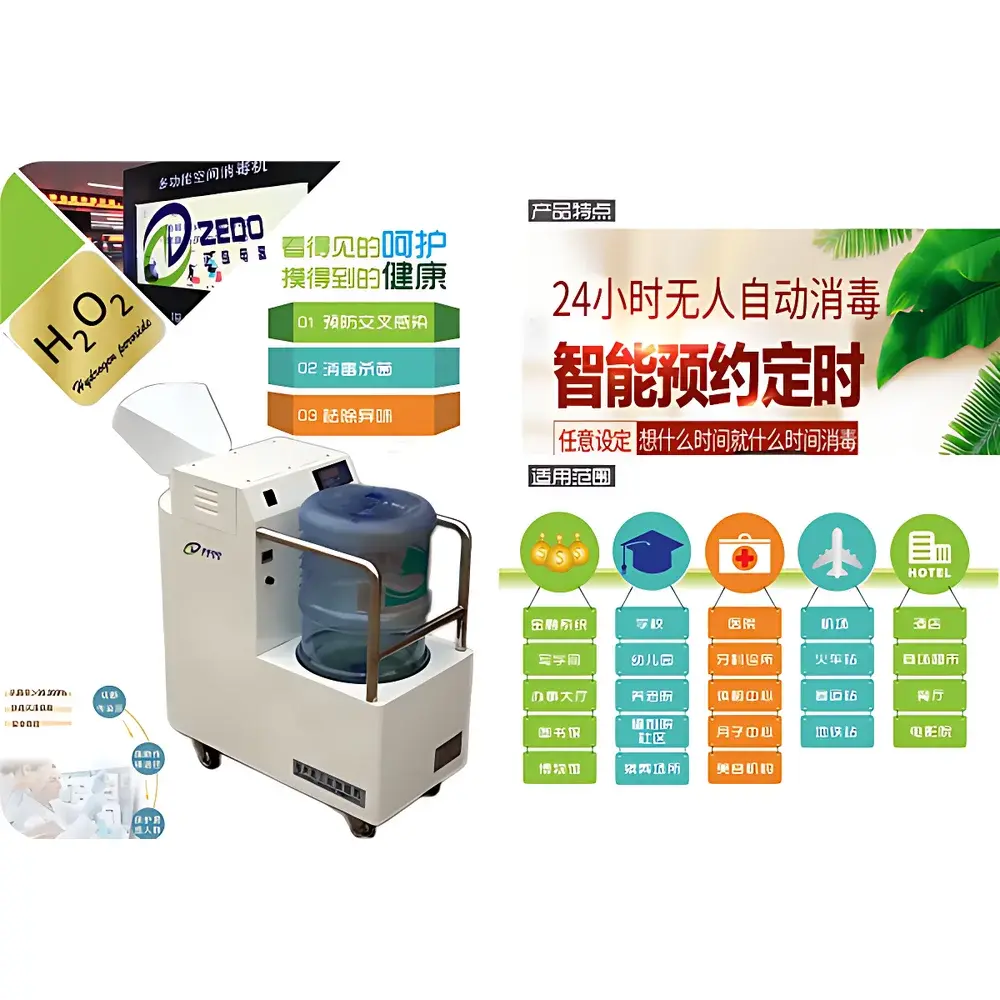
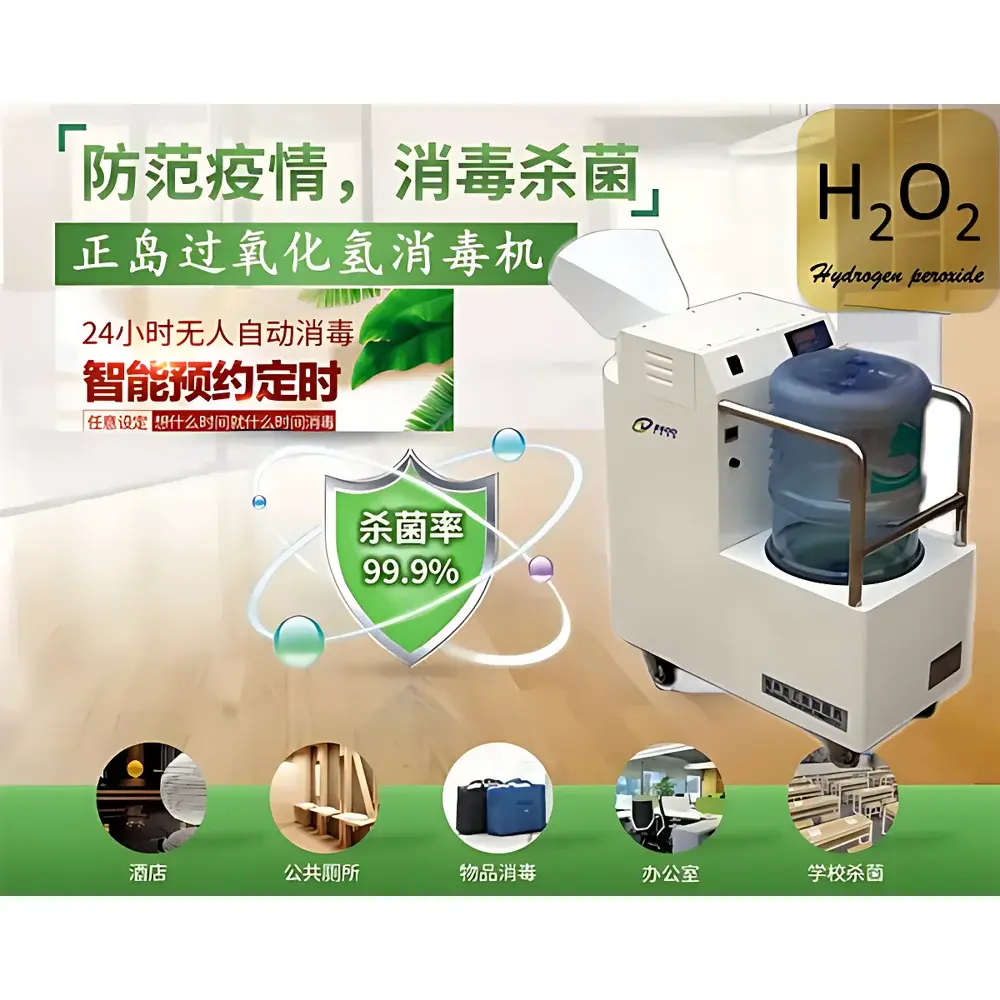
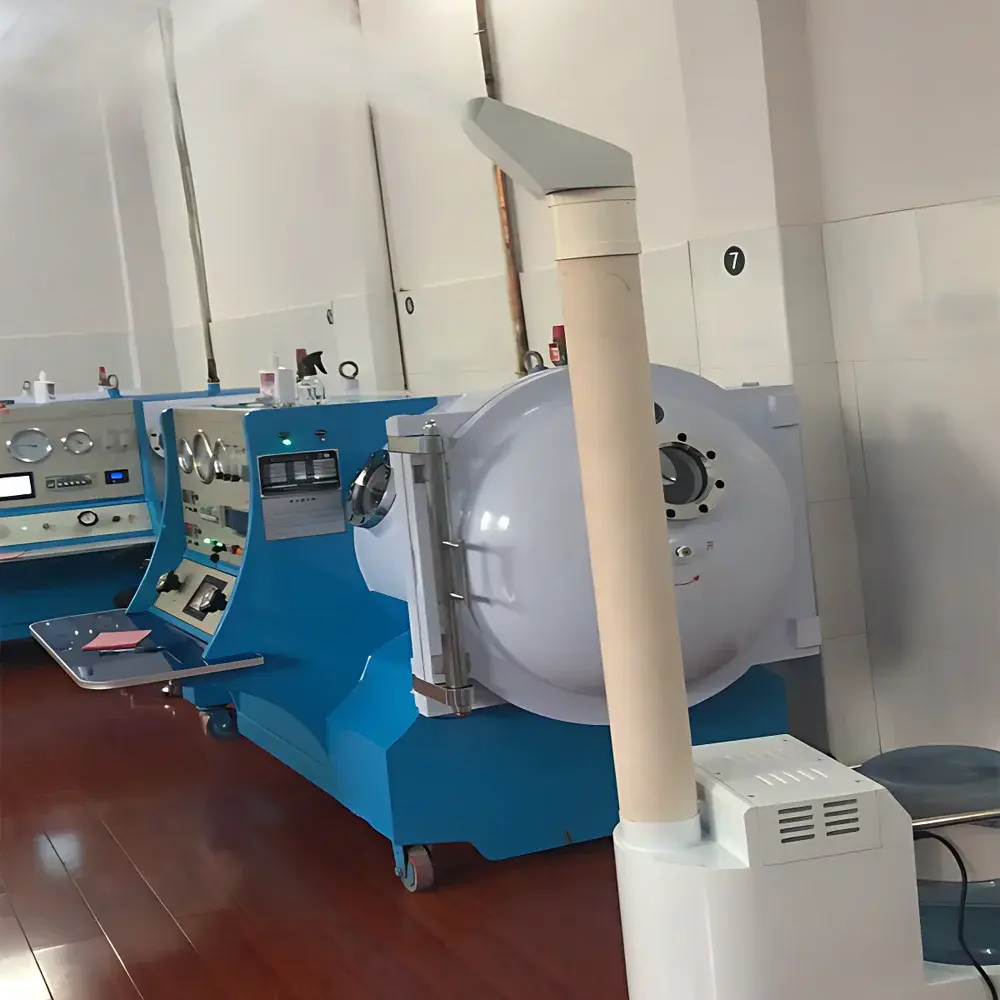
ZEDO XD-20 Hydrogen Peroxide Air Disinfection System
| Brand | ZEDO |
|---|---|
| Origin | Zhejiang, China |
| Manufacturer Type | OEM/ODM Manufacturer |
| Country of Origin | China |
| Model | XD-10 / XD-20 |
| 雾化粒径 | 1–5 µm |
| Aerosol Capacity | High-output vaporized H₂O₂ generation |
| Humidity Monitoring | Real-time ambient RH sensing |
| Coverage | Multi-room, complex-layout environments |
| Power Supply | Standard AC input (no water line required) |
| Operation Mode | Mobile, timer-programmable,定点定量 disinfection |
| Particulate Removal Efficiency | ≥99.5% for particles ≥0.1 µm |
Overview
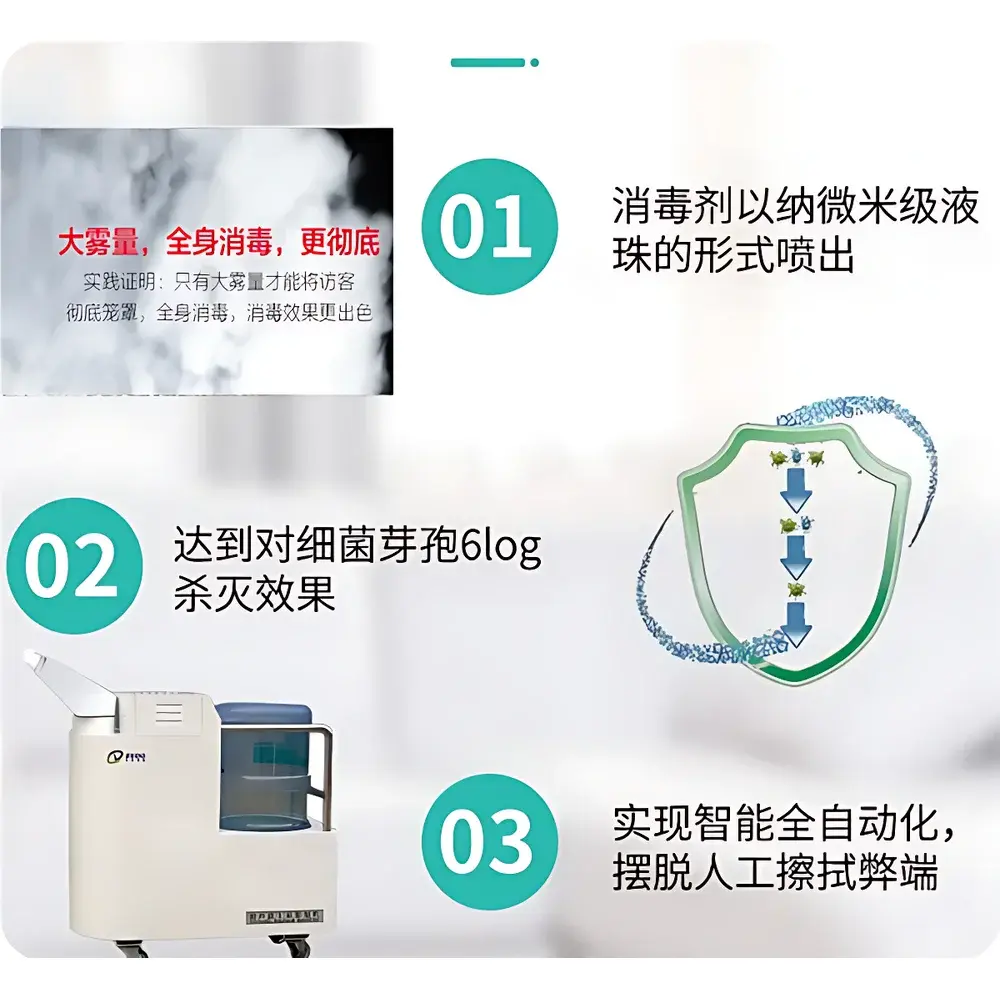
The ZEDO XD-20 Hydrogen Peroxide Air Disinfection System is an engineered solution for terminal decontamination of air and environmental surfaces in controlled laboratory, clinical, and pharmaceutical settings. It utilizes vaporized hydrogen peroxide (VHP®-compatible technology) — a well-established, EPA-registered sterilant — delivered via cold-mist ultrasonic or piezoelectric nebulization to generate a stable, sub-5 µm aerosol cloud. This physical dispersion mechanism ensures uniform distribution throughout enclosed spaces, enabling oxidative inactivation of vegetative bacteria, spores, viruses, and fungi on both airborne particles and exposed surfaces. Unlike thermal vaporization systems, the XD-20 operates at ambient temperature, preserving heat-sensitive equipment and infrastructure while maintaining validated biocidal efficacy consistent with ISO 14644-1 cleanroom decontamination protocols and CDC-recommended non-thermal disinfection strategies.
Key Features
- Mobile, self-contained design with integrated 18.9 L purified water reservoir — no permanent plumbing or compressed air supply required
- Adjustable mist output and programmable cycle timing (start delay, duration, repeat intervals) for reproducible, operator-defined decontamination protocols
- Real-time relative humidity (RH) monitoring with automatic cycle adjustment to maintain optimal VHP condensation thresholds (typically 50–75% RH)
- Sub-5 µm droplet size distribution (verified by laser diffraction particle sizer), ensuring deep lung penetration avoidance and high surface deposition efficiency
- Compliance-ready architecture: supports audit trails via optional USB data logging; compatible with GLP/GMP documentation workflows when paired with external validation hardware
- Non-corrosive operation on stainless steel, glass, and common polymer surfaces — validated for repeated use in BSL-2 and ISO Class 5–8 environments
Sample Compatibility & Compliance
The XD-20 is designed for use in non-occupied spaces where residual H₂O₂ levels can be safely ventilated post-cycle (per OSHA PEL of 1.0 ppm 8-hour TWA). It meets key regulatory expectations for environmental decontamination in life science facilities, including alignment with USP <1072> on disinfectants, ISO 14644-3 Annex B for cleanroom bio-decontamination, and EU Biocidal Products Regulation (BPR) Article 19 requirements for professional-use biocidal equipment. While not certified to UL 867 or IEC 60335-2-65 as a consumer appliance, its operational parameters conform to industrial-grade safety practices outlined in ANSI/AAMI ST58:2013 for low-temperature sterilization processes. Validation studies must be performed on-site using biological indicators (e.g., Geobacillus stearothermophilus spores) per ISO 14937.
Software & Data Management
The XD-20 employs embedded microcontroller logic with LED status interface — no proprietary software or cloud connectivity is required. All operational parameters (cycle start time, duration, RH readings, error codes) are stored in non-volatile memory and exportable via USB flash drive in CSV format. This enables integration into facility-wide environmental monitoring systems (EMS) and supports FDA 21 CFR Part 11-compliant data integrity when paired with timestamped, user-authorized log reviews. Optional external data loggers (e.g., HOBO UX100 series) may be deployed for independent RH and H₂O₂ concentration verification during qualification studies.
Applications
- Terminal decontamination of biosafety cabinets, laminar flow hoods, and isolators between experimental runs
- Post-procedure disinfection of PCR labs, cell culture suites, and analytical instrument rooms to prevent cross-contamination
- Routine turnover of quarantine rooms, infusion centers, and outpatient diagnostic areas in compliance with Joint Commission EC.02.05.01 standards
- Emergency response deployment in outbreak scenarios requiring rapid room turnaround (e.g., after suspected norovirus or influenza exposure)
- Support of ISO 13485-certified medical device manufacturing cleanrooms undergoing periodic microbial challenge testing
FAQ
Is the XD-20 suitable for occupied spaces?
No. Like all vaporized hydrogen peroxide systems, it must be operated only in unoccupied, sealed environments with verified ventilation interlocks.
What concentration of hydrogen peroxide solution is required?
The system is optimized for use with 5–7.5% w/w stabilized aqueous H₂O₂ solutions; higher concentrations may accelerate material degradation without proportional efficacy gains.
Can it replace UV-C or chlorine-based disinfection?
It serves a distinct purpose: VHP provides superior penetration into shadowed areas and porous materials compared to line-of-sight UV-C, and avoids halogenated byproduct formation associated with chlorine dioxide or sodium hypochlorite.
Does it require third-party validation for GMP use?
Yes. Installation Qualification (IQ), Operational Qualification (OQ), and Performance Qualification (PQ) must be executed per site-specific risk assessment and documented per ISO/IEC 17025 or ASTM E2994-15 guidelines.
How often should maintenance be performed?
Ultrasonic transducers and fluid pathways require quarterly inspection and cleaning with deionized water; filter replacement is recommended every 500 operating hours or annually, whichever occurs first.



