
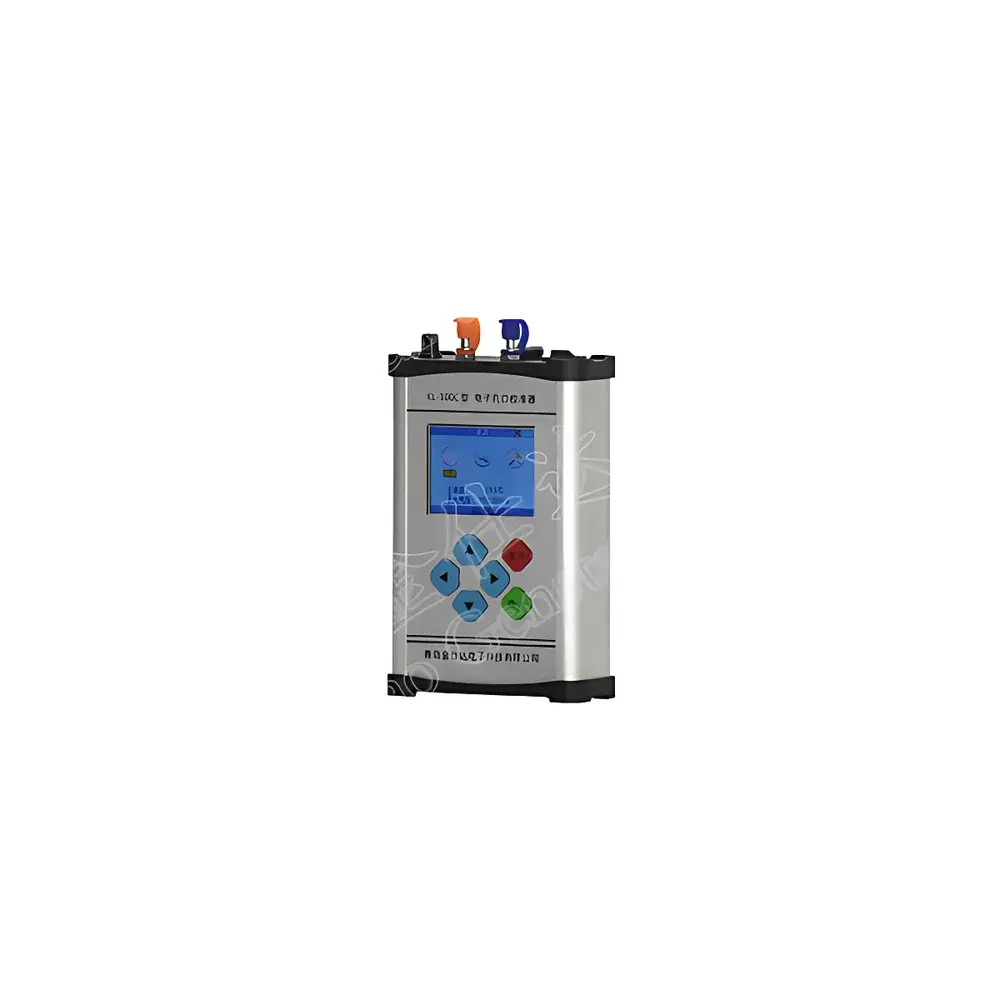
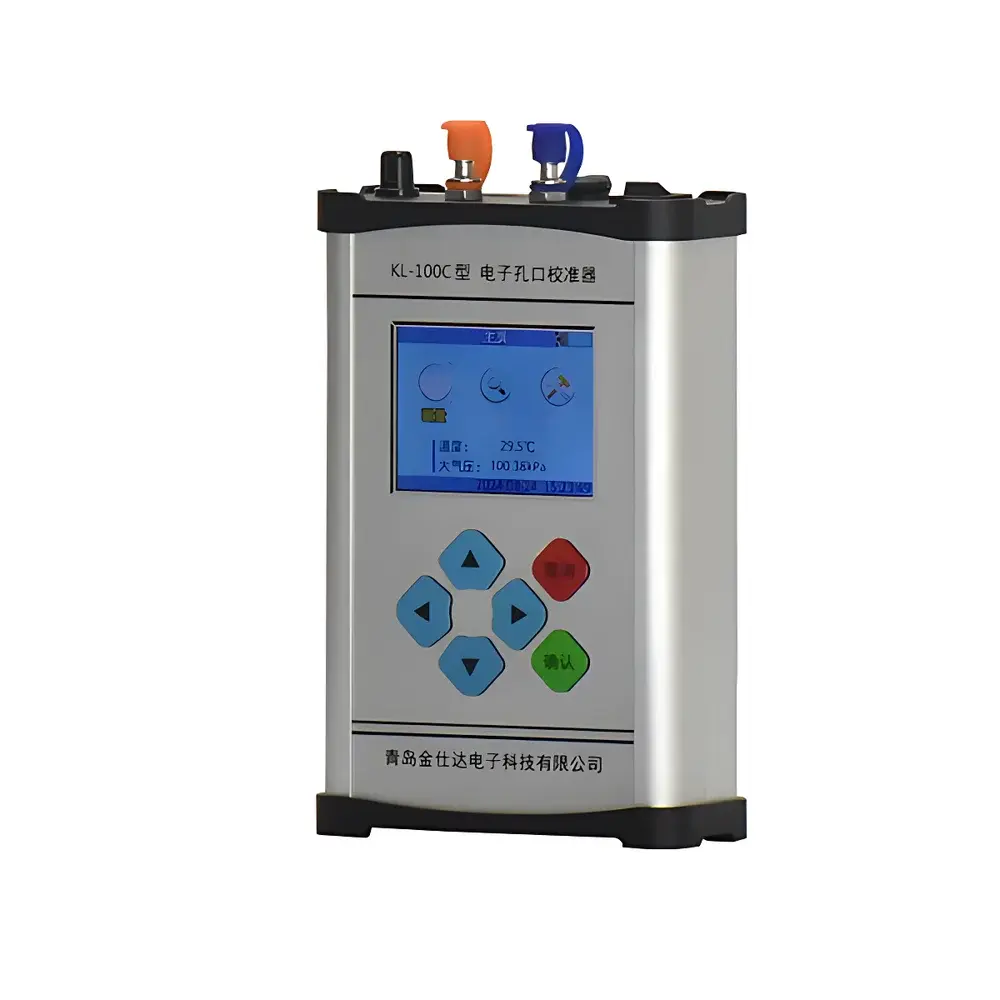
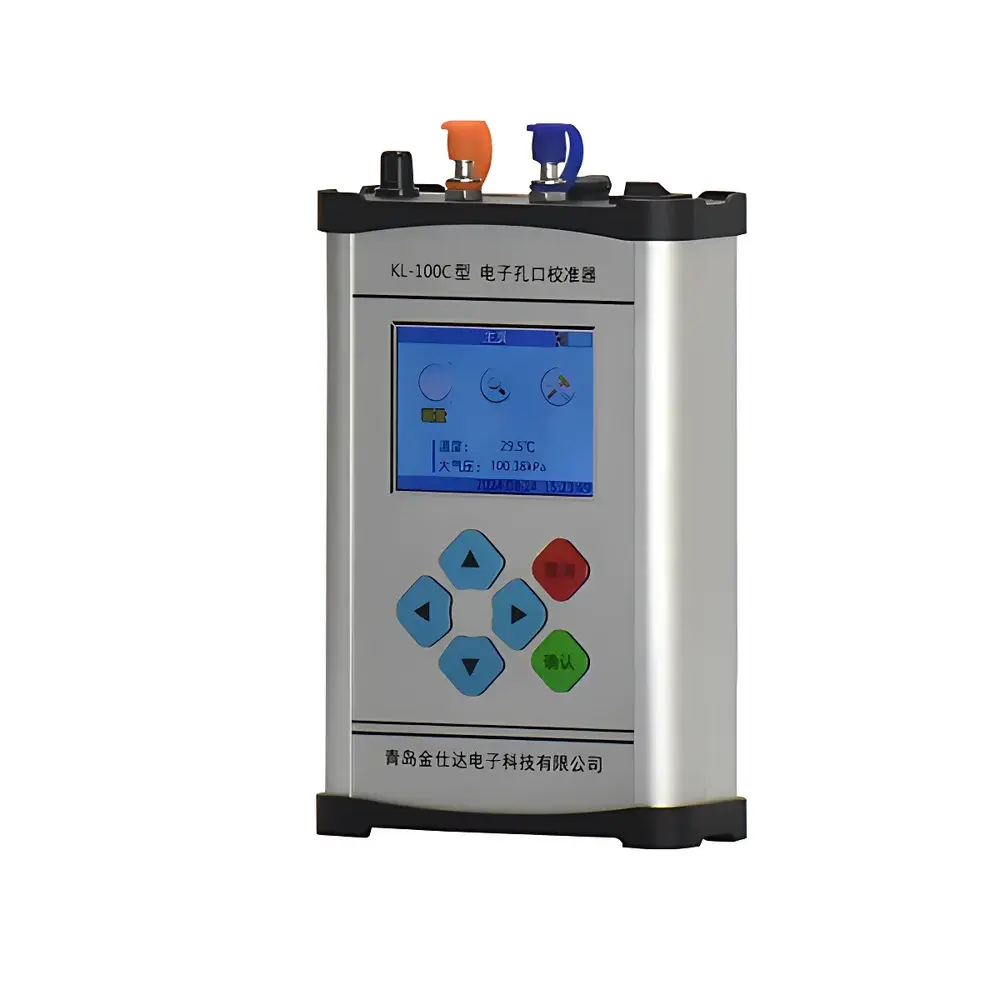
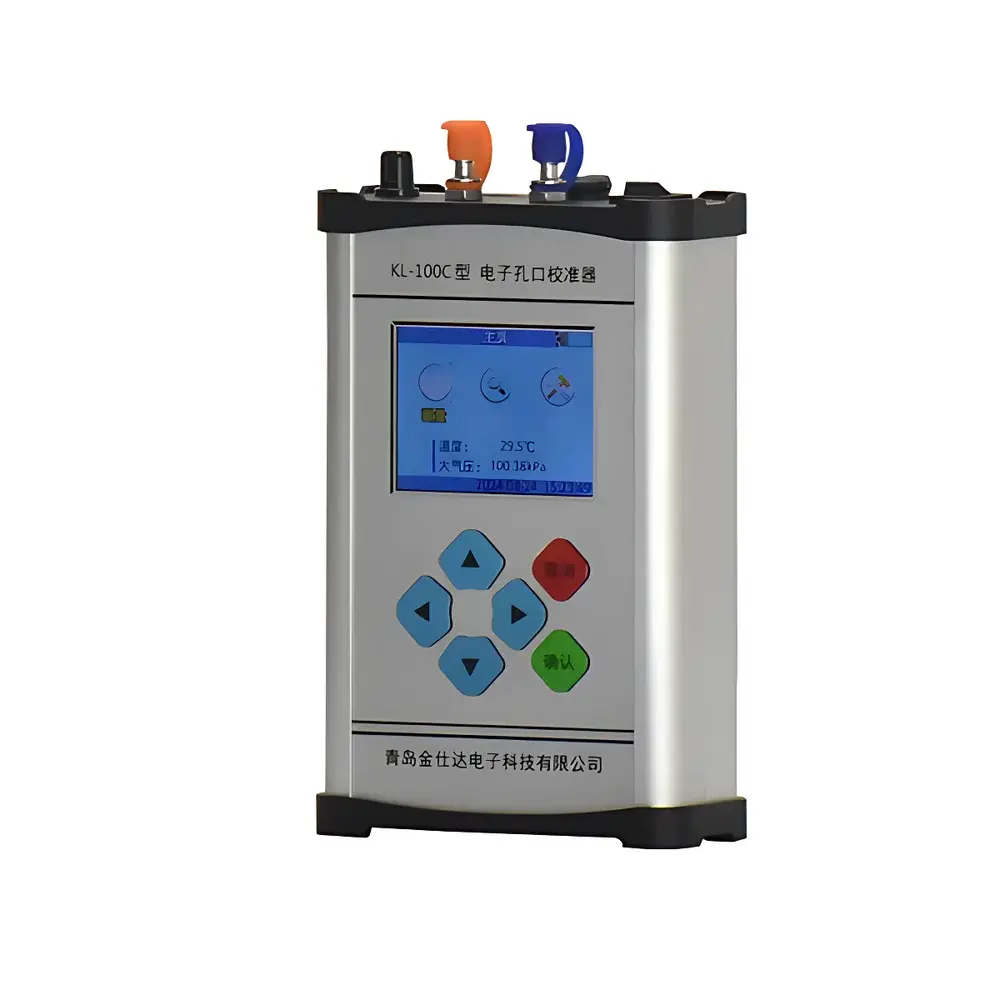
Genetec KL-100C Multi-Range Orifice Flow Calibrator
| Brand | Genetec |
|---|---|
| Origin | Shandong, China |
| Manufacturer Type | OEM Manufacturer |
| Model | KL-100C |
| Calibration Standard Compliance | HJ/T 368–2007, JJG 640–2016 |
| Display | Dot-matrix LCD with Chinese menu interface |
| Environmental Compensation | Integrated temperature and barometric pressure sensors for automatic NTP (20 °C, 101.325 kPa) and STP (0 °C, 101.325 kPa) flow conversion |
| Flow Range | Multi-orifice segmented calibration (broad dynamic range, typical span: 0.1–30 L/min nominal, dependent on orifice configuration) |
| Power Supply | AC/DC dual-mode |
| Traceability | Optional NIST-traceable calibration certificate available upon request |
| Repeatability | ≤ ±0.5% of reading (typical, per HJ/T 368–2007 verification protocol) |
| Response Time | < 2 s (90% step response, dry gas, ambient conditions) |
| Accuracy | ±1.0% of reading (full-scale referenced, per JJG 640–2016 Class 1.0 specification) |
Overview
The Genetec KL-100C Multi-Range Orifice Flow Calibrator is a precision portable instrument engineered for primary and secondary calibration of gas flow rates in environmental sampling systems. It operates on the fundamental principle of orifice-based differential pressure measurement under laminar and transitional flow regimes—governed by ISO 5167-2 (2023) and adapted to the specific metrological requirements of low-flow air sampling instrumentation. Unlike thermal mass flowmeters or turbine-based calibrators, the KL-100C leverages calibrated orifice plates with known discharge coefficients (Cd) and fixed geometric profiles to establish traceable volumetric flow under defined thermobaric conditions. Its design explicitly targets compliance with Chinese national standards HJ/T 368–2007 (specifying technical requirements for orifice flowmeters used in total suspended particulate (TSP) sampler calibration) and JJG 640–2016 (the official verification regulation for differential-pressure flowmeters). The device serves as a field-deployable reference standard for verifying the accuracy of low-flow samplers employed in ambient air quality monitoring, occupational hygiene assessments, stack emission testing, and laboratory method validation.
Key Features
- Multi-orifice modular design enabling segmented flow calibration across discrete ranges—minimizing Reynolds number-dependent deviations and improving overall measurement fidelity per orifice-specific Cd characterization.
- Integrated digital temperature and absolute barometric pressure sensors—automatically compensating for ambient variations and computing both normal temperature and pressure (NTP: 20 °C, 101.325 kPa) and standard temperature and pressure (STP: 0 °C, 101.325 kPa) volumetric flow rates in real time.
- Dot-matrix LCD display with native Chinese user interface—optimized for field technicians performing on-site verification without requiring external software or translation support.
- Dual-power architecture supporting continuous operation via AC adapter (100–240 VAC, 50/60 Hz) or extended autonomous use (≥8 h) via internal high-capacity lithium-ion battery with smart charge management.
- Ruggedized enclosure rated IP54 for dust and splash resistance—suitable for outdoor deployment in variable climatic conditions common during ambient air monitoring campaigns.
- Compliant with metrological traceability frameworks: supports optional factory calibration against national primary standards, with full documentation including uncertainty budgets aligned to GUM (JCGM 100:2008) and ISO/IEC 17025–2017 requirements.
Sample Compatibility & Compliance
The KL-100C is validated for use with clean, dry, non-corrosive gases—including ambient air, nitrogen, and synthetic air—within specified thermobaric limits (operating temperature: 5–40 °C; atmospheric pressure: 80–106 kPa). It is not intended for use with saturated, particulate-laden, or chemically aggressive streams without appropriate pre-conditioning. All orifice assemblies are manufactured from 316 stainless steel and individually characterized per JJG 640–2016 Annex B protocols. Device firmware implements mandatory corrections per HJ/T 368–2007 Section 5.3, including compressibility factor (Z) and expansion factor (Y) calculations for subsonic flow. Full compliance documentation—including test reports, calibration certificates, and conformity declarations—is provided to support GLP audits, CNAS-accredited lab submissions, and regulatory inspection readiness (e.g., EPA Method TO-11A, EN 12341:2014 Annex C).
Software & Data Management
The KL-100C operates autonomously without PC dependency; however, optional RS-232/USB data logging enables export of timestamped calibration records (flow value, T, P, orifice ID, date/time) in CSV format. Exported datasets include audit trail metadata compliant with basic ALCOA+ principles (Attributable, Legible, Contemporaneous, Original, Accurate), facilitating integration into LIMS environments or QA/QC review workflows. While the unit does not implement FDA 21 CFR Part 11 electronic signature functionality, its calibration log structure satisfies ISO/IEC 17025 clause 7.7.1 for record retention and traceability. Firmware updates are delivered via secure encrypted USB key to maintain integrity of metrological algorithms.
Applications
- Periodic verification of low-flow air samplers (e.g., PM2.5, PM10, VOC, and formaldehyde monitors) per EPA Compendium Method IO-2, ISO 12103-1, and HJ 618–2011.
- Field calibration of personal sampling pumps used in occupational exposure assessment (OSHA ID-121, NIOSH Method 0500).
- Validation of flow controllers in environmental test chambers and fume hood performance testing.
- Supporting accreditation activities for CNAS-certified laboratories conducting ambient air quality monitoring under HJ 193–2013 and HJ 655–2013.
- Research-grade flow characterization in aerosol generation and filtration efficiency studies where orifice-based traceability is mandated.
FAQ
Does the KL-100C require annual recalibration?
Yes—per JJG 640–2016, periodic verification at intervals not exceeding 12 months is required to maintain metrological validity; recommended interval is 6 months for high-usage field instruments.
Can it be used for wet gas or high-humidity sampling streams?
No—condensation or liquid carryover may obstruct orifice passages and invalidate Cd assumptions; inline desiccant or heated line conditioning is mandatory prior to calibration.
Is the device compatible with international calibration standards such as ISO 5167?
While optimized for HJ/T 368–2007 and JJG 640–2016, its orifice geometry, sensor specifications, and compensation algorithms are fully consistent with ISO 5167-2:2023 Annex D for low-Re applications and ISO/TR 15148:2002 guidance on orifice meter uncertainty.
What documentation accompanies the optional calibration certificate?
A full NIST-traceable certificate includes measurement uncertainty (k=2), environmental conditions during calibration, raw differential pressure and thermobaric readings, orifice-specific Cd values, and statement of compliance with JJG 640–2016 Clause 4.2.
How is traceability established for field use outside accredited labs?
Each KL-100C ships with a unique serial-numbered calibration record linked to a master reference standard maintained under ISO/IEC 17025–accredited procedures; field users may request third-party witnessed calibration at certified metrology institutes.
Related Products







