
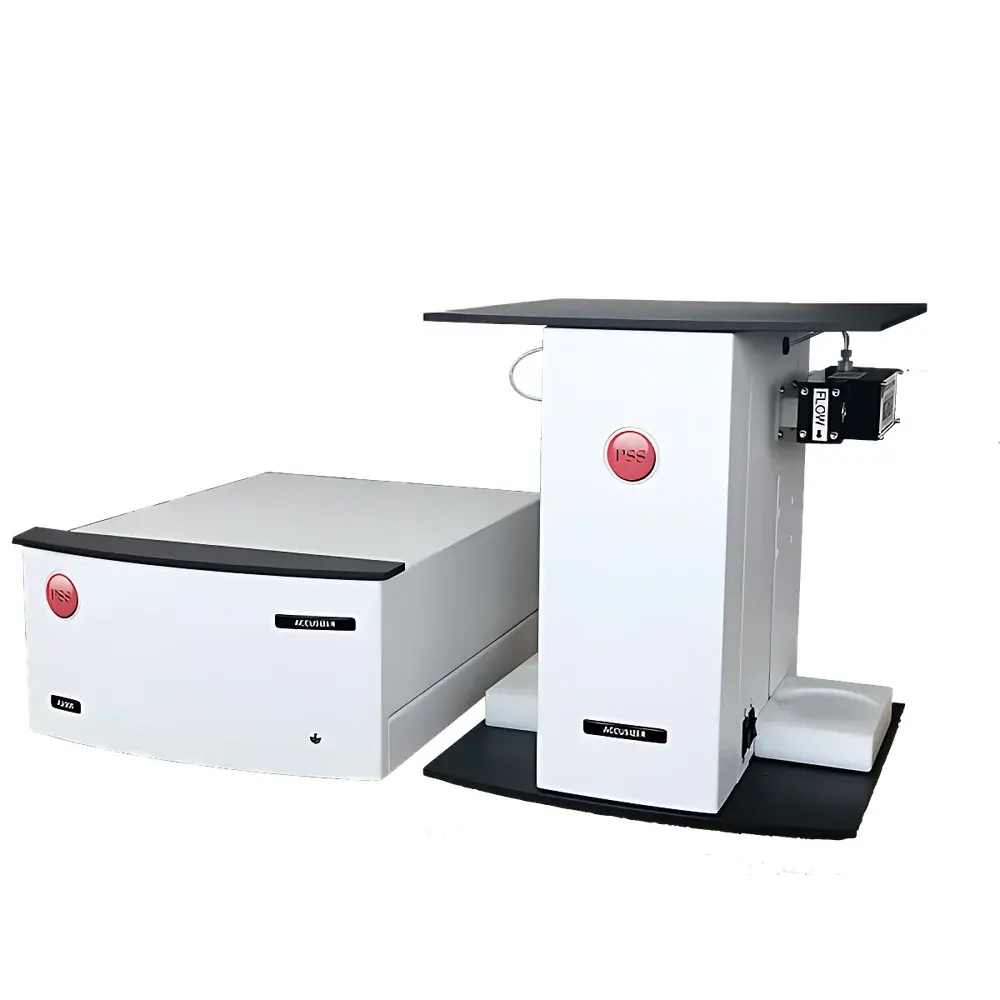
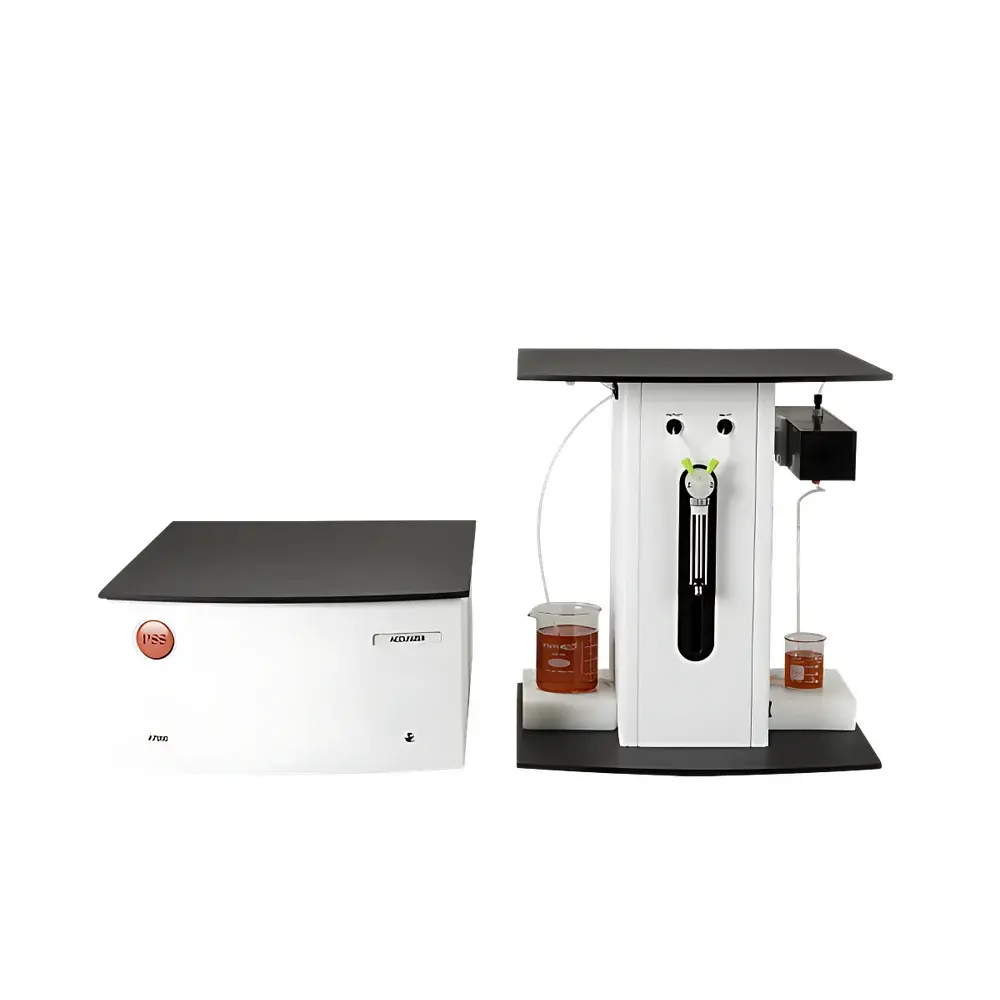
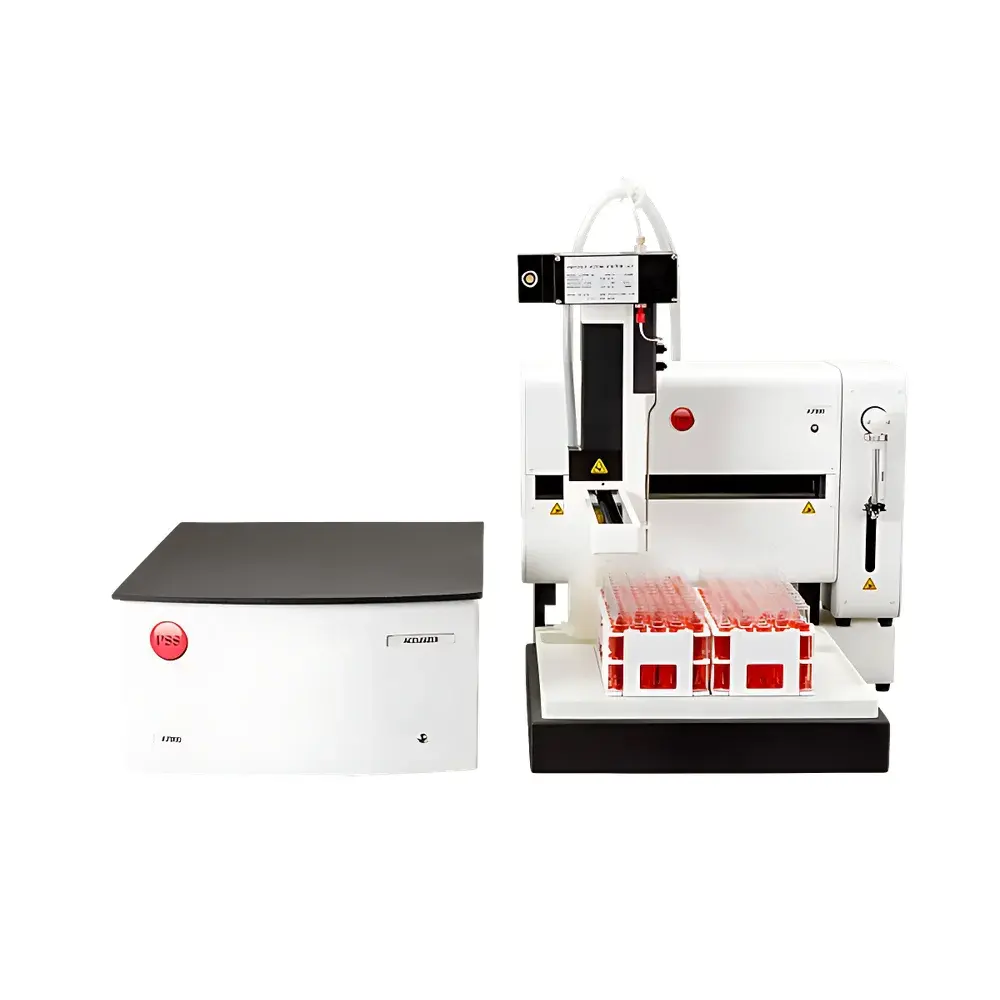
PSS AccuSizer A2000 SIS Insoluble Particle Analyzer
| Brand | Particle Sizing Systems (PSS), USA |
|---|---|
| Origin | USA |
| Model | PSS A2000 SIS |
| Detection Principle | Single Particle Optical Sensing (SPOS) via Light Obscuration |
| Detection Range | 0.5–400 µm |
| Channel Resolution | 1024 data channels + 32 user-defined channels |
| Minimum Sample Volume | 50 µL |
| Counting Accuracy | ≥97.5% |
| Sensitivity | ≤10 ppt (particles/mL) |
| Flow Rate Range | 5–120 mL/min |
| Maximum Particle Concentration | 10,000 particles/mL |
| Compliance | USP <787>, <788>, <789>, <1788> |
Overview
The PSS AccuSizer A2000 SIS Insoluble Particle Analyzer is a high-precision, regulatory-compliant instrument engineered for quantitative particulate analysis in parenteral drug products, biologics, and sterile injectables. It employs Single Particle Optical Sensing (SPOS) technology—based on the light obscuration (LO) principle—to detect, size, and count individual particles as they pass through a precisely defined optical sensing zone. Unlike ensemble-averaging techniques such as laser diffraction (LD), SPOS delivers true number-weighted particle size distribution (PSD), enabling unambiguous identification of sub-visible and visible particulates—including critical tail-end outliers ≥2 µm and ≥10 µm—that directly impact product safety, stability, and regulatory compliance. With a validated detection range spanning 0.5 µm to 400 µm (sensor-dependent), the A2000 SIS exceeds current pharmacopoeial requirements (e.g., USP , CP 0903) and anticipates emerging standards—such as the FDA’s increasing emphasis on quantification of 2–10 µm particles—ensuring long-term relevance across R&D, QC, and release testing workflows.
Key Features
- Ultra-High Resolution SPOS Detection: 1024-channel acquisition architecture enables 0.01 µm bin resolution across the full dynamic range, resolving multimodal distributions (e.g., 0.8 µm, 2 µm, and 5 µm polystyrene latex standards) with distinct, non-overlapping peaks—critical for root-cause analysis of aggregation or leachables.
- Micro-Sampling Capability: Validated down to 50 µL injection volume with ≤2.4% RSD at lowest volume, meeting stringent volumetric accuracy requirements of USP for low-volume formulations including ophthalmic solutions and lyophilized reconstitutes.
- Regulatory-Ready Software Workstation: Fully compliant with FDA 21 CFR Part 11, including electronic signatures, role-based access control (22 granular permission levels), immutable audit trails, automated data backup, and CSV-ready configuration for computer system validation.
- Modular Expandability: Supports seamless integration of optional modules—including CETAC automated sample handling (up to two 96-well plates), APS automatic dilution system for viscous or highly concentrated samples (e.g., lipid emulsions per CP monographs), and magnetic stirring for heterogeneous suspensions.
- Robust Quantitative Performance: Certified counting accuracy ≥97.5%, sensitivity ≤10 ppt, and flow rate accuracy ≥98%, ensuring traceable, reproducible results under GLP/GMP conditions. Raw data logging preserves full measurement integrity for retrospective analysis and regulatory inspection.
Sample Compatibility & Compliance
The A2000 SIS is optimized for aqueous and non-aqueous liquid pharmaceuticals—including small-molecule injectables, monoclonal antibodies, vaccines, liposomal formulations, and ophthalmic preparations. Its wide dynamic concentration range (up to 10,000 particles/mL) and adaptive flow control minimize coincidence error without requiring manual dilution. The system conforms to global regulatory frameworks: USP chapters , , , and ; Chinese Pharmacopoeia (CP) 0903; European Pharmacopoeia (EP); Japanese Pharmacopoeia (JP); AAMI TIR42; and WHO Technical Report Series No. 992 (QAS/11.405 5.7.1). All hardware and firmware are designed to support full lifecycle traceability in accordance with ICH Q5A(R2), Q5C, and Annex 1 (EU GMP), facilitating successful FDA, EMA, and NMPA inspections.
Software & Data Management
The AccuSizer Software Workstation provides a validated, integrated environment for instrument control, real-time data acquisition, statistical analysis (including trend charts, batch comparisons, and outlier detection), and automated report generation. Preconfigured templates generate pass/fail determinations aligned with USP, CP, EP, and internal specifications. Audit trail functionality logs every user action—including login/logout timestamps, parameter changes, data edits, report exports, and firmware updates—with searchable filters by operator, date/time, and event type. All electronic records are encrypted and stored in a relational database supporting LIMS integration via ODBC. Backup policies enforce scheduled replication to network drives or cloud repositories, satisfying ALCOA+ principles (Attributable, Legible, Contemporaneous, Original, Accurate, Complete, Consistent, Enduring, Available).
Applications
- Final container testing of sterile injectables per USP and CP 0903
- Stability-indicating method development for protein therapeutics prone to subvisible particle formation
- Root-cause investigation of filter clogging, vial stopper leachables, or silicone oil droplets
- Characterization of lipid nanoparticles (LNPs), exosomes, and viral vectors
- Process validation support for ultrafiltration, terminal sterilization, and aseptic filling operations
- Raw material qualification (e.g., excipients, water for injection) against particulate limits
FAQ
Does the A2000 SIS comply with FDA 21 CFR Part 11?
Yes—the software includes full electronic signature capability, audit trail logging, role-based permissions (22 configurable rights), and data encryption, meeting all technical and procedural requirements for regulated environments.
What is the smallest detectable particle size?
The system achieves validated detection down to 0.5 µm using the LE sensor, enabled by hybrid SPOS optics combining light obscuration and forward-scatter signal processing.
Can it analyze viscous or undiluted samples?
Yes—when configured with the APS automatic dilution module, the A2000 SIS handles high-viscosity formulations (e.g., hyaluronic acid gels, lipid emulsions) while maintaining volumetric precision and minimizing human error.
How does SPOS differ from laser diffraction for particle counting?
SPOS counts and sizes each particle individually, delivering number-based distributions essential for detecting rare large particles; LD measures ensemble scattering intensity, yielding volume-weighted distributions that mask low-abundance outliers.
Is raw data export supported for third-party statistical analysis?
Yes—full-resolution channel data, metadata, and audit logs can be exported in CSV, XML, or HDF5 formats, preserving traceability for advanced modeling or regulatory submission packages.





