
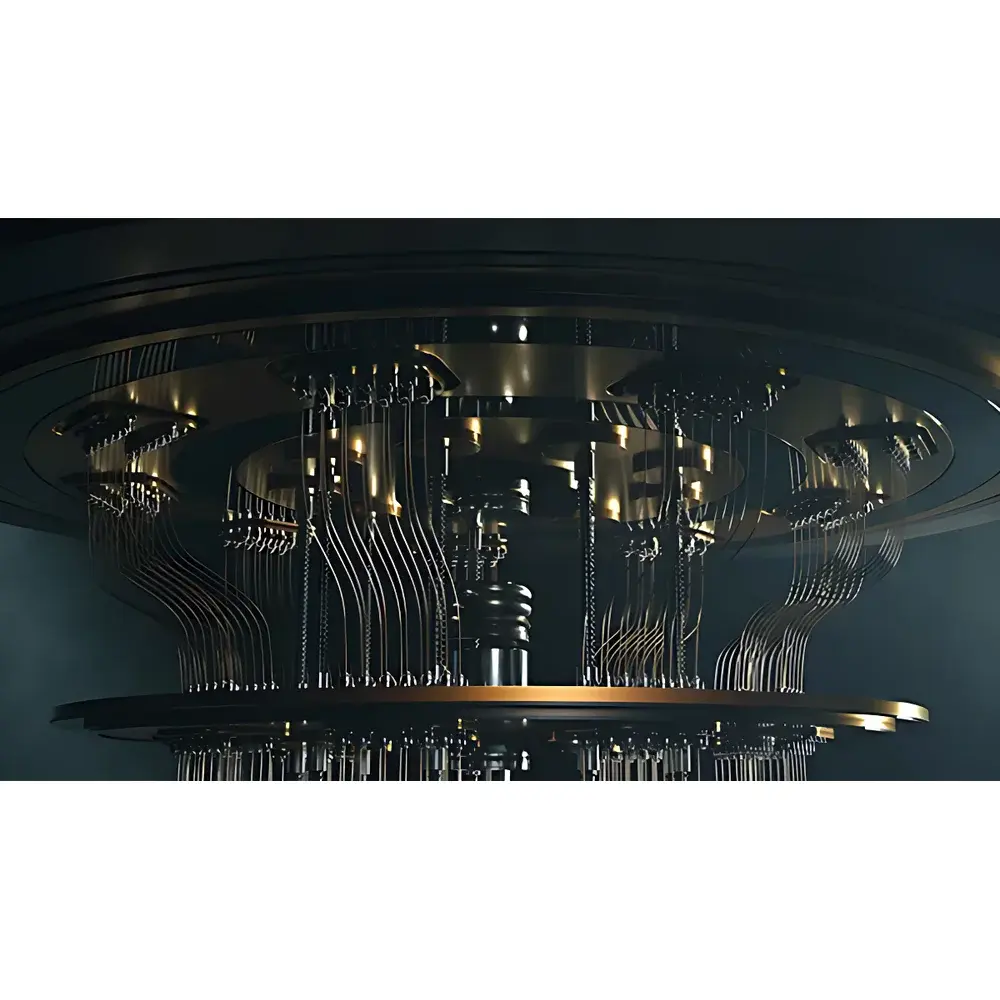
PVD Q-One Deterministic Single-Ion Implantation Focused Ion Beam System
| Brand | PVD |
|---|---|
| Origin | United Kingdom |
| Manufacturer Status | Authorized Distributor |
| Import Status | Imported |
| Model | Q-One |
| Product Type | Low-Energy High-Current Ion Implanter |
| Application Domain | IC Ion Implantation |
| Implantation Energy | 25 kV Liquid Metal Ion Source (LMIS) |
| Implantation Dose Control | Deterministic Single-Ion Delivery |
| Wafer Size Support | 6-inch |
| Available Ion Species | >40 elements selectable via LMIS and mass-filtered column |
Overview
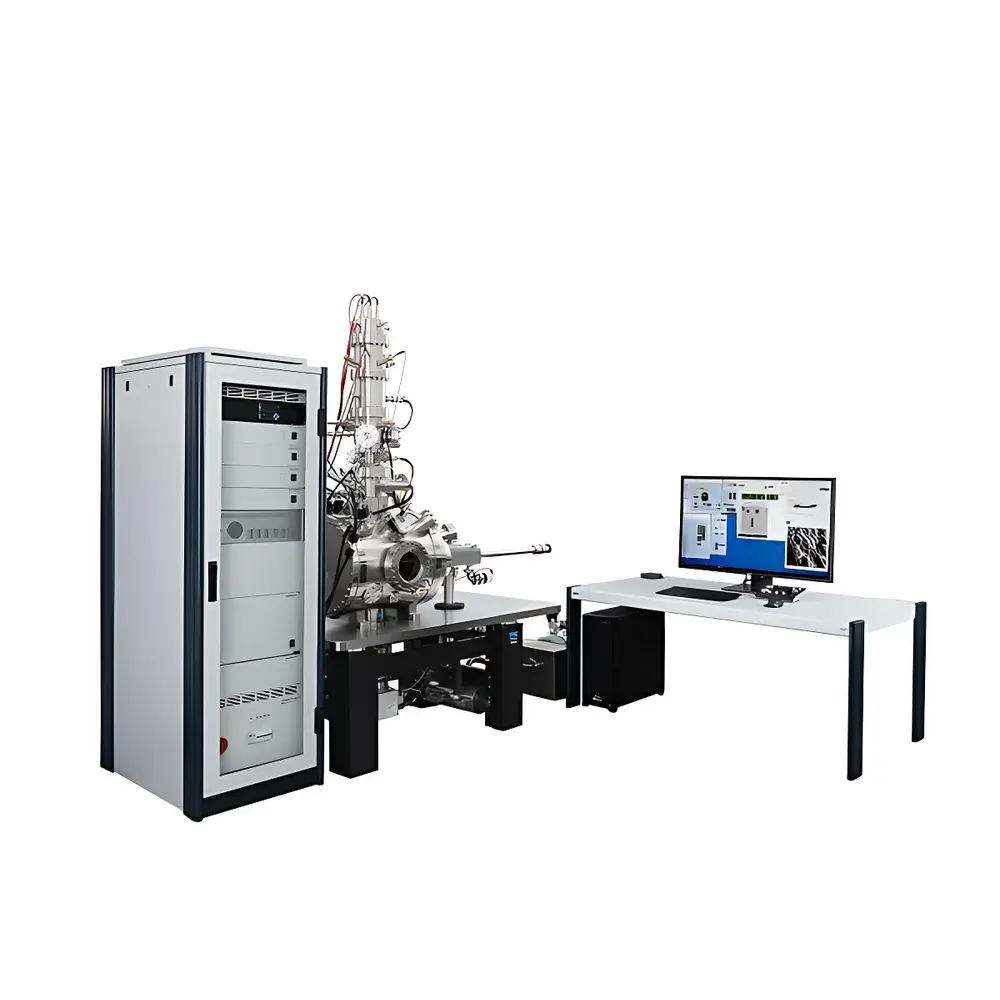
The PVD Q-One Deterministic Single-Ion Implantation Focused Ion Beam System is a purpose-built platform for quantum device fabrication and nanoscale materials engineering. Engineered around the principle of deterministic ion placement—where each individual ion impact is detected, validated, and spatially registered—the Q-One implements a closed-loop implantation architecture based on time-resolved secondary electron and ion yield detection. Unlike conventional broad-beam or stochastic FIB systems, the Q-One integrates real-time beam-current monitoring at the femtoampere level with post-implant verification to ensure atomic-scale fidelity. Its core functionality relies on a high-resolution mass-filtered liquid metal ion source (LMIS), enabling monoisotopic ion selection and suppression of cluster/multi-charge species. The system operates at a nominal acceleration voltage of 25 kV, optimized for shallow, low-damage implantation into semiconductor substrates such as silicon, diamond, and SiC—critical for solid-state qubit realization.
Key Features
- Deterministic single-ion delivery with >98% implantation event detection efficiency, verified via integrated secondary electron amplification and time-of-flight correlation
- Mass-filtered focused ion beam column with <10 nm probe size at 25 kV, supporting sub-20 nm lateral placement accuracy
- Configurable ion source architecture: primary liquid metal ion source (LMIS) for Si, Er, Nd, Au, Bi, and alloy-based ions; optional dual-plasma source for reactive gaseous species (O⁺, N⁺, H⁺)
- Nanopositioning stage with 6-inch wafer compatibility, active vibration isolation, and thermal drift compensation (<0.5 nm/min over 2 hours)
- Femtoampere-level beam current control (10 fA–100 nA), enabling precise dose definition from single-atom to high-fluence regimes
- Proprietary implantation and lithography software suite with CAD-based pattern import, dose mapping, and real-time event logging compliant with audit trail requirements
Sample Compatibility & Compliance
The Q-One accommodates standard semiconductor wafers up to 150 mm (6-inch) diameter, including oxidized Si, SOI, GaN-on-sapphire, and wide-bandgap substrates such as 4H-SiC and isotopically purified diamond. Sample holders support backside cooling and in situ electrical biasing (±100 V). All ion species are selected and mass-filtered in vacuum (base pressure <5×10⁻⁸ mbar), ensuring contamination-free implantation. The system meets ISO 14644-1 Class 5 cleanroom integration standards and supports GLP/GMP-aligned workflows through configurable user access levels, electronic signatures, and 21 CFR Part 11–compliant data archiving. Ion species selection adheres to ASTM F3013-15 guidelines for dopant purity and isotopic consistency in quantum-grade semiconductor processing.
Software & Data Management
The Q-One Control Suite provides a unified interface for beam alignment, pattern definition, dose calibration, and real-time event logging. Each implantation sequence generates timestamped metadata—including ion species, energy, dwell time, position coordinates, and detection confirmation status—stored in HDF5 format with SHA-256 checksum validation. Software modules include: (1) Deterministic Implant Planner for qubit array layout with neighbor-spacing constraints; (2) Multi-Element Dose Mapper for heterogeneous doping across nanostructures; and (3) Ion Lithography Engine supporting both resist-based (H⁺, He⁺) and sputter-based (Bi⁺, Ga⁺) direct-write modes. Data export supports CSV, JSON, and industry-standard SEM/TEM coordinate referencing (e.g., DM3, TIFF + XML sidecar). Audit trails record operator ID, parameter changes, and system diagnostics for full traceability.
Applications
- Quantum Bit Fabrication: Creation of identical, spatially registered donor arrays (e.g., phosphorus in silicon, nitrogen-vacancy centers in diamond) with sub-20 nm inter-qubit spacing and known atomic occupancy—enabling scalable quantum processor development
- Nanoscale Doping Engineering: Site-specific implantation into nanowires, quantum dots, and 2D materials (e.g., MoS₂, h-BN) using tailored ion species to modulate carrier concentration, spin coherence, or optical transition energies
- Ion Beam Lithography: Sub-10 nm feature definition via direct-write using light ions (H⁺, He⁺) for resist modification or heavy ions (Bi⁺, Au⁺) for physical sputtering—compatible with lift-off and etch-transfer processes
- Defect Engineering Studies: Controlled introduction of single-point defects for investigating charge trapping dynamics, lattice relaxation, and radiation hardness in emerging memory and sensor technologies
FAQ
How does the Q-One achieve deterministic single-ion implantation?
It combines a stabilized femtoampere beam current, time-resolved secondary electron detection, and synchronized stage positioning to confirm and localize each ion impact before advancing to the next site.
What ion species are available without hardware modification?
Over 40 elements—including Si, Er, Nd, Au, Bi, and Ga—are accessible via the standard LMIS and mass filter; O, N, and H require the optional dual-plasma source module.
Is the system compatible with cryogenic sample stages?
Yes—Q-One supports third-party cryo-stages (down to 4 K) with feedthroughs for electrical characterization, subject to vacuum and positional tolerance verification.
Can implantation data be exported for external analysis?
All raw detection events, coordinates, and metadata are exportable in HDF5, CSV, and JSON formats with full schema documentation.
Does the software support automated array generation for quantum dot lattices?
Yes—the Deterministic Implant Planner includes parametric lattice generators (square, hexagonal, custom Bravais) with automatic dose balancing and neighbor-spacing enforcement.