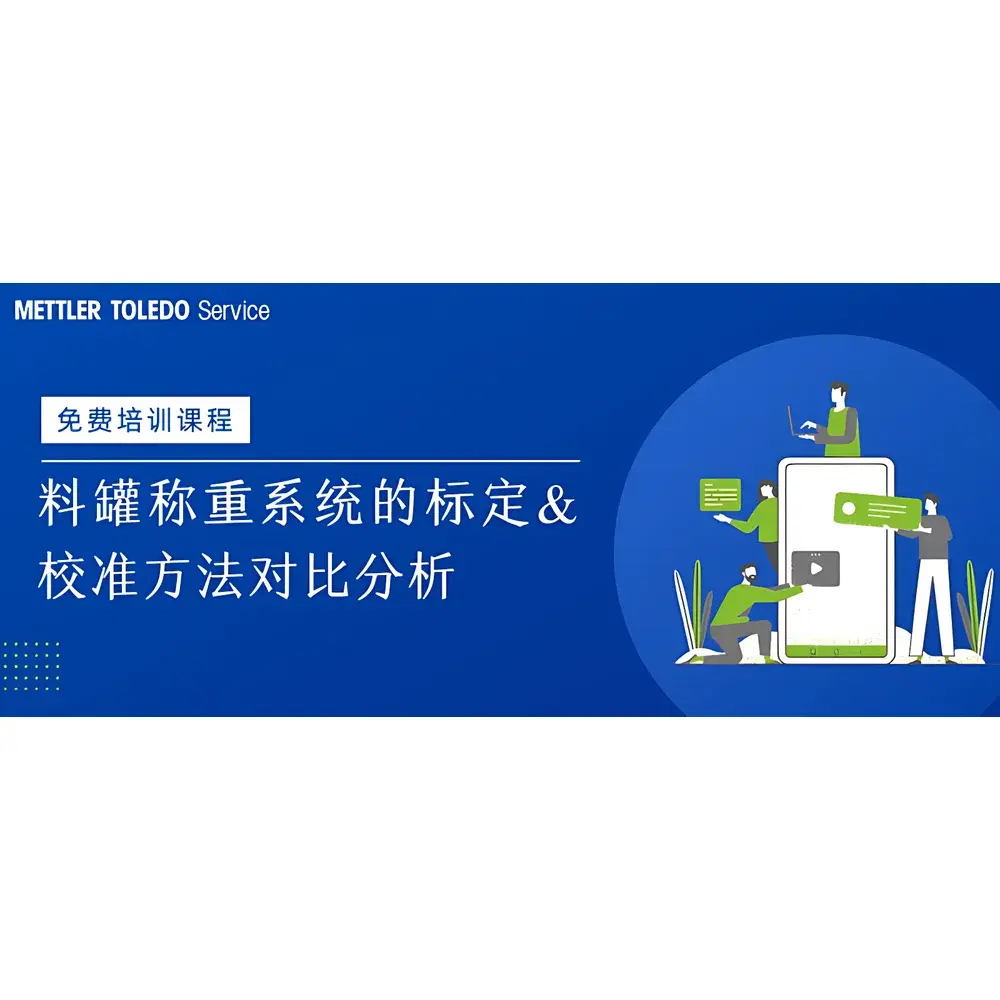
METTLER TOLEDO Digital Training Course: Comparative Analysis of Calibration and Adjustment for Tank Weighing Systems
| Brand | METTLER TOLEDO |
|---|---|
| Origin | Switzerland |
| Manufacturer Type | Authorized Distributor |
| Product Category | Imported |
| Model | Digital Training Course |
| Topic | Calibration vs. Adjustment for Tank Weighing Systems |
| Instructor Experience | >10 Years |
| Equipment Type | Laboratory & Industrial Weighing Systems |
| Compliance Context | ASTM E74, ISO/IEC 17025, USP <41>, FDA 21 CFR Part 11 (Data Integrity in Training Records) |
Overview
This digital training course, developed and delivered by METTLER TOLEDO Service Engineering, provides a technically rigorous, application-focused examination of calibration and adjustment methodologies for tank weighing systems—critical infrastructure in pharmaceutical, chemical, food & beverage, and bulk material handling operations. Unlike generic instrument operation overviews, this course centers on metrological traceability, measurement uncertainty propagation, and regulatory expectations for load cell–based weighing systems installed in fixed vessel configurations. It explicitly distinguishes between adjustment (a process that modifies system output to align with reference values, often performed during commissioning or after mechanical disturbance) and calibration (a documented comparison against traceable standards to quantify error and establish confidence intervals). The course addresses the fundamental challenge: how to achieve legally defensible mass measurement integrity when direct load application to the tank is impractical due to structural constraints, process continuity requirements, or safety limitations.
Key Features
- Structured three-module curriculum grounded in international weighing standards (OIML R60, ASTM E74, ISO 9001 Clause 7.1.5)
- Side-by-side technical comparison of classical methods—including deadweight loading, simulated load (hydraulic/pneumatic), and mathematical modeling—versus the RapidCal methodology
- Quantitative analysis of uncertainty contributors: mounting rigidity, thermal drift, off-center loading effects, cable tension, and signal conditioning nonlinearity
- Step-by-step procedural guidance for documenting calibration evidence per ISO/IEC 17025 and FDA 21 CFR Part 11 requirements (including audit trail generation, electronic signature validation, and record retention protocols)
- Real-world case studies from GMP-compliant API manufacturing facilities and ISO 22000-certified food processing lines
Sample Compatibility & Compliance
The training content applies universally to METTLER TOLEDO tank weighing solutions—including IND570, PW15, and XPR series indicators paired with POWERCELL® PDX®, WTSD, or HBM C2A load cells—as well as third-party systems meeting OIML R60 Class C3/C4 specifications. All procedures comply with regulatory frameworks governing measurement reliability in regulated industries: EU Annex 11 (Computerized Systems), USP (Analytical Instrument Qualification), and ISO 14001 environmental monitoring contexts where tank inventory reconciliation impacts emissions reporting. The course emphasizes documentation rigor required for GLP/GMP audits, including defined acceptance criteria, revision-controlled SOP templates, and traceability mapping from certificate of calibration to individual load cell serial numbers.
Software & Data Management
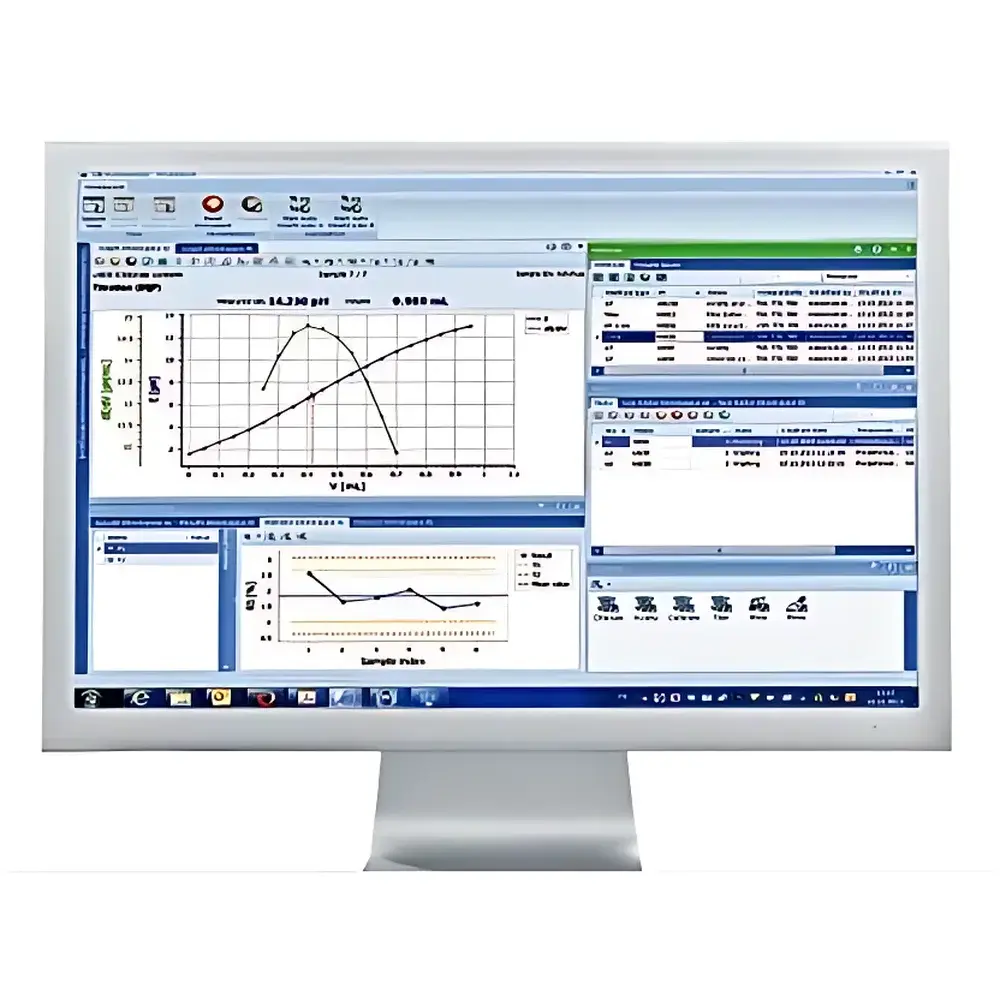
Instruction includes hands-on navigation of METTLER TOLEDO’s LabX® Weighing and AutoCal™ software environments used for automated calibration logging, uncertainty budgeting, and electronic certificate generation. Learners gain proficiency in configuring audit trails with user-level permissions, exporting CSV/PDF calibration reports with embedded digital signatures, and integrating calibration status into enterprise asset management (EAM) systems via OPC UA or RESTful APIs. Emphasis is placed on data integrity controls aligned with ALCOA+ principles (Attributable, Legible, Contemporaneous, Original, Accurate, Complete, Consistent, Enduring, Available).
Applications
- Pharmaceutical batch record reconciliation and inventory control for raw material tanks
- Regulatory submission support for FDA Pre-Approval Inspections (PAI) and EMA GMP inspections
- Troubleshooting chronic weight drift in fermentation vessels or solvent storage tanks
- Designing qualification protocols (IQ/OQ/PQ) for new tank installations under Annex 15
- Training QA/QC personnel to independently verify calibration validity without external vendor dependency
FAQ
What is the difference between “calibration” and “adjustment” in tank weighing systems?
Adjustment modifies the system’s output to match a known reference; calibration quantifies deviation without altering the system. Regulatory agencies require both to be documented separately.
Can RapidCal replace full-load calibration for GMP applications?
RapidCal serves as an interim verification method between formal calibrations. Full-load calibration remains mandatory at defined intervals per risk assessment (ICH Q9) and local metrology regulations.
Is this course recognized for continuing education credits (CEUs)?
Yes—participants receive a METTLER TOLEDO Certificate of Completion accredited by the International Association for Continuing Education and Training (IACET) for 0.6 CEUs.
Does the training cover hazardous area (ATEX/IECEx) weighing systems?
Yes—Module 2 includes specific considerations for intrinsically safe barrier configurations, spark-proof junction boxes, and certification scope alignment for Zone 1/21 installations.
How frequently should tank weighing systems be recalibrated?
Frequency must be determined by risk-based assessment per ISO/IEC 17025:2017 Clause 7.8.2—not by fixed time intervals—and justified using historical performance data, process criticality, and environmental stressors.