
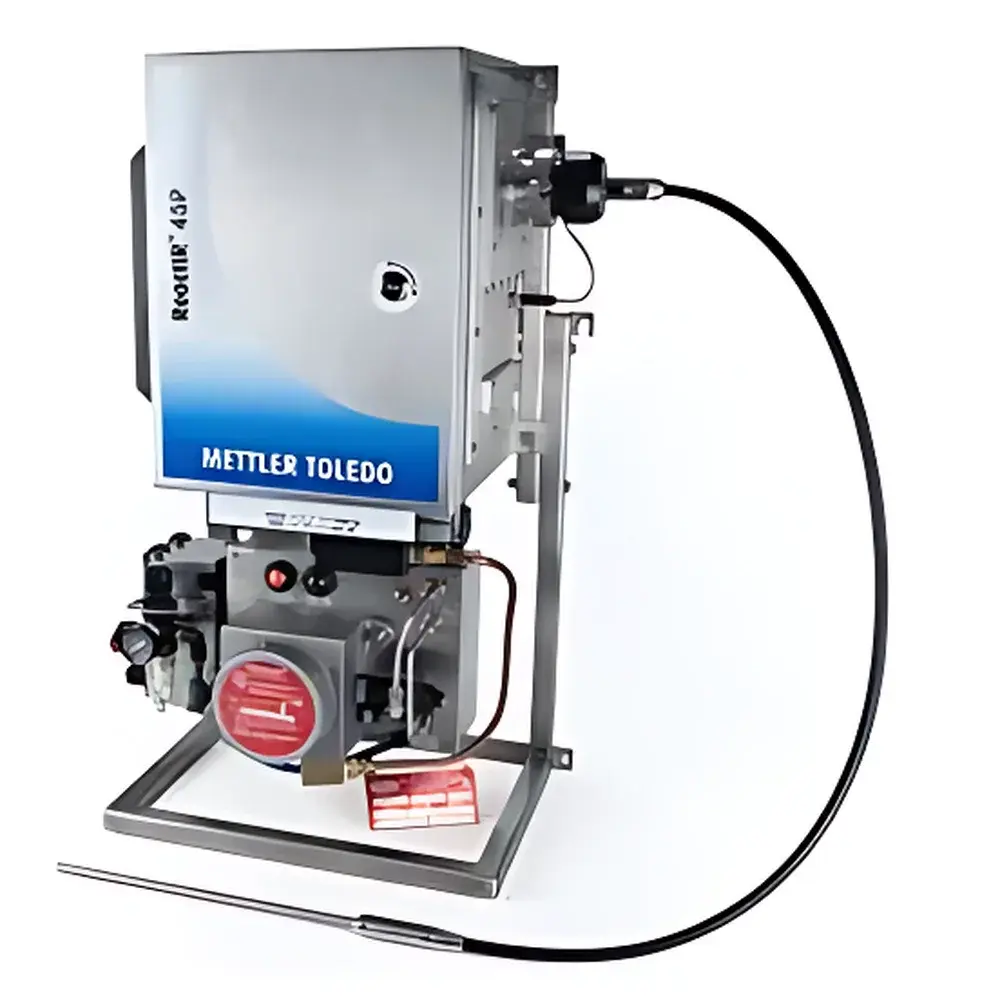
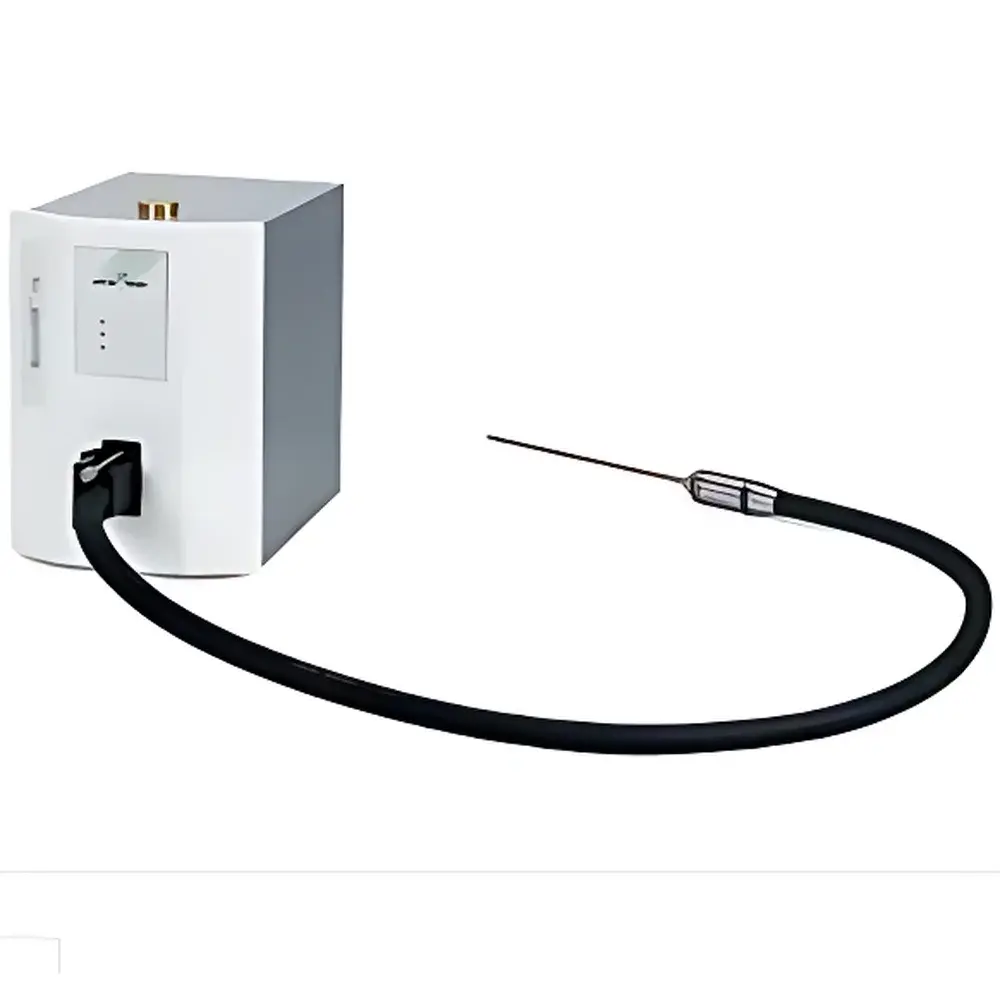
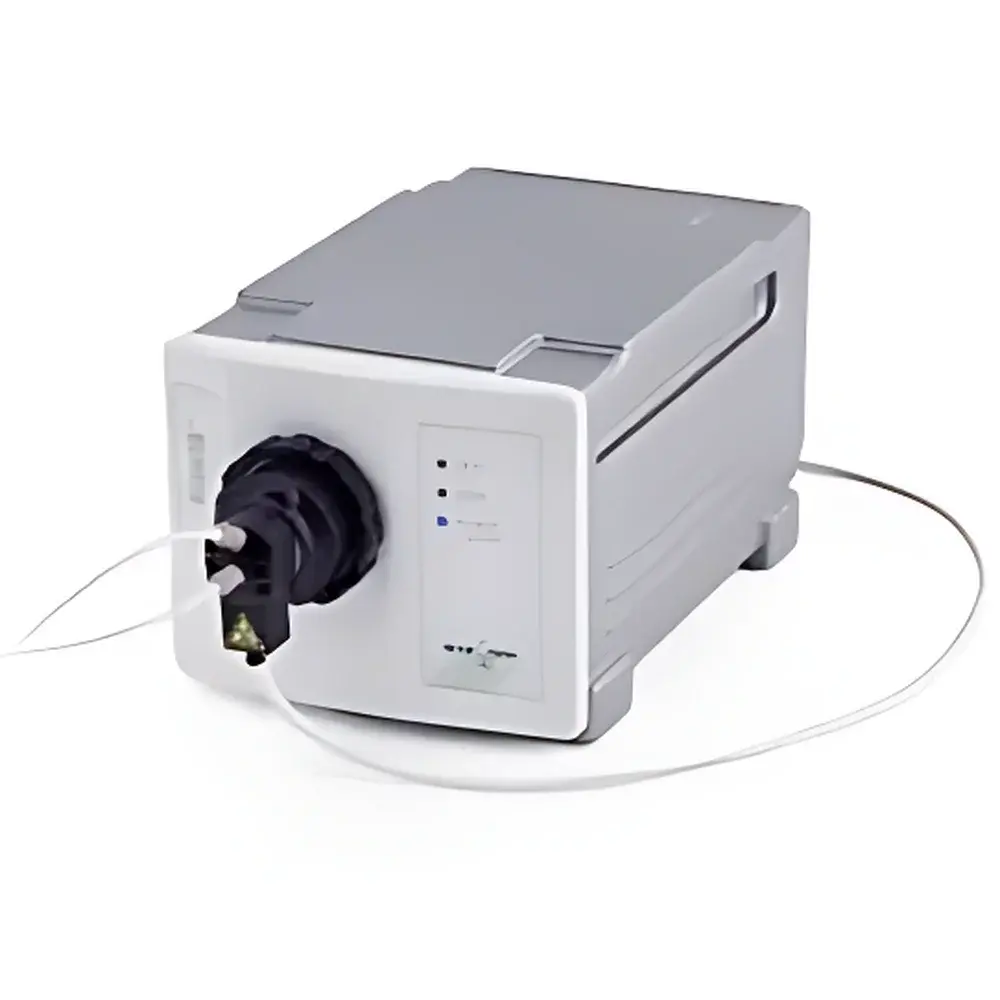
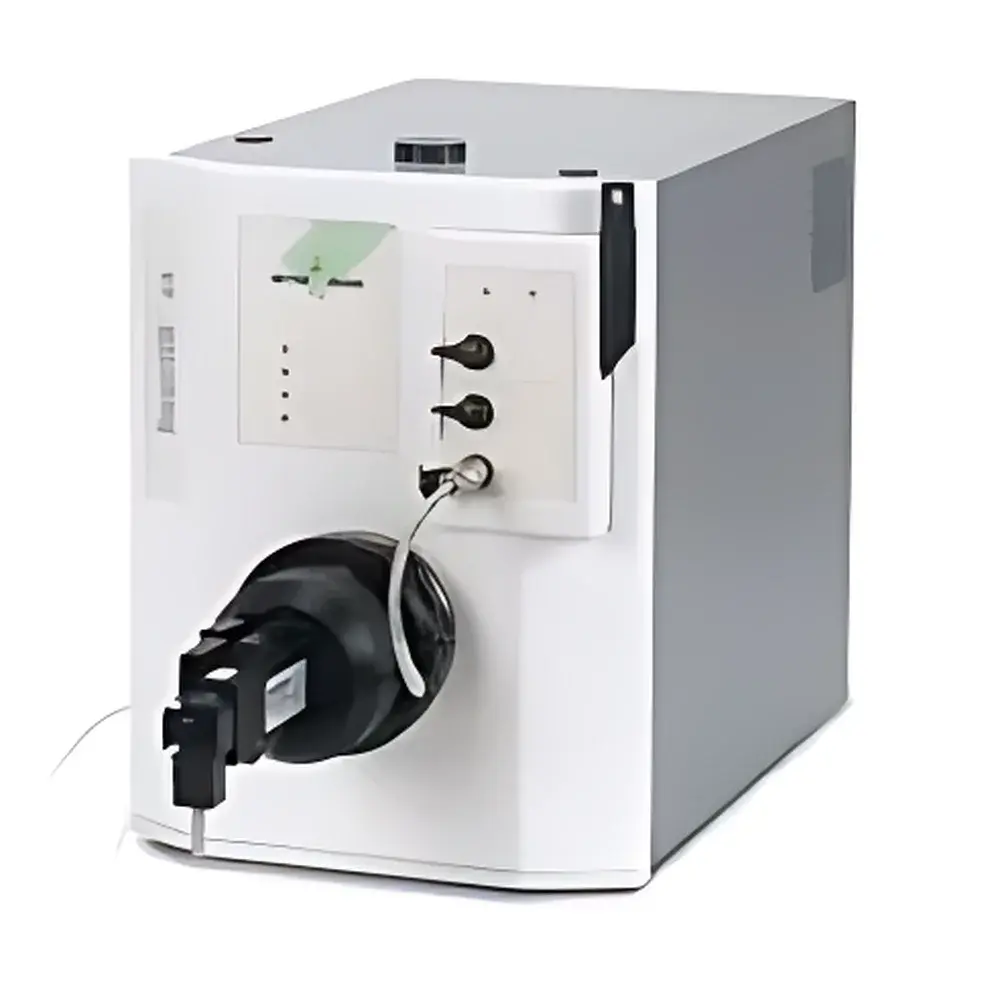
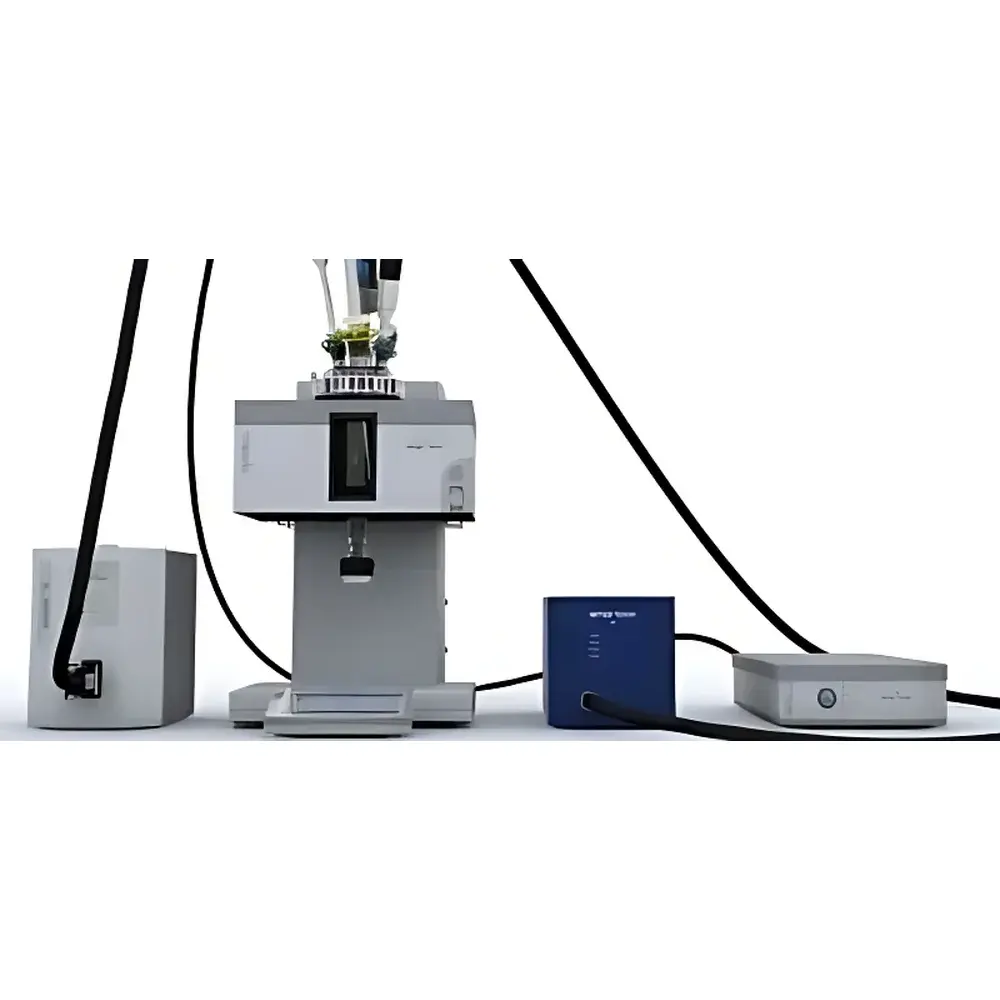
METTLER TOLEDO ReactIR™ 45m and ReactIR™ 45p Fourier Transform Infrared (FTIR) Reaction Monitoring Systems
| Brand | METTLER TOLEDO |
|---|---|
| Origin | USA |
| Model | ReactIR™ 45m, ReactIR™ 45p |
| Instrument Type | In-situ, Real-time Online FTIR Spectrometer |
| Wavenumber Range | 4000–650 cm⁻¹ |
| Resolution | 4 cm⁻¹ |
| Signal-to-Noise Ratio | 2000:1 |
| Scan Speed | Not specified (typical for high-stability process-grade FTIR) |
| Probe Materials | Diamond, Silicon, Zirconia ATR crystals |
| Wetted Materials | Hastelloy®, Gold |
| Temperature Range | −80 °C to 200 °C (optional up to 300 °C) |
| Pressure Rating | Vacuum to 7 bar (optional up to 350 bar) |
| Probe Diameters | 6.35 mm, 9.5 mm, 16 mm, 25.4 mm |
Overview
The METTLER TOLEDO ReactIR™ 45m and ReactIR™ 45p are benchtop and portable Fourier Transform Infrared (FTIR) spectroscopy systems engineered for in-situ, real-time reaction monitoring in chemical process development and manufacturing environments. Leveraging Attenuated Total Reflectance (ATR) sampling with high-stability interferometry, these instruments enable direct optical interrogation of reaction mixtures—without offline sampling, dilution, or sample preparation. The core measurement principle relies on the absorption of mid-infrared radiation by molecular vibrational modes, providing chemically specific, quantitative tracking of functional group evolution, reactant depletion, intermediate formation, and product generation under actual process conditions. Designed for integration into jacketed reactors, flow cells, crystallizers, and microreactors, the ReactIR™ 45 series delivers time-resolved spectral data at sub-minute intervals, supporting rigorous kinetic modeling, endpoint determination, and mechanistic validation across pharmaceutical, fine chemical, petrochemical, and polymer synthesis applications.
Key Features
- True in-situ FTIR capability via ruggedized ATR probes with diamond, silicon, or zirconia sensing elements—optimized for chemical resistance, thermal stability, and mechanical durability.
- High-fidelity spectral acquisition across 4000–650 cm⁻¹ with 4 cm⁻¹ resolution and >2000:1 signal-to-noise ratio—ensuring robust quantitation even in complex, absorbing, or turbid matrices.
- Modular probe configurations supporting operation from −80 °C to 300 °C and vacuum to 350 bar—validated for use in highly exothermic, catalytic, hydrogenation, and crystallization processes.
- Compact, vibration-damped optical bench design with integrated alignment and thermal stabilization—enabling reliable deployment in laboratory fume hoods, pilot plants, and GMP manufacturing suites.
- Real-time spectral acquisition synchronized with process parameters (temperature, pressure, addition rate), facilitating multivariate correlation and root-cause analysis.
Sample Compatibility & Compliance
The ReactIR™ 45m and 45p accommodate a broad range of homogeneous and heterogeneous reaction systems—including slurries, emulsions, viscous polymers, and gas-liquid interfaces—without spectral interference from scattering or pathlength variability. Probe wetted materials (Hastelloy® C-276, gold-plated stainless steel, sapphire windows) meet USP Class VI and ASTM F899 biocompatibility standards where applicable. System architecture supports 21 CFR Part 11 compliance when deployed with iC IR™ software configured for electronic signatures, audit trails, and role-based access control. Data integrity aligns with ALCOA+ principles (Attributable, Legible, Contemporaneous, Original, Accurate, Complete, Consistent, Enduring, Available), and instrument qualification documentation (IQ/OQ/PQ protocols) is available for GxP-regulated environments.
Software & Data Management
Controlled by METTLER TOLEDO’s iC IR™ software, the ReactIR™ platform provides a validated, intuitive interface for method development, spectral acquisition, multivariate curve resolution (MCR), and chemometric modeling (e.g., PLS regression for concentration prediction). Raw interferograms and processed spectra are stored in vendor-neutral HDF5 format, enabling interoperability with third-party cheminformatics tools (e.g., MATLAB, Python SciPy, SIMCA). The software includes built-in tools for peak tracking, reaction progress curve generation, stoichiometric balance verification, and automated endpoint detection based on user-defined spectral thresholds or derivative criteria. All processing steps are logged with timestamped metadata, supporting full traceability during regulatory submissions.
Applications
- Reaction mechanism elucidation and kinetic parameter estimation (kobs, Ea) via time-resolved functional group tracking.
- Process understanding and optimization in API synthesis—monitoring imine formation, amide coupling, nitration, and deprotection steps.
- Crystallization process analytical technology (PAT): real-time quantification of supersaturation, polymorph transition kinetics, and solvent-mediated phase transformations.
- Catalyst activation/deactivation profiling through adsorbed species identification on metal surfaces (e.g., CO stretching bands).
- Continuous flow chemistry validation—residence time distribution mapping, mixing efficiency assessment, and transient fault detection.
- Biocatalytic reaction monitoring (e.g., enzymatic ester hydrolysis, transamination) under physiologically relevant pH and temperature conditions.
FAQ
What distinguishes the ReactIR™ 45m from the 45p model?
The ReactIR™ 45m is a modular, rack-mountable system optimized for permanent integration into pilot-scale or manufacturing infrastructure; the 45p is a portable, battery-capable unit designed for rapid deployment across multiple lab reactors or field-based troubleshooting.
Can ReactIR™ quantify absolute concentrations without external calibration?
Yes—when coupled with validated pathlength correction and reference spectra acquired under identical optical geometry, Beer–Lambert law-based quantitation achieves ±5% RSD for major components in well-characterized systems.
Is it possible to monitor reactions in opaque or highly scattering media?
ATR-FTIR is inherently insensitive to bulk opacity or particle size effects; only the interfacial monolayer (~0.5–2 µm depth) contributes to the spectrum, making it uniquely suited for slurries, precipitations, and heterogeneous catalysis.
How is probe fouling managed during extended runs?
Probes feature polished crystal faces and optional purge gas channels; routine cleaning protocols (e.g., solvent flushes, ultrasonic baths) restore baseline performance—no recalibration required between cleanings.
Does METTLER TOLEDO provide support for method transfer to production environments?
Yes—application scientists collaborate on risk-based method qualification, including robustness testing, limit-of-detection studies, and correlation with HPLC/UPLC reference methods per ICH Q2(R2) guidelines.
Related Products






