
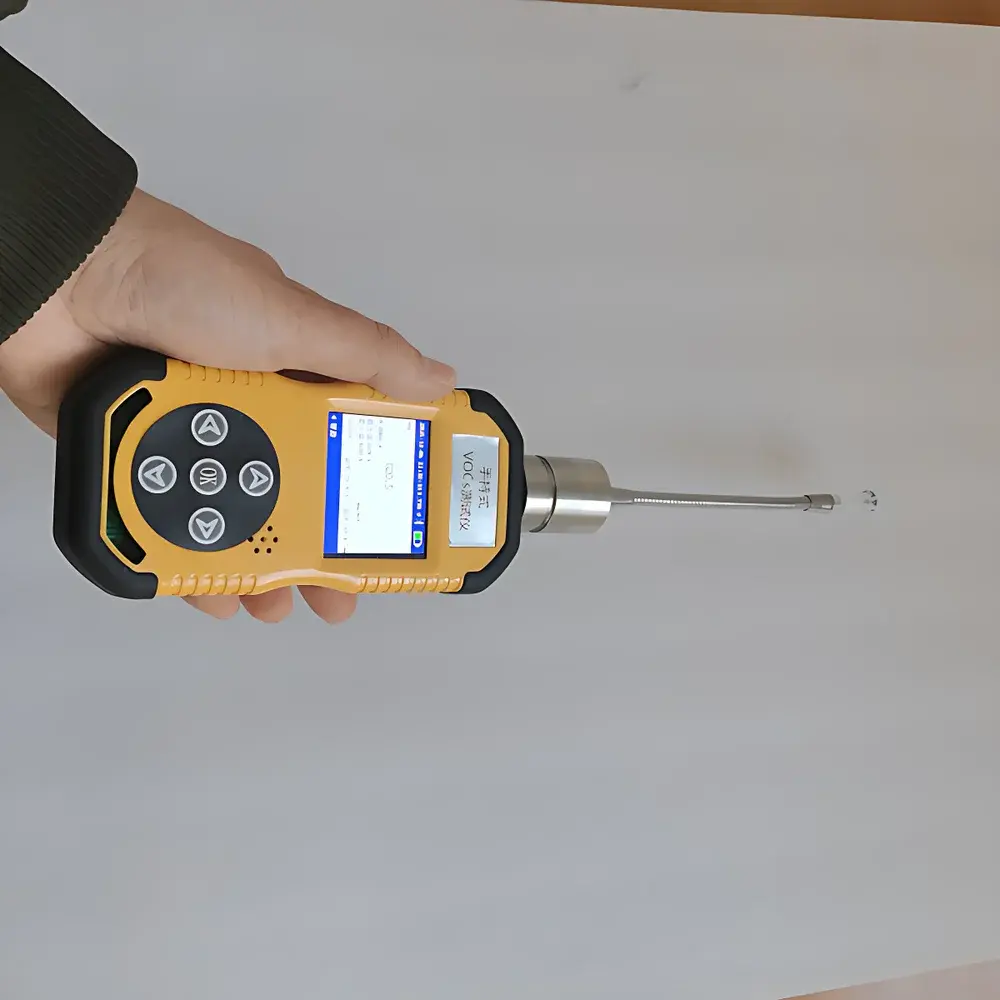
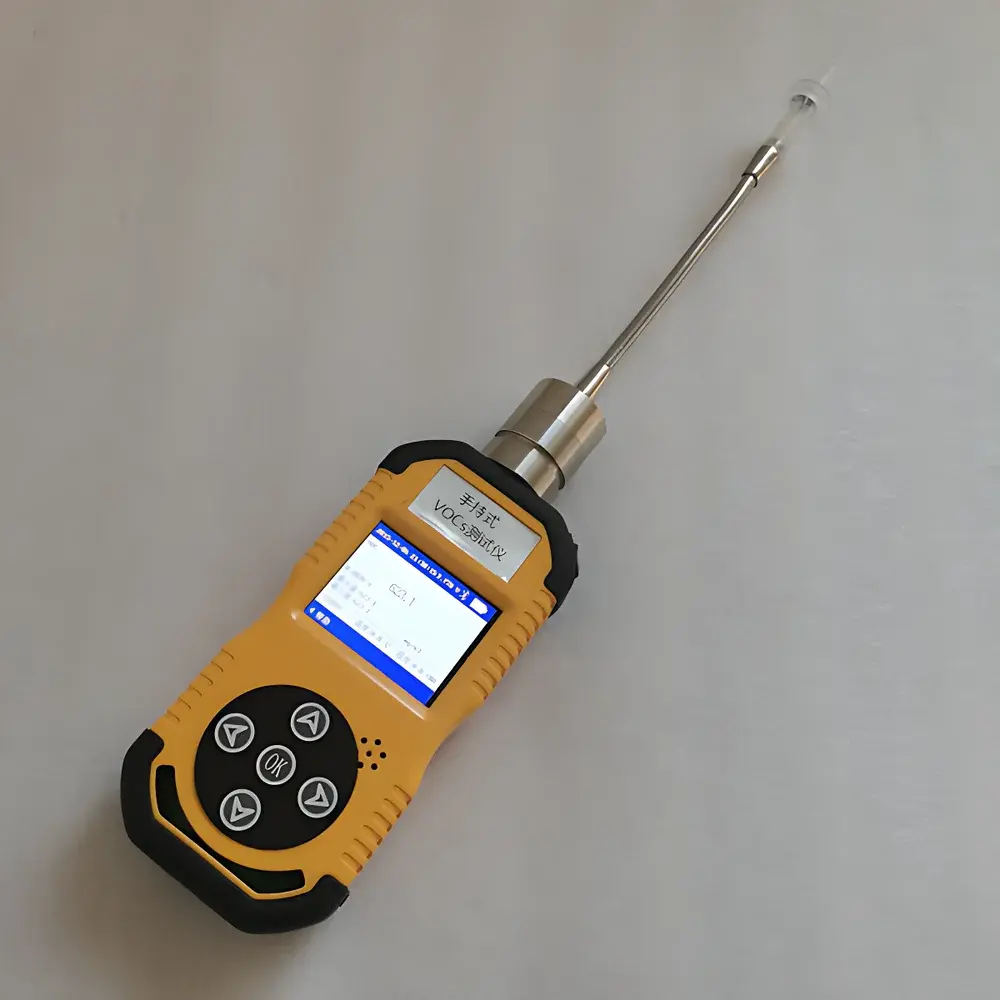
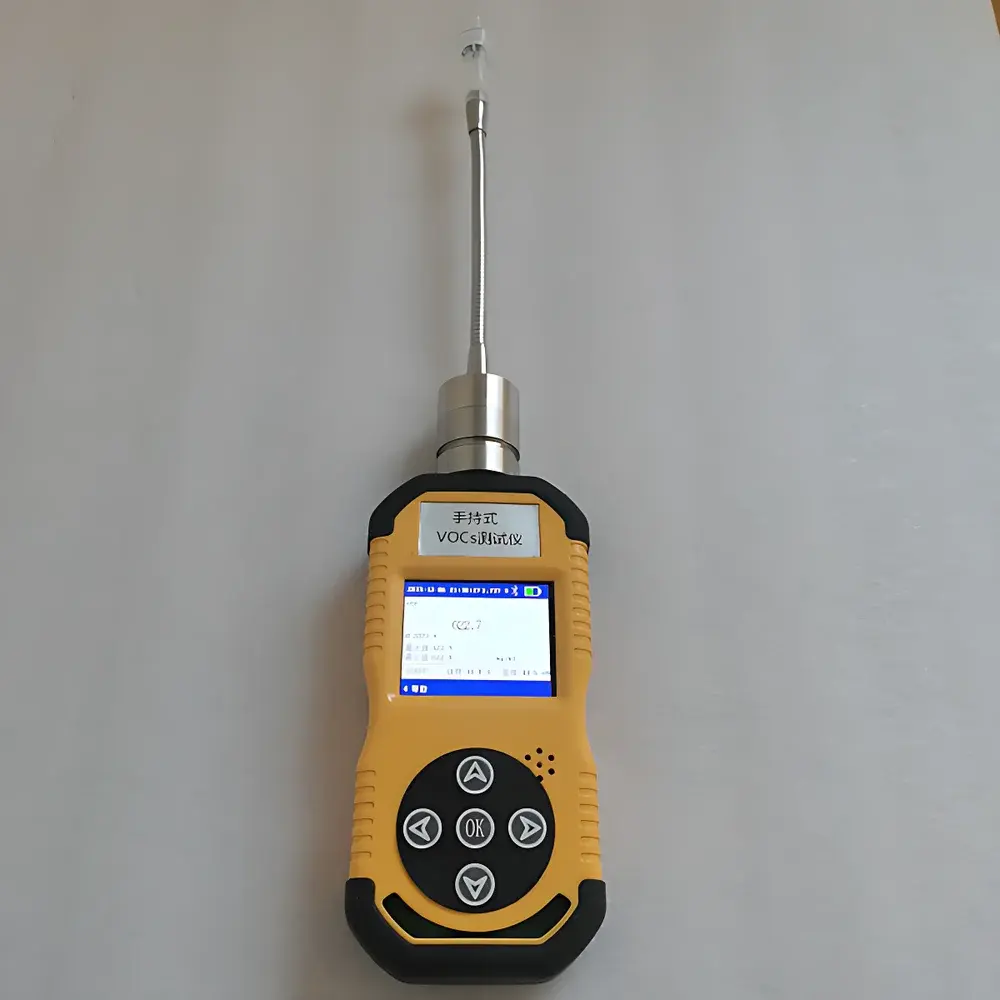
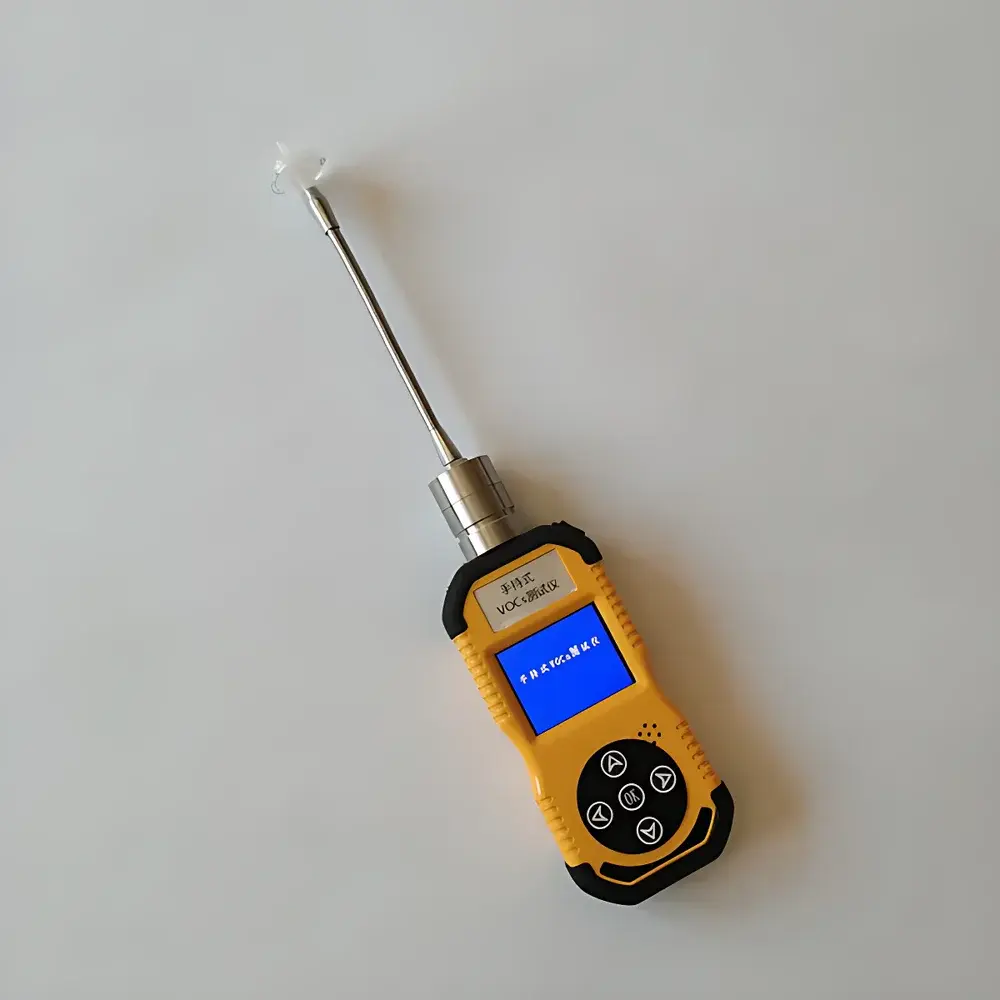
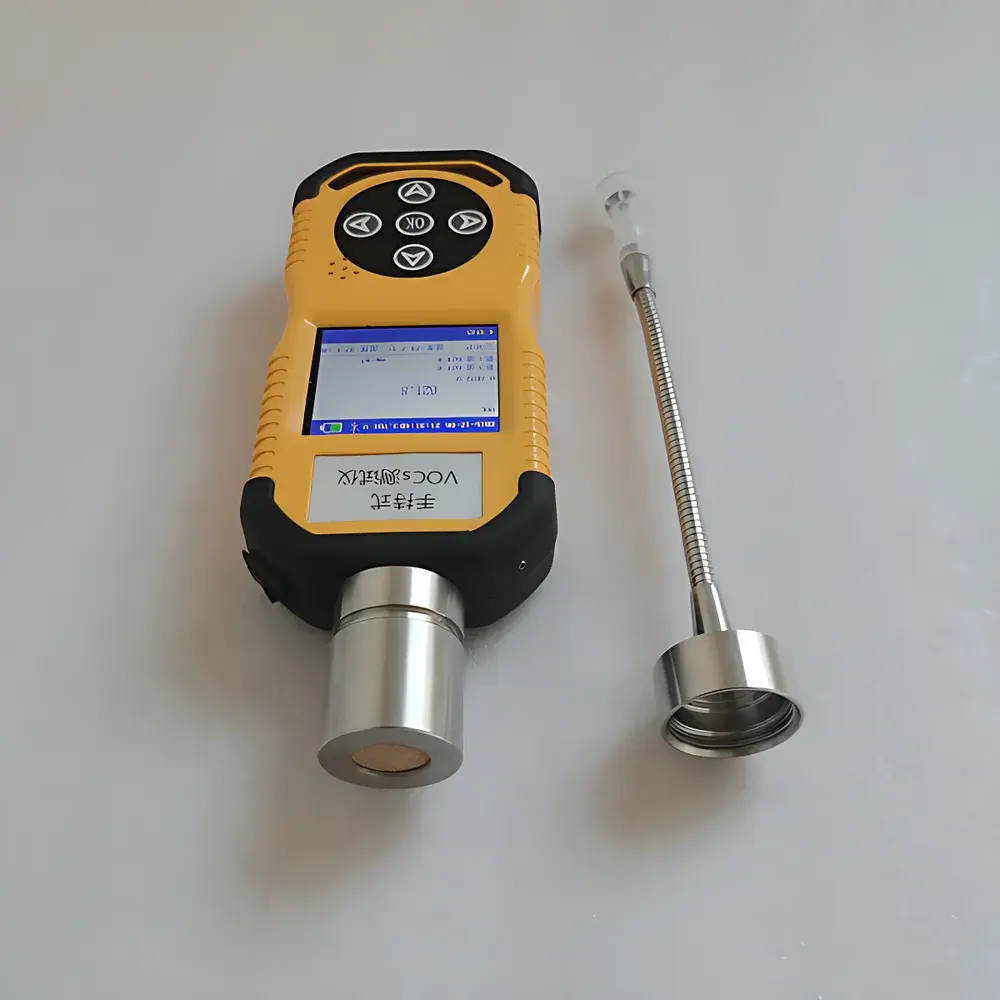
Ailun AL-F1000 Portable VOC Detector
| Brand | Ailun General / Qingdao Ailun |
|---|---|
| Origin | Shandong, China |
| Model | AL-F1000 |
| Detection Principle | Photoionization Detection (PID) |
| Instrument Type | Portable |
| Configuration | Multi-range Composite VOC Detector |
| Detection Range | 1 ppb – 10,000 ppm |
| Resolution | 0.001 ppm |
| Display | 2.4" TFT Color LCD (240 × 320) |
| Sampling Method | Built-in Pump Aspiration |
| Operating Temperature | −30 °C to +50 °C |
| Dimensions | 190 × 80 × 30 mm³ |
| Weight | < 0.5 kg |
| Battery Life | > 6 hours (rechargeable Li-ion) |
| Data Storage | 500,000 records (expandable), up to 65,536 data points per record |
| Environmental Compliance | GB 12358–2006, HJ 872–2017, HJ 1019–2019, HJ 1230–2021 |
Overview
The Ailun AL-F1000 Portable VOC Detector is a field-deployable photoionization detection (PID) instrument engineered for quantitative measurement of total volatile organic compounds (VOCs) in ambient air, workplace environments, and industrial settings. Utilizing a high-sensitivity ultraviolet (UV) lamp (typically 10.6 eV) to ionize VOC molecules, the detector measures resulting ion current proportional to analyte concentration. This principle enables broad-spectrum detection of aliphatic/aromatic hydrocarbons, ketones, esters, amines, and other photoionizable organics—without compound-specific calibration for total VOC estimation. Designed for rapid response in time-critical scenarios—including chemical spill response, LDAR (Leak Detection and Repair) programs, confined space entry verification, and occupational exposure assessment—the AL-F1000 delivers real-time, trace-level quantification from sub-ppb to percent-level concentrations.
Key Features
- High-resolution 2.4-inch TFT color display (240 × 320 pixels) with intuitive icon-based navigation and dual-language UI (English/Chinese)
- Multi-range PID sensor architecture supporting configurable detection spans—from ultra-trace (1 ppb) to high-concentration (10,000 ppm) applications
- Response time < 30 seconds (T90) across full range, ensuring timely hazard identification during dynamic leak events
- Pre-loaded correction factors for >30 common VOCs (e.g., benzene, toluene, xylene, acetone, isopropanol); custom coefficient tables可 be imported via USB for site-specific analytes
- Integrated temperature and humidity sensors enable automatic environmental compensation of PID signal output
- Unit switching between ppm and mg/m³ (with user-selectable molecular weight input for accurate mass-concentration conversion)
- Built-in rechargeable lithium-ion battery providing ≥6 hours continuous operation; USB-C port supports simultaneous data export and charging
- Internal memory capacity: 500,000 timestamped records, each accommodating up to 65,536 sequential data points—suitable for long-duration monitoring campaigns
- Pump-aspirated sampling system with adjustable flow rate ensures consistent sample delivery and minimizes diffusion lag
- Ruggedized housing rated for operation in extreme ambient conditions (−30 °C to +50 °C) and compact form factor (190 × 80 × 30 mm³, < 0.5 kg) optimized for belt-mount or handheld use
Sample Compatibility & Compliance
The AL-F1000 is validated for direct analysis of gaseous samples in ambient air, headspace vapors, and ventilated workspaces. It complies with Chinese national standards governing portable gas detection instrumentation: GB 12358–2006 (General Technical Requirements for Gas Detection Alarms in Workplace Environments), HJ 872–2017 (Emergency Monitoring of Toxic Gases Including Chlorine Using Electrochemical Sensors—methodology adapted for PID-based VOC screening), HJ 1019–2019 (Soil and Groundwater VOC Sampling Guidance—supporting vapor-phase soil gas surveys when used with optional soil probe accessories), and HJ 1230–2021 (LDAR Technical Guidelines for Industrial VOC Emission Control). While not certified to IECEx or ATEX for hazardous area use, its design adheres to electromagnetic compatibility (EMC) and electrical safety principles aligned with GB/T 18268 series. Data integrity meets basic GLP-aligned practices through timestamped logging and non-volatile memory retention.
Software & Data Management
Data acquisition and reporting are supported via native USB mass storage mode—no proprietary drivers required. When connected to a PC, the device appears as a removable drive; CSV-formatted logs (including time stamp, VOC reading, temperature, humidity, and sensor status flags) can be directly accessed and imported into LIMS or spreadsheet platforms. Optional Bluetooth 4.2 module enables wireless pairing with Android/iOS mobile apps for live telemetry viewing and on-device report generation. Printed hard copies are available using compatible thermal printers (e.g., ZQ520 series) via Bluetooth or USB interface. Firmware updates are delivered via signed binary files over USB, maintaining traceability of instrument configuration history.
Applications
- Leak Detection and Repair (LDAR) inspections at petrochemical facilities, refineries, and chemical manufacturing plants
- Emergency response to VOC releases—including tanker accidents, pipeline ruptures, and storage tank over-pressurization events
- Industrial hygiene monitoring for OSHA PEL or ACGIH TLV compliance in paint booths, printing operations, and solvent-handling areas
- Vapor intrusion assessment at brownfield sites using soil gas sampling (with optional soil probe kit)
- Indoor air quality (IAQ) audits in laboratories, cleanrooms, and office buildings following ISO 16000-22 guidance
- Verification of abatement system performance (e.g., carbon adsorbers, thermal oxidizers) via inlet/outlet concentration profiling
FAQ
What VOC compounds does the AL-F1000 detect?
It detects any VOC with ionization energy below the UV lamp’s photon energy (typically ≤10.6 eV), including aromatics, alkenes, aldehydes, ketones, and many chlorinated solvents—but not methane, ethane, or formaldehyde (IE >10.6 eV).
Can the instrument be calibrated for a specific compound?
Yes—users may load custom response factors to convert raw PID signal into compound-specific concentration units, provided the target analyte is photoionizable and reference standards are available.
Is the AL-F1000 suitable for use in explosive atmospheres?
No—it lacks intrinsic safety certification (e.g., ATEX, IECEx) and must only be operated in non-classified areas per local hazardous location regulations.
How is humidity compensated during measurement?
The integrated relative humidity and temperature sensors feed real-time environmental data to the firmware, which applies empirically derived correction algorithms to stabilize baseline and sensitivity across varying moisture conditions.
What is the recommended calibration frequency?
Field calibration is advised before each day’s use with certified isobutylene or benzene standard gas; full sensor verification should occur every 6 months or after exposure to high-concentration VOCs or contaminants.







