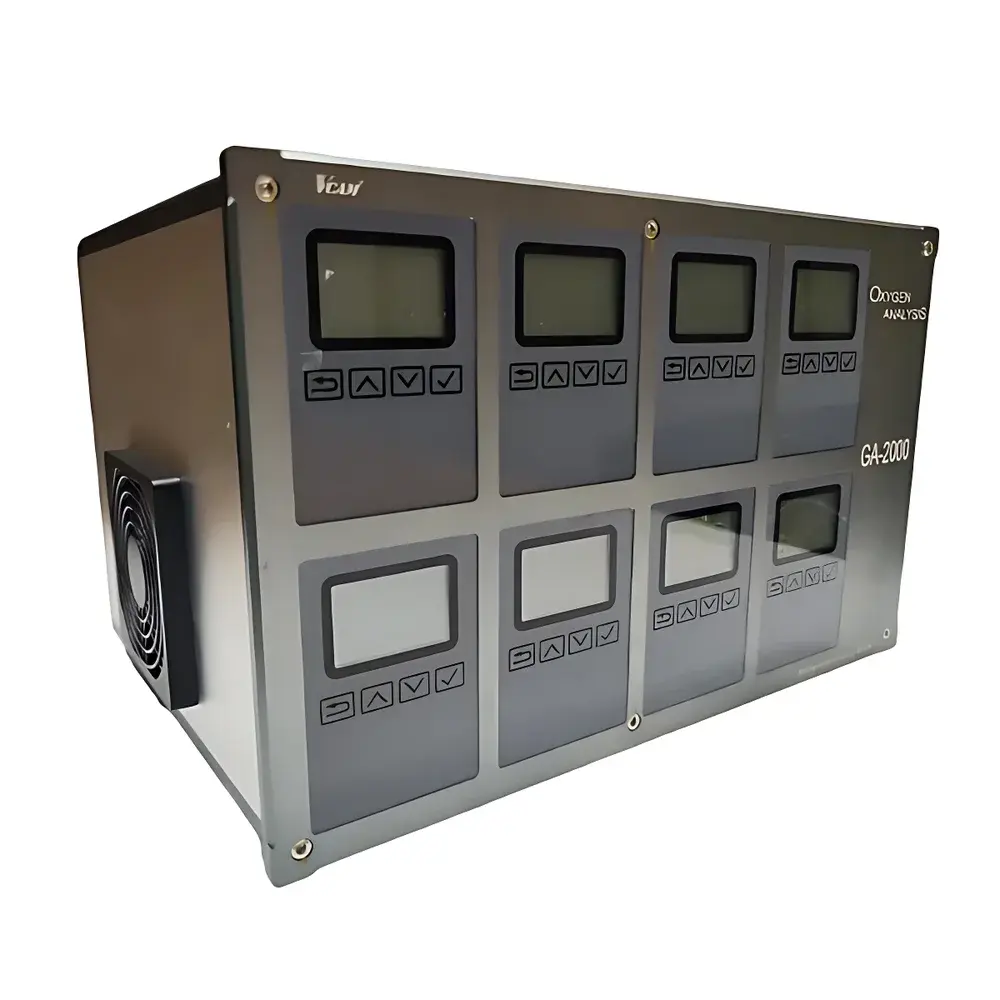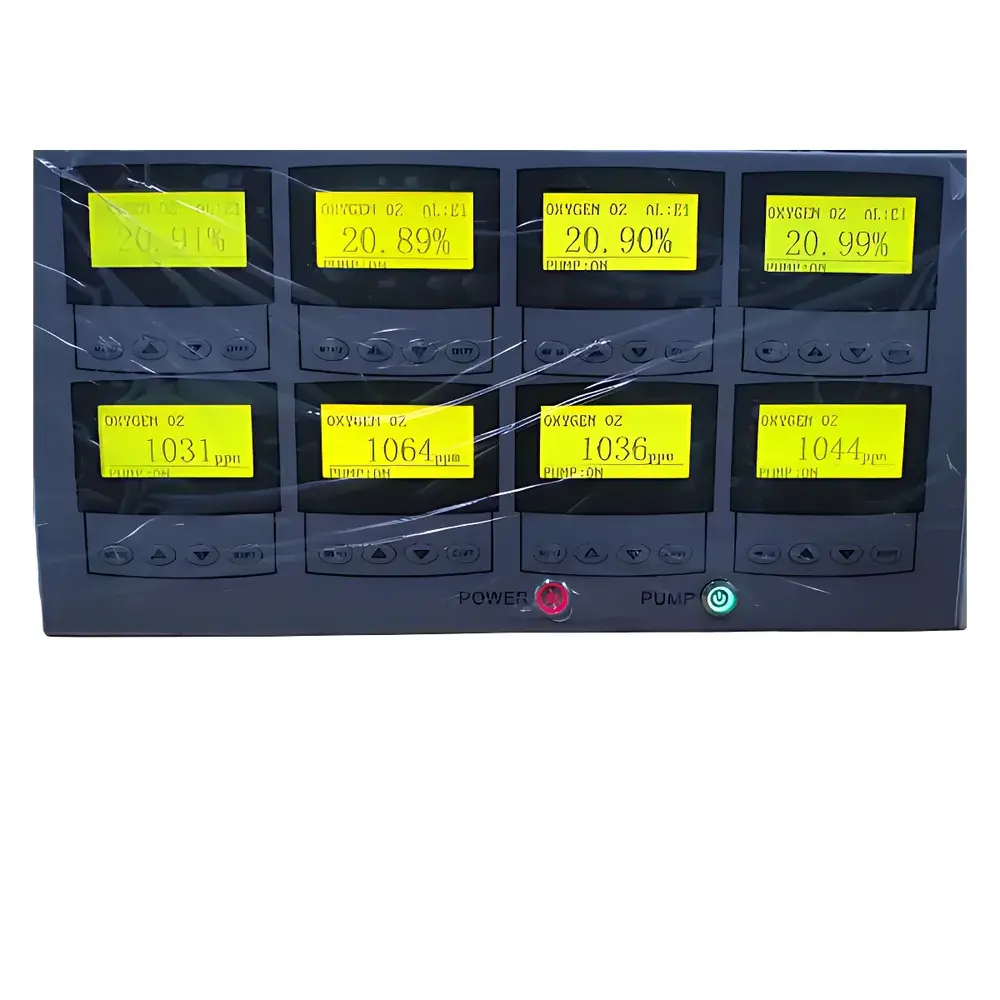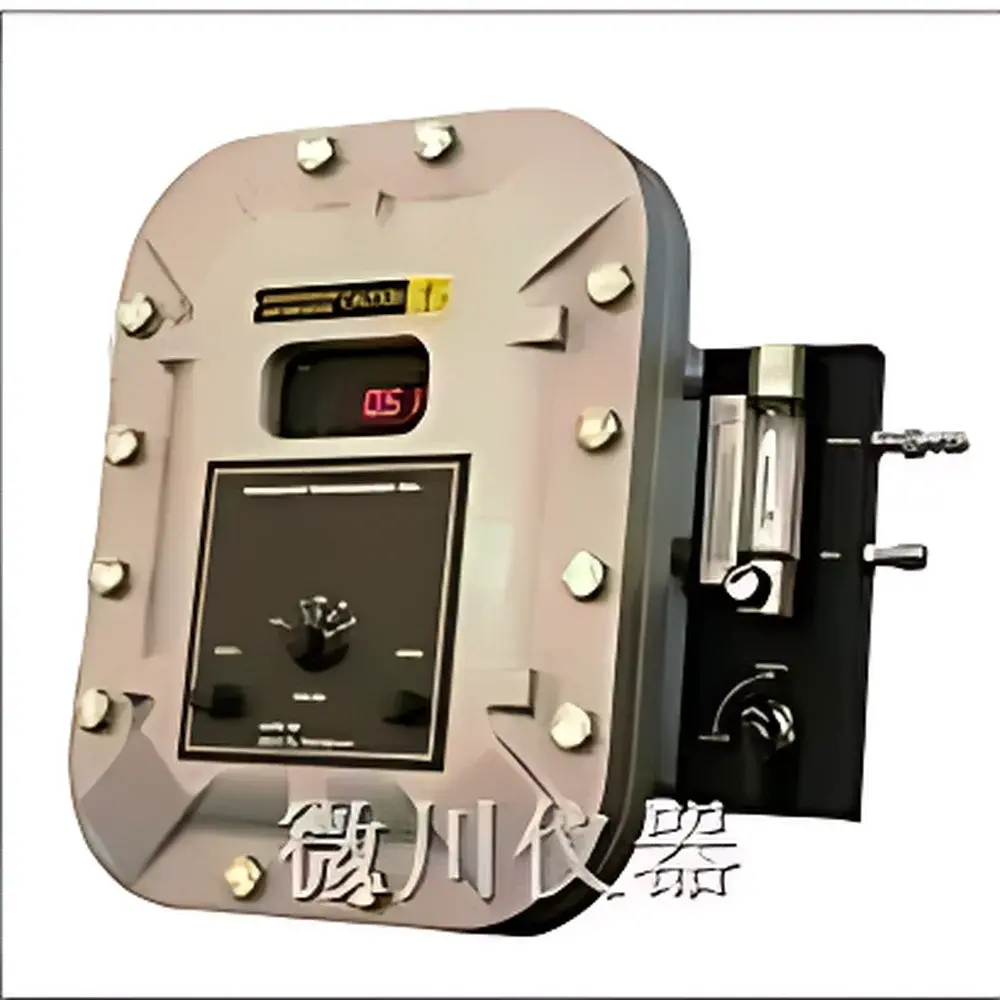
AII GPR-18 Series Intrinsically Safe Oxygen Analyzer
| Brand | AII |
|---|---|
| Origin | USA |
| Model | GPR-18 Series |
| Measurement Principle | Electrochemical Fuel Cell |
| Range | 0–1/10/100/1000 ppm, 0–1%/25% FS |
| Sensor Type | Micro-fuel-cell (e.g., XLT-12-333 for CO₂-rich streams) |
| Accuracy | <0.5% FS |
| Linearity | >0.995 |
| Response Time (T₉₀) | 10 s |
| Operating Temperature | 5–45 °C |
| Storage Temperature | –30 °C |
| Sample Flow Rate | 1–5 SCFH (recommended: 2 SCFH) |
| Inlet Pressure | 5–30 psig (max 100 psig) |
| Outlet Pressure | Ambient |
| Power Supply | 220 VAC, 50/60 Hz |
| Output Signals | 0–1 V DC and isolated 4–20 mA |
| Display Resolution | 0.01 ppm |
| Enclosure Rating | NEMA 4X/7, Class I, Division 1, Groups B–D |
| Certifications | FM, CSA, CE, ISO 9001 |
| Calibration Gas | 80% FS O₂ standard |
| Temperature Compensation | Built-in |
| Gas Compatibility | Inert gases, He, H₂, CO₂-containing mixtures (with XLT sensor), acidic gas streams |
| Optional Accessories | XLT-12-333 sensor, heated sample conditioning system (for sub-ppm analysis), flow control valve, shut-off valve, rotameter |
Overview
The AII GPR-18 Series Intrinsically Safe Oxygen Analyzer is a high-reliability, field-deployable process analyzer engineered for continuous, real-time oxygen monitoring in hazardous industrial environments. Utilizing proprietary micro-fuel-cell electrochemical sensing technology developed by AII—a U.S.-based leader in trace oxygen measurement since 1993—the GPR-18 delivers exceptional stability, low drift, and extended sensor life without routine maintenance. Unlike conventional galvanic or polarographic cells, AII’s fuel-cell architecture operates without internal electrolyte replenishment or consumable anodes, enabling operational lifetimes of up to 24 months under typical process conditions. The analyzer measures oxygen concentration via amperometric detection of the electrochemical current generated when O₂ diffuses across a selective membrane and undergoes reduction at the cathode. This principle ensures inherent linearity, minimal cross-sensitivity to background gases, and immunity to pressure fluctuations within its specified inlet range (5–30 psig). Designed for integration into nitrogen blanketing systems, inert gas purging loops, semiconductor purge lines, and CO₂-rich biogas or beverage carbonation processes, the GPR-18 meets stringent safety requirements for Class I, Division 1, Groups B–D locations per FM and CSA standards.
Key Features
- Intrinsically safe design certified to FM/CSA Class I, Division 1, Groups B–D with NEMA 4X/7 aluminum enclosure for outdoor or corrosive environment installation
- Five programmable measurement ranges (0–1 ppm to 0–25% FS) selectable via front-panel controls—no hardware modification required
- Advanced XLT-12-333 sensor option optimized for stable performance in CO₂ concentrations exceeding 0.5%, mitigating carbonate-induced signal drift
- Integrated temperature compensation circuitry ensures accuracy across 5–45 °C ambient operating range; optional heated sample conditioning system supports reliable sub-ppm detection down to –30 °C sample dew point
- Two user-configurable alarm relays (capacitive output) for high/low O₂ threshold alerts, plus dedicated diagnostics for sensor degradation and system fault detection
- High-resolution LCD display (0.01 ppm resolution) with intuitive menu navigation for zero/span calibration, range selection, and alarm setpoint adjustment
- Robust stainless-steel sample train including needle valve, isolation shutoff valve, and calibrated rotameter—factory-assembled and leak-tested
- Isolated 4–20 mA analog output and 0–1 V DC signal for PLC/DCS integration; compliant with 21 CFR Part 11 data integrity expectations when paired with validated logging software
Sample Compatibility & Compliance
The GPR-18 accommodates diverse process gas matrices—including high-purity nitrogen, argon, helium, hydrogen, and CO₂-based mixtures—without requiring external scrubbers or catalytic converters. Its fuel-cell sensor exhibits negligible interference from CO, NOₓ, SO₂, and hydrocarbons below 1,000 ppm, making it suitable for applications such as laser cutting assist gas monitoring, glovebox atmosphere control, and pharmaceutical nitrogen validation. For CO₂-rich streams (e.g., fermentation off-gas or modified-atmosphere packaging), the XLT sensor variant incorporates a proprietary acid-resistant membrane and buffered electrolyte formulation that prevents carbonate precipitation and maintains calibration integrity over extended exposure. All units are manufactured under ISO 9001-certified quality management systems and carry FM, CSA, and CE markings confirming compliance with IEC 60079-0/-11 for explosive atmospheres and EN 61000-6-2/-4 for electromagnetic compatibility. Documentation packages support GLP/GMP audit readiness, including factory calibration certificates traceable to NIST standards.
Software & Data Management
While the GPR-18 operates as a standalone analyzer with local calibration and configuration, its analog outputs interface seamlessly with distributed control systems (DCS), SCADA platforms, and LIMS via standard 4–20 mA input modules. For centralized monitoring and historical trending, AII recommends pairing the instrument with third-party data acquisition software compliant with FDA 21 CFR Part 11 requirements—including electronic signature capability, audit trail generation, and secure user access controls. Calibration events, alarm logs, and sensor health metrics can be exported in CSV format for QA/QC review. Firmware updates are performed via RS-232 port using AII-supplied configuration utilities, with version history and change logs maintained per internal revision control policy.
Applications
- Continuous O₂ monitoring in nitrogen generator outlet streams for semiconductor fab tool purging
- Leak detection and integrity verification of inerted storage tanks and reactors
- Quality assurance in food packaging lines using modified-atmosphere (MAP) gas blends
- Process control of anaerobic digesters and biogas upgrading units
- Safety interlock monitoring in hydrogen production and handling facilities
- Validation of oxygen depletion systems in fire suppression enclosures
FAQ
What is the recommended calibration frequency?
Calibration is advised every 3–6 months depending on process stability and exposure history; use certified 80% FS O₂ in balance N₂ as span gas and zero-grade nitrogen for zero adjustment.
Can the GPR-18 measure oxygen in wet or corrosive gas streams?
The standard unit requires dried, particle-free sample gas; for humid or acidic streams, AII recommends integrating a PTFE-lined sample cooler and particulate filter upstream of the analyzer—and selecting the XLT sensor for CO₂/H₂O tolerance.
Is remote configuration supported?
Local front-panel operation is primary; remote parameter adjustment requires optional RS-232 interface and AII configuration software—no Ethernet or wireless connectivity is built in.
How does sensor lifetime vary with operating conditions?
Typical service life is 24 months at room temperature and 40 °C) or continuous >100 ppm operation may reduce lifespan to 12–18 months.
Does the analyzer support automatic zero correction?
No—zero calibration must be performed manually using certified zero gas; however, the system retains zero offset memory across power cycles and includes diagnostic flags for sensor saturation or baseline shift.
Related Products