
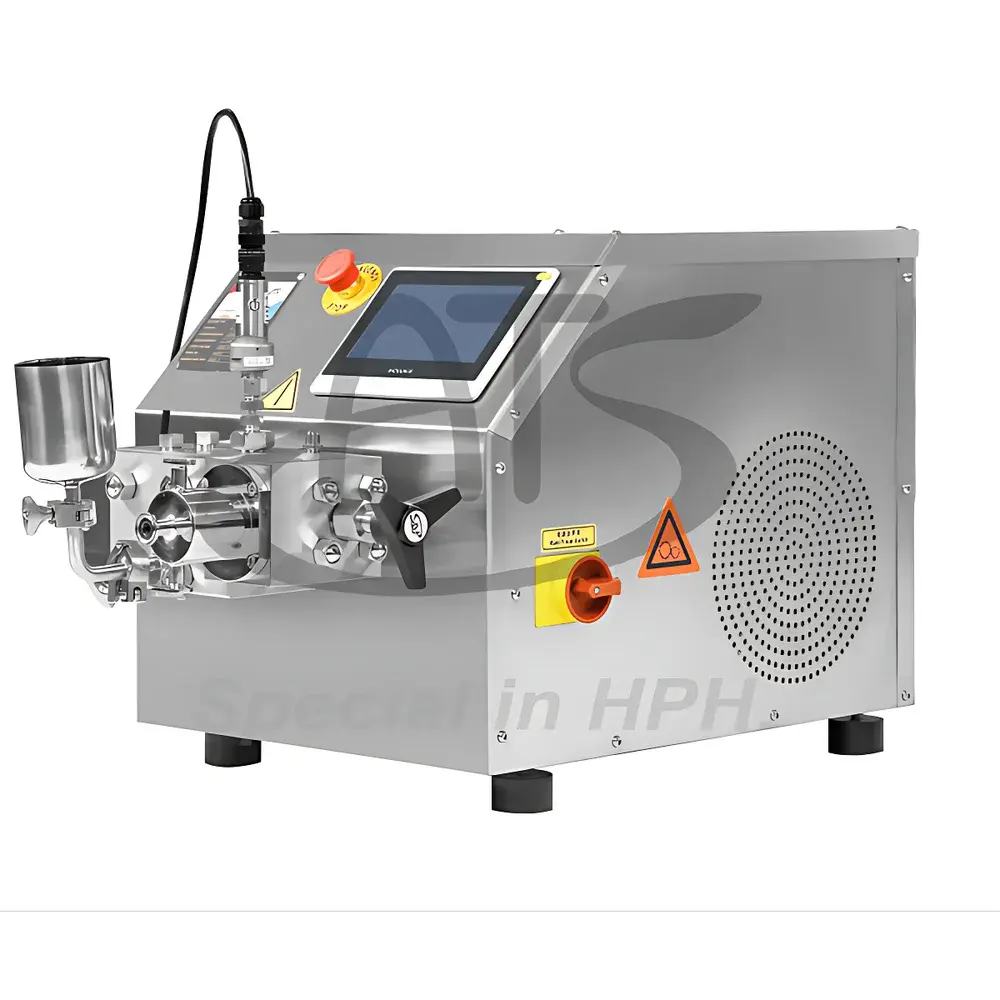
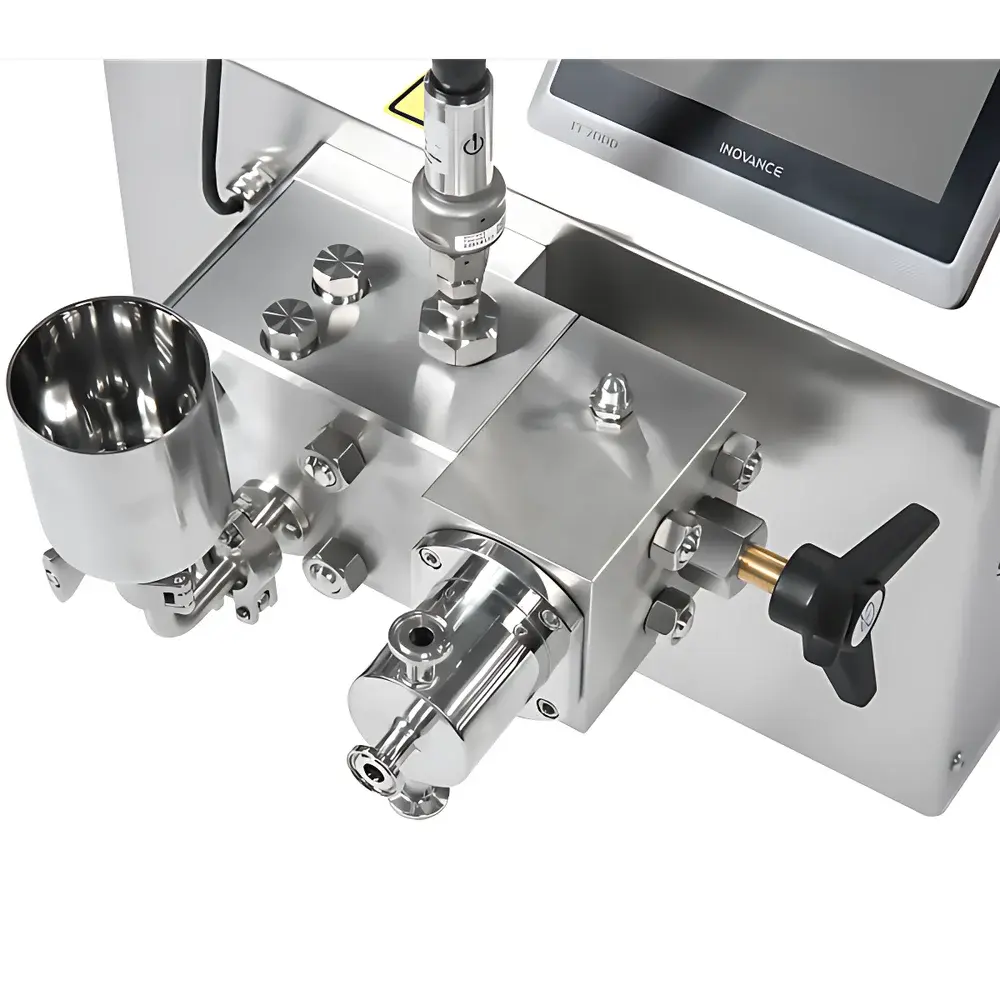
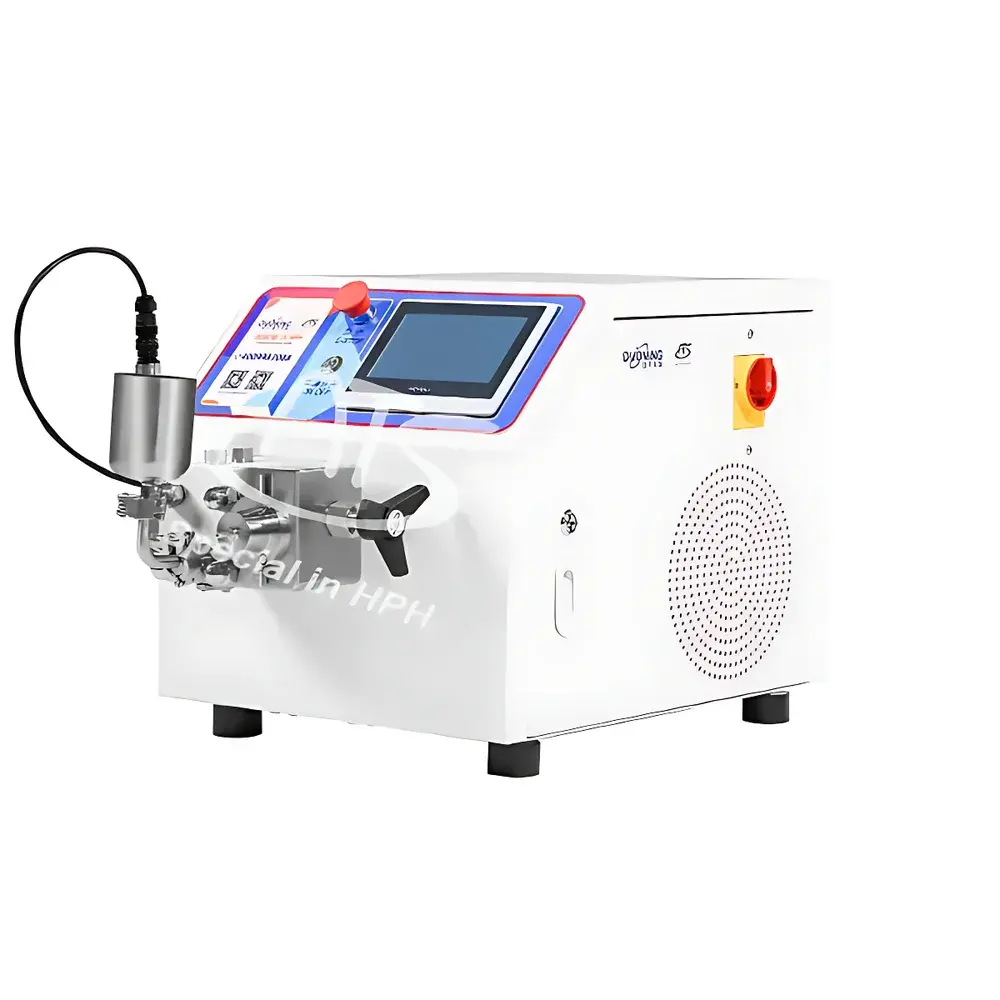
ATS AH-1500 High-Pressure Cell Disruptor
| Brand | ATS |
|---|---|
| Origin | Jiangsu, China |
| Manufacturer Type | Direct Manufacturer |
| Product Category | Domestic |
| Model | AH-1500 |
| Instrument Type | High-Pressure Homogenizer |
| Dimensions (W×D×H) | 440 × 800 × 410 mm |
| Processing Volume Range | 50–15,000 mL |
| Maximum Operating Pressure | 1500 bar (22,500 psi) |
| Optional Peak Pressure | 1800 bar (27,000 psi) |
| Motor Power | 1.5 kW (220 V, 50 Hz) |
| Throughput | Up to 15 L/h |
| Minimum Sample Volume | 25 mL |
| In-Line Cooling System | Yes, maintains sample temperature <20 °C |
| Wetted Materials | ASTM A276 Type 316L stainless steel |
| Cell Disruption Efficiency | >95% for E. coli, >90% for yeast |
| Particle Size Reduction | Sub-100 nm after single-pass homogenization |
| Compliance | CE-marked, GMP-compliant design |
| Weight | 110 kg |
Overview
The ATS AH-1500 High-Pressure Cell Disruptor is an engineered solution for scalable, reproducible lysis of microbial and mammalian cells under strictly controlled thermal and mechanical conditions. It operates on the principle of high-pressure homogenization—where a pressurized suspension is forced through a precisely engineered micro-orifice (typically <75 µm), inducing rapid pressure drop, supersonic jet formation (~1000–1500 m/s), and subsequent impact against a hardened collision ring. This process generates three synergistic disruption mechanisms: cavitation, shear stress, and turbulent impact—enabling consistent sub-100 nm particle size distribution and >95% lysis efficiency for Gram-negative bacteria such as Escherichia coli, while preserving labile intracellular components including enzymes, plasmids, inclusion bodies, and viral vectors. Designed for R&D labs and pilot-scale bioprocessing, the AH-1500 supports both batch and semi-continuous operation across volumes from 25 mL to 15 L/h, with integrated thermal management essential for thermosensitive biomolecules.
Key Features
- Robust dual-cooling architecture: Integrated in-line heat exchanger + optional external chiller or helical cooling coil—maintains sample temperature below 20 °C throughout extended runs
- GMP-aligned construction: All fluid-contact surfaces fabricated from electropolished ASTM A276 Type 316L stainless steel; compliant with ASME BPE surface finish standards (Ra ≤ 0.4 µm)
- CE-certified safety system: Includes pressure relief valves, interlocked door sensors, real-time pressure monitoring, and emergency stop circuitry per EN ISO 13850
- High-efficiency hydraulic drive: 1.5 kW motor coupled with precision reciprocating plunger assembly ensures stable pressure delivery up to 1500 bar (22,500 psi), with optional 1800 bar (27,000 psi) configuration
- No-bleed feed valve design: Eliminates manual air purging—enables direct sample loading and immediate pressurization, reducing downtime and contamination risk
- Single-stage homogenization geometry: Optimized valve geometry and impact ring alignment deliver uniform energy input, minimizing secondary aggregation and enabling >99% batch-to-batch reproducibility
Sample Compatibility & Compliance
The AH-1500 accommodates a broad range of biological suspensions—including E. coli, Saccharomyces cerevisiae, microalgae, insect cells, and primary mammalian cultures—with inlet particle size tolerance up to 100 µm. Its closed-loop processing path prevents aerosol generation and cross-contamination, supporting biosafety level 2 (BSL-2) workflows. The system meets key regulatory expectations for biopharmaceutical development: design documentation aligns with ICH Q5A and Q5D guidelines; material traceability complies with FDA 21 CFR Part 11 requirements when paired with validated electronic log software; and structural integrity conforms to PED 2014/68/EU for pressure equipment. Routine validation protocols—including pressure decay testing, temperature mapping, and disruption efficiency assays—are supported by manufacturer-provided IQ/OQ templates.
Software & Data Management
While the base AH-1500 operates via tactile HMI with analog pressure and temperature readouts, optional digital upgrade kits provide RS485/Modbus RTU connectivity for integration into LabVantage, STARLIMS, or custom SCADA systems. Data logging includes timestamped records of pressure setpoint, actual pressure, inlet/outlet temperatures, runtime, and total processed volume—exportable in CSV format for audit-ready reporting. When configured with compliant software, the system supports ALCOA+ data integrity principles, including user access controls, electronic signatures, and immutable audit trails required under GLP and GMP environments.
Applications
- Recombinant protein recovery from E. coli inclusion bodies with minimal denaturation
- Yeast cell wall disruption for intracellular enzyme extraction (e.g., alcohol dehydrogenase, catalase)
- Microalgal lipid and pigment release for biofuel and nutraceutical applications
- Viral vector purification in vaccine manufacturing (human and veterinary)
- Preparation of subcellular fractions for proteomics and metabolomics workflows
- Process development and scale-down modeling for industrial homogenizers (e.g., APV, Microfluidics)
FAQ
What is the maximum recommended inlet particle size for the AH-1500?
Particles should be ≤100 µm to prevent valve clogging; pre-filtration or coarse centrifugation is advised for viscous or debris-rich lysates.
Can the AH-1500 be used for sterile processing?
Yes—when equipped with SIP-capable valves and autoclavable tubing, and operated within validated sterilization cycles per ISO 13408-2.
Is third-party calibration and qualification support available?
ATS provides factory calibration certificates traceable to NIST standards; on-site IQ/OQ services are available through authorized partners in APAC and EU regions.
How does the in-line cooling system interface with external chillers?
The unit features standardized 1/4″ BSP ports compatible with most recirculating chillers (e.g., Huber, LAUDA); flow rate and ΔT are adjustable via external PID controller.
What maintenance intervals are recommended for the plunger seals and valve components?
Plunger seals require replacement every 500 operating hours under continuous 1500 bar use; impact rings and orifice assemblies are rated for ≥2000 hours with routine inspection per maintenance logbook.



