
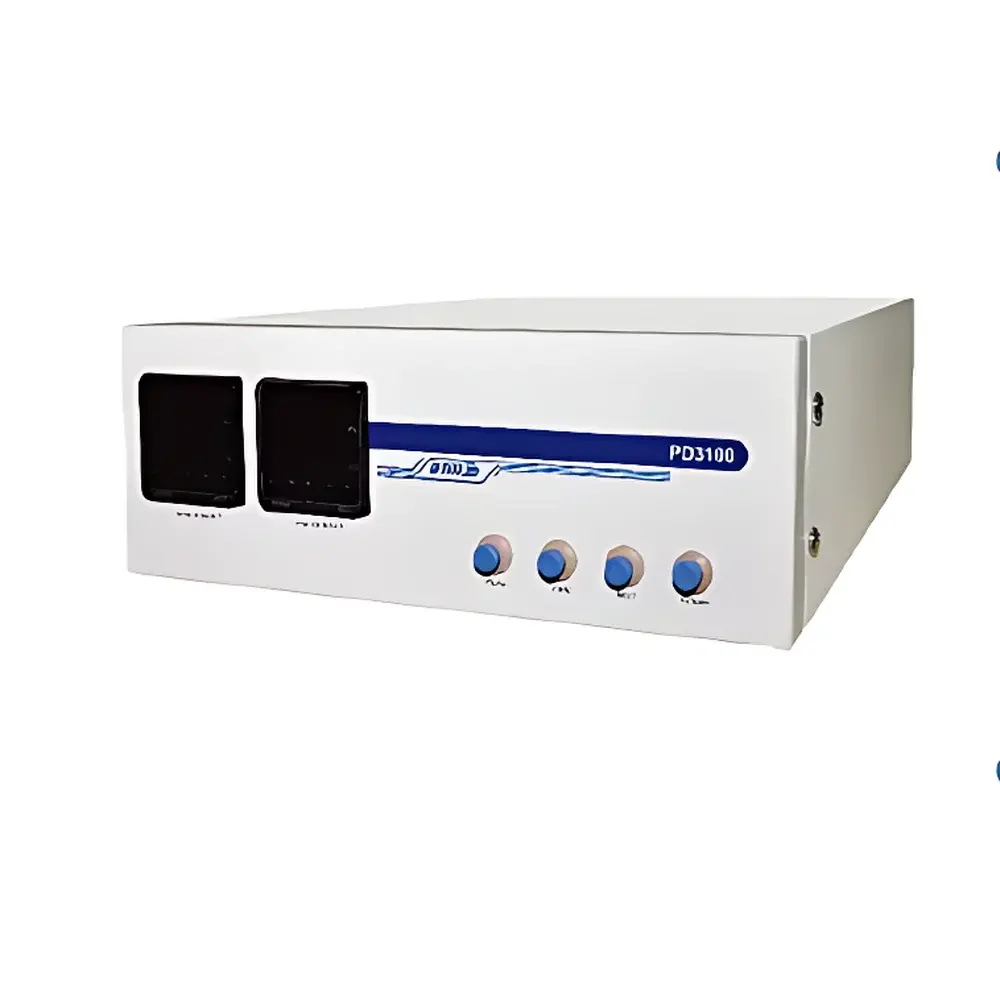
Elite PD3100 Post-Column Derivatization System
| Brand | Elite |
|---|---|
| Origin | Liaoning, China |
| Manufacturer Type | OEM Manufacturer |
| Country of Origin | China |
| Model | PD3100 |
| Price Range | USD 7,000 – 14,000 (FOB) |
| Temperature Control Range | Ambient to 120 °C (±0.1 °C stability) |
| Reagent Flow Rate | 0.01–2.0 mL/min (dual-channel, independently adjustable) |
| Reaction Coil | Stainless steel or PEEK-lined, 0.25–0.5 mm ID, 1–5 m length (configurable) |
Overview
The Elite PD3100 Post-Column Derivatization System is an engineered solution for enhancing detection sensitivity and selectivity in high-performance liquid chromatography (HPLC) and ultra-high-performance liquid chromatography (UHPLC) workflows. Designed specifically for post-separation chemical derivatization, the PD3100 introduces reagents into the eluent stream immediately after column exit—enabling on-line formation of chromophoric, fluorophoric, or electrochemically active derivatives of otherwise poorly detectable analytes. Its core architecture follows classical post-column reaction principles: precise mixing of analyte and derivatizing agent under controlled thermal and residence-time conditions, followed by rapid transport to the detector (e.g., UV-Vis, fluorescence, or electrochemical). This system is widely deployed in pharmaceutical QC, food safety testing (e.g., amino acid, mycotoxin, and pesticide residue analysis), environmental monitoring (e.g., carbamate and organophosphate detection), and clinical biochemistry (e.g., catecholamine quantification).
Key Features
- Dual independent derivatization modules—enabling parallel or sequential reaction pathways with separate reagent delivery, temperature control, and backpressure regulation.
- Two-zone precision temperature control system: each reaction zone maintains setpoint stability within ±0.1 °C across a range of ambient to 120 °C, using PID-controlled Peltier elements and integrated thermal shielding.
- Full inert fluidic path constructed from PEEK (polyether ether ketone) and FEP (fluorinated ethylene propylene) tubing—ensuring compatibility with aggressive reagents across pH 1–14, including strong acids (e.g., o-phthalaldehyde in borate buffer), alkalis (e.g., NaOH for hydrazide coupling), and organic solvents (acetonitrile, methanol, THF).
- Adjustable backpressure regulator (BPR) with fine-tuned needle valve design—minimizes baseline drift and shortens detector equilibration time following gradient elution or reagent switching.
- Integrated air-cooled heat exchanger module—rapidly quenches exothermic reactions or stabilizes post-reaction stream temperature prior to detection, improving signal reproducibility.
- Fail-safe thermal protection: automatic power cutoff triggered upon sensor fault or sustained overtemperature (>125 °C), compliant with IEC 61010-1 safety requirements for laboratory equipment.
Sample Compatibility & Compliance
The PD3100 supports derivatization of small-molecule analytes including primary/secondary amines, aldehydes, ketones, thiols, carboxylic acids, and phenols. Common applications include OPA/NAC (ortho-phthalaldehyde/n-acetyl cysteine) derivatization of amino acids, ninhydrin-based detection, dansyl chloride labeling, and bromination of aromatic amines. All wetted materials meet USP Class VI biocompatibility standards and are certified non-leaching per ISO 10993-5. The system architecture supports GLP/GMP-aligned operation: full audit trail capability via optional Ethernet-enabled controller firmware, electronic log export (CSV/Excel), and user-access-level permissions (admin/operator/viewer). It is compatible with 21 CFR Part 11-compliant data management systems when integrated with validated LIMS or CDS platforms (e.g., Thermo Chromeleon, Waters Empower, Agilent OpenLab).
Software & Data Management
The PD3100 operates via embedded microcontroller firmware with local LCD interface for real-time parameter monitoring (temperature, flow status, error codes). Optional RS-232 or Ethernet connectivity enables remote configuration and synchronization with HPLC system clocks for event-triggered derivatization (e.g., start reagent pump at peak elution time). Data logging includes timestamped temperature profiles, reagent flow confirmation pulses, and thermal fault history—retained for ≥30 days onboard or exportable via USB. No proprietary software installation is required; configuration files adhere to industry-standard XML schema for interoperability.
Applications
- Pharmaceutical impurity profiling: derivatization of trace degradation products (e.g., hydrazides in β-lactam antibiotics) for low-ng/mL detection limits.
- Food authenticity testing: quantification of free amino acids in dairy, soy, and infant formula per AOAC 994.12 and ISO 13903.
- Environmental residue analysis: post-column iodination of carbaryl and carbofuran for enhanced UV absorbance, aligned with EPA Method 531.1.
- Clinical diagnostics: fluorescence derivatization of plasma catecholamines (epinephrine, norepinephrine) per CLSI GP17-A3 guidelines.
- Method development flexibility: modular coil exchange allows optimization of residence time (0.5–30 s) without hardware modification.
FAQ
Does the PD3100 support gradient-compatible derivatization?
Yes—the dual-channel reagent delivery and pressure-compensated mixing design maintain consistent reaction kinetics across binary and ternary mobile phase gradients.
Can it be used with UHPLC systems operating above 1000 bar?
The system’s maximum pressure rating is 600 bar at 60 °C; for >600 bar applications, a pressure-matched passive mixer and pre-heated reactor coil must be installed upstream.
Is method transfer from older Elite derivatizers straightforward?
Yes—PD3100 retains identical mounting dimensions, electrical interface pinout, and analog I/O signaling as PD2000 series units, enabling drop-in replacement with firmware update.
What maintenance intervals are recommended for long-term reliability?
PEEK/FEP fluidic components require inspection every 6 months under continuous use; temperature sensors are calibrated annually per ISO/IEC 17025 internal verification protocol.
Does Elite provide IQ/OQ documentation packages?
Yes—validated qualification protocols (including installation, operational, and performance qualification test scripts) are available upon request for regulated environments.





