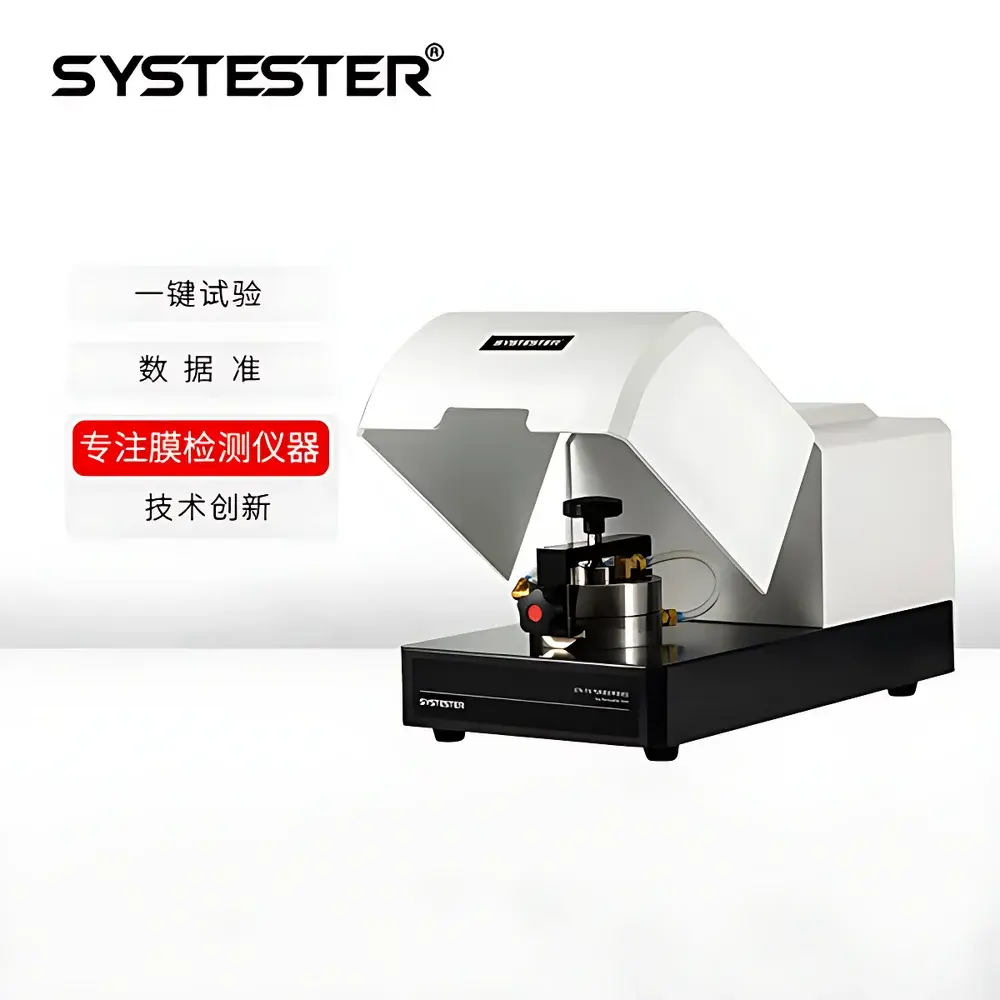
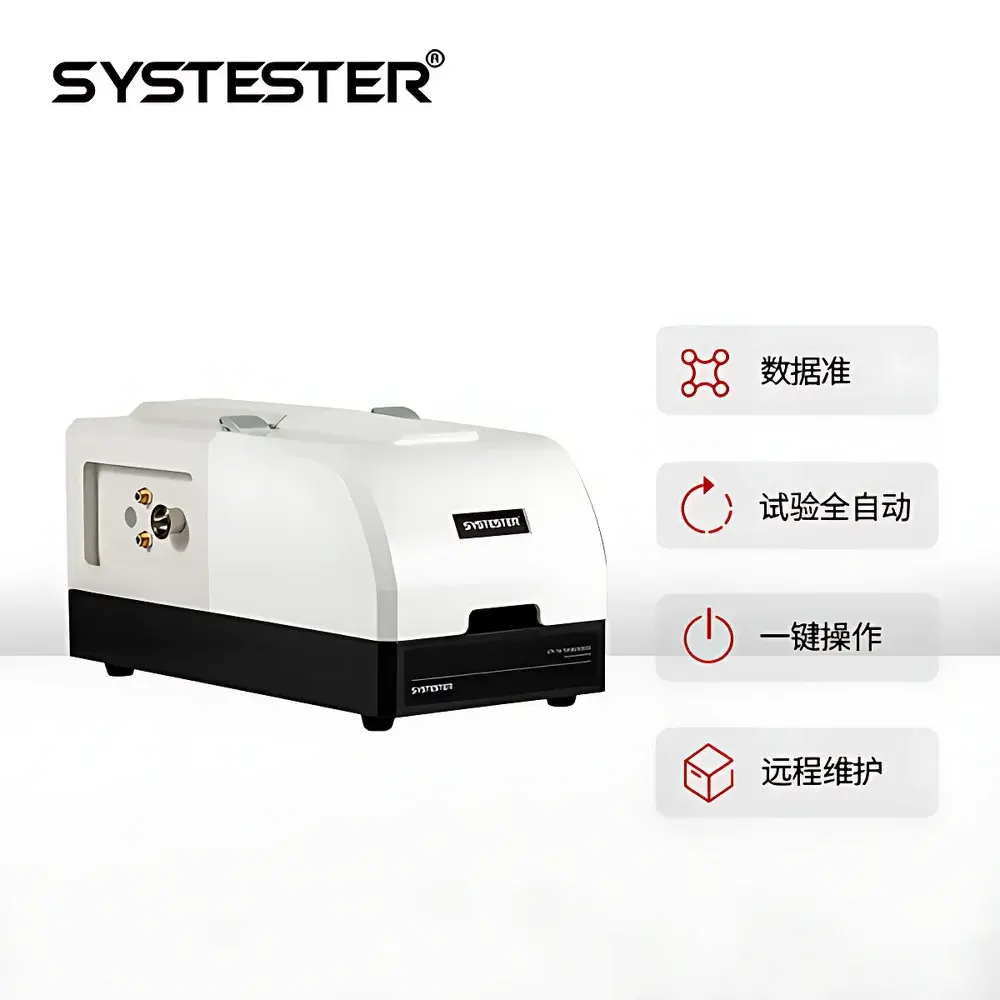
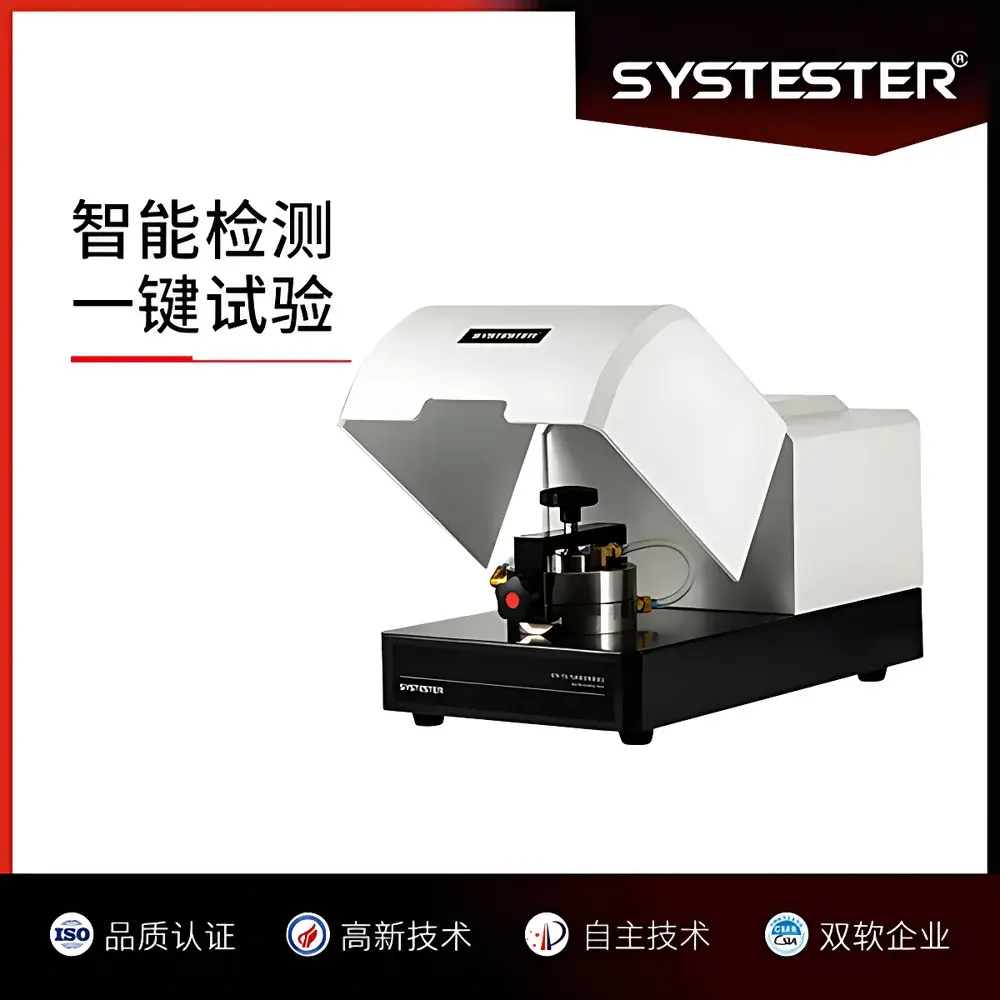
SYSTESTER Membrane Separation Performance Evaluation System
| Brand | SYSTESTER |
|---|---|
| Origin | Shandong, China |
| Model | Membrane Separation Performance Evaluation System |
| Test Range | 0.01–2×10⁴ Barrer |
| Gas Flow Rate | 0–100 mL/min (200/300 mL/min optional) |
| Measurement Accuracy | ±0.01 Barrer |
| Vacuum Accuracy | ±0.1 Pa |
| Test Pressure Differential | 0–10 bar (system rated to 16 bar) |
| Temperature Control Range | 5–95 °C (±0.1 °C with optional chiller/heater) |
| Effective Test Area | Φ20 mm (3.14 cm²) |
| Sample Thickness Limit | ≤2 mm |
| Sample Capacity | 1 specimen per run |
| Detector Sensitivity | ≥5000 or 10000 mV·mL/mg (configurable) |
| Baseline Drift | ≤0.10 mV |
| Noise | ≤0.015 mV |
| Carrier Gas Pressure | 2 bar |
| Compatible Carrier Gases | N₂, H₂, He, Ar |
| Dimensions (Host) | 320 × 625 × 335 mm (W×D×H) |
| (GC Unit) | 590 × 480 × 500 mm (L×W×H) |
| Power Supply | AC 220 V, 50 Hz |
Overview
The SYSTESTER Membrane Separation Performance Evaluation System is a precision-engineered benchtop instrument designed for quantitative characterization of gas transport properties in polymeric, ceramic, and composite separation membranes. It operates on the principle of pressure-driven gas permeation coupled with real-time gas chromatographic (GC) analysis—commonly referred to as the differential pressure–gas chromatography (DP-GC) method. This configuration enables rigorous determination of key membrane performance parameters including gas permeability (in Barrer), ideal selectivity (αA/B), mixed-gas selectivity, and separation factor under controlled thermodynamic conditions. The system maintains a stable transmembrane pressure gradient across a standardized test area (3.14 cm²), while permeated gases are continuously swept by high-purity carrier gas into a dedicated GC unit for compositional quantification. This integrated architecture ensures traceable, reproducible, and standards-aligned measurements essential for R&D labs, quality control departments, and regulatory submissions in packaging, food preservation, medical device packaging, and carbon capture material development.
Key Features
- DP-GC methodology compliant with ASTM D1434 (Standard Test Method for Determining Gas Permeability of Plastic Film and Sheeting) and ISO 15105-1/2 for permeability and selectivity evaluation
- Modular vacuum-integrated test chamber with dual-pressure-zone design: high-pressure upstream (0–10 bar) and low-pressure downstream (<0.1 Pa base vacuum), enabling precise control of driving force
- Integrated temperature-sensing array within the test cell—provides real-time, in-situ thermal monitoring at the membrane interface (±0.1 °C resolution with optional Peltier or circulating bath temperature control)
- Certified-grade components—including leak-tight stainless-steel manifolds, ultra-low-outgassing seals, and high-stability pressure transducers—ensuring long-term measurement integrity and operator safety
- Remote diagnostics and firmware updates via secure Ethernet interface, supporting predictive maintenance and minimal downtime
- Optional integration with SYSTESTER DSM Laboratory Data Management System (LIMS-ready), providing audit-trail-compliant data storage, user-role-based access, and electronic signature capability aligned with FDA 21 CFR Part 11 and GLP/GMP requirements
Sample Compatibility & Compliance
The system accommodates flat-sheet membranes up to 2 mm thick, with standardized clamping geometry (Φ20 mm active area). It supports both single-gas and multi-component gas mixtures (e.g., O₂/N₂, CO₂/CH₄, H₂/CO, He/air), enabling direct assessment of competitive sorption and plasticization effects. All wetted surfaces are electropolished stainless steel or fluoropolymer-lined to prevent catalytic degradation or adsorption artifacts. The platform meets CE marking requirements for electromagnetic compatibility (EMC) and low-voltage directive compliance. Vacuum integrity is validated per ISO 2859-1 sampling plans; pressure calibration traceable to NIST-certified references. Optional IQ/OQ documentation packages are available for qualification in regulated environments.
Software & Data Management
Embedded acquisition software synchronizes pressure, temperature, flow, and GC signal data at 10 Hz resolution. Peak integration follows ASTM E1510-compliant algorithms, with retention time locking and internal standard normalization for multi-component quantitation. Raw chromatograms, permeation curves, and calculated permeability values are stored in vendor-neutral HDF5 format. When configured with the DSM module, data undergoes automated metadata tagging (operator ID, sample ID, test protocol version, environmental logs), supports trend analysis across batches, and exports directly to CSV, PDF, or XML for inclusion in regulatory dossiers. Audit trails record all parameter changes, result modifications, and user logins with timestamps—fully compliant with ALCOA+ principles.
Applications
- Development and validation of high-barrier packaging films for pharmaceutical blister packs and retort pouches
- Performance benchmarking of novel MOF- and graphene-oxide-incorporated membranes for hydrogen purification and biogas upgrading
- Accelerated aging studies correlating permeability drift with thermal/UV exposure per ISO 11607-1
- Quality assurance testing of sterile barrier systems in medical device packaging per ISO 11607-2
- Fundamental research on structure–property relationships in thin-film composite (TFC) reverse osmosis membranes under humidified gas streams
- Supporting DOE and EU Horizon grant deliverables requiring third-party-validated permeability datasets
FAQ
What gases can be tested simultaneously using the integrated GC module?
The system supports up to six-component gas mixtures when paired with a capillary column optimized for permanent gases (e.g., HayeSep D + Molecular Sieve 5A). Detection limits depend on carrier gas selection and detector configuration (TCD or FID), but typical LODs range from 10–100 ppm for common industrial gases.
Is the test chamber compatible with aggressive gases such as Cl₂ or NH₃?
Standard configuration uses 316L stainless steel and Kalrez® seals, suitable for NH₃ and dry Cl₂. For highly corrosive or oxidizing service, optional Hastelloy C-276 wetted parts and specialized sealing materials are available upon request.
Can the system operate unattended for extended permeation equilibrium studies?
Yes—automated sequence control allows multi-step pressure ramping, temperature profiling, and timed GC injections over 72+ hours. System health monitoring triggers alerts for vacuum decay, temperature deviation, or carrier gas depletion.
Does the platform support custom test protocols beyond ASTM/ISO standards?
The software SDK permits scripting of user-defined test sequences—including dynamic pressure cycling, humidity-controlled feed streams (with optional humidifier add-on), and real-time permeability derivative calculation—via Python API.
How is calibration traceability maintained across instrument lifetime?
Each system ships with a NIST-traceable calibration certificate covering pressure, temperature, and flow sensors. Annual recalibration kits and certified reference gases (e.g., NIST SRM 1678c) are available through SYSTESTER’s global service network.