
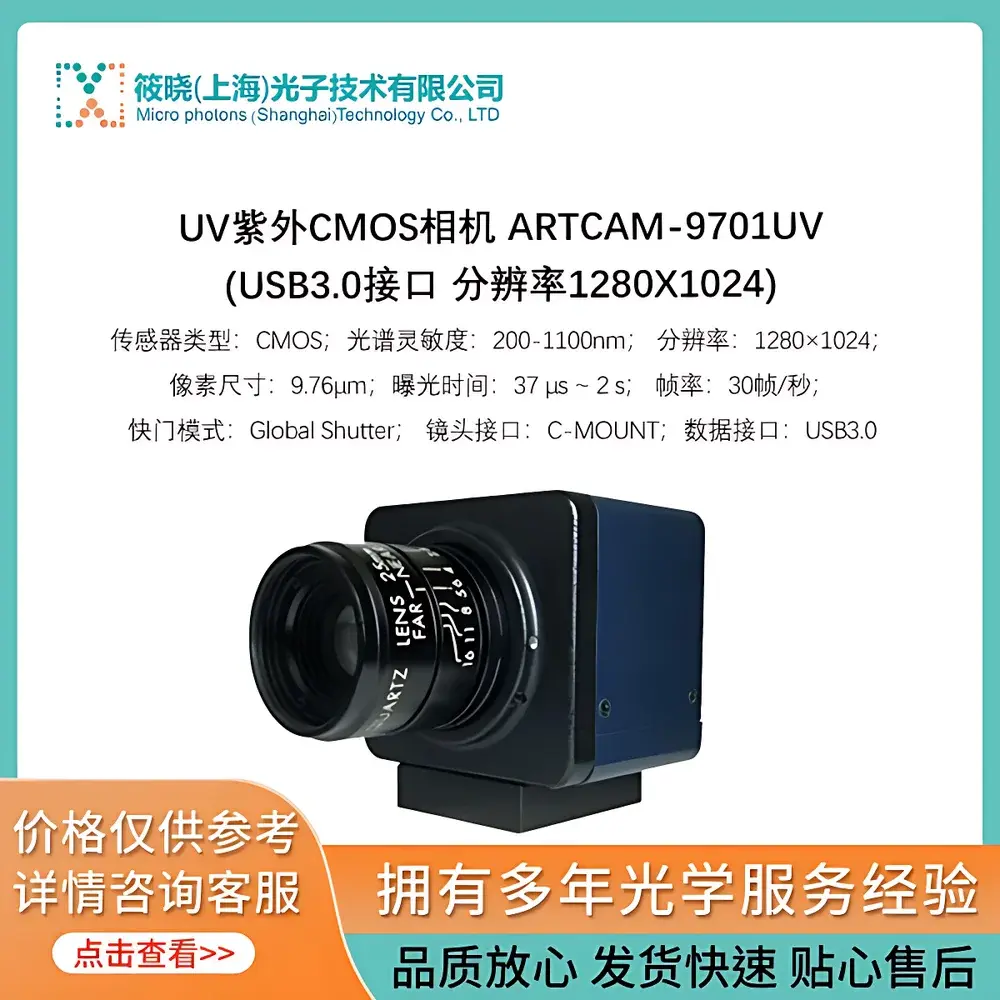
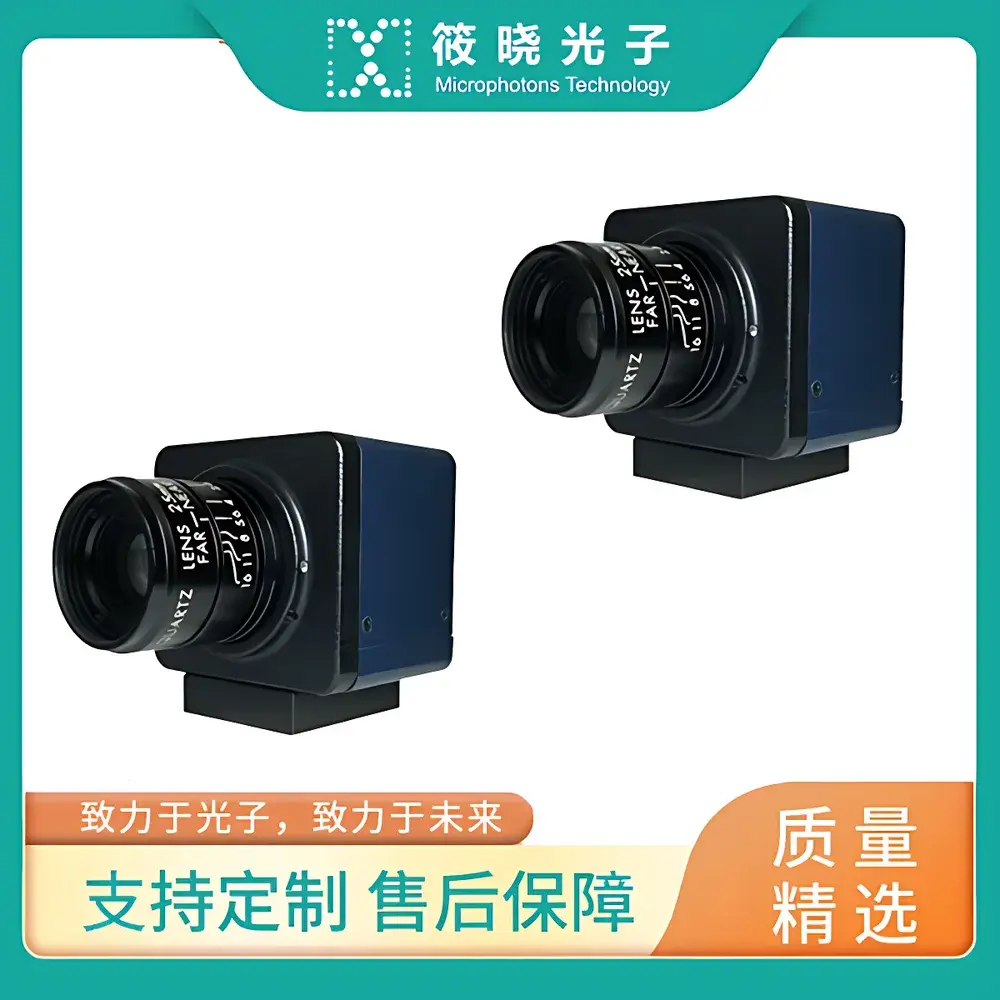
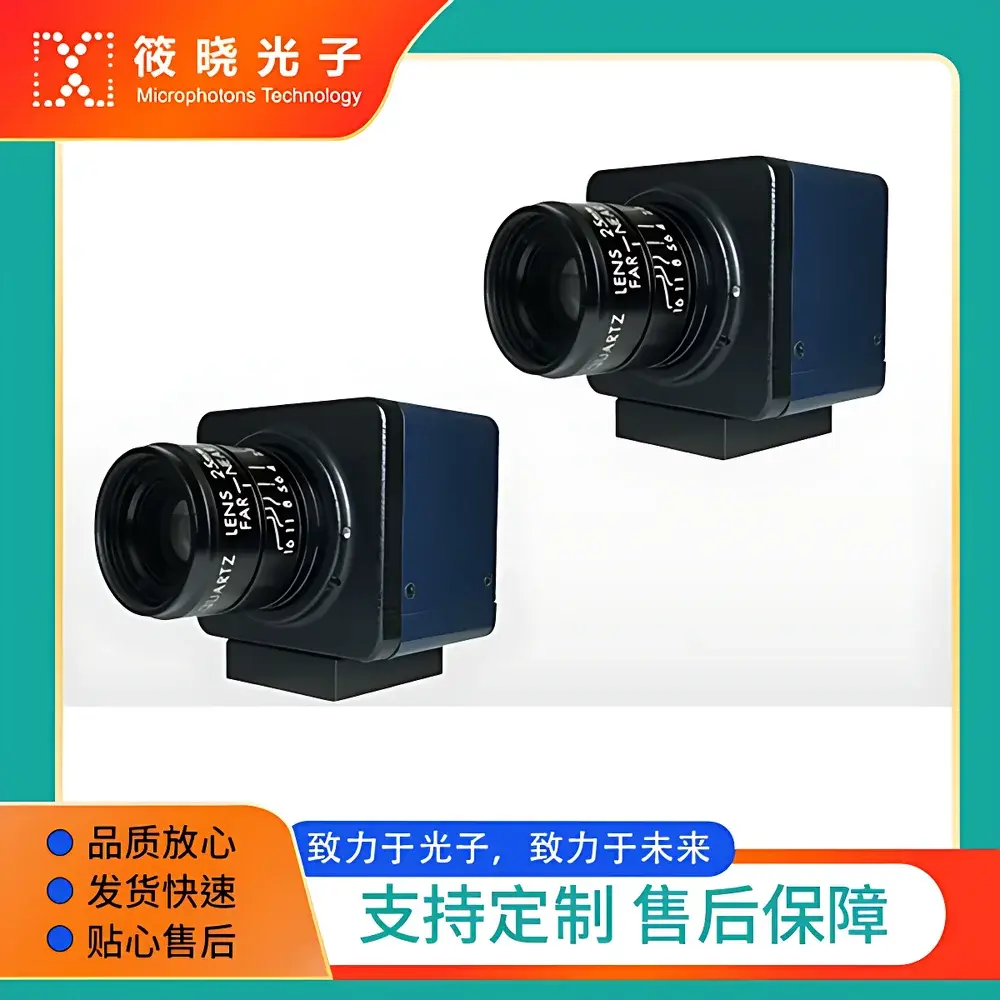
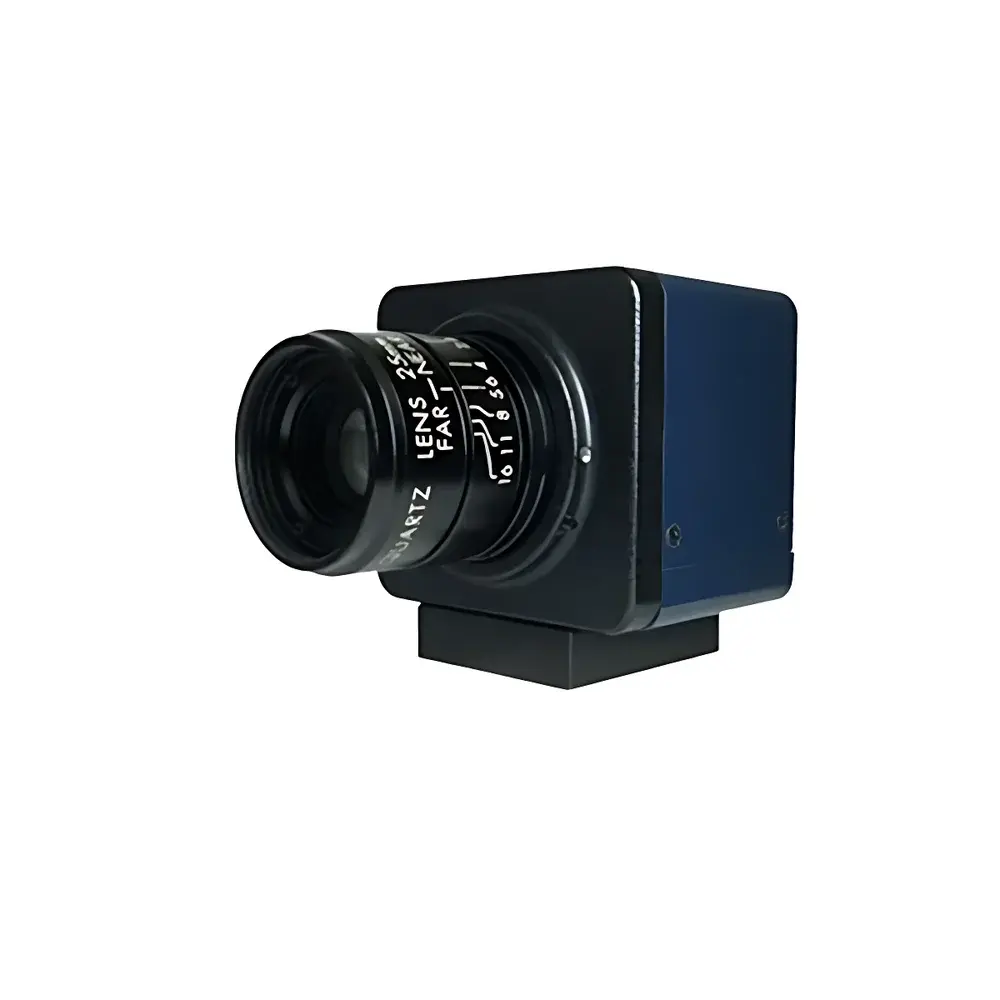
Artray ARTCAM-9701UV UV-Sensitive CMOS Imaging Camera with USB 3.0 Interface
| Brand | Artray |
|---|---|
| Origin | Japan |
| Model | ARTCAM-9701UV |
| Sensor Type | CMOS |
| Resolution | 1280 × 1024 |
| Pixel Size | 9.76 µm |
| Spectral Range | 200 nm – 1000 nm |
| Shutter Mode | Rolling Shutter |
| Frame Rate | 30 fps |
| ADC Resolution | 12 bit |
| Exposure Time | 37 µs – 2 s |
| Lens Mount | C-Mount |
| Interface | USB 3.0 |
| Power Supply | 5 VDC |
| Operating Temperature | 0 °C – +35 °C |
| Dimensions (W×H×L) | 50 mm × 47 mm × 42.7 mm |
| Weight | 110 g |
Overview
The Artray ARTCAM-9701UV is a high-sensitivity, ultraviolet-extended CMOS imaging camera engineered for scientific and industrial applications requiring spectral response from deep ultraviolet (200 nm) through visible to near-infrared (1000 nm). Unlike standard silicon-based imaging sensors whose quantum efficiency drops sharply below 350 nm, the ARTCAM-9701UV incorporates optimized microlens and anti-reflective coating technologies—combined with back-thinned or UV-enhanced front-side illumination architecture—to deliver stable, reproducible responsivity across the full 200–1000 nm range. Its 1280 × 1024 active pixel array features large 9.76 µm square pixels, enabling high photon collection efficiency and low read noise—critical for low-light UV fluorescence inspection, semiconductor wafer defect mapping, UV lithography alignment, and forensic document analysis. The camera operates without external frame grabbers, leveraging native USB 3.0 bandwidth (up to 400 MB/s) for real-time streaming and deterministic trigger synchronization.
Key Features
- UV-optimized CMOS sensor with verified quantum efficiency ≥35% at 254 nm and ≥65% at 365 nm—characterized per ISO 15739:2013 imaging sensor testing protocols
- Native USB 3.0 interface compliant with USB Video Class (UVC) 1.5 and custom vendor control extensions for precise exposure, gain, and ROI configuration
- Hardware-level rolling shutter with programmable exposure timing (37 µs – 2 s), supporting both free-run and externally triggered acquisition modes
- 12-bit analog-to-digital conversion with on-chip correlated double sampling (CDS) to suppress reset noise and fixed-pattern noise
- C-Mount lens interface compatible with industry-standard UV-transmissive optics (e.g., quartz, CaF₂, or fused silica lenses)
- Compact, fanless aluminum housing (50 × 47 × 42.7 mm; 110 g) rated for continuous operation in controlled laboratory environments (0–35 °C ambient)
- Low-power 5 VDC operation via USB bus power—no auxiliary supply required for standard use cases
Sample Compatibility & Compliance
The ARTCAM-9701UV is designed for non-contact, non-destructive optical inspection of materials exhibiting UV-specific optical signatures—including photoresists, organic contaminants, biological fluorophores (e.g., tryptophan, NADH), and degraded polymer surfaces. Its spectral response supports compliance-driven workflows aligned with ASTM E2912-21 (Standard Guide for UV Imaging in Forensic Science) and ISO/IEC 17025:2017 requirements for measurement traceability. While the camera itself is not FDA-registered, its output data may be integrated into GLP/GMP-compliant systems when paired with validated software and audit-trail-enabled acquisition platforms. All optical performance specifications—including spectral responsivity curves—are traceably calibrated using NIST-traceable deuterium and tungsten-halogen reference sources.
Software & Data Management
Artray provides the ARTCAM SDK (v4.2+), a cross-platform C/C++/Python API supporting Windows, Linux (x86_64), and macOS (Intel only). The SDK enables full control over exposure, gain, black level, gamma, and region-of-interest (ROI) cropping. Acquired frames are delivered as raw 12-bit monochrome buffers (Bayer optional) in memory-mapped or callback-based modes. Third-party compatibility includes HALCON 22.11+, OpenCV 4.8+ (via custom UVC backend), and LabVIEW 2022 SP1 with IMAQdx drivers. Metadata embedding (EXIF-like tags) includes timestamp (µs resolution), exposure parameters, sensor temperature (monitored via on-die diode), and calibration ID—facilitating 21 CFR Part 11–compliant data archiving when used with validated electronic lab notebook (ELN) or LIMS integrations.
Applications
- Semiconductor manufacturing: UV inspection of photomask defects, resist development uniformity, and post-etch residue detection
- Life sciences: Widefield UV fluorescence imaging of unstained cellular components and protein gels (e.g., SYPRO Ruby alternatives)
- Forensics: Visualization of latent fingerprints, erased ink alterations, and security feature verification under 254/365 nm excitation
- Materials science: Detection of micro-cracks, oxidation layers, and surface contamination on glass, ceramics, and aerospace alloys
- Quality control: In-line verification of UV-curable adhesive cure status and coating thickness homogeneity via reflectance contrast
FAQ
Does the ARTCAM-9701UV require a UV-pass filter to operate in the ultraviolet band?
No—the sensor’s native spectral response extends to 200 nm; however, broadband illumination sources (e.g., mercury-xenon lamps) typically necessitate bandpass or longpass filters to isolate specific UV lines and suppress visible bleed-through.
Is global shutter available on this model?
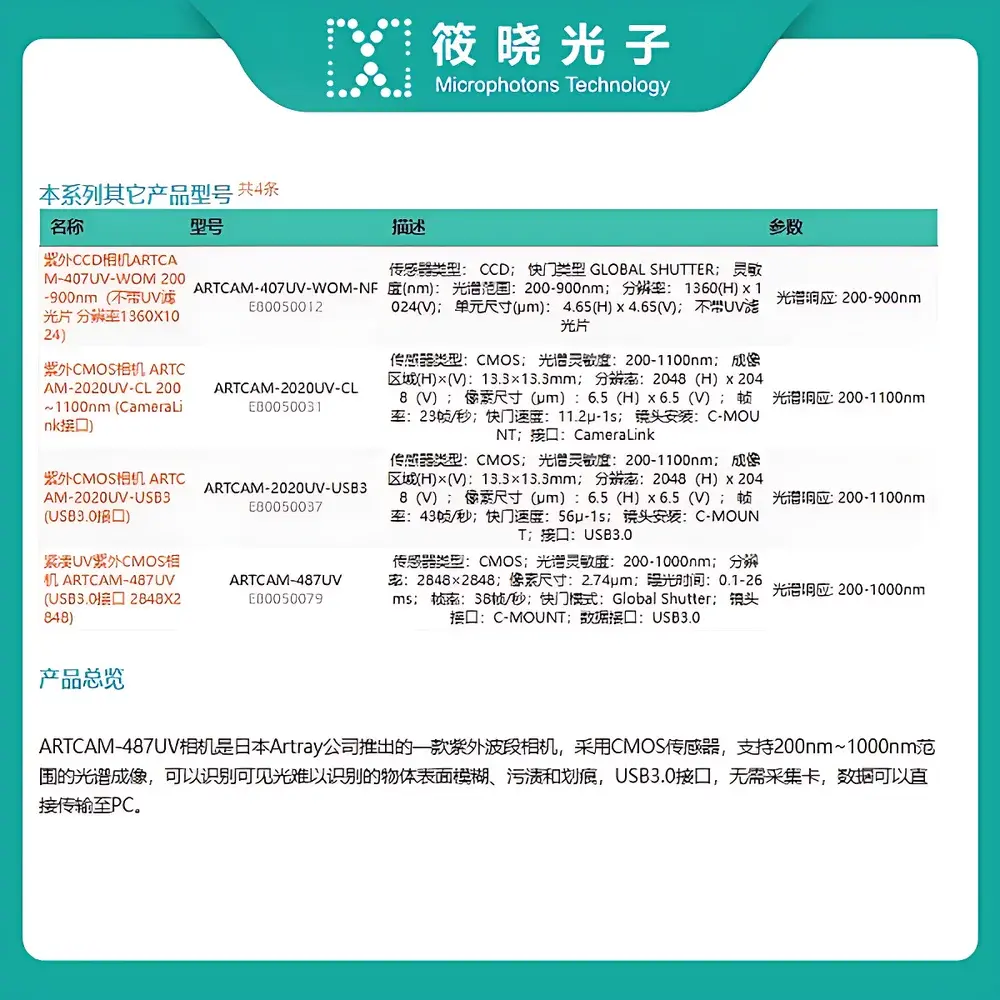
No—ARTCAM-9701UV uses a rolling shutter architecture. For applications requiring motion-freeze capture of fast-moving UV targets, consider the ARTCAM-487UV (global shutter, 2848 × 2848) or ARTCAM-2020UV-CL (Camera Link, global shutter).
Can the camera be synchronized with external light sources or motion stages?
Yes—TTL-compatible input/output trigger ports (opto-isolated) support hardware-level start/stop triggering, exposure gating, and frame synchronization at ≤10 MHz rates.
What is the dark current specification at maximum exposure time?
At 25 °C and 2 s exposure, typical dark current is ≤0.3 e⁻/pixel/s, yielding <120 e⁻ total dark signal—measured per EMVA 1288:2020 methodology.
Is radiometric calibration provided with the camera?
A factory-measured relative spectral responsivity curve (200–1000 nm) is included in the calibration certificate. Absolute radiometric calibration (W/m²/nm) requires optional NIST-traceable irradiance calibration service (Artray Calibration Kit UV-RC-01).





