A5085e Coal Mine Safety Chromatographic Information Management System
| Brand | East & West Analytical Instruments |
|---|---|
| Origin | Beijing, China |
| Manufacturer | East & West Analytical Instruments Co., Ltd. |
| Country of Origin | China |
| Model | A5085e |
| Pricing | Upon Request |
Overview
The A5085e Coal Mine Safety Chromatographic Information Management System is a domain-specific Laboratory Information Management System (LIMS) engineered for real-time acquisition, visualization, trend analysis, and regulatory-compliant archival of gas chromatographic data generated by the GC5085 coal mine–dedicated gas chromatograph. Developed by East & West Analytical Instruments (Beijing), the system implements a deterministic, time-series–driven architecture optimized for continuous monitoring of fire-indicative gases—including O2, CO, CH4, C2H4, CO2, and C2H6—in underground coal mining environments. Its core function is to transform raw chromatographic peak-area or concentration outputs into actionable safety intelligence through temporal and spatial correlation, enabling early detection of spontaneous combustion, assessment of sealed-fire zone evolution, and quantitative evaluation of explosion risk via the flammability triangle model. Designed explicitly for integration within coal mine ventilation monitoring networks, the A5085e supports both local intranet deployment and authenticated remote access over public internet infrastructure—ensuring continuity of safety oversight beyond physical site boundaries.
Key Features
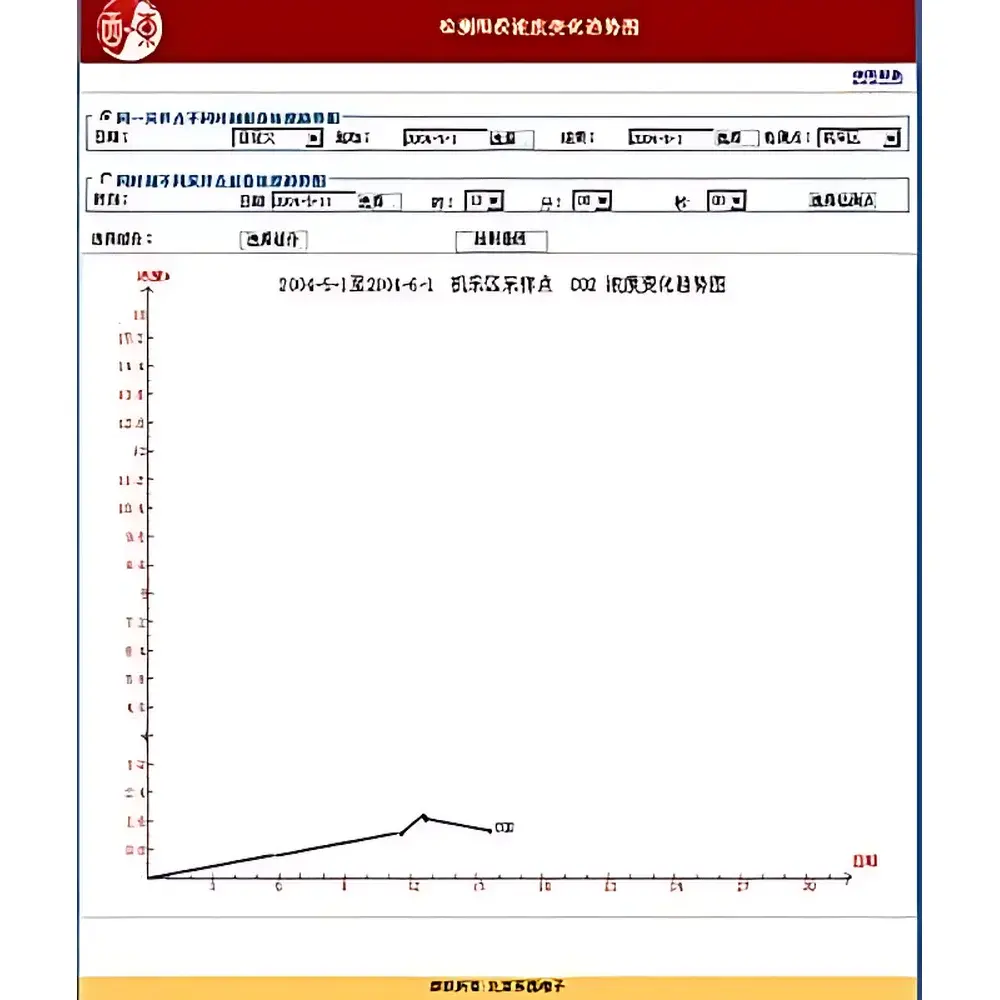
- Real-time and historical concentration–time trend visualization with configurable X/Y-axis scaling, auto-scrolling, and multi-curve overlay
- Spatial–temporal mapping: Sampling-point–concentration trend charts across heterogeneous locations (e.g., longwall face, return airway, goaf, sealed fire zones)
- Explosion hazard assessment using the methane–oxygen–inert gas triangular diagram per GB 50167–2014 and IEC 60079-10-1
- Regulatory threshold-based alarm engine aligned with mandatory limits in China’s Coal Mine Safety Regulations (2022 Edition), including dynamic warning lines for CO ≥ 24 ppm, CH4 ≥ 1.0% vol, O2 ≤ 19.5% vol, and C2H4 ≥ 0.5 ppm
- Historical同期 comparison module supporting year-over-year, shift-over-shift, and pre-/post-incident gas profile benchmarking
- Role-based access control (RBAC) with granular permission tiers (administrator, safety supervisor, shift operator, auditor) and full audit trail logging per GLP principles
- Customizable UI: User-defined sampling point nomenclature, color-coded trace assignment, line-style selection, and multi-parameter display layout
- Method persistence: Entire analytical workflows—including acquisition parameters, calibration settings, and report templates—saved as reusable method files
- Remote trigger capability for GC5085 via RS-485/Modbus RTU or TCP/IP, enabling synchronized start/stop from the A5085e interface
Sample Compatibility & Compliance
The A5085e ingests structured chromatographic data exclusively from the GC5085 gas chromatograph, supporting native peak integration results (retention time, area, height, concentration) exported in CSV or proprietary binary format. It does not perform raw signal digitization or spectral deconvolution. All gas concentration units conform to SI conventions (ppm, % vol, µL/L). The system complies with national coal safety standards including AQ 1011–2005 (Spontaneous Combustion Prediction), MT/T 757–1997 (Gas Chromatography for Mine Gases), and aligns with ISO/IEC 17025:2017 requirements for data integrity in safety-critical testing environments. Audit trails record user login/logout events, configuration changes, alarm acknowledgments, and report generation timestamps—supporting internal GLP audits and regulatory inspections.
Software & Data Management
Built on a Microsoft SQL Server relational database backend, the A5085e ensures ACID-compliant transaction handling for concurrent multi-user operations. Data retention policies are configurable per site (default: 36 months), with automated backup scheduling to network-attached storage (NAS) or cloud object storage (S3-compatible). Export functions support PDF reports with embedded vector graphics, Excel (.xlsx) datasets with metadata headers, and XML schemas compliant with China’s Coal Industry Safety Monitoring Data Exchange Standard (GB/T 34679–2017). All remote sessions enforce TLS 1.2+ encryption; authentication integrates Windows Active Directory or local credential stores with password complexity enforcement and 90-day rotation policies. No third-party telemetry or cloud synchronization is enabled by default.
Applications
- Early-warning surveillance of coal seam oxidation stages via CO/C2/C2H4 ratio kinetics and temperature-correlated elution shifts
- Dynamic assessment of fire zone inertization efficacy through sequential O2/N2/CO2 profiling during nitrogen injection
- Post-incident root cause analysis using synchronized chromatographic records across ventilation branches
- Validation of seal integrity via longitudinal CH4/C2H6 ratio stability monitoring
- Regulatory reporting for provincial coal safety bureaus under Article 42 of the Occupational Safety and Health Law of the PRC
- Integration with mine-wide SCADA systems via OPC UA or MQTT for unified dashboarding
FAQ
Does the A5085e support direct hardware control of third-party gas chromatographs?
No. It is certified exclusively for bidirectional communication with the GC5085 series instruments via serial or Ethernet protocols.
Can historical chromatograms be reprocessed with updated calibration curves?
Yes. Raw peak tables and integration parameters are preserved; users may apply revised calibration models retroactively to generate corrected concentration histories.
Is FDA 21 CFR Part 11 compliance supported?
The system provides electronic signature capability, audit trail completeness, and role-based e-signature enforcement—but formal Part 11 validation documentation is available only upon separate validation services engagement.
What database scalability limits apply?
Tested performance: sustained ingestion of >500 concurrent sampling points at 5-minute intervals for ≥10 years without index degradation, assuming ≥16 GB RAM and SSD-backed SQL Server instance.
How are software updates distributed and validated?
Patches and version upgrades are delivered via signed offline installers; each release includes a traceable verification checksum and impact assessment report covering functional, security, and regulatory implications.
Related Products