Haier Biomedical Smart Cell Management Platform
| Brand | Haier Biomedical |
|---|---|
| Origin | Shandong, China |
| Manufacturer Type | Original Equipment Manufacturer (OEM) & Software Developer |
| Product Category | Domestic LIMS |
| Model | Smart Cell Management Platform |
| Pricing | Available Upon Request |
Overview
The Haier Biomedical Smart Cell Management Platform is a purpose-built Laboratory Information Management System (LIMS) designed specifically for cell therapy manufacturing, biobanking, and advanced regenerative medicine laboratories. Engineered to support Good Manufacturing Practice (GMP), Good Laboratory Practice (GLP), and ISO 20387-compliant operations, the platform integrates sample lifecycle management—from order intake and cold-chain logistics tracking to SOP-driven cell processing, quality control execution, and cryogenic storage governance. Unlike generic LIMS solutions, it embeds domain-specific workflows for autologous and allogeneic cell product development, including traceability across donor, material, equipment, and operator identifiers at every process step. The system operates on a modular architecture, supporting both cloud-hosted deployment via Haier Biomedical’s validated cloud infrastructure and on-premises installation within secure institutional intranets—ensuring alignment with data sovereignty requirements and regulatory expectations in the EU (GDPR), US (HIPAA, FDA 21 CFR Part 11), and China (NMPA Annex 1 & GB/T 37864-2019).
Key Features
- End-to-End Sample Lifecycle Traceability: Barcode/QR-code–enabled intake, chain-of-custody logging, and real-time cold-chain monitoring—including GPS location, ambient temperature, and transport duration alerts against predefined SLAs.
- SOP-Governed Process Execution: Configurable workflow engine supporting user-defined cell manufacturing protocols; preloaded templates for expansion, differentiation, transduction, and formulation steps compliant with ISCT and ASTM E3151 standards.
- Integrated Quality Control Framework: Batch-level QC record capture, automated import of analytical instrument data (e.g., flow cytometry, viability assays, mycoplasma testing), and electronic approval routing with role-based sign-off.
- Smart Cryo-Inventory Visualization: Interactive 3D-compatible freezer map interface displaying real-time occupancy, vial-level metadata (donor ID, passage number, cryoprotectant, freeze date), and automated storage location assignment based on stability criteria.
- Interoperable Ecosystem Integration: Native APIs and HL7/FHIR-compliant connectors for bidirectional synchronization with CRM systems, ERP platforms, electronic lab notebooks (ELN), and hospital HIS/PACS environments.
- Regulatory-Ready Infrastructure: Built-in audit trail with immutable timestamped records, 21 CFR Part 11–compliant electronic signatures, configurable access controls (RBAC), and documented computer system validation (CSV) packages available upon request.
Sample Compatibility & Compliance
The platform supports full digital tracking of human-derived biological materials including peripheral blood mononuclear cells (PBMCs), mesenchymal stromal cells (MSCs), induced pluripotent stem cells (iPSCs), T-cell products (e.g., CAR-T), and engineered exosomes. It enforces compliance with ISO/IEC 17025 (for testing labs), ISO 9001 (quality management), and ISO 20387 (biobanking). All data handling adheres to ALCOA+ principles (Attributable, Legible, Contemporaneous, Original, Accurate, Complete, Consistent, Enduring, Available), and the system undergoes annual third-party penetration testing and vulnerability scanning as part of Haier Biomedical’s ISO 27001-certified information security management system (ISMS).
Software & Data Management
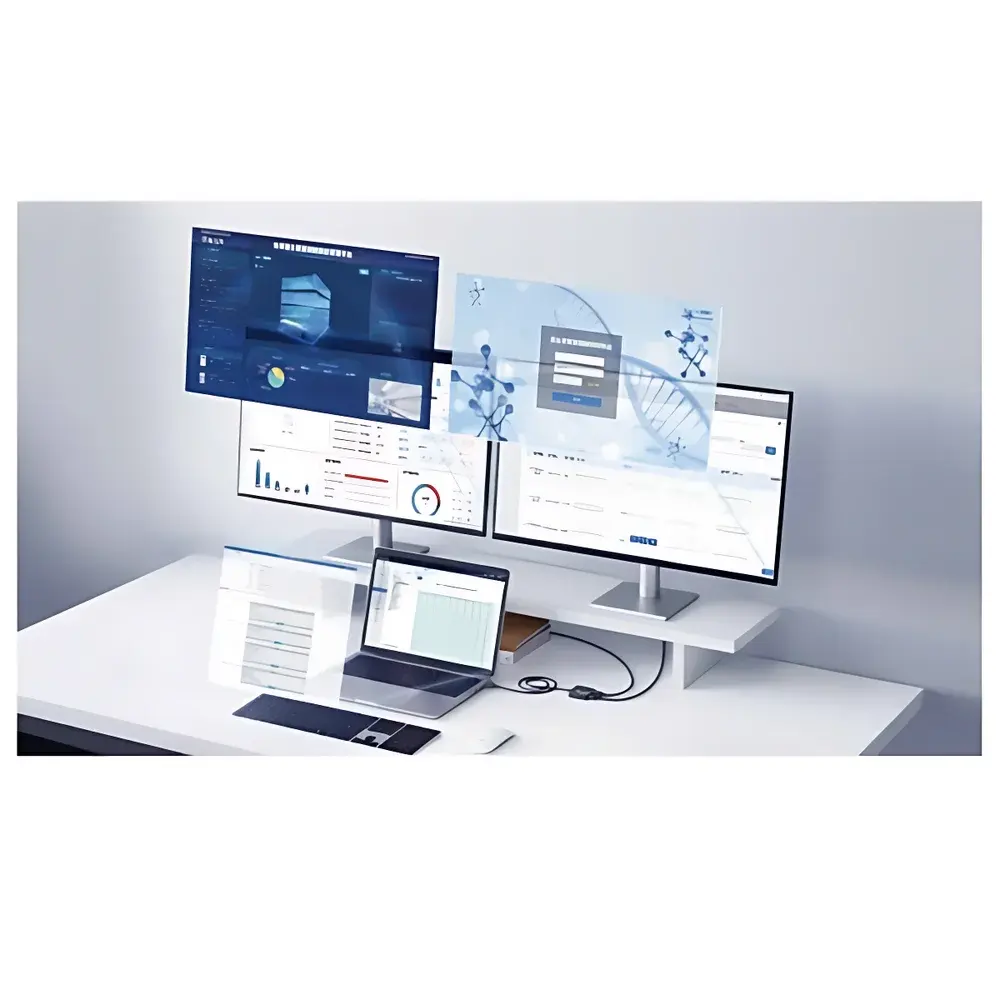
Deployed as a web-native application (HTML5/CSS3/JavaScript), the platform offers responsive access across desktop, tablet, and mobile devices—including a dedicated WeChat Mini Program for field staff to initiate orders, scan samples, and receive real-time notifications. Data persistence utilizes encrypted PostgreSQL databases with daily incremental backups and point-in-time recovery. Role-based dashboards provide KPI visualization (e.g., sample turnaround time, QC pass/fail rates, freezer utilization efficiency) using D3.js–powered widgets. All system configurations, SOP versions, and change logs are version-controlled and subject to formal change control procedures aligned with GxP requirements.
Applications
- Cell therapy contract development and manufacturing organizations (CDMOs)
- Academic and clinical biobanks managing longitudinal cohorts
- Hospital-based GMP facilities producing autologous dendritic cell vaccines or MSC infusions
- Regenerative medicine startups requiring scalable, audit-ready digital infrastructure
- Pharma R&D units conducting preclinical cell-based assay development and screening
FAQ
Is the platform validated for use in FDA-regulated environments?
Yes—the system includes documentation packages supporting CSV (Computer System Validation) per GAMP 5 guidelines, and electronic signature functionality conforms to 21 CFR Part 11 Subpart B requirements.
Can it integrate with existing laboratory instruments?
It supports standard communication protocols including RS232, TCP/IP, and HL7 v2.x for direct integration with analyzers, freezers, and environmental monitoring systems.
What deployment options are available?
Two validated models: (1) Haier Biomedical Cloud (hosted in Tier III data centers with SOC 2 Type II attestation), or (2) On-premises installation with air-gapped network configuration for high-security institutions.
Does it support multi-site operations?
Yes—centralized master data management enables synchronized SOP libraries, user permissions, and audit logs across geographically distributed facilities while preserving local operational autonomy.
How is data migration handled during implementation?
Haier Biomedical provides a structured data migration service including legacy system mapping, format transformation, integrity validation, and reconciliation reporting—all executed under a defined data governance protocol.
Related Products