
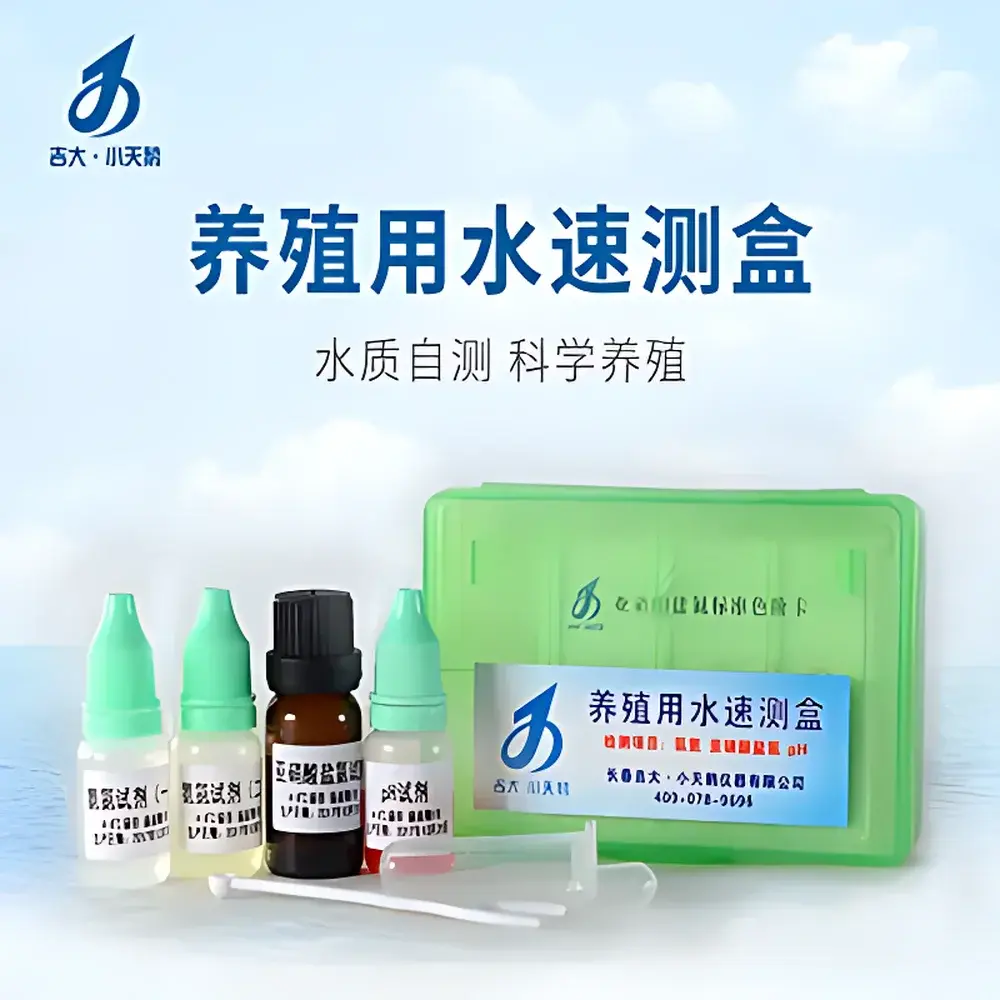
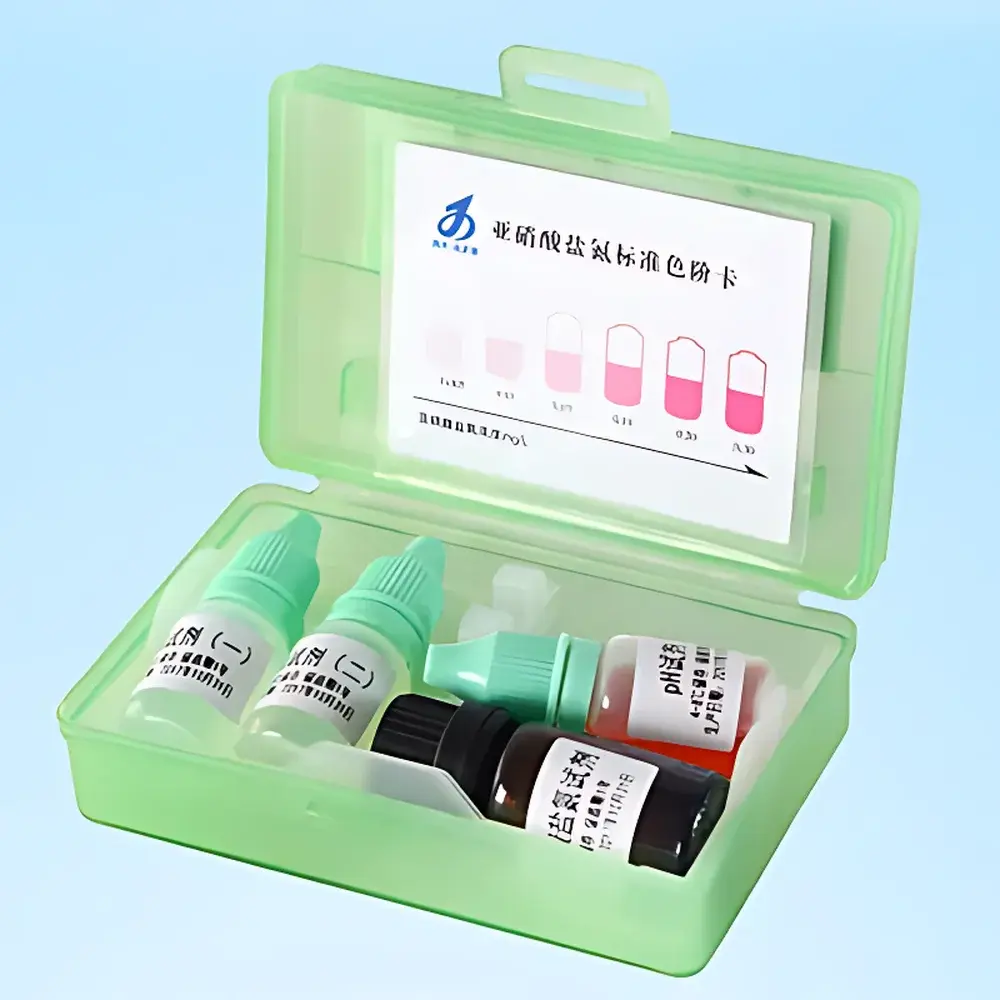
Jiada Xiaotian’e Aquaculture Water Rapid Test Kit
| Brand | Jiada Xiaotian'e |
|---|---|
| Origin | Jilin, China |
| Manufacturer Type | Direct Manufacturer |
| Product Category | Domestic |
| Model | Aquaculture Water Rapid Test Kit |
| Price Range | USD 140–1,400 (based on configuration) |
| Instrument Type | Portable |
| Measurement Principle | Colorimetric Method |
Overview
The Jiada Xiaotian’e Aquaculture Water Rapid Test Kit is a field-deployable, chemically based analytical system engineered for on-site quantification of critical water quality parameters in freshwater and brackish aquaculture systems. Designed around standardized colorimetric reaction chemistry, the kit enables quantitative determination of ammonia nitrogen (NH₃-N), nitrite nitrogen (NO₂⁻-N), pH, and dissolved oxygen (DO) — four parameters explicitly mandated by China’s *Fishery Water Quality Standard* (GB 11607–89) and aligned with internationally recognized aquaculture monitoring frameworks such as FAO’s *Code of Conduct for Responsible Fisheries*. Each test employs pre-calibrated reagents and comparator-based visual or semi-quantitative photometric interpretation, eliminating the need for laboratory infrastructure while maintaining traceability to reference methods. The system operates without external power, making it suitable for remote ponds, hatcheries, and mobile extension services.
Key Features
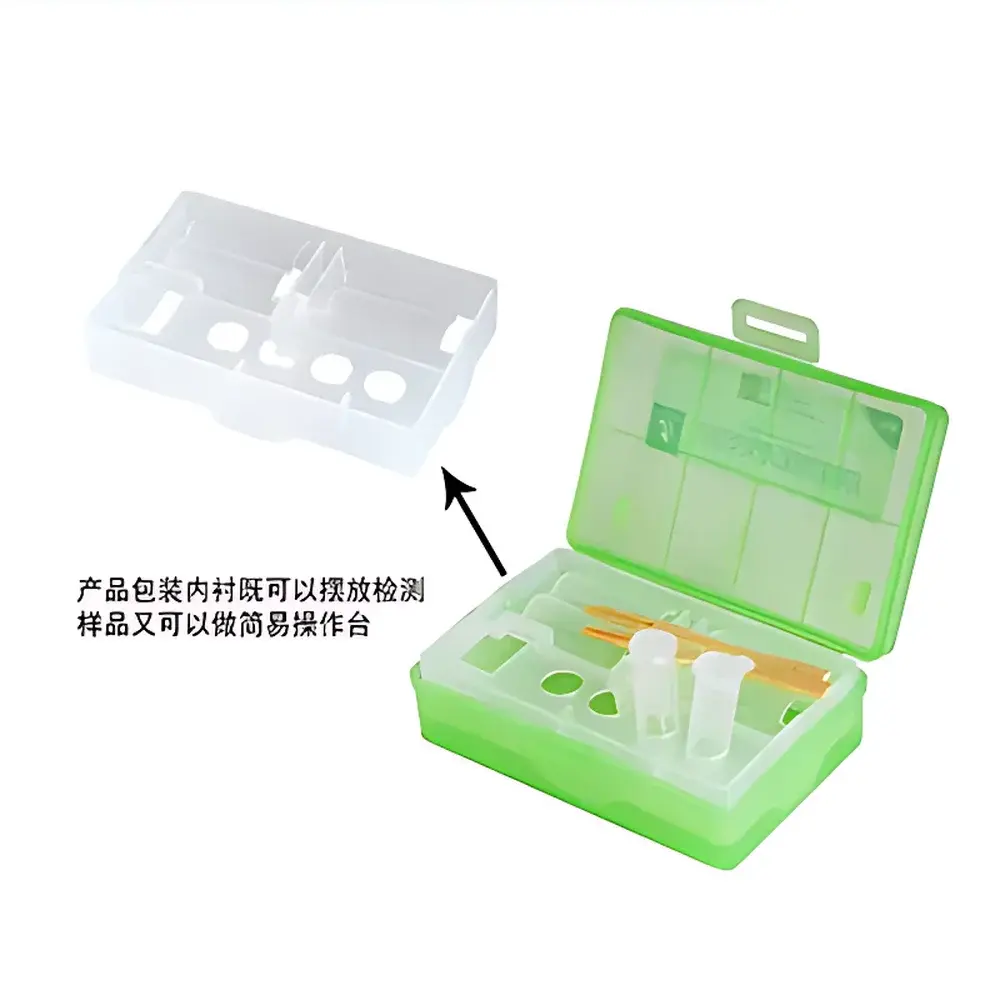
- Portable, all-in-one design housed in a durable, waterproof carrying case with integrated reagent storage compartments and calibrated color charts.
- Four-parameter simultaneous testing capability: NH₃-N (0.02–5.0 mg/L), NO₂⁻-N (0.005–2.0 mg/L), pH (6.0–9.0, ±0.2 unit accuracy), and DO (0.5–15.0 mg/L, Winkler-based iodometric method).
- Pre-measured, lyophilized reagent tablets and stabilized liquid reagents ensure shelf life ≥18 months at ambient temperature (15–30°C) when unopened.
- No instrumentation required for basic use: visual comparison against ISO-standardized NBS color scales; optional digital reader support available for enhanced repeatability (not included).
- Compliant with national verification protocols under JJG 972–2019 (Calibration Specification for Water Quality Test Kits) and compatible with GLP-aligned recordkeeping practices.
Sample Compatibility & Compliance
The kit is validated for use with surface water samples from earthen ponds, concrete raceways, recirculating aquaculture systems (RAS), and nursery tanks. It accommodates turbidities up to 50 NTU without filtration—reagent formulations include masking agents to minimize interference from common aquaculture co-ions (e.g., Fe²⁺, Cu²⁺, Cl⁻). All test procedures conform to the fundamental principles outlined in ISO 7888 (pH), ISO 5813 (DO), ISO 7150-1 (ammonia nitrogen), and ISO 6777 (nitrite nitrogen). While not certified for regulatory reporting under EPA or EU WFD mandates, results are suitable for operational decision-making, trend analysis, and pre-screening prior to confirmatory lab analysis per ASTM D1292 (pH), D888 (DO), D1426 (NH₃-N), and D1976 (NO₂⁻-N).
Software & Data Management
The base kit does not include embedded electronics or software. However, optional companion tools—such as the Jiada AquaLog mobile application (iOS/Android)—support barcode-scanned batch logging, geotagged measurement capture, and export to CSV or PDF reports compliant with internal QA/QC documentation requirements. When used in conjunction with certified laboratory workflows, data generated meets audit readiness criteria for GMP-aligned aquaculture operations and third-party certification schemes (e.g., ASC, GAP). All reagent lot numbers and calibration date stamps are printed on individual vial labels to support full traceability under 21 CFR Part 11–compatible record retention policies.
Applications
- Daily health monitoring of finfish (e.g., tilapia, carp, salmonids) and crustacean (e.g., shrimp, crab) culture units.
- Troubleshooting acute stress events—including gill hyperplasia, lethargy, or sudden mortality—by correlating NH₃-N/NO₂⁻-N spikes with feeding cycles and aeration status.
- Validating efficacy of biofiltration media, probiotic dosing, and water exchange protocols during system start-up or seasonal transition.
- Supporting extension training programs for smallholder farmers under national aquaculture sustainability initiatives.
- Integration into university teaching labs for principles of aquatic toxicology, environmental chemistry, and field analytical method validation.
FAQ
What is the shelf life of the reagents, and how should they be stored?
Unopened reagent vials retain stability for ≥18 months when stored at 15–30°C in low-humidity conditions. Avoid direct sunlight and refrigeration, which may induce condensation or crystallization.
Can this kit be used for seawater or marine aquaculture applications?
The standard configuration is optimized for freshwater and low-salinity brackish systems (15 ppt), chloride interference requires dilution or use of salt-tolerant assay variants (available upon request as custom configuration).
Is operator training required to achieve reliable results?
Yes—while intuitive, consistent performance requires adherence to standardized sample collection depth (30 cm below surface), timing (within 15 minutes post-collection for DO/NH₃-N), and color reading under controlled daylight (CIE D65 illuminant equivalent). Training modules are provided in English and Spanish.
Does the kit meet ISO/IEC 17025 requirements for accredited testing?
No—it is classified as a screening-level tool. Confirmatory analysis must be performed using ISO/IEC 17025-accredited laboratories when regulatory compliance or contractual obligations apply.
Are replacement reagents and calibration standards available separately?
Yes. All consumables are sold as replenishment kits (Cat. No. ATK-RF-01 through ATK-RF-04), each including lot-specific Certificate of Analysis and expiration tracking labels.
Related Products







