
LTB LIBSLab Series Laser-Induced Breakdown Spectroscopy (LIBS) Systems
| Brand | LTB |
|---|---|
| Origin | Germany |
| Product Family | LIBSLab |
| Instrument Type | Benchtop |
| Integration | Modular |
Overview
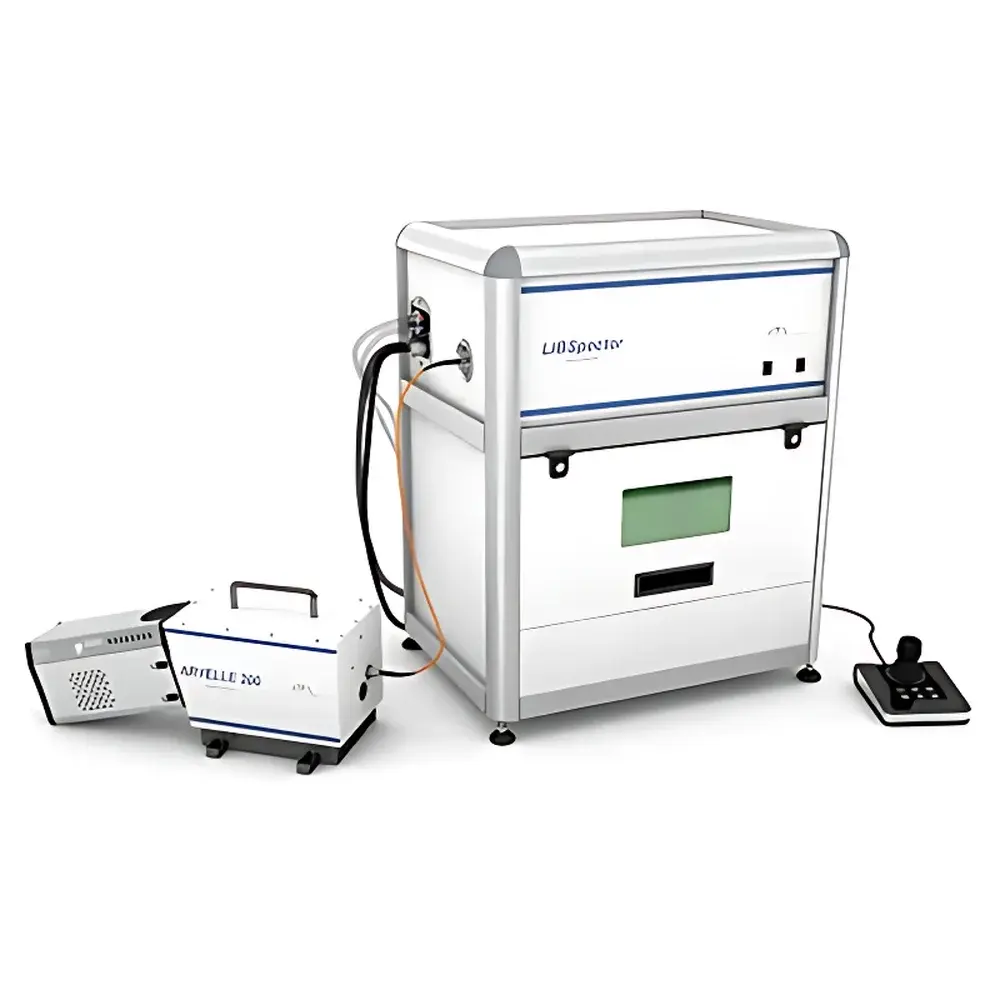
The LTB LIBSLab Series represents a comprehensive, research-grade platform for Laser-Induced Breakdown Spectroscopy (LIBS), engineered for high-fidelity elemental analysis across academic, industrial, and regulatory environments. LIBS operates on the principle of laser ablation: a focused pulsed laser generates a transient microplasma on the sample surface; emitted atomic and ionic line spectra from the cooling plasma are dispersed and resolved by a high-performance echelle spectrometer. This enables rapid, matrix-independent, multi-elemental detection—without chemical digestion or vacuum requirements—making it ideal for in situ, real-time, and minimally invasive analysis. Developed since 2002 by LTB (Laser- und Technologie-Berlin GmbH), a German manufacturer specializing in advanced spectroscopic instrumentation, the LIBSLab family delivers metrologically traceable performance in both spectral and temporal domains. Its architecture supports fundamental studies—including actinide/lanthanide speciation, isotopic shift resolution, and ultrafast plasma dynamics—as well as applied tasks such as alloy sorting, geological mapping, nuclear safeguards verification, and pharmaceutical excipient screening.
Key Features
- Sub-picometer spectral resolution (down to ≤5.3 pm at 253.652 nm), enabled by high-order echelle gratings and optimized optical alignment—suitable for resolving complex spectral congestion in rare-earth and transition-metal spectra.
- Temporal resolution down to 2 ns (with optional ICCD/ICMOS gating), extendable to 500 ps for time-resolved plasma evolution studies and background suppression in challenging matrices.
- Microscopic spatial resolution: down to 2 µm spot size using integrated microscope objectives—enabling micro-domain mapping, inclusion analysis, and heterogeneous material characterization.
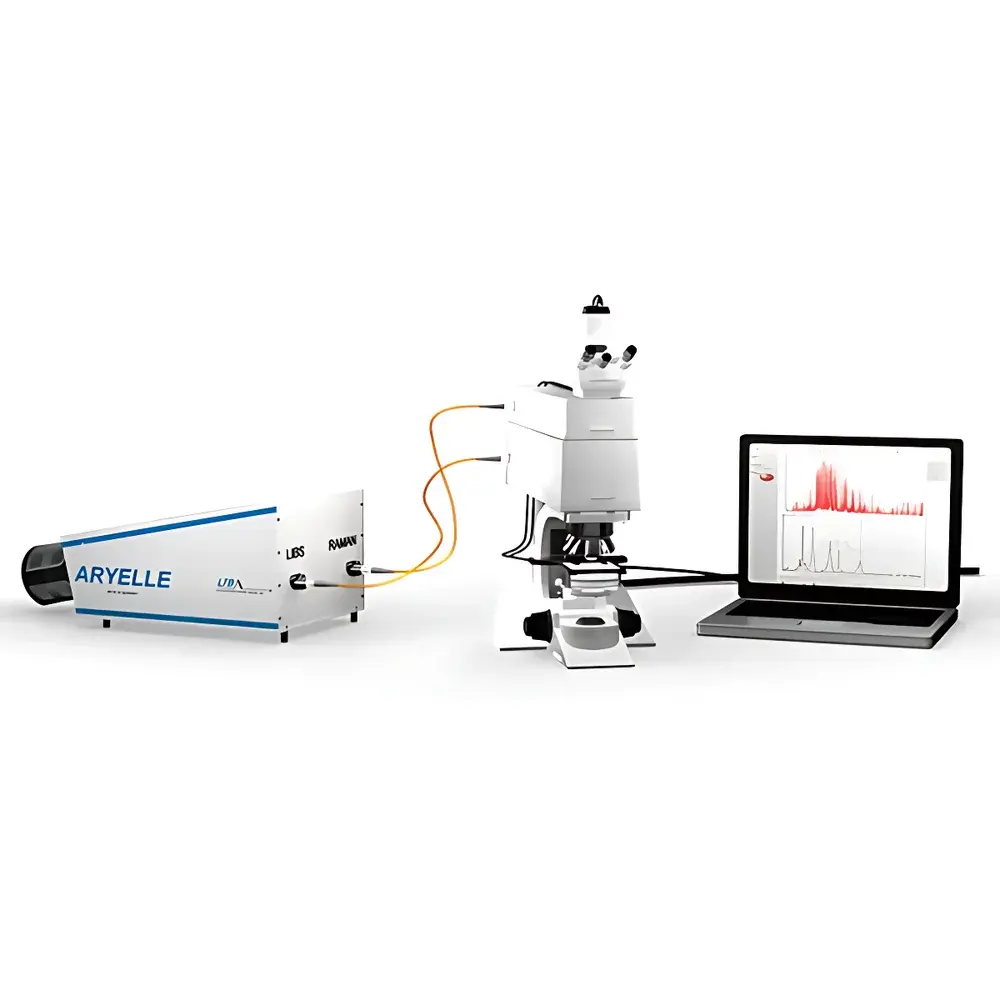
- Modular, application-specific configuration: 14 dedicated sub-series (e.g., LIBSLab-I, LIBS-Micro-II-HR, LIBS-Remote, LIBS&RAMAN) with over 100 pre-engineered combinations of lasers, spectrometers, collection optics, and sample chambers.
- Multi-wavelength laser compatibility: 193 nm (ArF excimer), 266/337/532/800/1030 nm sources—including single-longitudinal-mode (SLM), femtosecond, dual-pulse, and deep-UV variants—each selected for optimal ablation efficiency and plasma stability per material class.
- Quantitative software environment with automated calibration routines, spectral deconvolution algorithms, and ISO/IEC 17025-aligned uncertainty propagation frameworks.
Sample Compatibility & Compliance
The LIBSLab platform accommodates solid, liquid, and aerosol samples—including conductive metals, insulating ceramics, polymers, biological tissues, and radioactive materials—without mandatory preprocessing. Sample chambers are configurable for ambient air, controlled atmospheres (N₂, Ar, He), or vacuum (<10⁻³ mbar), supporting ASTM E2926-22 (Standard Test Method for Determination of Elemental Composition by LIBS) and ISO 17294-2:2016 (Water quality — Elemental analysis by inductively coupled plasma mass spectrometry — Part 2: Guidance on analytical methodology). All systems comply with EU Machinery Directive 2006/42/EC and IEC 61000-6-3 EMC standards. For regulated laboratories, optional audit-trail-enabled software modules support 21 CFR Part 11 compliance, including electronic signatures, user role management, and immutable data archiving.
Software & Data Management
LTB’s proprietary LIBS Studio software provides full instrument control, spectral acquisition, real-time visualization, and post-processing—including peak identification (NIST Atomic Spectra Database integration), multivariate calibration (PLS, PCA), and elemental mapping with georeferenced metadata export (GeoTIFF, CSV, HDF5). The environment supports Python and MATLAB APIs for custom algorithm integration and automated workflow scripting. Raw spectral data are stored in vendor-neutral formats (HDF5, SPE) with embedded metadata (laser energy, gate delay, grating position, detector temperature), ensuring FAIR (Findable, Accessible, Interoperable, Reusable) data principles. Optional cloud synchronization enables cross-site collaboration and centralized method validation.
Applications
- Materials Science: Composition profiling of high-entropy alloys, thermal barrier coatings, and additive-manufactured components—validated against certified reference materials (CRMs) per ISO Guide 35.
- Geosciences: In-field mineralogical mapping of drill cores and meteorites; detection of Li, Be, B, and REEs at sub-ppm levels in silicate matrices.
- Nuclear Industry: Isotopic ratio determination (e.g., ²³⁵U/²³⁸U) via high-resolution line-shape analysis; remote monitoring of fuel cladding integrity under simulated accident conditions.
- Environmental Monitoring: Real-time heavy metal detection (Pb, Cd, As) in soil and airborne particulates; combined LIBS–Raman for simultaneous elemental and molecular fingerprinting.
- Pharmaceutical QA/QC: Excipient homogeneity assessment, tablet coating thickness verification, and counterfeit drug screening via spectral library matching (USP <1058> compliant).
FAQ
What spectral resolution can be achieved with the LIBSLab system?
Spectral resolution is configurable between 42 pm and ≤1.3 pm at 253.652 nm, depending on grating selection (ARYELLE 150/200/400, Butterfly) and detector pixel binning—optimized per application to balance resolution, signal-to-noise, and acquisition speed.
Is time-gated detection supported?
Yes—integrated ICCD, ICMOS, or sCMOS detectors with programmable gate widths (2 ns to 100 ns) and delays enable plasma continuum suppression and selective atomic/ionic line capture.
Can LIBSLab be used for quantitative analysis?
Quantitative capability is validated through matrix-matched calibration curves, internal standardization (e.g., Ca II 393.366 nm), and machine-learning-based correction for self-absorption and plasma parameter drift—achieving R² > 0.995 for major elements in certified steel and glass CRMs.
Does LTB provide application-specific system integration support?
Yes—LTB offers collaborative system co-design, including custom chamber engineering, laser safety interlocks (EN 60825-1), and GMP-compliant documentation packages (IQ/OQ/PQ protocols, URS templates).





