
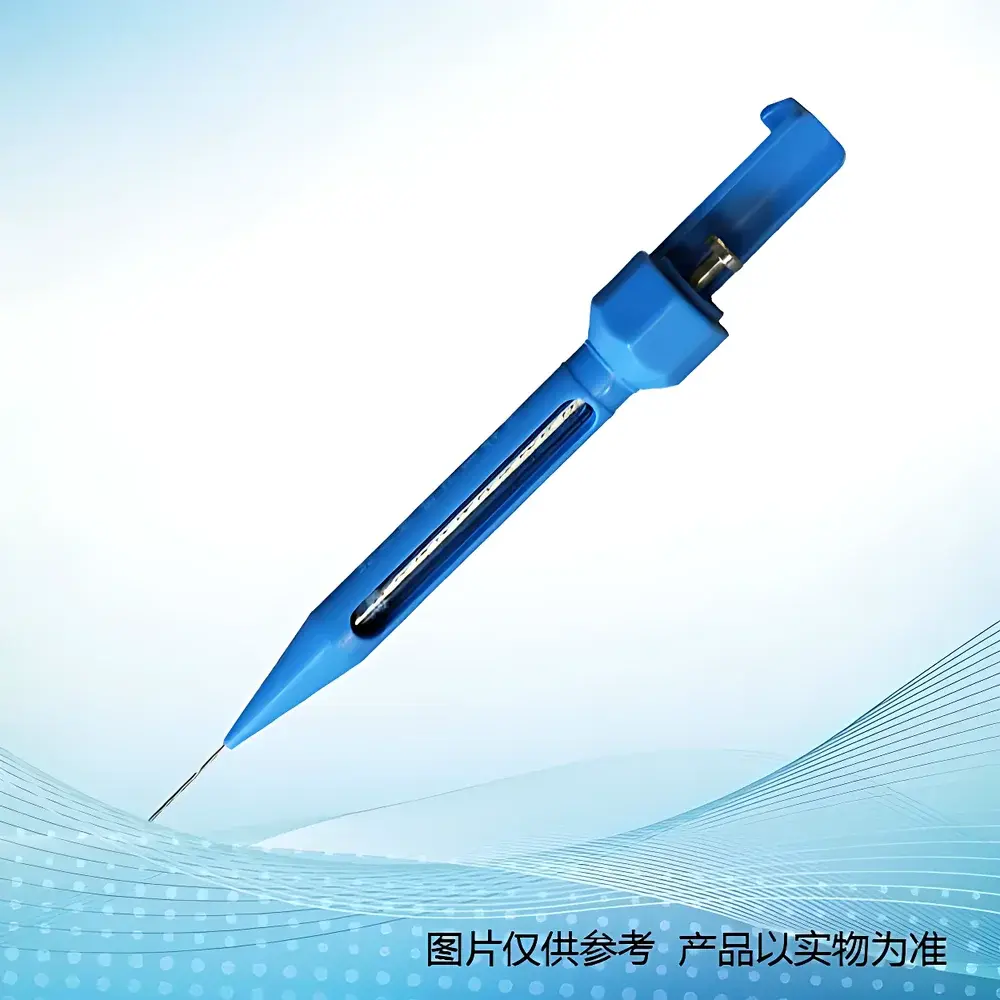
Jiada Xiaotian’e GDYQ-110SF Food Oil Acid Value Rapid Analyzer
| Brand | Jiada Xiaotian'e |
|---|---|
| Origin | Jilin, China |
| Manufacturer Type | Direct Manufacturer |
| Country of Origin | China |
| Model | GDYQ-110SF |
| Function Type | Single-Analyte Quantitative Detection |
| Sample Compatibility | Multi-Sample Universal Format |
| Detection Time | 10 minutes |
| Detection Limit | 0.1 mg KOH/g |
| Measurement Range | 0.0–30.0 mg KOH/g |
| Accuracy | ±5% (Relative Standard Deviation) |
| Reference Standard | GB/T 5009.37–2003 |
Overview
The Jiada Xiaotian’e GDYQ-110SF Food Oil Acid Value Rapid Analyzer is a dedicated benchtop or field-deployable photometric instrument engineered for the quantitative determination of free fatty acid content—expressed as acid value—in edible oils and fats. It operates on the principle of colorimetric titration adapted to standardized spectrophotometric quantification, in full alignment with the Chinese national standard GB/T 5009.37–2003. The method relies on the neutralization reaction between free fatty acids in the oil sample and potassium hydroxide (KOH), followed by color development using a pH-sensitive indicator. Absorbance is measured at a defined wavelength (typically 520–560 nm), and concentration is calculated via pre-calibrated curve interpolation. Designed for routine quality control in refining plants, cold-pressed oil facilities, regulatory inspection units, and third-party food safety laboratories, the GDYQ-110SF delivers traceable, operator-independent results without requiring wet chemistry expertise or volumetric glassware.
Key Features
- Compliance-driven methodology: Fully implements GB/T 5009.37–2003, ensuring technical equivalence to reference laboratory procedures for regulatory acceptance in domestic food safety monitoring.
- Rapid turnaround: Delivers quantitative acid value results within ≤10 minutes per sample—including extraction, reagent addition, incubation, and optical reading—enabling high-throughput screening during production line checks.
- Integrated reagent system: Uses single-use, pre-measured, lyophilized reagent cartridges sealed under inert atmosphere to eliminate weighing errors, moisture interference, and reagent degradation.
- Optimized optical path: Features a fixed-wavelength LED-based photometer with temperature-compensated detector and factory-calibrated optical alignment for stable baseline performance across ambient conditions (15–35°C).
- Robust architecture: Enclosed housing with IP54-rated dust/moisture resistance; no moving parts or fluidic pumps; minimal maintenance beyond periodic calibration verification with certified reference standards.
- User-accessible calibration: Supports two-point calibration using traceable acid value reference oils (0.5 and 10.0 mg KOH/g), documented in internal audit log with timestamp and operator ID.
Sample Compatibility & Compliance
The GDYQ-110SF accepts clarified liquid edible oils—including soybean, peanut, rapeseed, sunflower, palm, olive, and blended cooking oils—as well as crude and refined frying oils post-use. Samples require no dilution or solvent extraction beyond the built-in filtration step provided in the assay kit. Solid fats (e.g., coconut oil, lard) must be melted and homogenized prior to analysis. The instrument meets essential requirements for food safety rapid testing under China’s GB 15193 series and supports documentation traceability for GLP-aligned internal audits. While not certified to ISO/IEC 17025, its measurement uncertainty profile (±5% RSD) satisfies routine QC thresholds specified in GB/T 22460–2008 for edible oil quality grading.
Software & Data Management
The device incorporates embedded firmware with non-volatile memory storing up to 500 test records, each containing sample ID, date/time stamp, measured absorbance, calculated acid value, calibration status, and operator code. Data export is supported via USB 2.0 to CSV format for integration into LIMS or Excel-based QA databases. Audit trail functionality logs all critical events—including calibration, firmware updates, and error resets—with immutable timestamps. No cloud connectivity or remote access is implemented, preserving data sovereignty and aligning with on-premise food safety infrastructure requirements. Firmware updates are delivered via signed binary files distributed through authorized service channels only.
Applications
- Real-time monitoring of oil oxidation status during storage and distribution to prevent rancidity-related consumer complaints.
- Pre-shipment verification for exporters complying with import country limits (e.g., EU Regulation (EC) No 1528/2007: max 2.5 mg KOH/g for virgin olive oil).
- Verification of refining efficacy—especially alkali refining and deacidification steps—in edible oil processing lines.
- Field deployment by municipal food safety supervision bureaus conducting unannounced market surveillance.
- Training and capacity building in vocational colleges offering food technology curricula aligned with national occupational standards.
FAQ
Does the GDYQ-110SF comply with international standards such as AOAC or ISO?
It is validated against GB/T 5009.37–2003, which is technically harmonized with ISO 660:2020 for acid value determination. However, formal AOAC Official Method or ISO 17025 accreditation requires third-party laboratory validation under local jurisdiction.
Can it measure acid value in emulsified or cloudy oil samples?
No—samples must be optically clear. Turbid or emulsified oils require centrifugation or filtration using the supplied membrane filter before analysis.
Is reagent lot traceability provided?
Yes—each reagent cartridge bears a unique batch number and expiration date; certificate of analysis (CoA) is available upon request for full traceability.
What is the recommended frequency for calibration verification?
Daily verification using the low- and high-level reference oils is advised when operating in high-volume environments; otherwise, pre-shift verification suffices for routine use.
Does the instrument support multi-language UI?
The interface is English-only; Chinese language support is disabled in export-configured units to maintain compliance with regional regulatory expectations for documentation clarity.
Related Products




