
AOE Tech SpotOn USB2.0 Laser Beam Position and Intensity Analyzer
| Brand | AOE Tech |
|---|---|
| Model | SpotOn USB2.0 |
| Type | PSD-based Laser Beam Profiling & Position Monitoring System |
| Spectral Range | 350–1100 nm |
| Active Area | 9 mm diameter (PSD sensor) |
| Power Range | 10 µW – 2.5 mW |
| Interface | USB 2.0 |
| Dual-PSD Support | Yes |
| Real-time Position & Intensity Output | Yes |
| Auto-gain Control | Yes |
| Compliance | CE, RoHS |
| Origin | Shanghai, China |
Overview
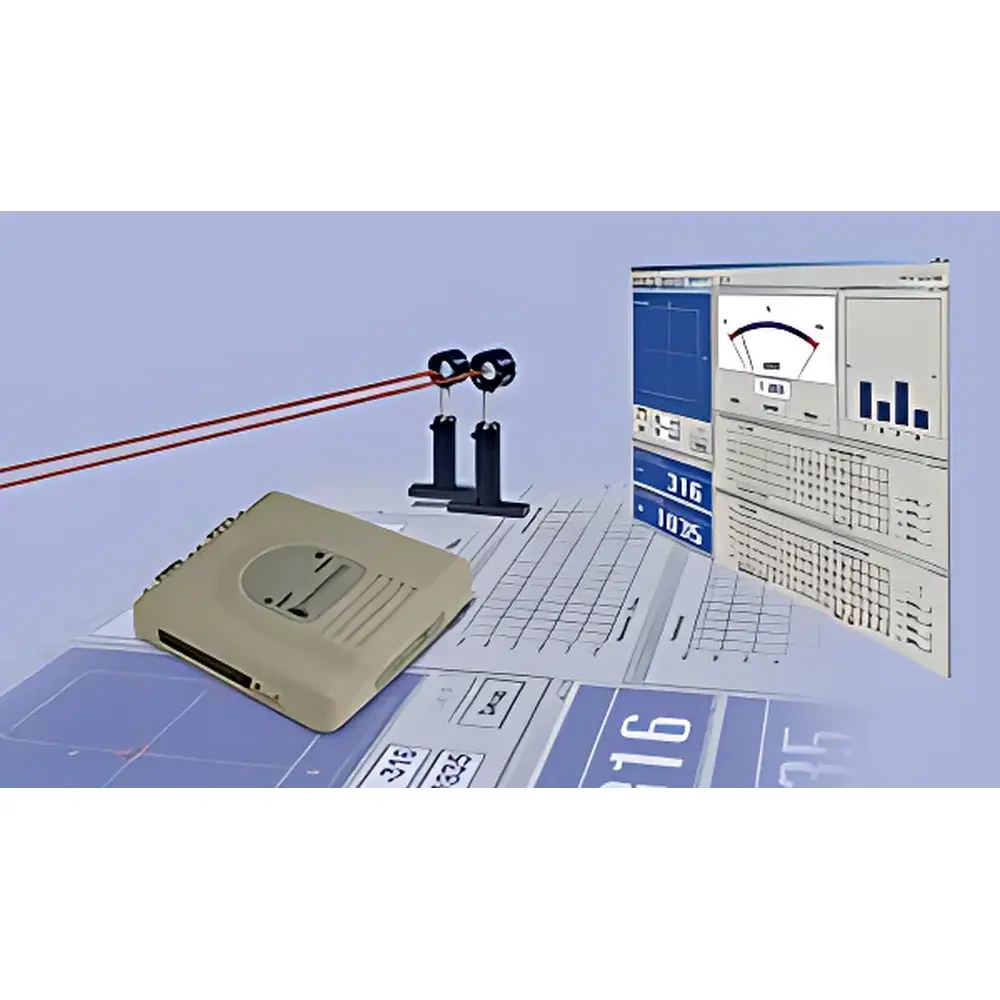
The AOE Tech SpotOn USB2.0 is a precision-engineered laser beam position and intensity analyzer designed for real-time monitoring of spatial stability and centroid displacement in continuous-wave (CW) and pulsed laser systems. Built upon dual-position-sensitive-detector (PSD) architecture, it operates on the principle of lateral photovoltaic effect to deliver analog-differential output proportional to beam centroid coordinates (X, Y) with sub-microradian angular resolution. Unlike camera-based profilers, this system provides high-bandwidth (up to 10 kHz update rate), low-latency feedback essential for active laser stabilization loops, cavity alignment diagnostics, and beam pointing jitter quantification. Its compact OEM-ready form factor and USB 2.0 interface enable seamless integration into optical tables, vacuum chambers, and automated test benches without requiring external power supplies or frame grabbers.
Key Features
- Dual-PSD configuration enables simultaneous, independent measurement of two distinct laser beams — ideal for differential alignment or multi-axis stabilization setups.
- Real-time X/Y centroid tracking with <1 µm spatial resolution (repeatability) and analog-equivalent bandwidth exceeding 5 kHz — optimized for dynamic beam drift analysis.
- Integrated auto-gain control algorithm dynamically adjusts detector sensitivity across six decades of incident power (10 µW to 2.5 mW), eliminating manual attenuation calibration.
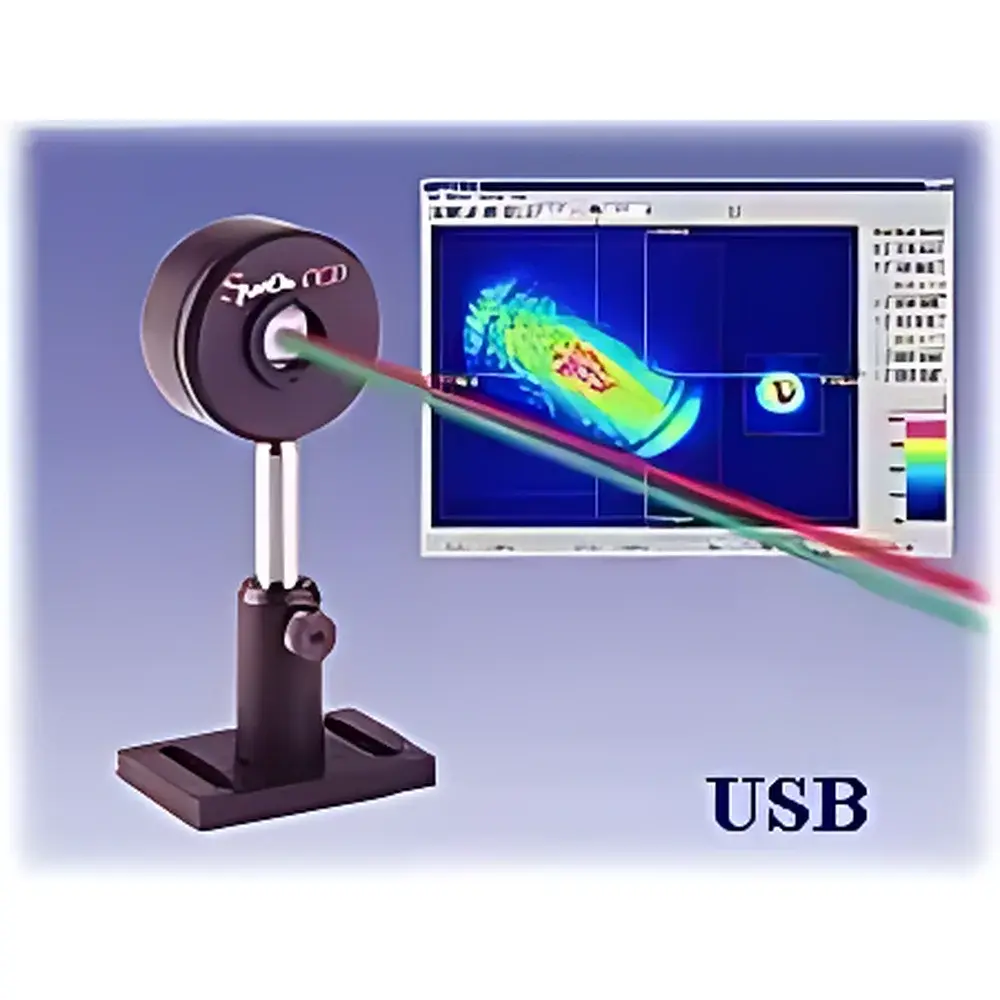
- USB 2.0 interface delivers plug-and-play operation under Windows/Linux with native support for LabVIEW, MATLAB, and Python (via provided DLL/SDK).
- Optimized spectral response from 350 nm to 1100 nm covers major laser lines including 405 nm diodes, 532 nm DPSS, 780 nm VCSELs, and 1064 nm Nd:YAG sources.
- Rugged aluminum housing with kinematic mounting holes and SMA-compatible optical input port ensures mechanical stability during long-term metrology campaigns.
Sample Compatibility & Compliance
The SpotOn USB2.0 is compatible with free-space collimated or weakly focused Gaussian and multimode beams up to 9 mm diameter. It does not require beam expansion or reduction optics for standard alignment applications. The device meets electromagnetic compatibility requirements per EN 61326-1:2013 and carries CE marking for use in laboratory and industrial environments. While not certified for medical or aerospace-grade qualification, its design adheres to ISO/IEC 17025 traceability principles when used with NIST-traceable power meters and alignment standards. Data logging outputs comply with GLP audit trail requirements when paired with validated software configurations.
Software & Data Management
The included SpotOn Control Suite provides intuitive GUI-based visualization of beam position trajectories, intensity histograms, and time-series drift plots. Raw coordinate data (X, Y, Sum, Ratio) are streamed at user-selectable sampling rates (10 Hz – 5 kHz) and exported in CSV or HDF5 format for post-processing. SDKs support deterministic timestamping synchronized to system clock with ±100 µs accuracy, enabling correlation with external triggers (e.g., pulse generators, shutter signals). For regulated environments, optional FDA 21 CFR Part 11-compliant audit log modules are available upon request — including electronic signatures, user role management, and immutable record retention.
Applications
- Laser cavity alignment and thermal drift compensation in ultrafast oscillator-amplifier chains.
- Beam pointing stability verification per ISO 11554 for laser safety certification and OEM product validation.
- Active feedback control in adaptive optics systems using closed-loop PID correction via analog output channels.
- Quantitative assessment of mechanical vibration coupling in optical mounts and breadboards.
- Educational laboratories for teaching fundamental concepts of beam propagation, centroid detection, and signal-to-noise optimization in photodetection.
- QC/QA workflows in photonics manufacturing where beam centering repeatability must be verified within ±2 µm over 8-hour shifts.
FAQ
What is the maximum beam diameter supported by the SpotOn USB2.0?
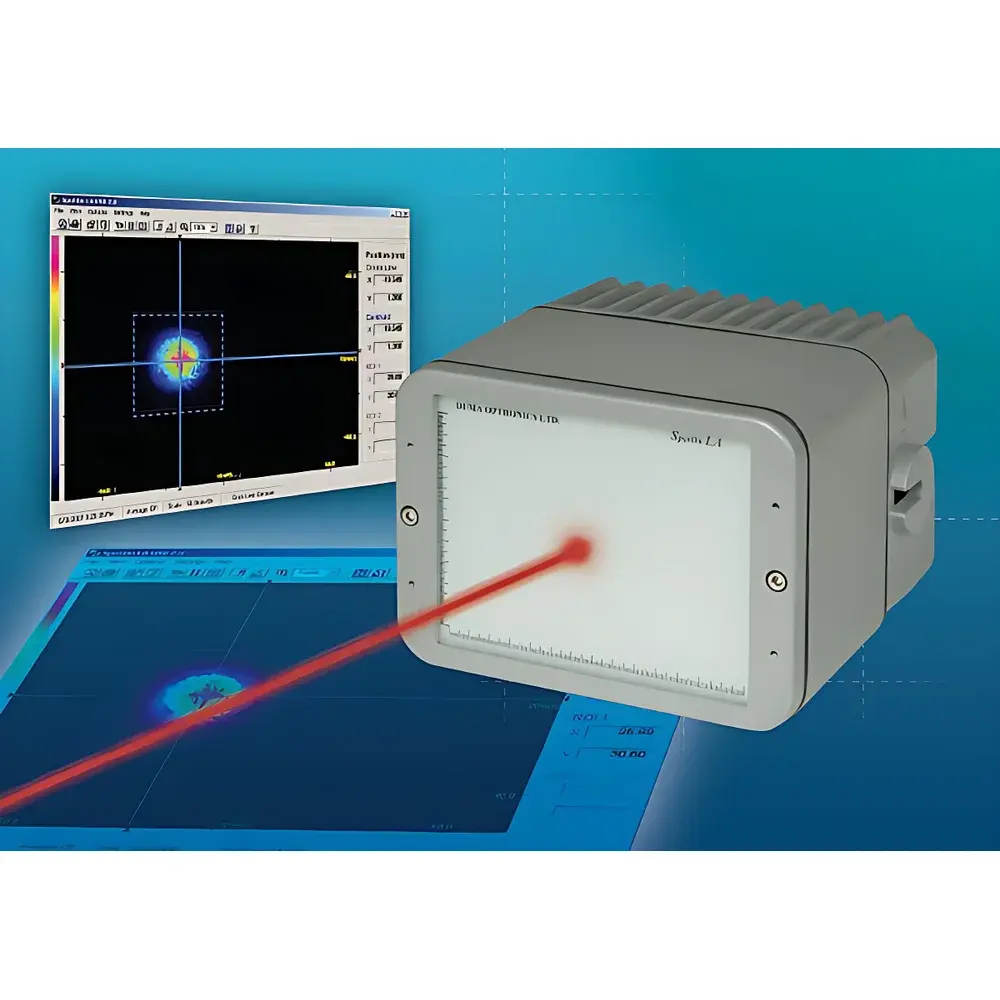
The standard PSD sensor accepts beams up to 9 mm in diameter; larger beams require optional beam reduction optics or migration to the SpotOn LA variant.
Can this system measure pulsed lasers?
Yes — it supports both CW and nanosecond-to-millisecond pulsed lasers, provided average power remains within the 10 µW–2.5 mW range and pulse repetition frequency exceeds 10 Hz for stable centroid averaging.
Is calibration traceable to national standards?
Factory calibration uses reference apertures and stabilized HeNe lasers; full NIST-traceable calibration certificates are available as an add-on service.
Does the device support synchronization with external hardware triggers?
Yes — TTL-compatible trigger input/output ports are provided on the rear panel for hardware-synchronized acquisition and external event tagging.
How is positional accuracy affected by beam shape or non-uniform intensity distribution?
PSD-based centroid calculation assumes smooth intensity gradients; highly structured or speckled beams may introduce ≤0.5% systematic error — for such cases, complementary CCD-based SpotOn models are recommended.




