
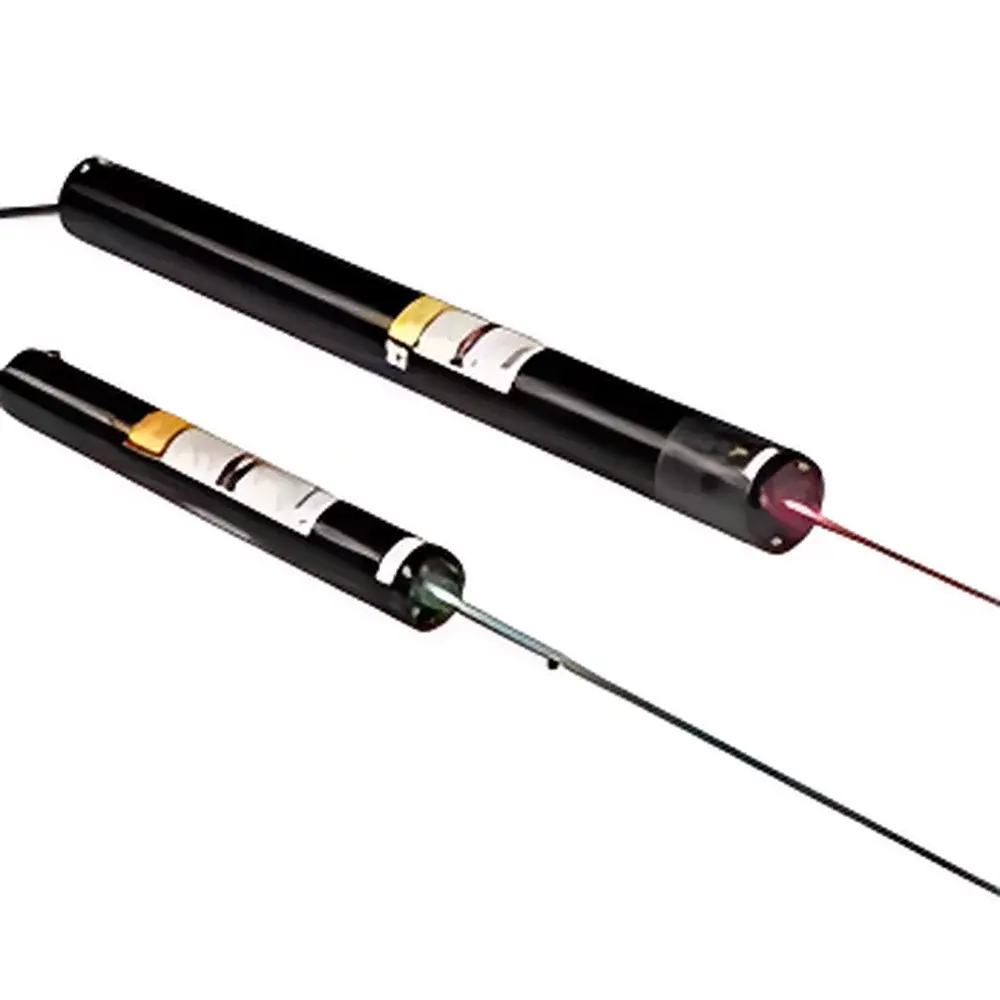
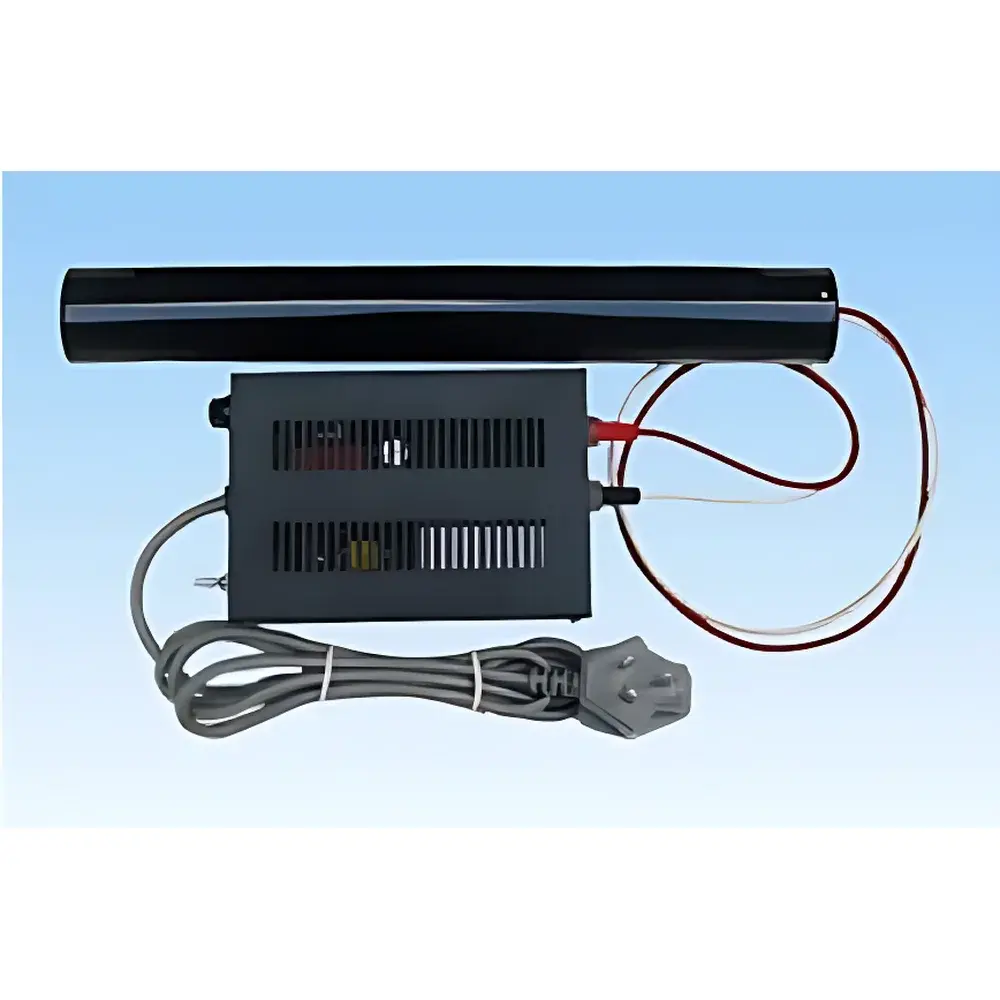
AOE Tech JF500HN Helium-Neon (He-Ne) Laser System
| Brand | AOE Tech |
|---|---|
| Origin | Shanghai, China |
| Manufacturer Type | Authorized Distributor |
| Product Type | Gas Laser System |
| Model | JF500HN |
| Output Power Range | 1.5–30 mW (CW) |
| Beam Mode | TEM₀₀ |
| Beam Diameter (1/e²) | 0.63–1.15 mm |
| Beam Divergence (1/e²) | ≤1.32 mrad |
| Polarization | Random or Linear (selectable) |
| Power Stability | ≤±1% (over 8 hrs) |
| Laser Head Dimensions | 240.03×35.1 mm to 550.3×46.5 mm (L×D, model-dependent) |
| Construction | Separated Laser Tube & Power Supply Architecture |
| Laser Tube Origin | USA-sourced sealed He-Ne tube |
| Sealing Technology | Hard-seal glass-metal hermetic encapsulation |
| Typical Lifetime | >20,000 hours |
Overview
The AOE Tech JF500HN Helium-Neon (He-Ne) Laser System is a precision-engineered continuous-wave (CW) gas laser designed for stable, low-noise red-light emission at the fundamental wavelength of 632.8 nm. Based on the well-established four-level atomic transition in a helium-neon plasma medium, this system operates under DC-excited glow discharge conditions within a sealed, hard-soldered glass envelope. Its core architecture separates the laser resonator tube from the regulated high-voltage power supply—enabling thermal isolation, simplified integration into optical benches and OEM subsystems, and enhanced long-term power stability. The JF500HN series delivers diffraction-limited TEM₀₀ output with minimal beam divergence (≤1.32 mrad, 1/e²), making it suitable for applications demanding high spatial coherence, precise interferometric alignment, and reproducible beam propagation characteristics.
Key Features
- Modular design with physically decoupled laser head and power supply unit—reducing thermal crosstalk and improving mechanical stability during extended operation.
- TEM₀₀ transverse mode output certified via near-field and far-field profiling; M² < 1.1 typical across all models.
- USA-sourced, factory-aligned He-Ne laser tubes employing mature hard-seal technology—ensuring hermetic integrity, resistance to outgassing, and operational lifetime exceeding 20,000 hours under nominal current drive.
- Selectably polarized output: linear polarization (with integrated Brewster-angle window or external polarizer option) or natural random polarization—configurable per application requirement.
- High short-term and long-term power stability: ≤±1% RMS fluctuation over 8 hours, verified under constant ambient temperature (23 ± 1 °C) and line voltage variation < ±5%.
- Comprehensive safety compliance: Class 3B laser product per IEC 60825-1:2014 and FDA 21 CFR 1040.10; includes key-switch interlock, emission indicator LED, and aperture shutter (optional).
Sample Compatibility & Compliance
The JF500HN is not a sample-interaction instrument but serves as a primary reference light source in metrology, alignment, and calibration workflows. It interfaces directly with standard optomechanical components (e.g., kinematic mounts, beam splitters, waveplates) via industry-standard 30 mm or 50 mm clear apertures. All units are manufactured and tested in accordance with ISO 9001-certified quality management systems. The laser tube assembly complies with RoHS Directive 2011/65/EU and REACH Regulation (EC) No. 1907/2006. For regulated environments—including GLP-compliant laboratories and medical device calibration facilities—the system supports optional documentation packages (traceable calibration certificate, EU Declaration of Conformity, and full manufacturing lot traceability).
Software & Data Management
As a passive analog light source, the JF500HN does not incorporate embedded firmware or digital control interfaces. However, its analog-compatible power supply features 0–5 V TTL modulation input (bandwidth ≥10 kHz) and analog monitor output (0–5 V proportional to output power), enabling integration with third-party data acquisition systems (e.g., National Instruments DAQ, Thorlabs Kinesis, LabVIEW-based control platforms). Optional accessories include USB-powered beam profiling cameras (e.g., Ophir Pyrocam III), power meters (Coherent FieldMaxII-TO), and automated alignment stages—all controllable via SCPI or vendor-specific SDKs. Audit trails for power stability verification may be generated using time-stamped photodiode readings logged through compliant software meeting FDA 21 CFR Part 11 requirements (electronic signatures, user access controls, immutable records).
Applications
- Interferometry: Used as a coherent reference source in Michelson, Mach-Zehnder, and Twyman-Green configurations for surface flatness measurement, vibration analysis, and displacement sensing.
- Optical Alignment: Provides a visible, collimated reference beam for aligning multi-axis optical systems—including fiber coupling setups, spectrometer slits, and laser cavity mirrors.
- Education & Training: Demonstrates fundamental laser physics principles—population inversion, stimulated emission, longitudinal mode structure, and Gaussian beam propagation—in undergraduate and graduate photonics laboratories.
- Calibration Standards: Serves as a stable wavelength and beam geometry reference for calibrating CCD/CMOS sensors, autocollimators, and position-sensitive detectors (PSDs).
- OEM Integration: Embedded in flow cytometers, particle sizers, barcode scanners, and confocal microscope illumination modules where reliability, spectral purity, and low noise are critical.
FAQ
What is the typical warm-up time required to achieve rated power stability?
The JF500HN achieves ≥95% of nominal output power within 15 minutes and meets its specified ±1% stability threshold after 30 minutes of continuous operation under ambient conditions (20–25 °C, no drafts).
Is the laser tube replaceable independently of the power supply?
Yes—laser heads are field-replaceable modules with standardized electrical and mechanical interfaces; replacement tubes retain original alignment and require only recalibration of monitor photodiode gain.
Does the system support OEM customization for mounting interface or electrical connectors?
AOE Tech offers mechanical redesign services (e.g., custom flange patterns, DB9/LEMO connector variants) and firmware-free analog signal conditioning options under NDA-bound engineering collaboration agreements.
How is beam pointing stability characterized, and what is its typical value?
Beam pointing drift is measured per ISO 11554:2017 using quadrant photodetectors; typical values are ≤5 µrad/°C and ≤15 µrad over 8-hour operation at constant temperature.
Are safety interlocks compatible with industrial PLC control systems?
Yes—the standard interlock loop uses dry-contact closure (IEC 61800-5-2 compliant) and can be wired directly into safety-rated PLC inputs (e.g., Siemens F-PLC, Rockwell GuardLogix) without additional interface hardware.




