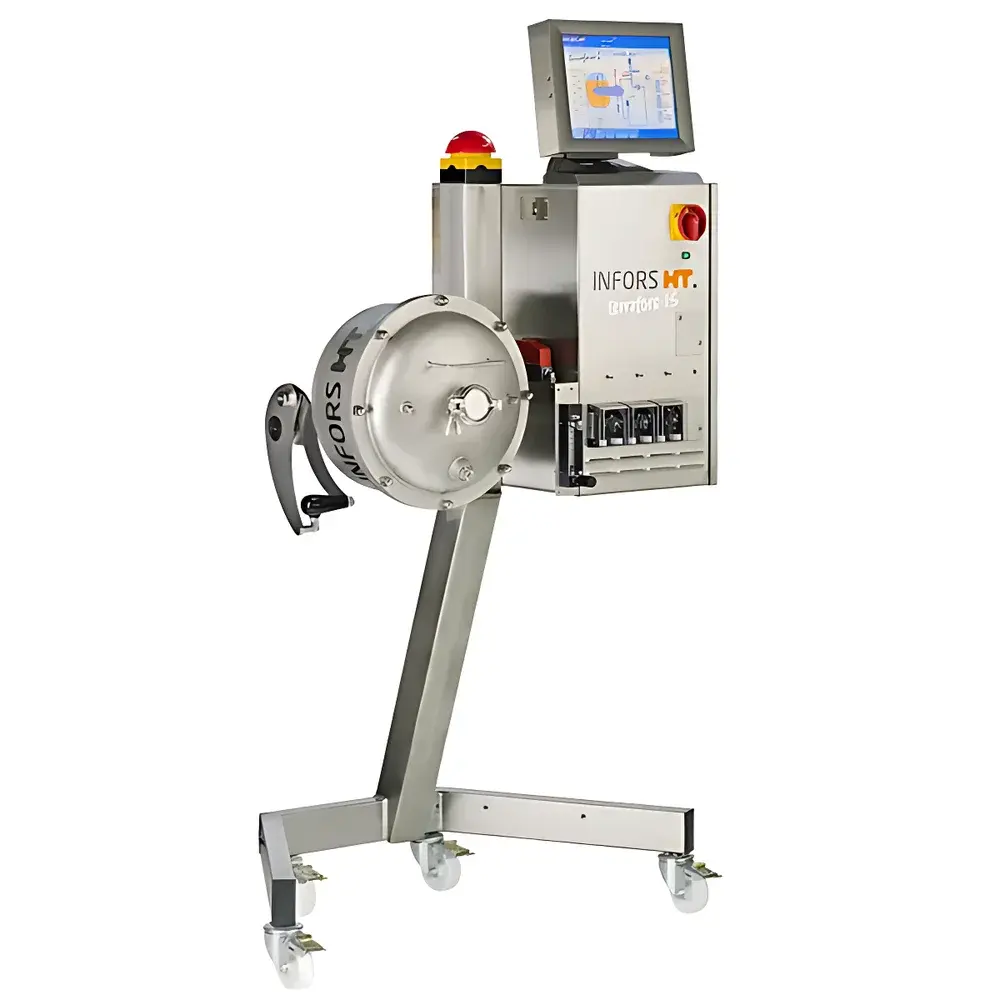
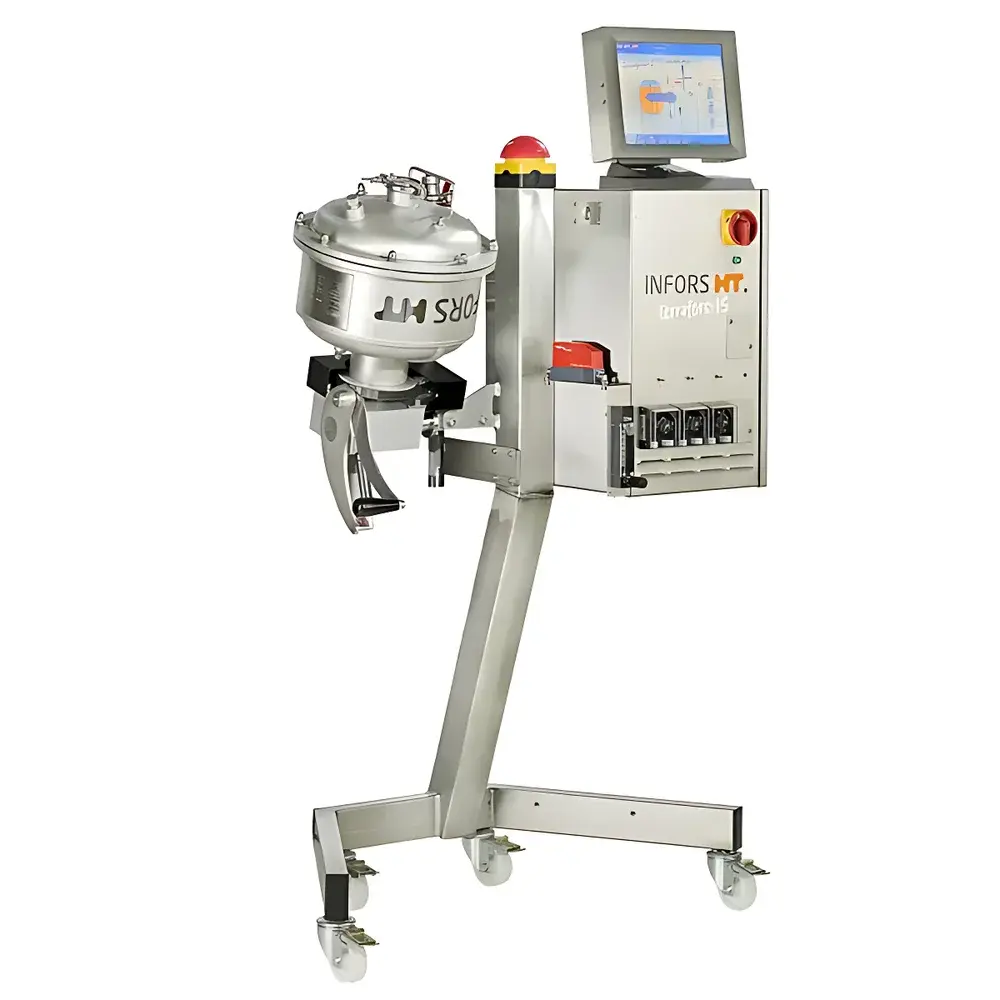
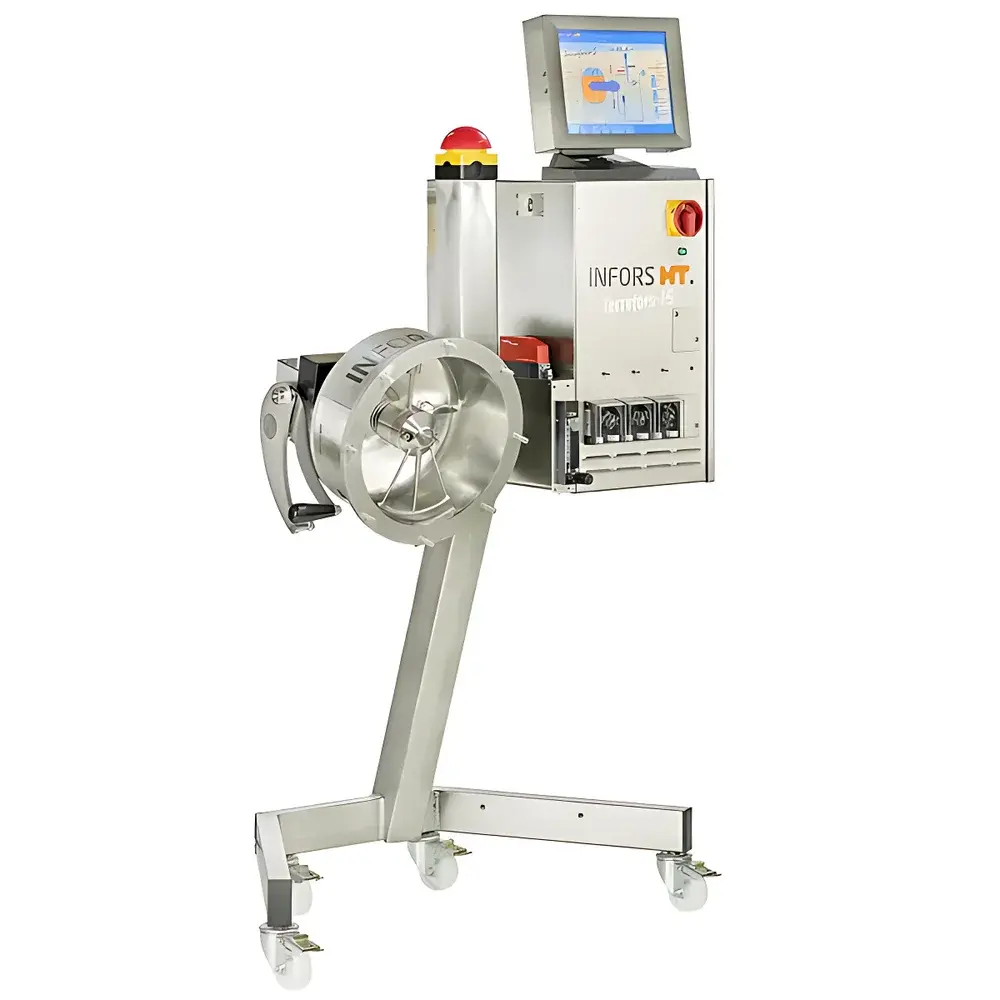
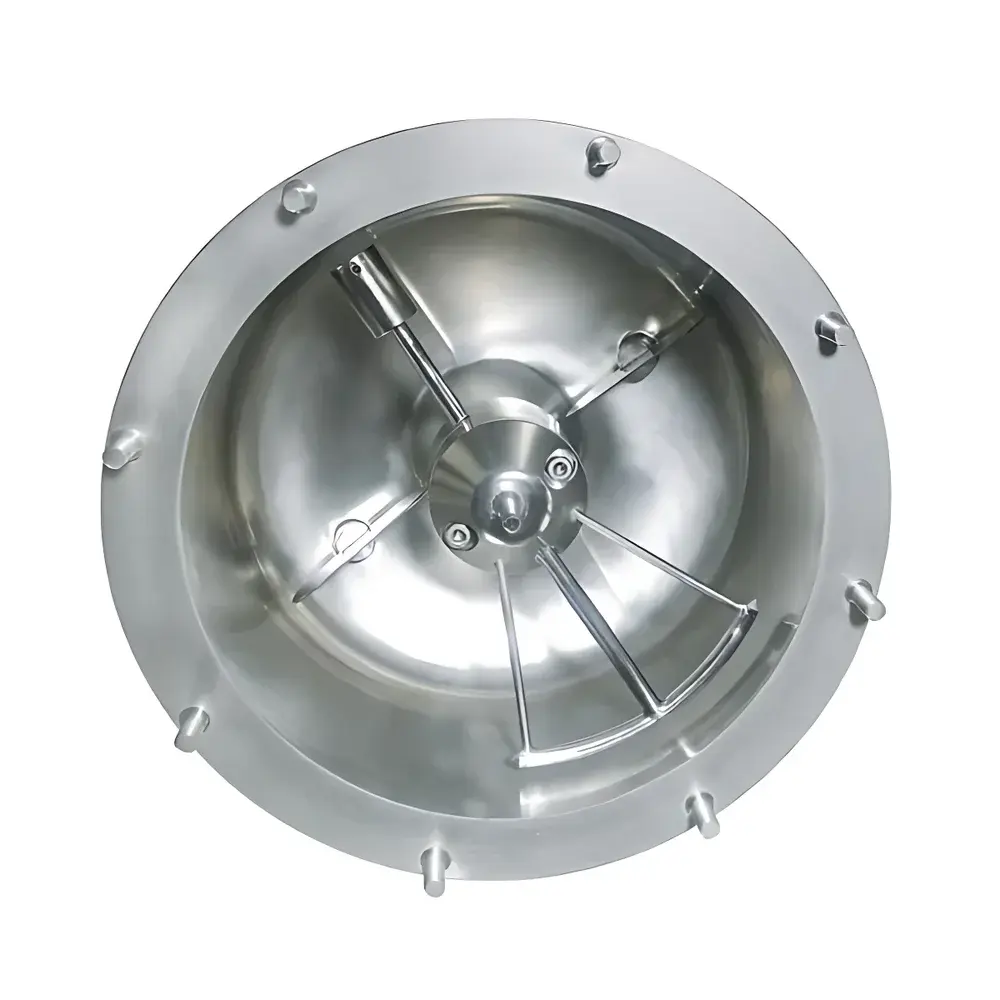
INFORS Terrafors-IS Bacteria Solid-State Fermentation Reactor
| Brand | INFORS |
|---|---|
| Origin | Switzerland |
| Model | Terrafors-IS Bacteria |
| Vessel Capacity | 15 L (3–4 kg solid substrate or 7 L liquid medium) |
| Aeration System | Stainless steel sparger with 1 mm orifices |
| CO₂ Monitoring Range | 0–10% (NDIR sensor, ±1% FS repeatability) |
| O₂ Monitoring Range | 0–25% (Zirconia sensor, ±0.5% FS repeatability) |
| Temperature Control Range | +5 °C to 80 °C (in situ sterilization up to 134 °C) |
| Rotation Speed | 0.1–10 rpm (programmable profile) |
| Air Flow Rate | 3.6–36 NL/min (rotameter-controlled with automated inlet/outlet valves) |
| Material | 316L stainless steel drum vessel |
| Sterilization | Fully automated in-situ steam sterilization via integrated INFORS steam generator |
| User Interface | Color touchscreen controller with tab-based navigation, multi-level password protection, and support for up to 24 configurable process parameters |
Overview
The INFORS Terrafors-IS Bacteria is a purpose-engineered solid-state fermentation (SSF) reactor designed for rigorous research and process development in microbial biotechnology. Unlike conventional submerged liquid fermenters, the Terrafors-IS Bacteria employs a rotating drum architecture—constructed from electropolished 316L stainless steel—to enable homogeneous mixing, controlled mass transfer, and reproducible aerobic degradation of heterogeneous solid substrates. Its core operating principle relies on regulated rotational agitation combined with precise gas-phase management (O₂ supply and CO₂ removal), enabling physiologically relevant microenvironments for filamentous fungi, actinomycetes, and bacterial consortia commonly used in lignocellulosic biomass conversion, composting microbiology, bioremediation, and enzyme production. The system supports fully automated in-situ steam sterilization (up to 134 °C), eliminating manual disassembly and ensuring strict aseptic integrity across repeated batch cycles—a critical requirement for GLP-compliant biodegradability testing and regulatory submissions under OECD 301/310 or ISO 14855 standards.
Key Features
- Rotating drum vessel (15 L total volume; accommodates 3–4 kg solid matrix or 7 L liquid medium) with internal movable baffles for optimized radial and axial mixing under low-shear conditions.
- Integrated in-situ sterilization system utilizing an onboard INFORS steam generator—mounted directly on the support frame—enabling full-unit mobility post-sterilization without compromising sterility.
- Pt100 temperature sensing with water-jacketed thermal control, delivering stable operation from +5 °C above coolant temperature to 80 °C, with validated sterilization capability at 134 °C for ≥30 minutes.
- Programmable rotation speed (0.1–10 rpm) with real-time profile editing; motor torque feedback ensures consistent agitation even with high-viscosity or particulate-laden substrates.
- Three high-precision peristaltic pumps with autoclavable pump heads—designed for sterile addition of water, acid/base, antifoam, or nutrient solutions without tubing replacement or calibration drift.
- Dual high-stability gas sensors: NDIR-based CO₂ analyzer (0–10%, ±1% FS repeatability) and zirconia-based O₂ analyzer (0–25%, ±0.5% FS repeatability), both calibrated using certified zero gas and span gas, with humidity compensation (5–95% RH non-condensing).
- Color touchscreen HMI with tab-driven workflow navigation, role-based access control (admin/operator/user), audit trail logging, and compliance-ready data export (CSV, PDF, XML).
Sample Compatibility & Compliance
The Terrafors-IS Bacteria is validated for use with complex, non-homogeneous matrices including agricultural residues (e.g., wheat straw, rice husk), municipal organic waste, contaminated soils, sewage sludge, and fungal-inoculated composts. Its robust mechanical design and corrosion-resistant construction meet ISO 13485 manufacturing quality requirements, while its digital control architecture supports FDA 21 CFR Part 11 compliance when configured with electronic signatures and immutable audit logs. The system adheres to ASTM D5338 and ISO 14855-1 for aerobic biodegradation testing, and its gas exchange metrics (e.g., respiratory quotient RQ = CO₂/O₂) are traceable to NIST-traceable calibration gases. Optional integration with INFORS off-gas analyzers enables dynamic stoichiometric modeling of catabolic activity during SSF—critical for metabolic flux analysis and scale-up prediction.
Software & Data Management
The embedded DDC (Direct Digital Control) unit runs INFORS’ proprietary BioCommand software, supporting simultaneous monitoring and closed-loop regulation of up to 24 process variables—including temperature, rotation speed, gas flow rates, pH (via optional probe), dissolved O₂ (via optical sensor), and real-time off-gas composition. All parameters are time-stamped with millisecond resolution and stored locally with redundant backup. Data export formats comply with FAIR principles (Findable, Accessible, Interoperable, Reusable), supporting seamless import into MATLAB, Python (Pandas), or commercial bioprocess analytics platforms (e.g., SIMCA, DeltaV). Event-driven alarms, deviation reporting, and SOP-linked batch templates ensure consistency across users and laboratories—facilitating multi-site method transfer and regulatory inspection readiness.
Applications
- Rapid screening of microbial consortia for lignocellulose depolymerization and bioconversion into platform chemicals (e.g., organic acids, ethanol, itaconic acid).
- Optimization of solid-state enzyme production (cellulases, xylanases, laccases) using agro-industrial byproducts as low-cost substrates.
- Bioremediation studies involving hydrocarbon-contaminated soils or pesticide-laden biomass under controlled redox conditions.
- Development of SSF-based biofertilizers and biocontrol agents (e.g., Trichoderma spp., Bacillus subtilis) with quantified spore yield and viability metrics.
- Regulatory biodegradability assessment per OECD 301B, ISO 14855-2, and ASTM D6400 for industrial compostability claims.
- Process intensification of biodiesel precursor synthesis (e.g., microbial lipid accumulation in oleaginous yeasts on spent glycerol).
FAQ
Does the Terrafors-IS Bacteria support pH monitoring and control?
No—pH sensing and titration capability are not integrated into the standard configuration. However, the system provides two dedicated 19 mm and 50 mm Tri-Clamp ports on the lid, allowing retrofitted installation of sterilizable pH probes and associated dosing modules if required for specific applications.
Can the system operate under anaerobic or microaerophilic conditions?
Yes—the gas blending module supports programmable N₂/CO₂/O₂ mixtures, and the sealed drum design enables precise control of headspace composition. Oxygen setpoints as low as 0.1% can be maintained using cascade control between the zirconia sensor and solenoid valves.
Is remote monitoring and control supported?
Yes—BioCommand software includes Ethernet connectivity and optional OPC UA server integration, enabling secure remote access via institutional VPNs and compatibility with SCADA or MES systems for centralized bioprocess oversight.
What maintenance is required for the CO₂ and O₂ sensors?
Both sensors are factory-calibrated, drift-compensated, and require no routine recalibration under normal operating conditions. Zero-point verification using certified nitrogen gas and span checks with calibration gas are recommended annually or after extended shutdown periods.
How is sampling performed for solid substrates?
The 50 mm Tri-Clamp port permits rapid, aseptic insertion of sterile coring tools or spatulas; samples are extracted without breaking vessel integrity. For liquid-phase sampling, the 19 mm port accepts standard Luer-lock syringes or peristaltic sample loops connected to external collection vials.