
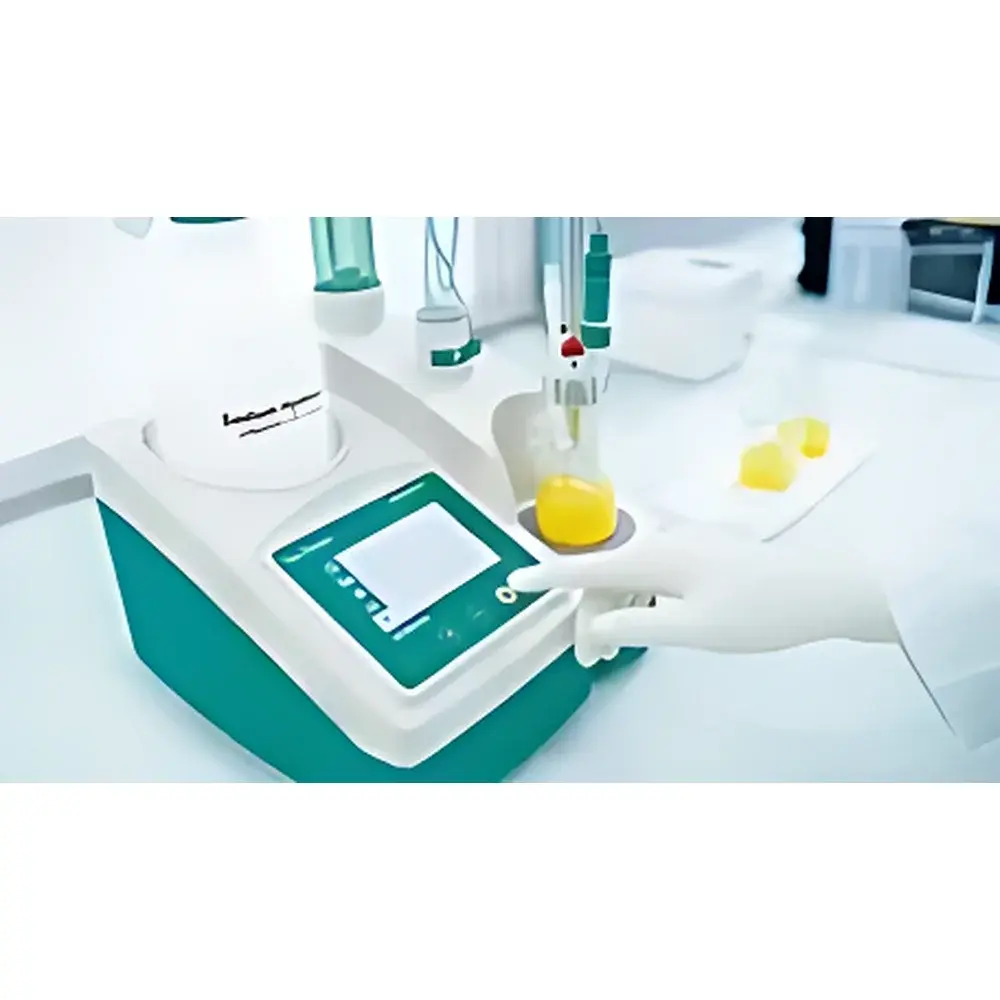
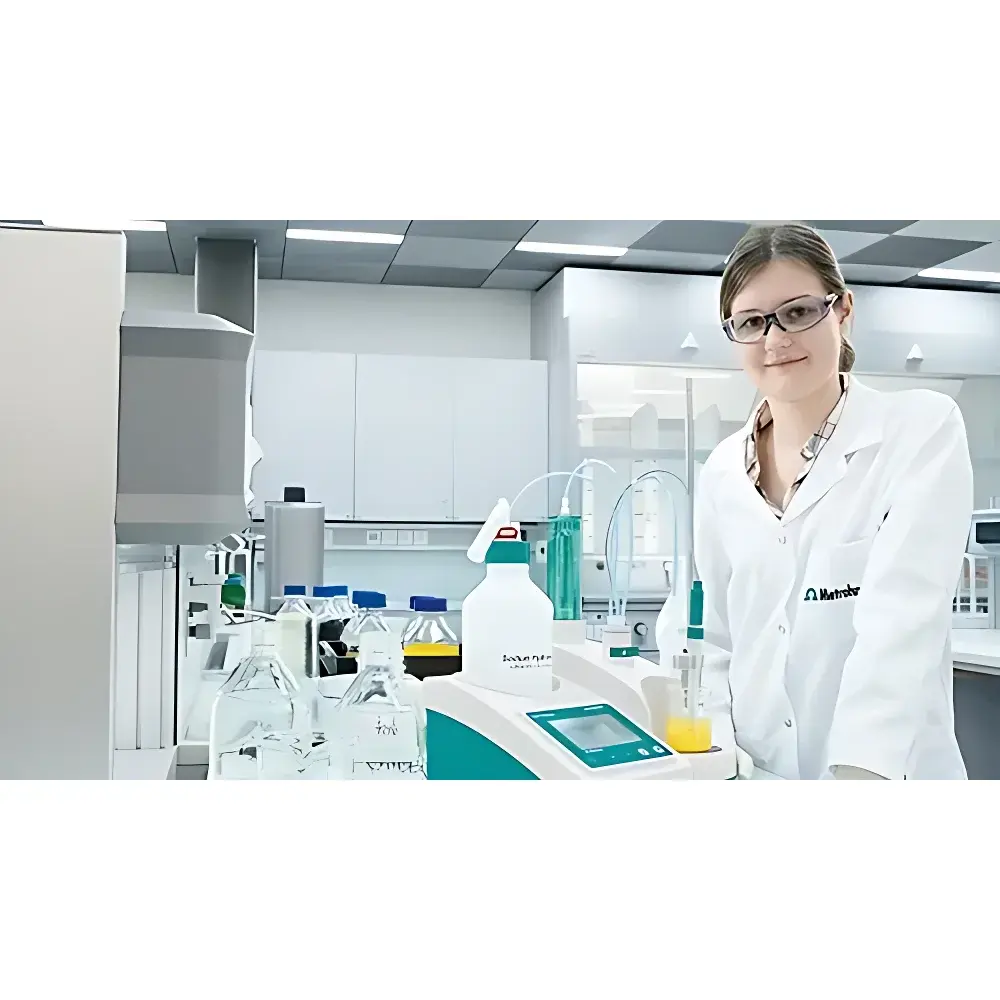
Metrohm Eco Automatic Potentiometric Titrator
| Brand | Metrohm |
|---|---|
| Origin | Switzerland |
| Manufacturer Type | Original Equipment Manufacturer (OEM) |
| Product Category | Imported Instrument |
| Model | Eco |
| Instrument Type | General-Purpose Automatic Potentiometric Titrator |
| Application Scope | Universal |
| Measurement Range | −2000 mV to +2000 mV |
| Potential Resolution | 0.1 mV |
| Titration Delivery Resolution | μL-level (compliant with DIN EN ISO 8655-6) |
| GLP/GMP Compliance | Full audit trail, method protection, electronic signature support |
Overview
The Metrohm Eco Automatic Potentiometric Titrator is a compact, benchtop potentiometric titration system engineered for precision, reproducibility, and operational simplicity in routine laboratory environments. It operates on the fundamental principle of potentiometric endpoint detection—measuring the potential difference between a reference electrode and an indicator electrode as a function of titrant addition—to determine stoichiometric equivalence points in acid-base, redox, precipitation, and complexometric titrations. Designed and manufactured in Herisau, Switzerland, the Eco platform integrates Metrohm’s decades of electrochemical instrumentation expertise into a robust, cost-optimized architecture without compromising core metrological integrity. Its all-in-one design combines a high-stability potentiometric measurement unit, precision syringe-driven burette, integrated magnetic stirrer, and intuitive touchscreen interface—eliminating external peripherals while maintaining full compliance with internationally recognized analytical standards.
Key Features
- Integrated dual-function hardware: Combines high-fidelity potentiometric measurement electronics (±0.1 mV resolution across ±2000 mV range) with a DIN EN ISO 8655-6–certified micro-dosing burette delivering sub-microliter dispensing accuracy.
- Touchscreen-driven user interface with dual operating modes: “Standard Mode” for rapid method execution by non-specialist users; “Expert Mode” with password-protected access for method development, parameter tuning, and calibration management.
- Onboard magnetic stirring control via dedicated front-panel buttons—enabling real-time adjustment of rotation speed without interrupting titration sequences.
- GLP-compliant data handling architecture: Built-in timestamped audit trail, electronic signature capability (per FDA 21 CFR Part 11 requirements), and method locking to prevent unauthorized modification.
- Modular documentation output: Results and methods exportable to USB storage devices or direct thermal/inkjet printing—fully traceable and suitable for regulated quality control (QC) and quality assurance (QA) workflows.
- Compact footprint (W × D × H ≈ 280 × 320 × 420 mm) and lightweight construction enable flexible placement on fume hoods, laminar flow benches, or mobile lab carts without requiring dedicated infrastructure.
Sample Compatibility & Compliance
The Eco titrator supports standard aqueous and non-aqueous titration matrices, including but not limited to hydrochloric acid–sodium hydroxide neutralizations, iodometric redox assays, argentometric chloride determinations, and EDTA-based metal ion complexations. Electrode compatibility encompasses all common Metrohm-compatible pH, redox, ion-selective (e.g., Ag/AgCl, Pt, Cu, F⁻), and combination electrodes with BNC or S7 connectors. The instrument conforms to key international regulatory frameworks: ISO/IEC 17025 for testing laboratories, ASTM E2029 for titrimetric method validation, USP on volumetric analysis, and EU GMP Annex 11 for computerized system validation. All firmware and software components undergo periodic verification per internal Metrohm quality management system (QMS), certified to ISO 9001:2015.
Software & Data Management
The Eco runs embedded firmware with native support for up to 20 pre-programmed titration methods—including standardized protocols for total acidity (AOAC 945.13), free fatty acids (ISO 660), chloride (ASTM D512), and peroxide value (AOCS Cd 8b-90). Method files are stored internally with version control and checksum validation. Data export formats include CSV (for LIMS integration), PDF (print-ready reports with header metadata), and XML (structured for automated QA review pipelines). Audit logs record operator ID, method name, start/end timestamps, electrode calibration history, and any parameter overrides—retained for ≥36 months unless manually purged under documented retention policy.
Applications
This system serves as a primary titration platform in pharmaceutical QC labs (e.g., assay of active pharmaceutical ingredients per USP monographs), food & beverage testing (acidity, salt content, preservative quantification), environmental water analysis (alkalinity, hardness, cyanide), petrochemical quality control (TAN/TBN determination), and academic teaching laboratories where pedagogical clarity and procedural fidelity are paramount. Its universal design eliminates the need for application-specific hardware variants—reducing capital expenditure and simplifying training across multi-departmental facilities.
FAQ
Does the Eco support non-aqueous titrations?
Yes—it accepts standard glass pH electrodes and redox sensors compatible with solvents such as glacial acetic acid, methanol, and acetone, provided appropriate reference junctions and filling solutions are selected.
Can I import custom titration curves or modify equivalence point algorithms?
Custom curve fitting (e.g., first/second derivative, Gran plot, or user-defined slope thresholds) is available only in Expert Mode with firmware v2.3 or later—subject to Metrohm technical approval.
Is remote monitoring or network connectivity supported?
No Ethernet or Wi-Fi interface is built-in; however, USB-host functionality allows connection to local PCs running Metrohm’s optional TitraLab® Suite for advanced reporting and fleet management.
What electrode calibration routines are included?
Two-point pH calibration (NIST-traceable buffers), single-point redox calibration (quinhydrone or Fe²⁺/Fe³⁺ standards), and automatic liquid junction potential compensation for variable ionic strength samples.
How frequently does the burette require recalibration?
Per DIN EN ISO 8655-6, volumetric accuracy verification is recommended before each analytical campaign or at least daily when used continuously—automated self-check routines guide users through gravimetric verification steps.





