
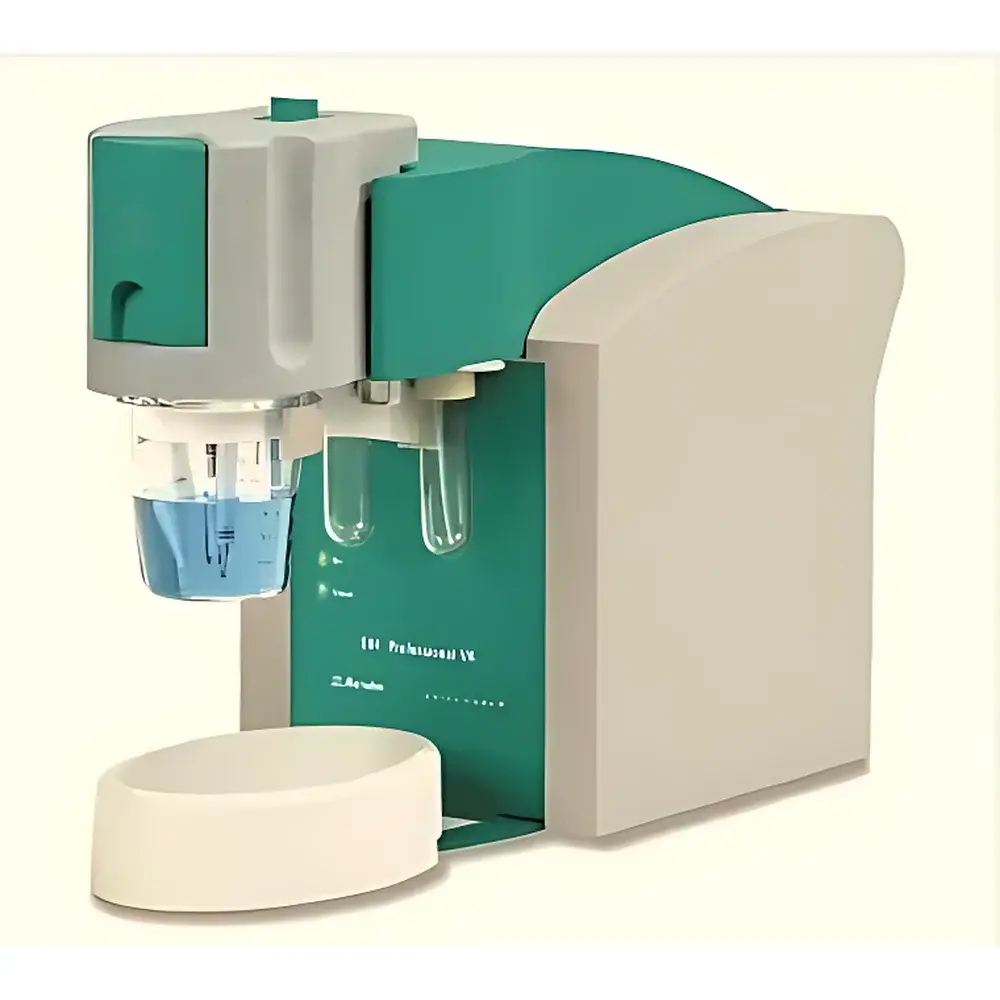
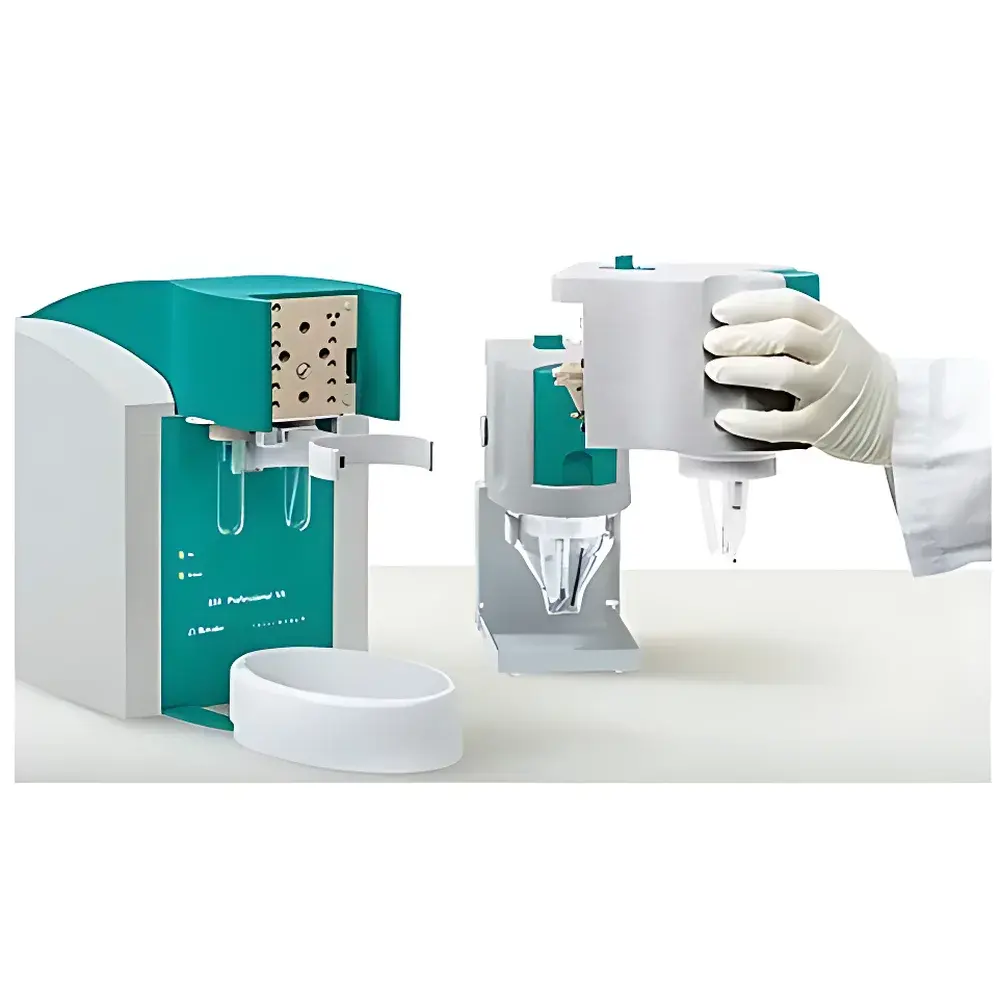
Metrohm 884 Professional Voltammetric Polarograph
| Brand | Metrohm |
|---|---|
| Origin | Switzerland |
| Manufacturer | Metrohm AG |
| Country of Origin | Imported |
| Model | 884 |
| Pricing | Upon Request |
Overview
The Metrohm 884 Professional Voltammetric Polarograph is a high-precision, modular electrochemical analyzer engineered for trace-level quantitative analysis using voltammetry and polarography. Based on Metrohm’s decades-long expertise in electroanalytical instrumentation, the 884 platform implements controlled-potential techniques—including differential pulse voltammetry (DPV), square-wave voltammetry (SWV), anodic/cathodic stripping voltammetry (ASV/CSV), and cyclic voltammetric stripping (CVS)—to deliver reproducible detection of metals and organic additives at sub-pptr (picogram per gram) concentrations. Its core measurement principle relies on precise potential control across a three-electrode system (working, reference, and counter electrodes), coupled with highly sensitive current measurement in the picoampere range. Designed for laboratories requiring regulatory-compliant, auditable electrochemical data—particularly in environmental monitoring, pharmaceutical water testing, electroplating bath control, and high-purity chemical certification—the 884 integrates metrological traceability via an internal certified potentiostatic calibrator that performs automatic zero and gain adjustment prior to each measurement cycle, compensating for ambient thermal drift and humidity-induced baseline shifts.
Key Features
- Modular hardware architecture enabling rapid reconfiguration for diverse electrochemical methods (DPV, SWV, ASV, CSV, CVS, linear sweep voltammetry)
- Interchangeable measurement heads with pre-aligned electrode cartridges—electrode swapping completed in under 10 seconds without recalibration
- Integrated certified potentiostat with real-time potential verification and automatic offset correction before every analysis
- Compact benchtop footprint (350 × 300 × 250 mm) optimized for space-constrained QC labs and cleanroom environments
- Full compatibility with Metrohm Dosino dosing modules, peristaltic pumps, and sample processors for end-to-end automation
- Compliance-ready design supporting audit trails, electronic signatures, and method versioning per FDA 21 CFR Part 11 and ISO/IEC 17025 requirements
Sample Compatibility & Compliance
The 884 supports direct analysis of aqueous matrices including seawater, boiler feedwater, ultrapure process water (UPW), plating electrolytes, and high-purity reagents (e.g., HNO₃, HCl, HF grades). It quantifies trace metals—Cd, Pb, Ni, Co, Fe, Cu, Zn, Tl—at detection limits ranging from 10–100 pg/mL depending on matrix and method configuration. For organic additive analysis in electroplating baths, the system performs CVS-based quantification of suppressors, brighteners, and levelers with <±2% RSD precision across multi-day validation studies. All measurement protocols adhere to ASTM D3559 (lead in water), ISO 8692 (freshwater toxicity testing), USP <232>/<233> (elemental impurities), and EN 16262 (metal speciation in industrial effluents). Instrument qualification includes IQ/OQ documentation packages aligned with GLP and GMP laboratory practices.
Software & Data Management
The viva software suite serves as the central analytical engine for method development, execution, and data governance. It provides role-based user access control (administrator, analyst, reviewer), encrypted database storage with immutable audit logs, and full traceability from raw current-time curves to final concentration reports. Method templates support dynamic parameter adaptation—e.g., automatic scan rate adjustment based on sample conductivity or deposition time optimization per analyte redox kinetics. Data evaluation includes peak deconvolution, baseline correction algorithms (polynomial and spline fitting), and statistical outlier detection per ICH Q2(R2). Export formats include CSV, PDF, XML (ASTM E1382-compliant), and direct LIMS integration via ODBC or RESTful API. All software modules undergo annual cybersecurity vulnerability assessment and are validated per Annex 11 and GAMP 5 guidelines.
Applications
- Trace metal monitoring in seawater and marine sediment pore water per EPA Method 7063
- Quantification of copper and iron in ultrapure boiler feedwater per ASTM D511/D512
- CVS-based quality control of acid copper plating baths in semiconductor packaging lines
- Speciation analysis of Cr(III)/Cr(VI) in wastewater treatment effluents
- Validation of elemental impurity profiles in excipients per ICH Q3D
- Stability-indicating assays for redox-active pharmaceuticals in accelerated degradation studies
FAQ
Does the 884 support GLP-compliant data archiving?
Yes—the viva software generates time-stamped, tamper-evident audit trails with full metadata (operator ID, instrument state, calibration history, raw signal files) meeting GLP Annex 1 and OECD 17025 requirements.
Can the 884 be integrated into a fully automated sample-to-report workflow?
Yes—via optional Metrohm OMNIS Sample Processor, Dosino dispensers, and custom script modules, enabling unattended batch processing of up to 96 samples with integrated cleaning, standard addition, and spike recovery validation.
Is electrode calibration traceable to national standards?
All internal potentiostatic calibrations are traceable to NIST SRM 1765 (potentiometric reference solution) and verified annually by Metrohm’s accredited calibration laboratory (ISO/IEC 17025:2017 certified).
What electrode configurations are supported out-of-the-box?
Standard configurations include hanging mercury drop electrode (HMDE), rotating disk electrode (RDE), gold film, bismuth-film, and screen-printed carbon electrodes—all with plug-and-play recognition via embedded RFID tags.
How does the system handle complex, high-salinity matrices like seawater?
The 884 employs adaptive background subtraction and multi-step deposition protocols to mitigate chloride interference; method-specific matrix-matched calibration and standard addition are programmatically supported within viva.
Related Products





