
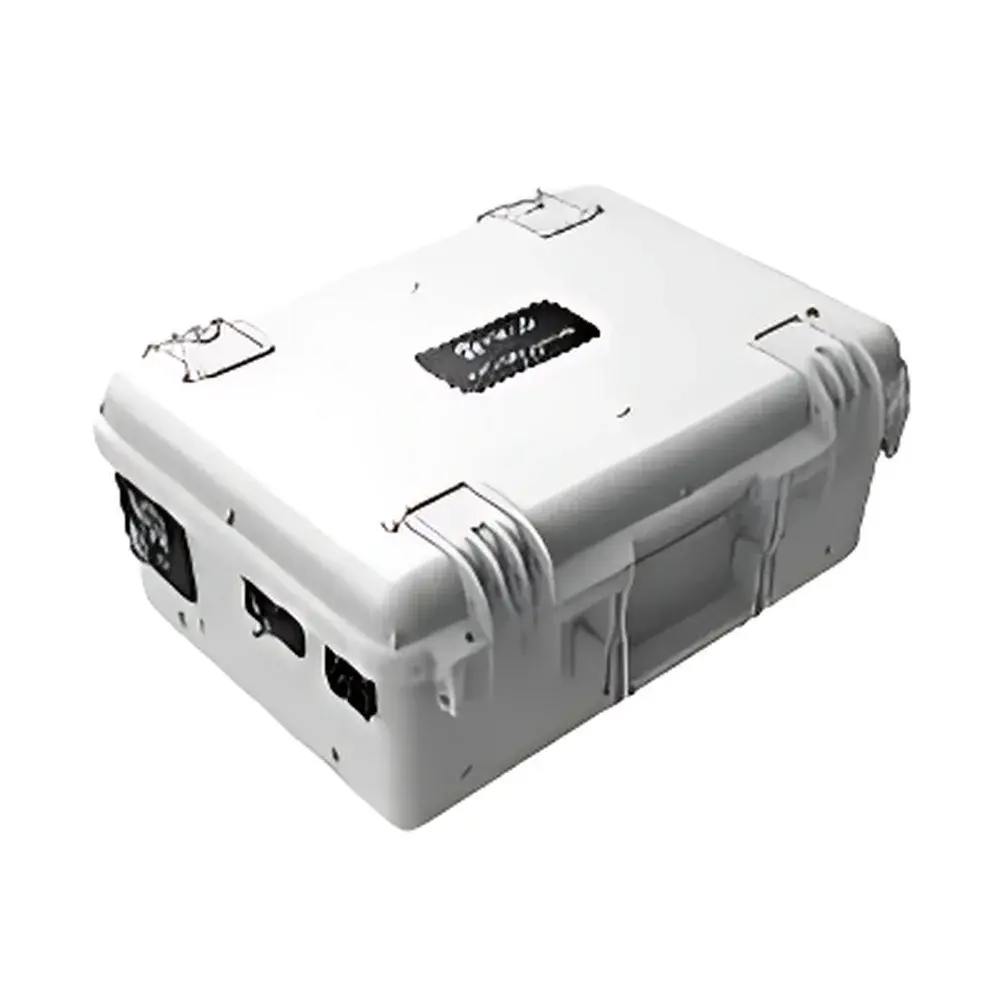
Lingxi Optoelectronics HGA-331p Portable High-Precision Greenhouse Gas Analyzer
| Brand | Lingxi Optoelectronics |
|---|---|
| Origin | Zhejiang, China |
| Model | HGA-331p |
| Measurement Principle | Cavity Ring-Down Spectroscopy (CRDS) |
| Target Gases | CO₂, CH₄, H₂O |
| Detection Sensitivity | Sub-ppb level |
| Power Supply | Rechargeable Li-ion battery (8 h continuous operation) |
| Connectivity | Integrated Wi-Fi, USB 2.0, Ethernet |
| Operating Temperature | 10–35 °C |
| Dimensions | Compact portable form factor (< 4.5 kg) |
| Compliance | Designed for field-deployable environmental monitoring per ISO 14064-1 and EPA Method TO-15 adjunct principles |
Overview
The Lingxi Optoelectronics HGA-331p Portable High-Precision Greenhouse Gas Analyzer is an engineered field instrument designed for quantitative, real-time measurement of carbon dioxide (CO₂), methane (CH₄), and water vapor (H₂O) in ambient air and controlled sampling environments. It employs Cavity Ring-Down Spectroscopy (CRDS), a laser-based absorption technique that achieves high sensitivity through ultra-long effective optical path lengths—up to 20 km within a compact, thermally stabilized multipass cavity. Unlike conventional NDIR or tunable diode laser (TDLAS) systems, CRDS delivers absolute concentration measurements without calibration drift dependency, as it directly quantifies photon decay time (τ) in nanoseconds, which is inversely proportional to total absorbance. This physical principle ensures traceable accuracy, minimal interferences from pressure or temperature fluctuations, and inherent immunity to source intensity variations. The HGA-331p is optimized for deployment in remote or logistically constrained locations—including eddy covariance towers, landfill perimeters, agricultural soil chambers, and natural gas infrastructure—where laboratory-grade precision must coexist with operational portability and low power consumption.
Key Features
- Sub-part-per-trillion (ppt) to sub-part-per-billion (ppb) detection limits for CO₂ and CH₄, validated against NIST-traceable reference standards under field-relevant humidity conditions.
- Simultaneous, fully resolved spectral acquisition of CO₂ (at 1.57 µm), CH₄ (at 1.65 µm), and H₂O (rotational-vibrational bands near 1.39 µm) using dual-wavelength pulsed lasers and high-finesse optical cavities.
- Proprietary pressure stabilization algorithm actively regulates cavity internal pressure to ±0.02 kPa, minimizing spectral broadening and enabling long-term measurement stability (< 0.5 ppb CH₄ drift over 24 h).
- Real-time water vapor correction: integrated spectroscopic H₂O quantification enables stoichiometric dilution compensation for CO₂ and CH₄, eliminating need for external drying or empirical correction models.
- Onboard rechargeable lithium-ion battery supports 8 hours of continuous operation at full spectral resolution; hot-swap capability maintains uninterrupted data acquisition during battery replacement.
- Embedded Linux platform with native support for Wi-Fi 802.11n, USB 2.0 host/device mode, and 10/100BASE-T Ethernet—enabling remote configuration, live web UI access, and direct integration into SCADA or IoT telemetry networks.
Sample Compatibility & Compliance
The HGA-331p accepts standard 1/4″ Swagelok®-compatible inlet tubing and operates across a sample flow range of 0.1–1.0 L/min with optional mass flow controller integration. It accommodates variable humidity (0–95% RH non-condensing) and particulate-laden airstreams when paired with a heated Nafion™ dryer or cyclonic pre-filter. Instrument design adheres to electromagnetic compatibility (EMC) requirements per IEC 61326-1 and environmental robustness per IP54 enclosure rating. Data integrity protocols align with GLP-compliant field practices, including timestamped raw decay curve logging, audit-trail-enabled parameter changes, and exportable .csv/.netCDF datasets compliant with ICOS (Integrated Carbon Observation System) metadata standards. While not certified for regulatory enforcement use, its performance meets technical specifications referenced in ISO 14064-1 Annex B (GHG quantification) and supports Tier 2 inventory reporting per IPCC 2006 Guidelines.
Software & Data Management
The analyzer ships with Lingxi FieldView™ v3.x firmware and desktop/web application suite. The embedded web interface provides real-time spectral visualization, cavity alignment diagnostics, and configurable alarm thresholds. All raw ring-down decay traces are stored locally on microSD (up to 128 GB) with automatic rollover and SHA-256 checksum validation. Export options include time-synchronized CSV (with UTC timestamps, GPS coordinates if external module attached), CF-compliant NetCDF-4 files for atmospheric modeling workflows, and MQTT payloads for cloud ingestion (e.g., AWS IoT Core, Azure IoT Hub). Remote firmware updates and script-based measurement scheduling are supported via secure HTTPS REST API with TLS 1.2 authentication.
Applications
- Mobile ground-based GHG flux mapping along transects or perimeter surveys (e.g., oil & gas facilities, biogas plants).
- In situ soil chamber studies requiring sub-minute temporal resolution and concurrent CO₂/CH₄/H₂O co-quantification for partitioning respiration and methanogenesis.
- Calibration transfer verification between stationary analyzers and mobile platforms using common reference gases.
- Urban air quality campaigns integrating with meteorological stations and low-cost sensor networks for source apportionment modeling.
- Validation of satellite-derived XCO₂ and XCH₄ retrievals via coordinated ground truth measurements under clear-sky conditions.
FAQ
What is the minimum detectable concentration for CH₄ under typical field conditions?
At 1 Hz averaging and 40% RH, the 1σ noise-equivalent concentration is ≤ 0.3 ppb for CH₄.
Does the HGA-331p require daily calibration with certified standards?
No—CRDS provides absolute concentration measurement; however, biweekly zero/span verification using NIST-traceable CO₂/CH₄/N₂ blends is recommended for QA/QC documentation.
Can the instrument operate unattended for extended periods?
Yes—when powered via 12 V DC external supply and equipped with environmental enclosure, it supports continuous operation for >30 days with automated data offload via Ethernet.
Is spectral interference between CO₂ and H₂O corrected in real time?
Yes—the firmware applies physics-based line shape fitting using HITRAN 2020 parameters to deconvolve overlapping absorption features without empirical cross-sensitivity tables.
What GPS integration options are available?
External USB or serial NMEA 0183 GPS receivers (e.g., u-blox NEO-M8N) can be connected; position metadata is embedded in all exported data files.
Related Products







