
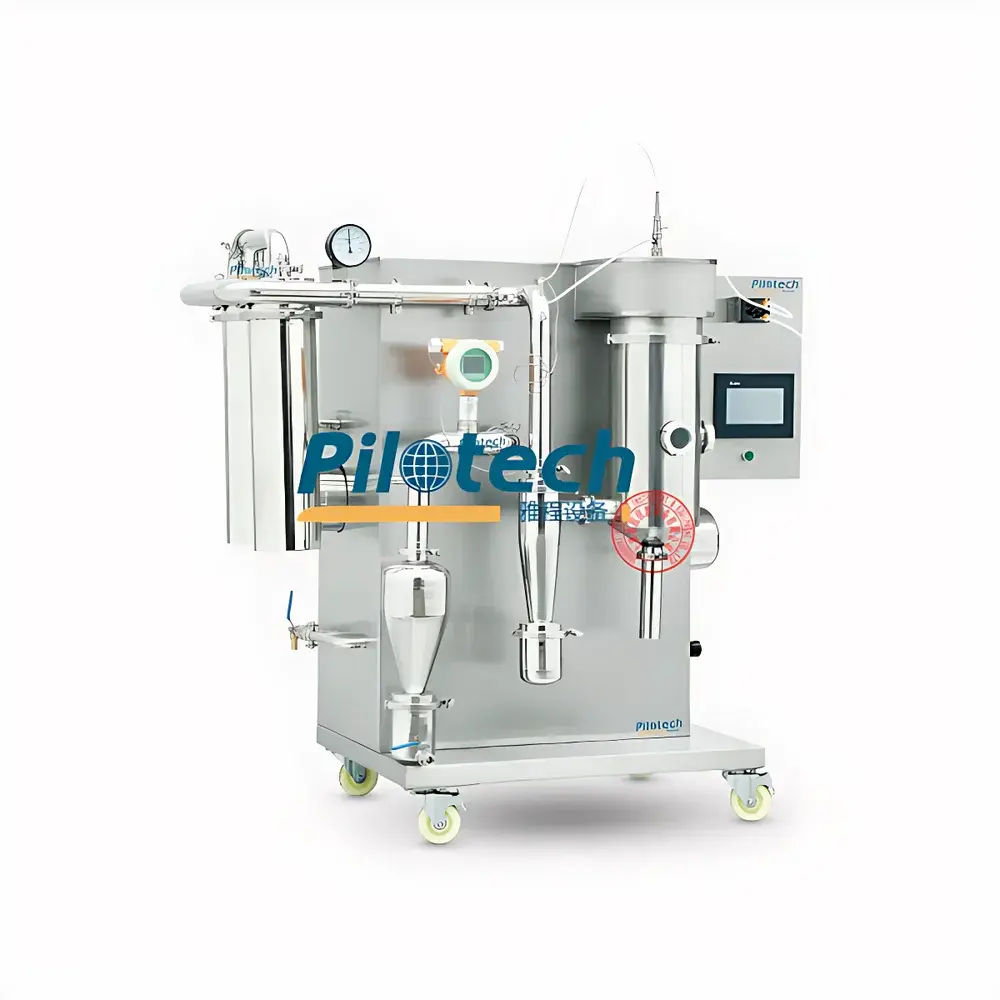
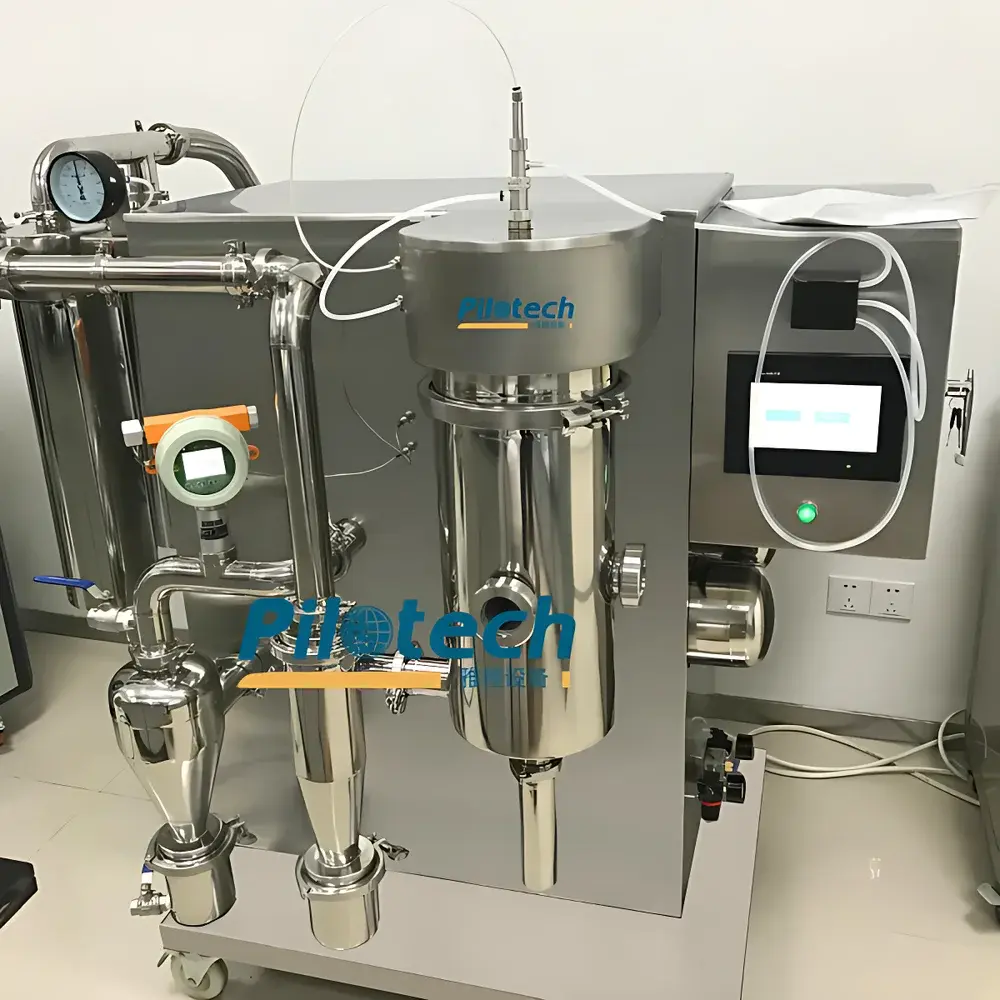
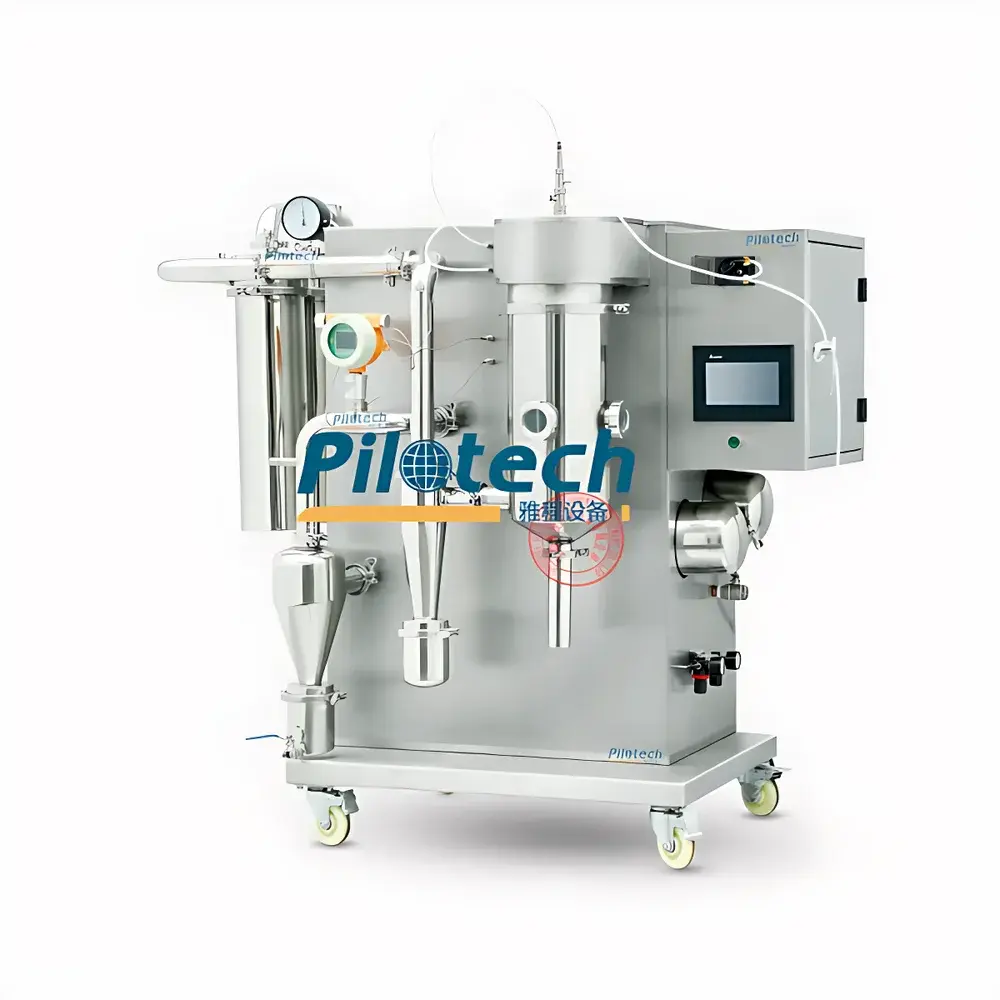
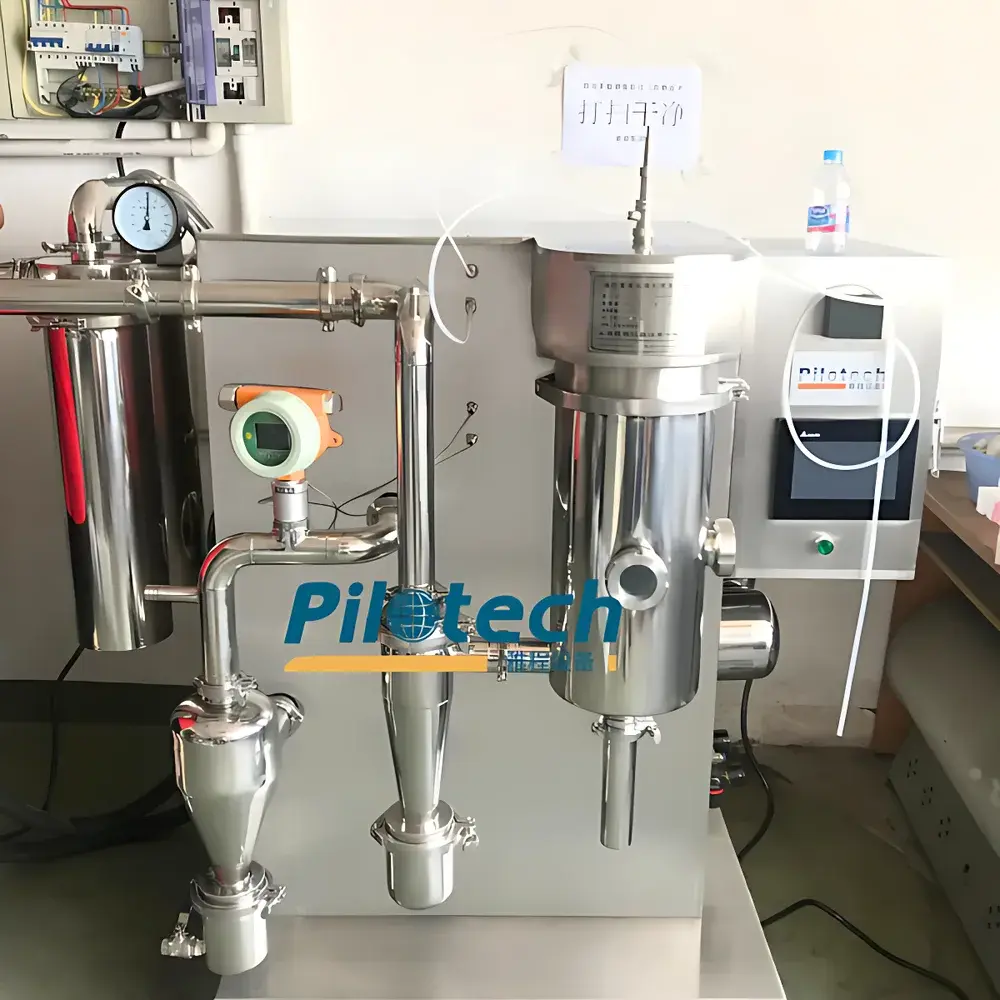
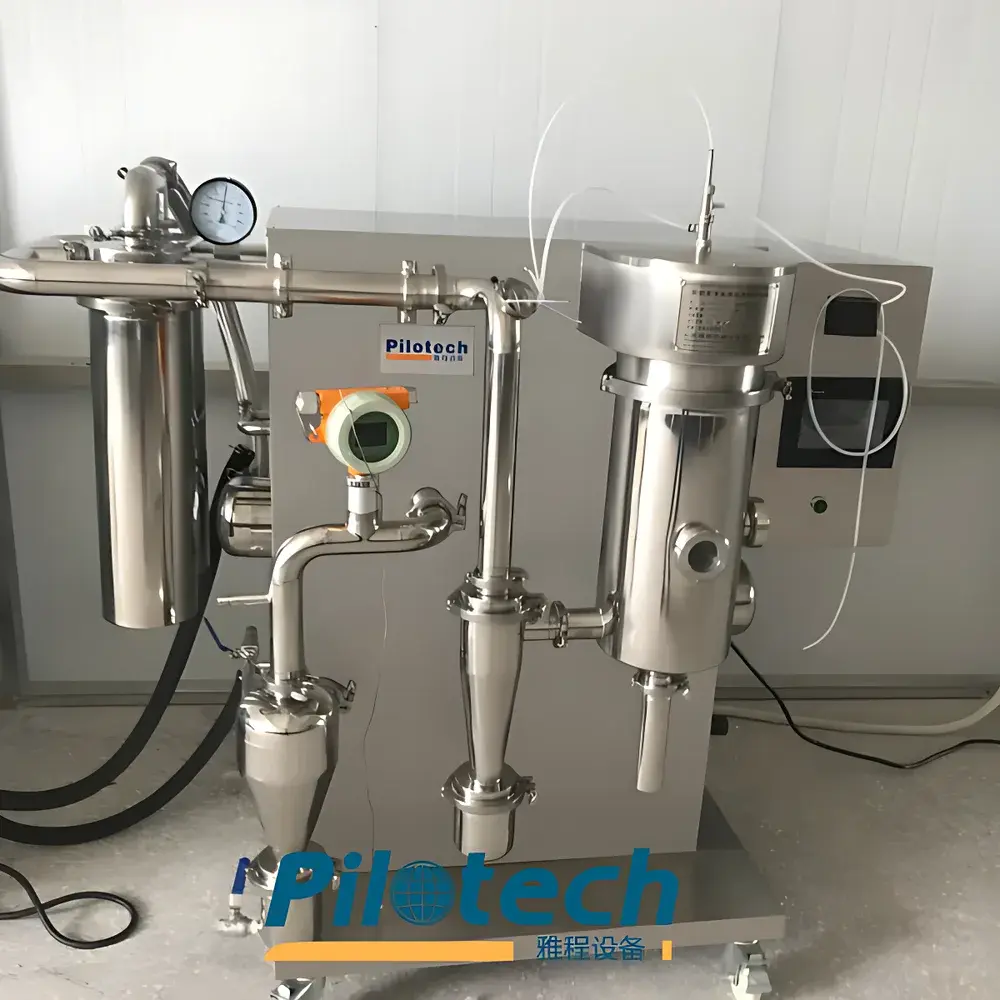
雅程有机溶剂喷雾干燥机YC-015A
| Brand | PiloTech |
|---|---|
| Origin | Shanghai, China |
| Manufacturer Type | OEM Manufacturer |
| Country of Origin | China |
| Model | YC-015A |
| Sample Compatibility | Aqueous & organic solvent-based solutions (e.g., ethanol, acetone, ethyl acetate, chloroform, DMF) |
| Max Feed Rate | 1500 mL/h |
| Inlet Air Temperature Range | Ambient to 200 °C |
| Particle Size Distribution | 1–25 µm |
| Oxygen Monitoring Threshold | Auto-shutdown at ≥2.5% O₂ |
| Nozzle Orifice | 1.0 mm standard (0.5/0.8/1.5/2.0 mm optional) |
| Temperature Control Accuracy | ±1 °C (PID-regulated) |
| Integrated Solvent Recovery | Yes (condenser + heat exchanger) |
| Inert Gas System | Nitrogen-closed loop with real-time O₂ monitoring |
Overview
The PiloTech YC-015A Closed-Cycle Organic Solvent Spray Dryer is an engineered laboratory-scale system designed for the safe, reproducible, and solvent-efficient conversion of heat-sensitive liquid feeds—including aqueous suspensions and flammable organic solutions—into free-flowing microparticulate powders. Unlike conventional open-loop spray dryers, the YC-015A operates under a fully sealed nitrogen atmosphere, eliminating oxygen exposure to prevent combustion, oxidation, or degradation during drying. Its core process leverages atomization via concentric two-fluid nozzles, rapid convective drying in heated inert gas, cyclonic particle separation, and integrated condensation-based solvent recovery. This architecture complies with fundamental safety requirements for handling Class I flammable solvents (per NFPA 30 and IEC 60079-10-1), making it suitable for R&D workflows involving pharmaceutical actives, biopolymers, nanocapsules, catalyst precursors, and functional food ingredients where thermal lability, oxidative instability, or toxicity necessitate closed-system operation.
Key Features
- Full nitrogen-closed loop system with real-time oxygen concentration monitoring (0–10% range); automatic emergency shutdown triggered at ≥2.5% O₂
- 7-inch color touchscreen HMI with intuitive Chinese/English bilingual interface; PLC-based control architecture supporting parameter logging and recipe storage
- Concentric dual-channel nozzle design ensuring symmetrical atomization—eliminating wall impingement and maximizing powder recovery efficiency
- Adjustable nozzle vertical positioning for fine-tuning droplet trajectory relative to drying airflow, optimizing residence time and moisture evaporation profile
- Integrated refrigerated condenser and heat exchanger enabling on-line recovery of volatile organic solvents (e.g., methanol, THF, dichloromethane) with >95% typical recovery yield
- Robust corrosion-resistant construction: stainless steel 316L contact surfaces, EPDM/FKM seals, and nitrogen-compatible fan housing with zero material contact
- Intelligent post-drying cooldown protocol: programmable fan continuation until chamber temperature falls below user-defined safety threshold (default: <45 °C)
- Low sample requirement: as little as 30 mL feed volume enables rapid feasibility screening without material waste
Sample Compatibility & Compliance
The YC-015A accommodates a broad spectrum of thermolabile and chemically reactive feedstocks, including protein solutions, enzyme formulations, lipid nanoparticles, polymeric micelles, metal-organic frameworks (MOFs), and small-molecule APIs dissolved in polar aprotic or protic solvents. Minimum inlet temperature is adjustable down to 60 °C for low-boiling solvents (e.g., acetone, diethyl ether), while aqueous systems typically operate between 105–180 °C. All wetted components conform to USP Class VI biocompatibility standards. The system supports GLP-compliant operation through audit-trail-enabled parameter logging (time-stamped setpoints, deviations, alarms), aligning with FDA 21 CFR Part 11 data integrity expectations when paired with validated software configurations. It meets CE machinery directive (2006/42/EC) and ATEX Zone 2/22 classification prerequisites for inerted equipment used in potentially explosive atmospheres.
Software & Data Management
The embedded controller records all critical process variables—including inlet/outlet temperature, nitrogen flow rate, pump speed, nozzle purge pressure, O₂ concentration, and cyclone temperature—at 1-second intervals. Data exports natively to CSV format via USB port, enabling direct import into MATLAB, Python pandas, or statistical process control (SPC) platforms. Optional Ethernet connectivity allows remote monitoring and alarm notification via SMTP or Modbus TCP integration into centralized lab infrastructure. Parameter change history is immutably logged with operator ID (if configured), supporting traceability in regulated environments. No cloud dependency or proprietary binary formats are employed—ensuring long-term data accessibility and interoperability.
Applications
- Pharmaceutical development: spray drying of amorphous solid dispersions (ASDs) using solvent-based polymer solutions (e.g., HPMCAS, PVPVA)
- Biotechnology: stabilization of monoclonal antibodies, vaccines, and mRNA-LNPs via gentle organic-phase drying
- Materials science: synthesis of uniform ceramic microspheres, battery cathode precursors (e.g., NMC), and MOF powders
- Agrochemical R&D: formulation of encapsulated pesticides and biopesticides resistant to photolysis and hydrolysis
- Food & nutraceuticals: production of encapsulated omega-3 oils, probiotics, and anthocyanin-rich fruit extracts
- Academic research: method development for continuous manufacturing, process analytical technology (PAT) integration, and QbD-aligned drying studies
FAQ
Can the YC-015A handle chlorinated solvents such as chloroform or DCM?
Yes—the system’s 316L stainless steel construction, FKM gaskets, and nitrogen-purged environment are compatible with chlorinated solvents. Condenser operating temperature must be adjusted accordingly to ensure efficient recovery.
Is GMP documentation available for this instrument?
Factory calibration certificates, material traceability reports, and IQ/OQ protocol templates are provided upon request. Full GMP validation support requires site-specific qualification under client-defined URS.
What maintenance intervals are recommended for the nitrogen circulation system?
Oxygen sensor calibration every 6 months; condenser coil inspection and descaling annually; nozzle cleaning after each run using ultrasonic bath and nitrogen purge.
Does the system comply with ISO 22000 or ICH Q5C guidelines?
While not certified to these standards directly, its closed-loop inert design, temperature uniformity (<±1 °C), and particulate containment capabilities support compliance with relevant sections of ICH Q5C (stability testing) and ISO 22000 (food safety management).
Can third-party data acquisition software interface with the YC-015A?
Yes—Modbus RTU over RS-485 is supported for integration with SCADA, LabVIEW, or DeltaV systems. Analog outputs (4–20 mA) are available for key parameters upon configuration.



