
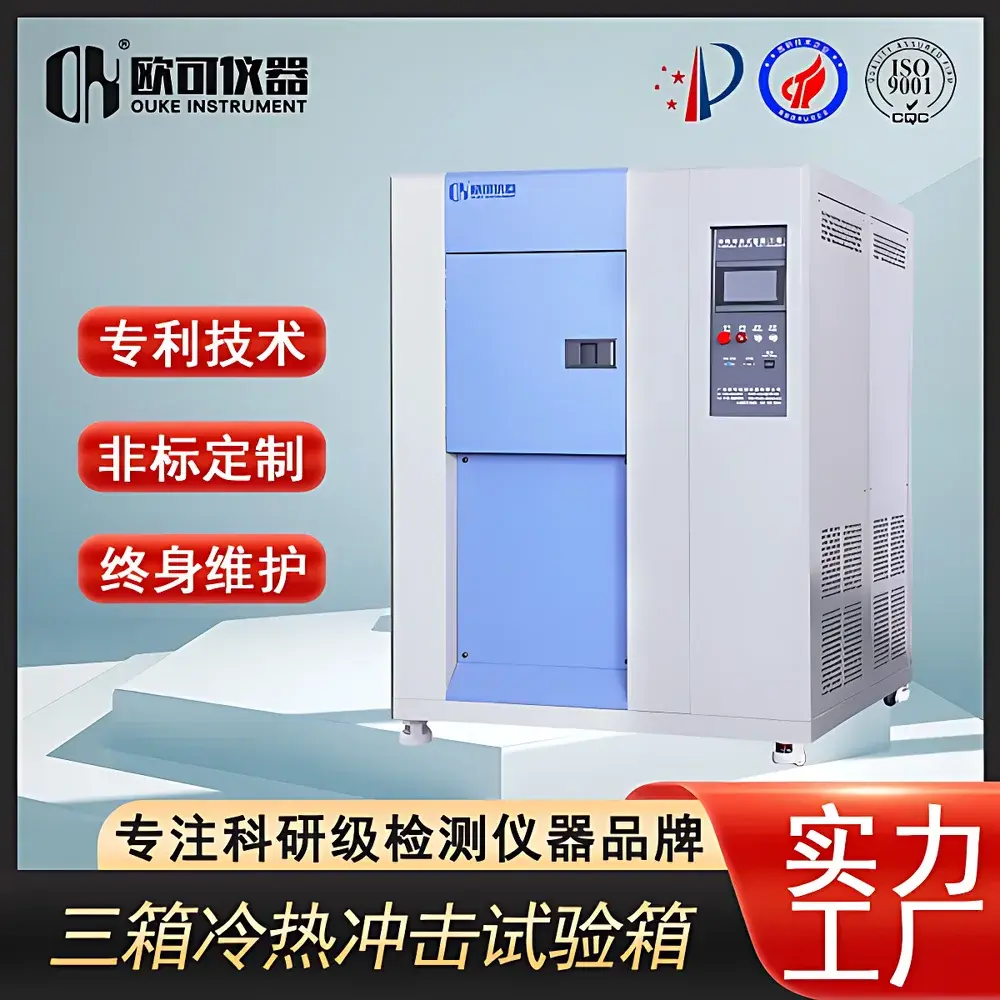
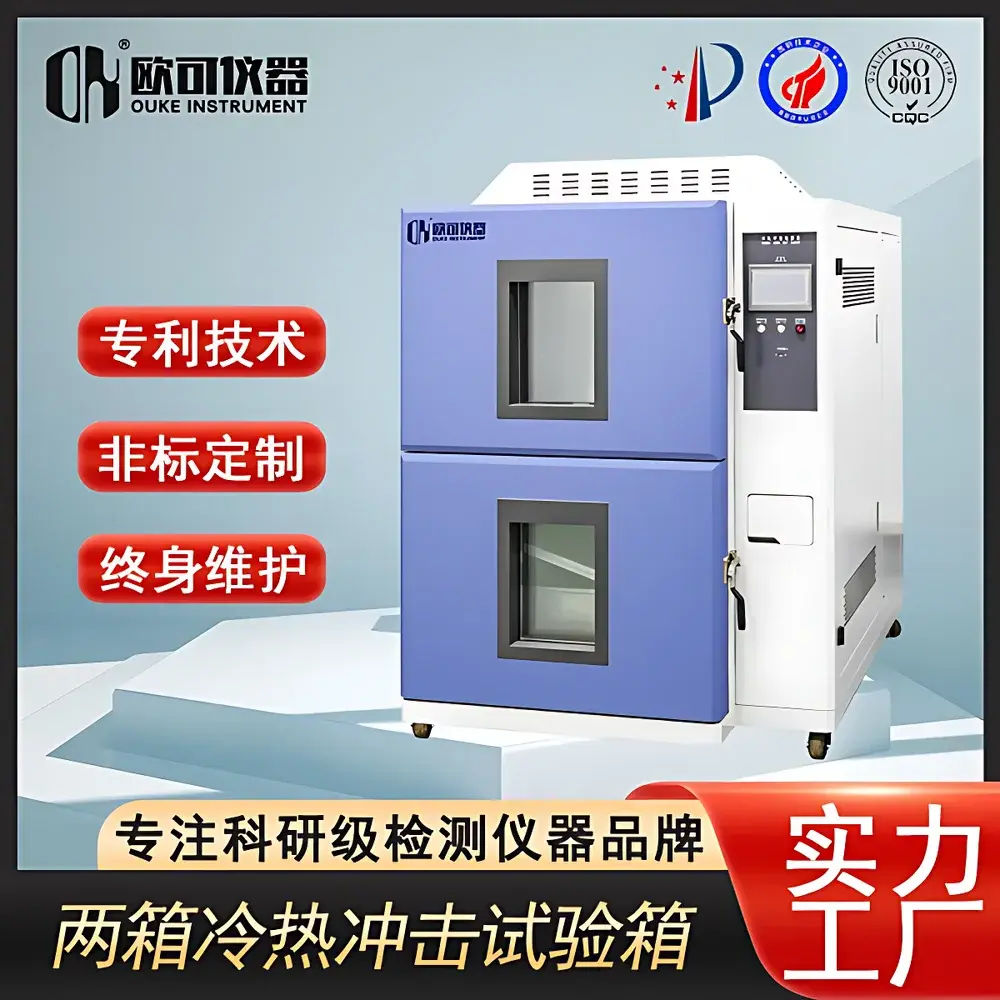
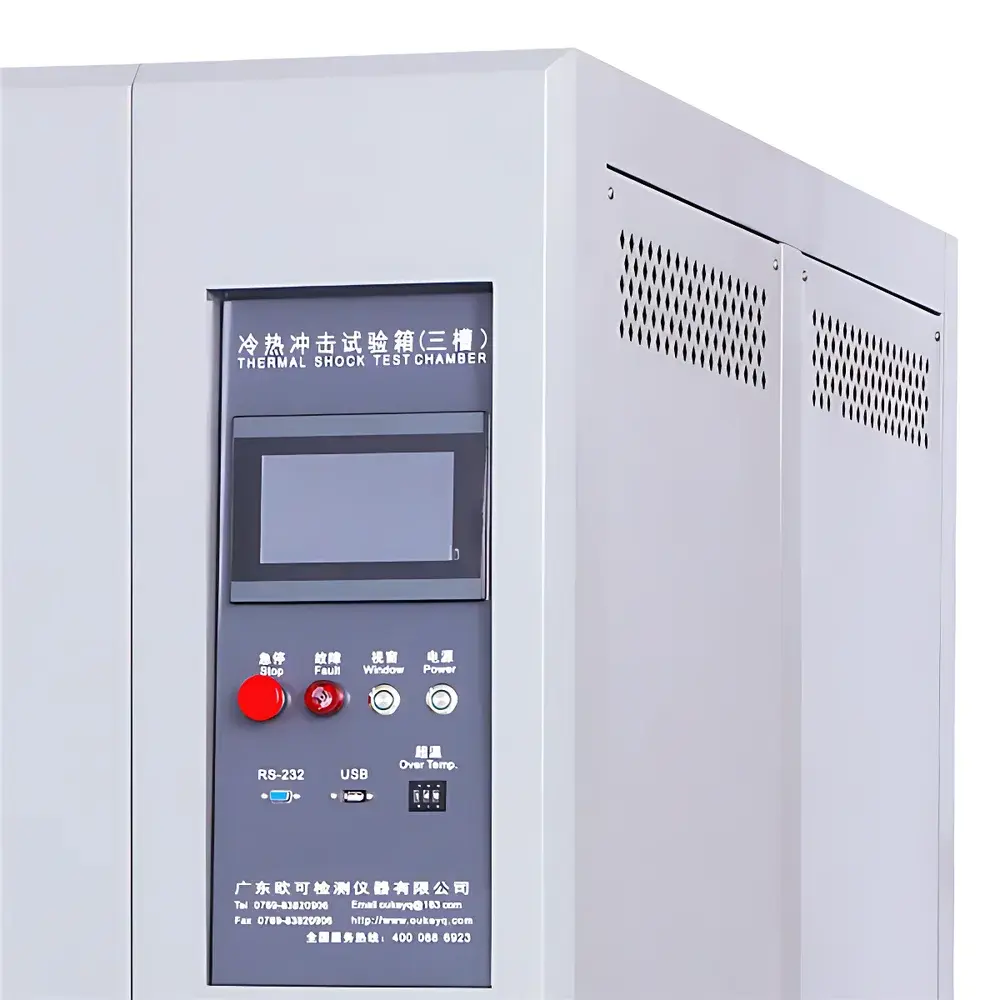
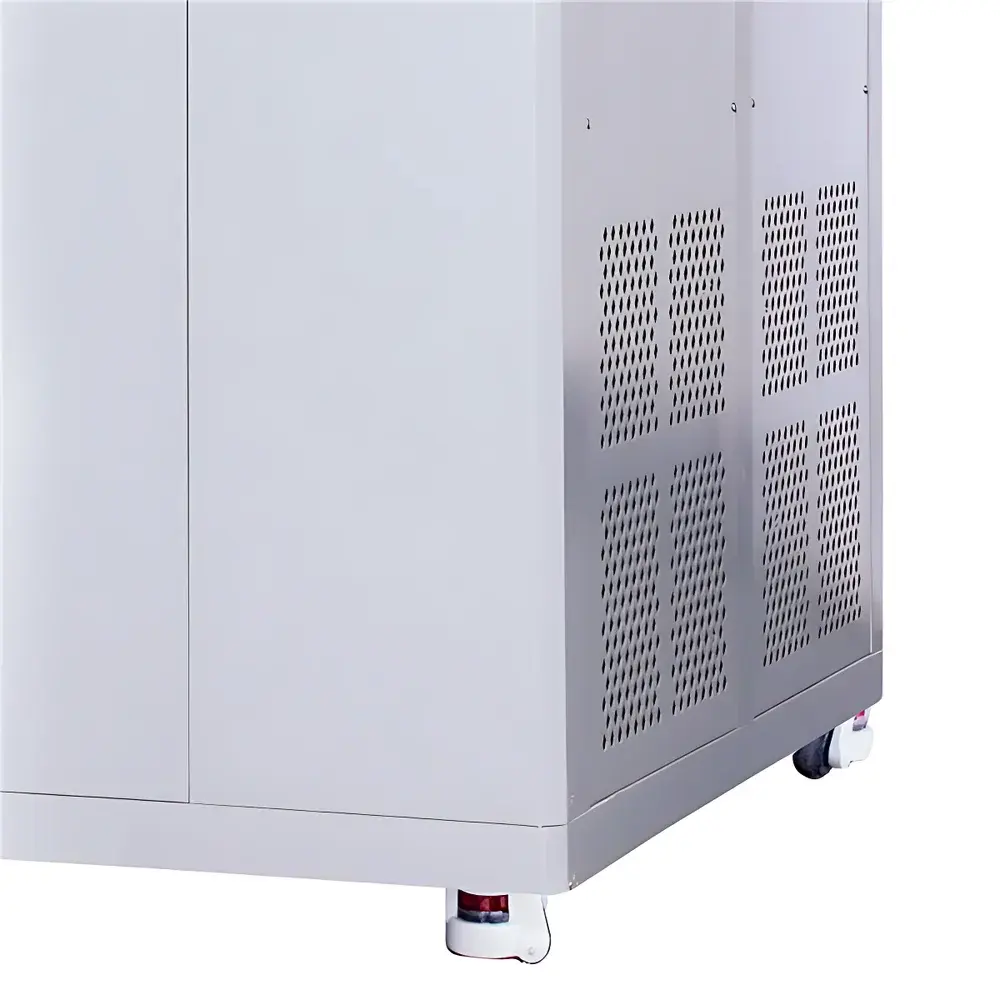
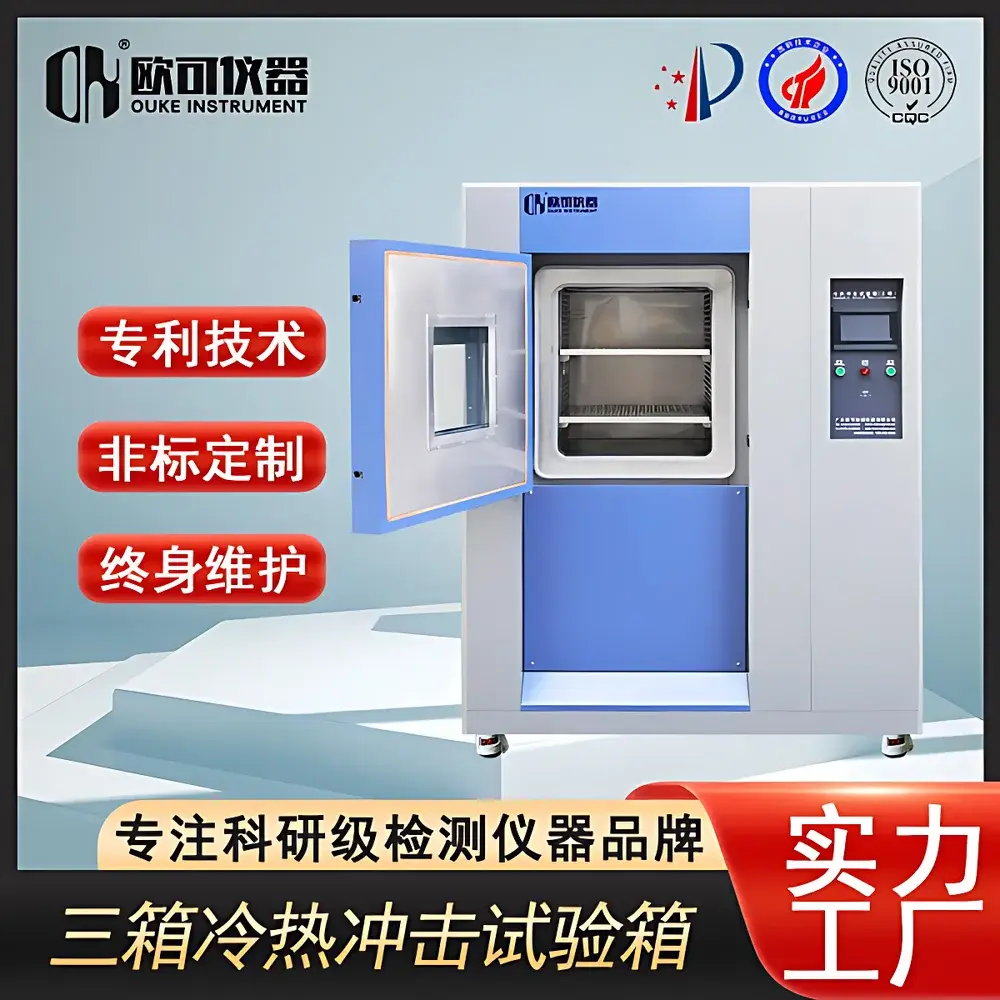
OK 0K-TS-49.0 Thermal Shock Test Chamber
| Brand | OK |
|---|---|
| Origin | Guangdong, China |
| Manufacturer Type | Direct Manufacturer |
| Model | 0K-TS-49.0 |
| High-Temperature Range | +150 °C |
| Low-Temperature Range | −50 °C |
| Thermal Shock Range | −50 °C to +150 °C |
| Temperature Stability | ±2 °C |
| Temperature Transition Time | ≤10 s (hot-to-cold / cold-to-hot) |
Overview
The OK 0K-TS-49.0 Thermal Shock Test Chamber is an engineered environmental stress screening (ESS) system designed to subject electronic components, automotive modules, aerospace assemblies, and packaging materials to rapid, repeatable thermal transitions between extreme temperature extremes. Unlike temperature cycling or rapid temperature change chambers—which apply controlled ramped profiles—the 0K-TS-49.0 implements true thermal shock by enforcing step-change exposure via mechanical or pneumatic switching between thermally isolated zones. Its core operational principle conforms to the fundamental definition of thermal shock per IEC 60068-2-14, JESD22-A104, and MIL-STD-883 Method 1010.8: a discrete, high-magnitude thermal gradient applied in minimal time to induce thermo-mechanical stress sufficient to reveal latent defects such as interfacial delamination, solder joint fracture, wire bond lift-off, or hermetic seal failure.
Key Features
- Two-zone configuration (high-temperature chamber at +150 °C and low-temperature chamber at −50 °C) with independent PID-controlled heating and refrigeration systems
- Verified transition time ≤10 seconds—measured from sample zone exit of one environment to stabilization within ±2 °C of target temperature in the opposing zone—meeting stringent requirements of IEC 60068-2-14 Test Nb
- Robust stainless-steel test basket with reinforced suspension mechanism for two-chamber transfer; rated load capacity optimized for mid-size PCBAs, sensors, and optoelectronic housings
- High-efficiency cascade refrigeration system with environmentally compliant R404A/R23 mixed refrigerant, enabling stable sub-zero operation without liquid nitrogen dependency
- Integrated over-temperature, over-pressure, and door interlock safety circuits compliant with IEC 61000-6-2 (EMC) and UL 61010-1 (electrical safety)
- Real-time monitoring of chamber air temperature, basket position status, and compressor discharge pressure via embedded industrial-grade PLC
Sample Compatibility & Compliance
The 0K-TS-49.0 supports samples up to standard dimensions compatible with its internal test basket (W × D × H: 400 × 400 × 400 mm). It is validated for use with non-hazardous solid-state devices, printed circuit board assemblies (PCBAs), molded plastic enclosures, and metal-ceramic hybrid packages. The chamber meets the physical and procedural requirements of multiple international standards governing thermal shock testing: IEC 60068-2-14 (identical to GB/T 2423.22), JESD22-A104D (JEDEC Solid State Technology Association), and MIL-STD-883 Method 1010.8. All calibration and performance verification protocols follow ISO/IEC 17025–accredited procedures, ensuring traceability to NIST-certified reference thermometers. Optional GLP-compliant audit trail logging and electronic signature support are available for regulated industries requiring FDA 21 CFR Part 11 compliance.
Software & Data Management
Control and data acquisition are managed through OK’s proprietary TSC-Manager v3.2 software, running on an embedded Windows IoT platform. The interface supports multi-step test programs—including dwell time, number of cycles, direction sequencing (e.g., hot→cold→hot), and conditional abort logic based on real-time temperature deviation thresholds. All temperature readings, actuator status signals, and alarm events are timestamped and stored in CSV and SQLite formats. Exported datasets include full metadata (test ID, operator, chamber serial number, calibration certificate expiry), facilitating integration into LIMS environments or automated quality reporting workflows. Remote access via HTTPS-enabled web interface allows secure monitoring across corporate networks without exposing internal control infrastructure.
Applications
- Qualification testing of automotive ECUs subjected to under-hood thermal transients during cold-start/warm-shutdown scenarios
- Reliability screening of consumer electronics before mass production release (e.g., smartphones exposed to outdoor winter-to-indoor heating transitions)
- Failure analysis root cause identification in semiconductor packaging—particularly for wafer-level chip-scale packages (WLCSP) and fan-out wafer-level packages (FOWLP)
- Validation of adhesive bond integrity in medical device housings where differential CTE between polymer and metal substrates may drive interfacial cracking
- Accelerated life assessment of optical sensor windows and laser diode mounts under repeated thermal inversion conditions
FAQ
What distinguishes thermal shock testing from temperature cycling?
Thermal shock applies instantaneous step changes between two fixed temperature extremes (e.g., −50 °C ↔ +150 °C), inducing transient thermo-mechanical stress. Temperature cycling uses linear ramps (e.g., 15 °C/min) across a defined range and targets cumulative fatigue damage over hundreds or thousands of cycles.
Is the 0K-TS-49.0 suitable for powered-in testing?
Yes—optional electrical feedthroughs (up to 24 AWG × 12 channels) and EMI-shielded viewing window enable real-time functional monitoring during shock exposure. Recommended for three-chamber configurations where sample remains stationary.
Does this chamber require external liquid nitrogen?
No—its dual-stage refrigeration architecture achieves −50 °C without cryogenic supplementation, reducing operational cost and logistical complexity.
How is temperature uniformity verified across the test zone?
Per IEC 60068-3-5, uniformity is validated using nine calibrated PT100 sensors placed on a grid pattern inside the empty basket; maximum deviation must remain within ±2 °C during steady-state dwell at both extremes.
Can test reports be generated in PDF format with digital signatures?
Yes—TSC-Manager v3.2 includes configurable report templates compliant with ISO 17025 documentation requirements, supporting PKI-based electronic signatures and automatic archiving to network storage locations.
Related Products



