
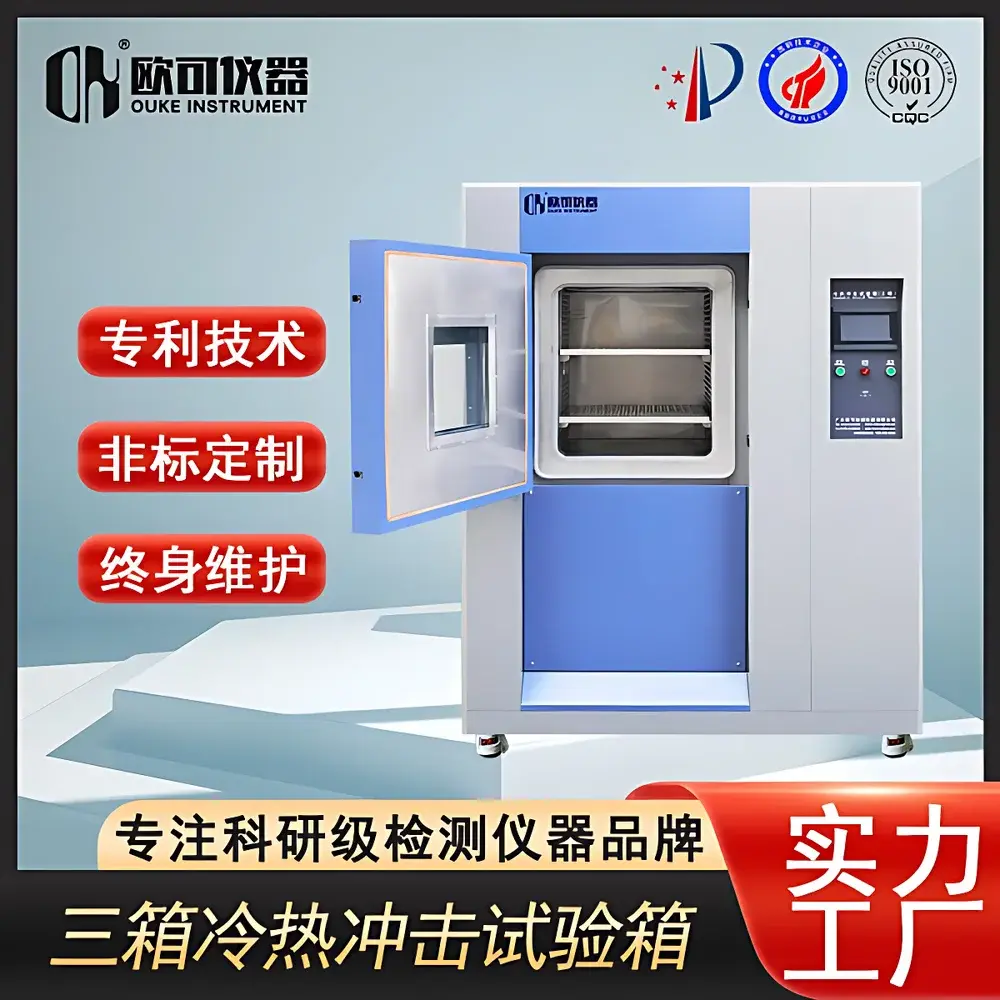
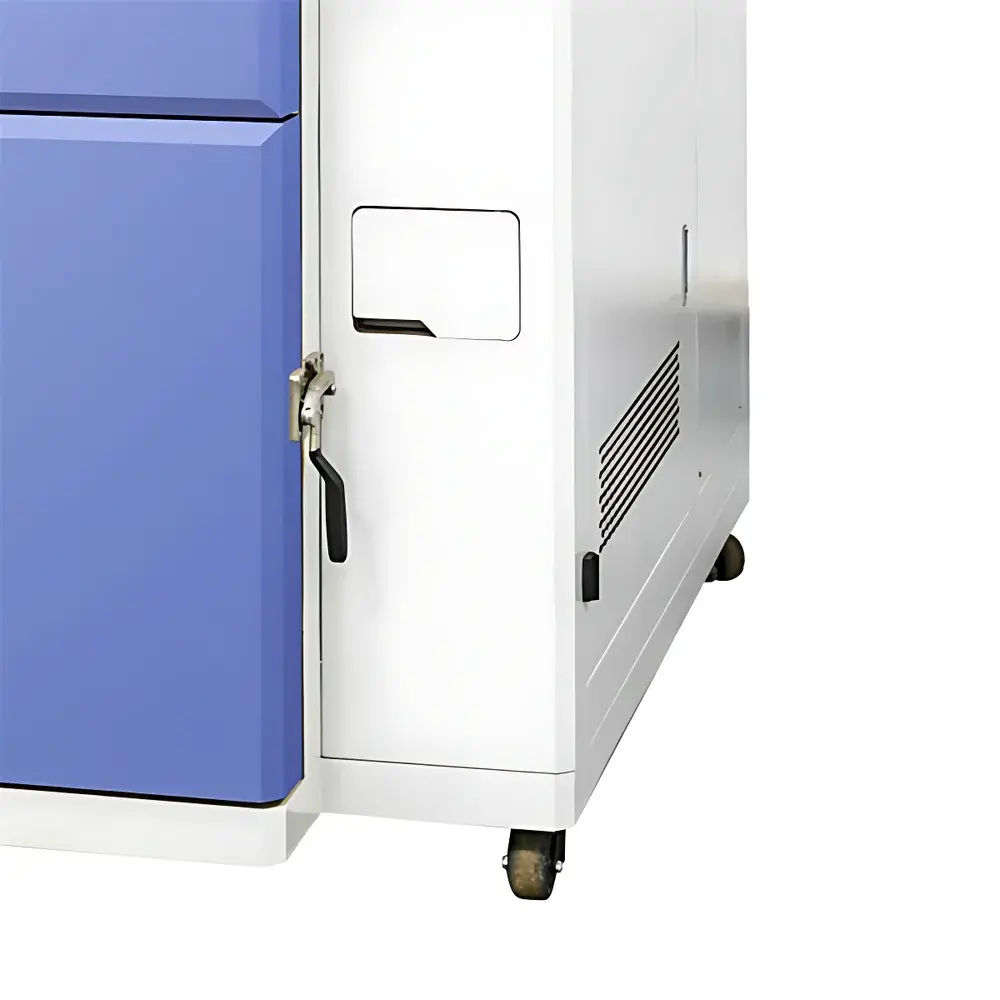
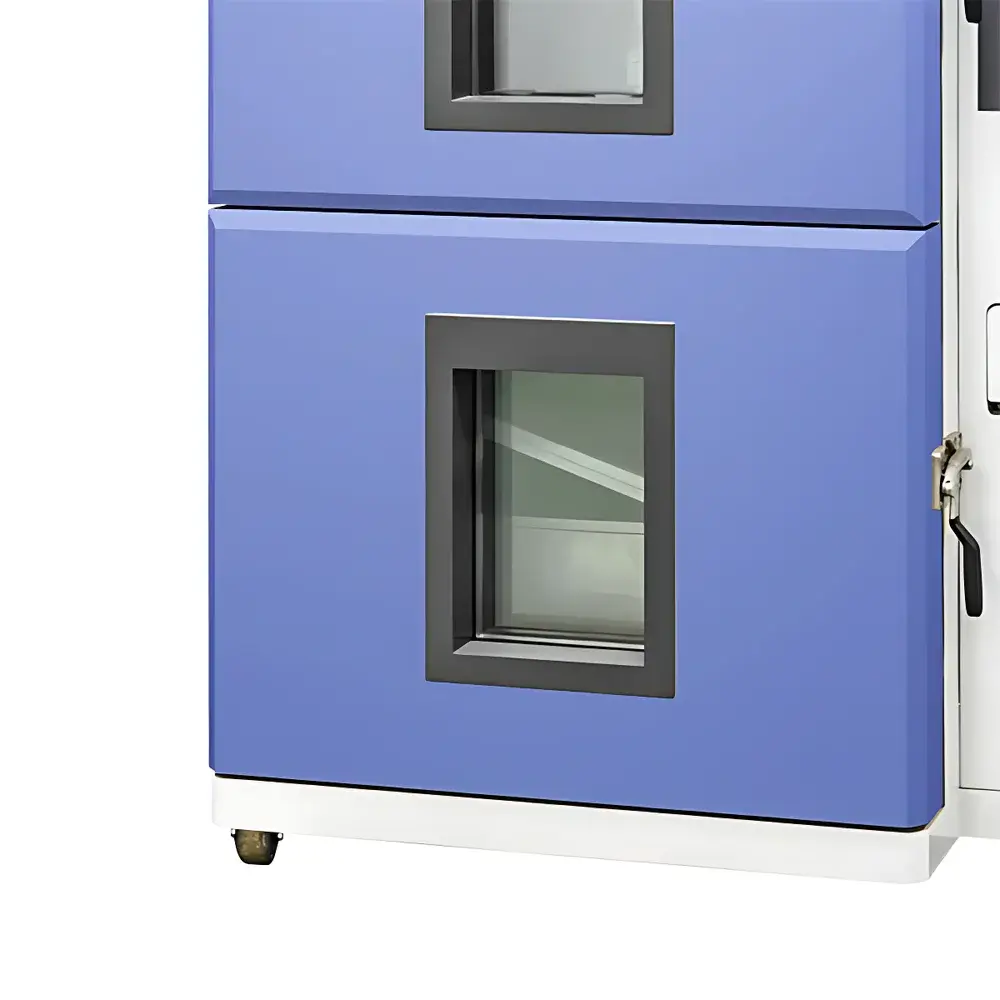
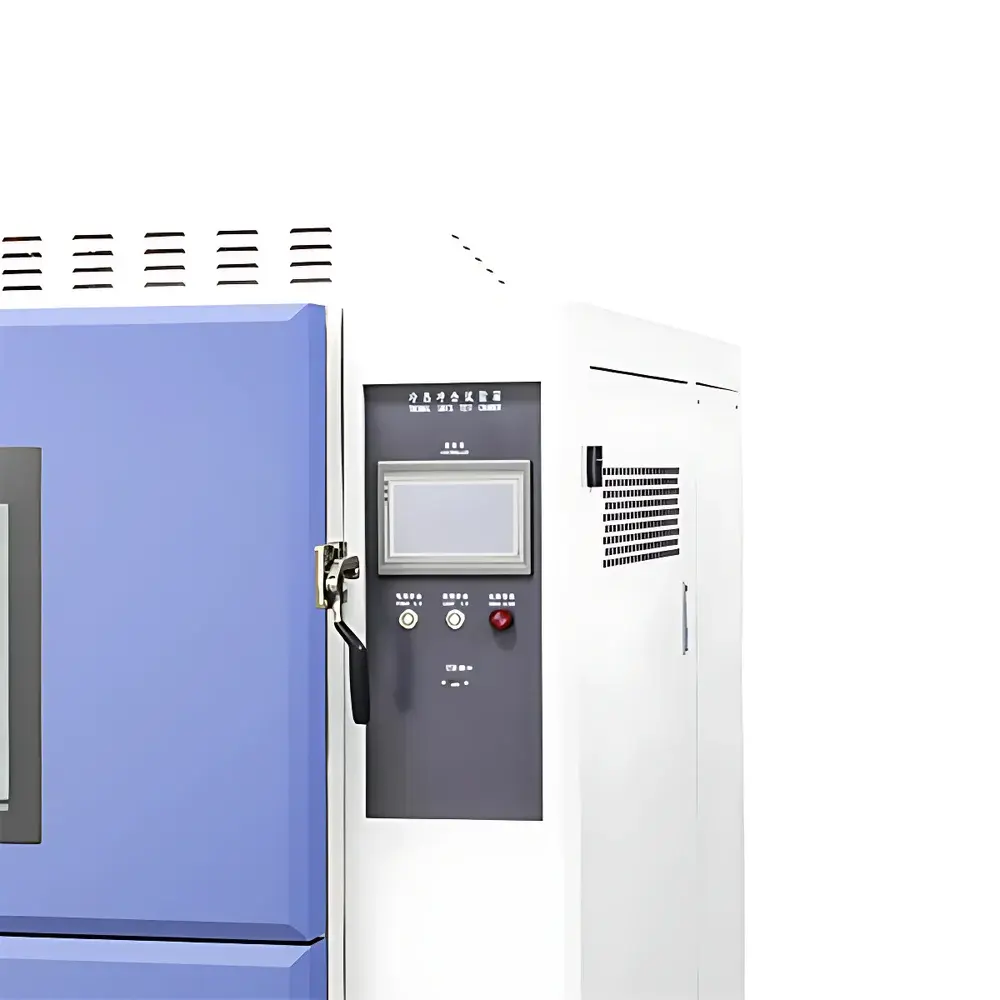
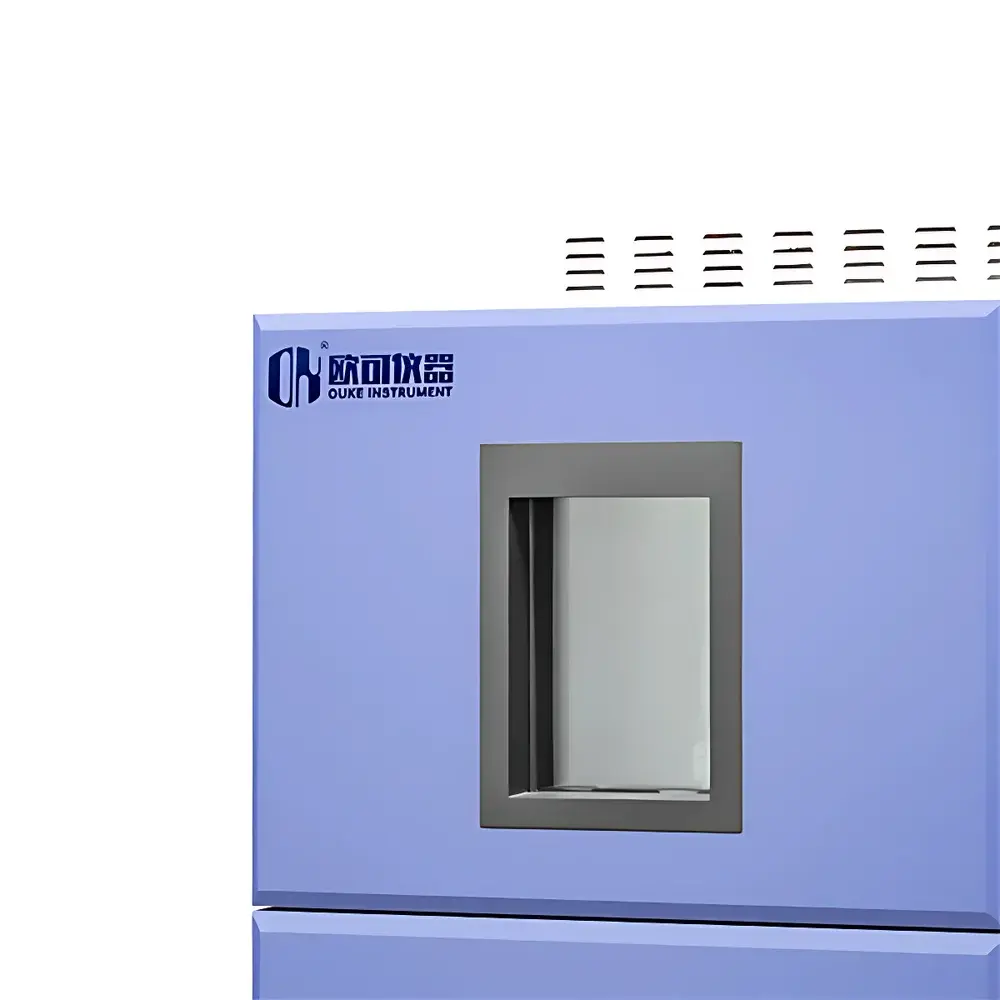
OK 0K-TS-49.11 Thermal Shock Test Chamber
| Brand | OK |
|---|---|
| Origin | Guangdong, China |
| Manufacturer Type | Direct Manufacturer |
| Model | 0K-TS-49.11 |
| High Temperature Range | +150 °C |
| Low Temperature Range | −50 °C |
| Thermal Shock Range | −50 °C to +150 °C |
| Temperature Stability | ±2 °C |
| Transition Time (Hot ↔ Cold) | ≤20 s |
| Compliance Standards | IEC 60068-2-14, GB/T 2423.22, MIL-STD-883 Method 1010, JESD22-A104 |
Overview
The OK 0K-TS-49.11 Thermal Shock Test Chamber is an engineered environmental stress screening (ESS) system designed to subject electronic components, aerospace assemblies, automotive modules, and packaging materials to rapid, repetitive transitions between extreme high- and low-temperature environments. Unlike temperature cycling or rapid thermal ramp chambers—which apply controlled linear gradients—the 0K-TS-49.11 executes discrete, step-function thermal shocks governed by defined dwell times and transition intervals. Its operational principle aligns with the physics of transient thermal stress: differential expansion coefficients across heterogeneous material interfaces generate instantaneous mechanical strain, revealing latent defects such as solder joint microcracks, delamination in multilayer PCBs, sealant fractures, or interfacial debonding in MEMS devices. This chamber supports both two-zone (basket-transfer) and three-zone (air-switching) configurations—though the 0K-TS-49.11 model implements a vertically oriented dual-chamber architecture with pneumatic basket actuation, optimized for repeatable ≤20-second hot-to-cold and cold-to-hot transfers.
Key Features
- Two-zone thermally isolated chamber design with independent high-temperature (+150 °C) and low-temperature (−50 °C) reservoirs
- Pneumatically driven stainless-steel test basket enabling precise positional repeatability and ≤20-second transfer between zones
- Temperature stability maintained within ±2 °C during dwell phases, verified per IEC 60068-3-5 calibration protocols
- Integrated PID-controlled heating and cascade refrigeration systems with R404A/R23 dual-stage compressors
- Programmable test sequences supporting up to 999 cycles, customizable dwell time (1 min–999 h), and automatic cycle logging
- RS485 interface compliant with Modbus RTU for integration into factory MES or LabVIEW-based monitoring platforms
Sample Compatibility & Compliance
The 0K-TS-49.11 accommodates samples up to 400 mm × 400 mm × 400 mm (W×D×H) with maximum basket load capacity of 20 kg. Its mechanical transfer mechanism is suitable for rigid, self-contained units—including populated PCBAs, connectors, sensors, and small enclosures—that tolerate brief inertial loading during basket motion. The chamber meets essential requirements of IEC 60068-2-14 (identical to GB/T 2423.22), MIL-STD-883 Method 1010.8 (for semiconductor reliability qualification), and JEDEC JESD22-A104D. All temperature transitions are validated using NIST-traceable Class A PT100 sensors mounted at sample reference plane level. System documentation includes full traceability records for IQ/OQ protocols, supporting GLP-compliant validation under ISO/IEC 17025-accredited laboratories.
Software & Data Management
Equipped with OK’s proprietary TSC-Manager v3.2 control software, the chamber provides real-time graphical monitoring of zone temperatures, basket position status, cycle count, and elapsed test time. Data is logged at user-selectable intervals (1–60 seconds) and exported in CSV format compatible with JMP, Minitab, or Python pandas workflows. Audit trail functionality complies with FDA 21 CFR Part 11 requirements: all parameter modifications, start/stop commands, and alarm events are timestamped, user-ID tagged, and digitally signed. Optional Ethernet/IP gateway enables remote diagnostics and synchronized data ingestion into enterprise LIMS platforms without compromising network segmentation policies.
Applications
- Qualification testing of automotive ECUs subjected to under-hood thermal transients during cold-start/warm-shutdown scenarios
- Reliability screening of avionics modules per DO-160 Section 4.5 (Temperature Shock)
- Failure analysis root cause isolation in lead-free solder joints exposed to field-relevant thermal discontinuities
- Accelerated life testing of optical sensor housings and hermetic seals used in industrial IoT edge nodes
- Process validation for reflow-soldered medical device PCBs prior to ISO 13485 certification
FAQ
What distinguishes thermal shock testing from temperature cycling?
Thermal shock applies abrupt, discontinuous temperature steps (e.g., −50 °C → +150 °C in ≤20 s), inducing instantaneous mechanical stress. Temperature cycling uses continuous ramps (e.g., 10 °C/min), simulating cumulative thermal fatigue over hundreds of cycles.
Does this chamber support liquid nitrogen (LN₂) augmentation?
No—the 0K-TS-49.11 relies on mechanical refrigeration only. LN₂-assisted models (e.g., 0K-TS-LN series) are available upon request for sub−65 °C low-temperature capability.
Can the basket be customized for non-standard sample geometries?
Yes—OK offers OEM basket fabrication services with CAD-based design review and load-distribution FEA verification prior to machining.
Is third-party calibration certification included with shipment?
A factory calibration report with uncertainty budget (k=2) is provided. Full ISO/IEC 17025-certified calibration by an accredited body is available as an optional add-on service.
How is recovery time defined and measured for this model?
Recovery time refers to the duration required for the active test zone to return to setpoint after basket transfer. For the 0K-TS-49.11, it is ≤3 minutes post-transfer at nominal load, verified per IEC 60068-3-10 Annex B.



