
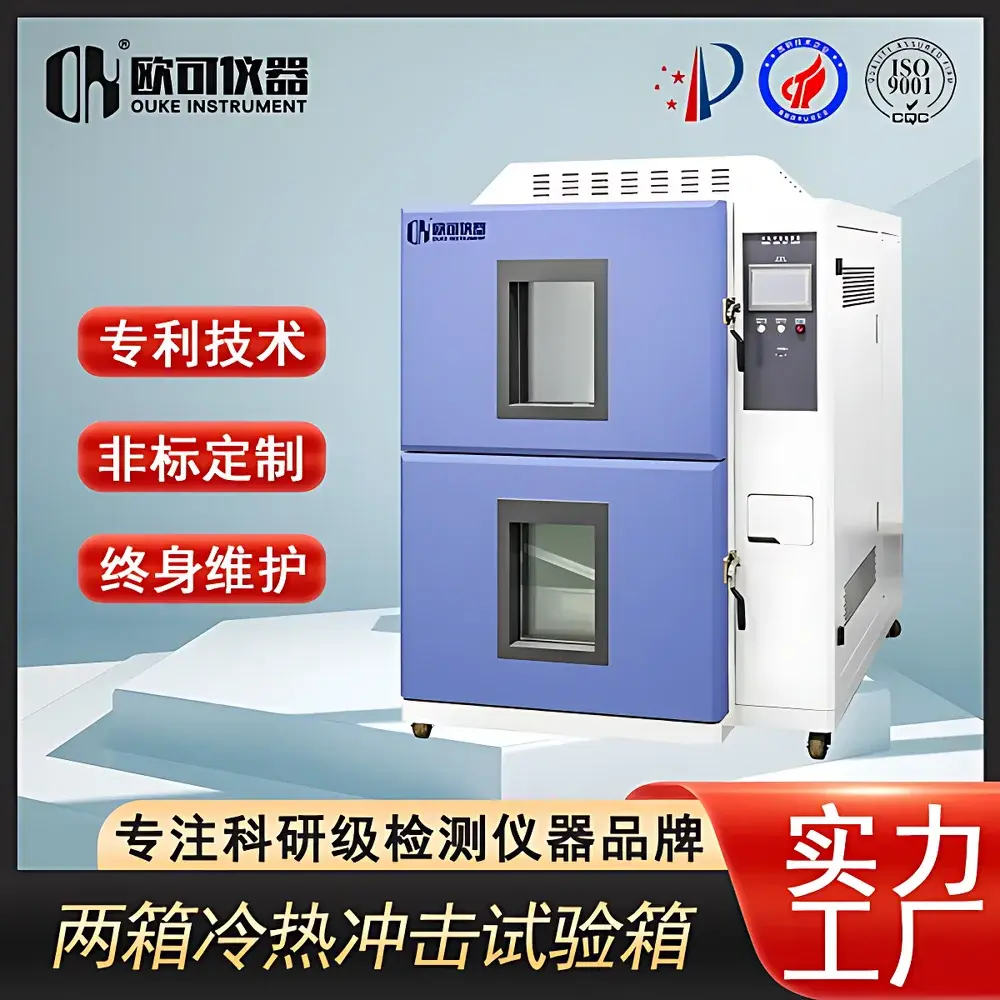
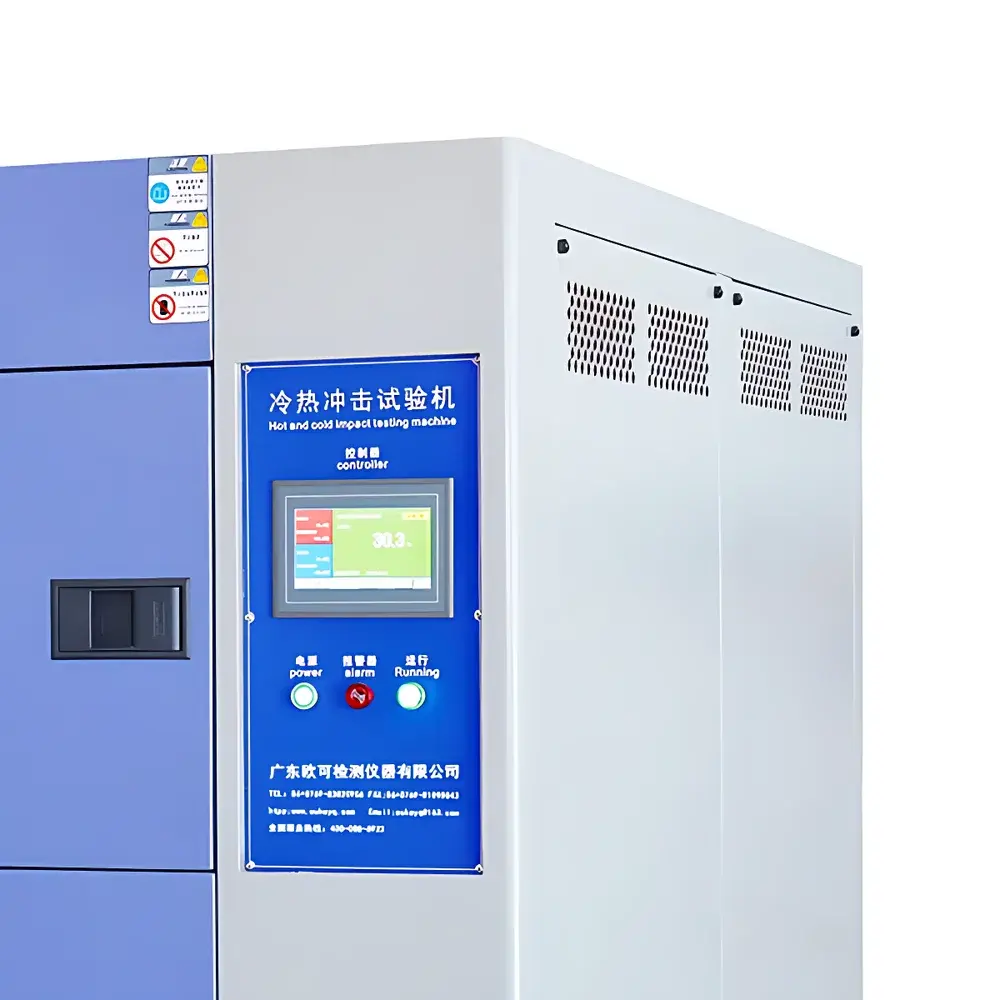
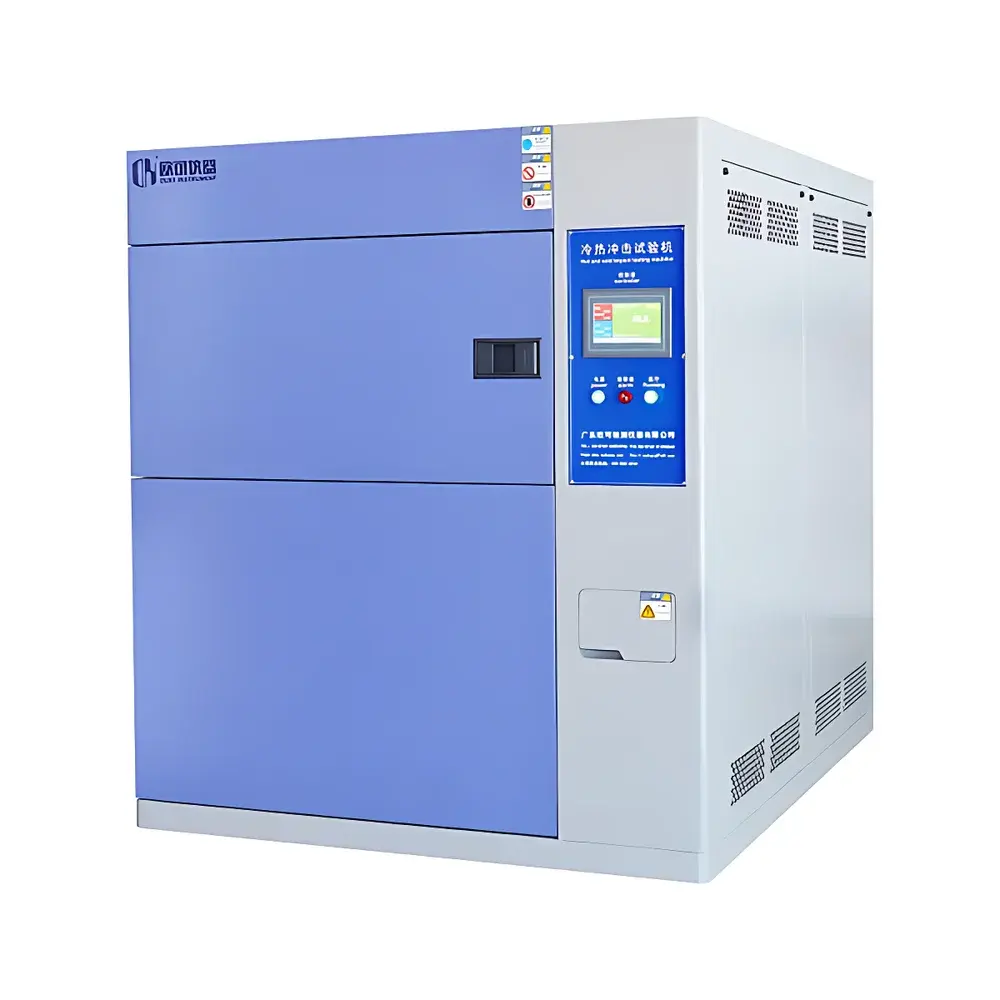
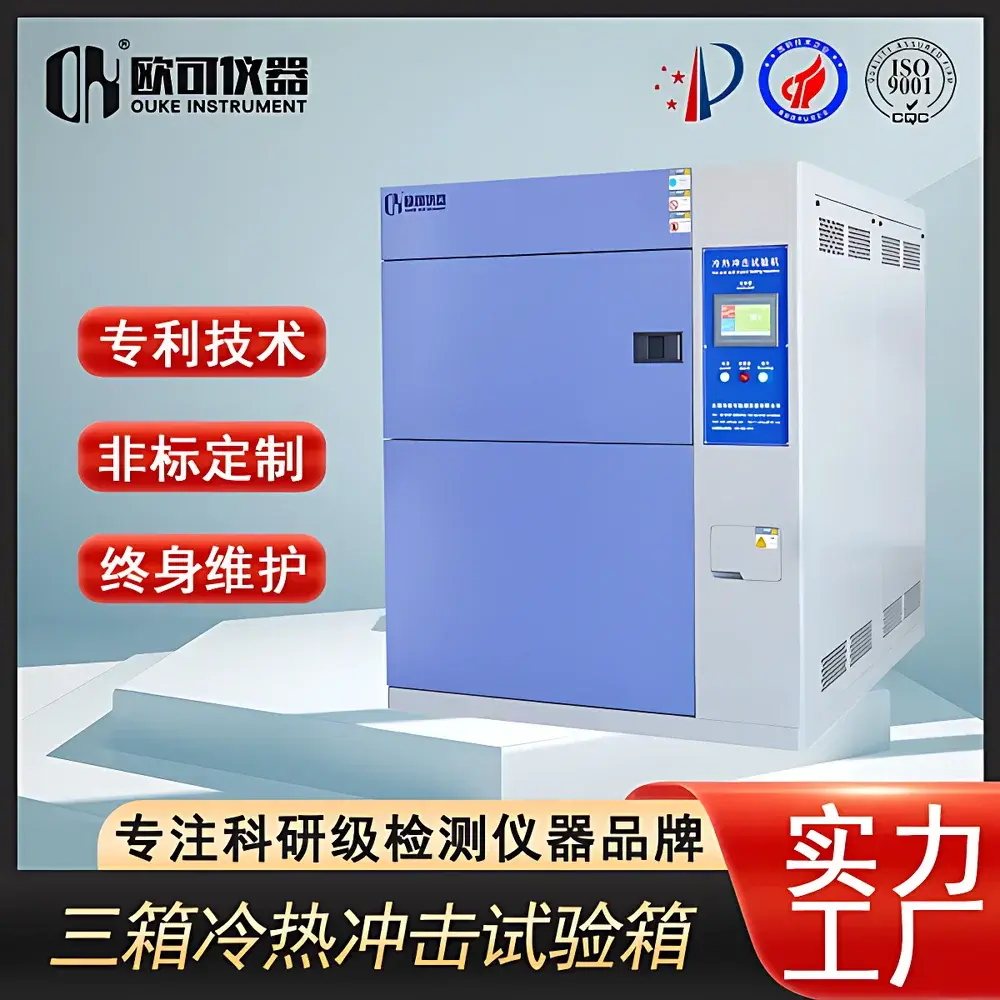
OK 0K-TS-49.1111 Thermal Shock Test Chamber
| Brand | OK |
|---|---|
| Origin | Guangdong, China |
| Manufacturer Type | Direct Manufacturer |
| Model | 0K-TS-49.1111 |
| High Temperature Range | +150 °C |
| Low Temperature Range | −60 °C |
| Thermal Shock Range | −60 °C to +150 °C |
| Temperature Stability | ±2 °C |
| Temperature Transition Time | ≤20 s (hot-to-cold / cold-to-hot) |
Overview
The OK 0K-TS-49.1111 Thermal Shock Test Chamber is an engineered environmental test system designed to subject electronic components, automotive modules, aerospace assemblies, and packaging materials to rapid, repetitive transitions between extreme high- and low-temperature environments. Unlike temperature cycling or rapid thermal ramping chambers—which apply gradual, linear temperature gradients—this chamber implements true thermal shock per IEC 60068-2-14, MIL-STD-883 Method 1010.8, and JESD22-A104. Its operational principle relies on discrete, step-change exposure: samples are either physically transferred between isolated hot and cold zones (two-chamber design), or exposed to pre-conditioned air streams via fast-acting pneumatic dampers (three-chamber configuration). The defining performance metric is transition time—the elapsed duration from the moment a sample exits one thermal zone until it reaches thermal equilibrium within the opposing zone—not the rate of temperature change within a single chamber. This distinction ensures that mechanical stress induced by differential thermal expansion, interfacial delamination, solder joint fracture, and hermetic seal failure can be reliably accelerated and detected.
Key Features
- Configurable architecture: Supports both two-chamber (basket-transfer) and three-chamber (air-switching) thermal shock methodologies—selection based on sample mass, fragility, and functional test requirements.
- Temperature range: −60 °C to +150 °C, with independent high- and low-temperature reservoirs maintained at stable setpoints (±2 °C stability under no-load conditions).
- Verified transition performance: Achieves ≤20 seconds for full hot-to-cold or cold-to-hot transfer, compliant with Class 5 (IEC 60068-2-14) and Level C (MIL-STD-883) shock severity classifications.
- Robust mechanical construction: Stainless steel inner chamber, insulated double-wall housing, and corrosion-resistant evaporator/heater assemblies ensure long-term dimensional stability and thermal integrity.
- Programmable controller: 7-inch color touchscreen HMI with embedded logic for multi-step shock profiles, dwell time adjustment, cycle count tracking, and alarm-triggered emergency shutdown.
- No liquid nitrogen dependency: Fully electric refrigeration and heating system enables repeatable, maintenance-optimized operation without cryogenic consumables.
Sample Compatibility & Compliance
The 0K-TS-49.1111 accommodates samples up to standard benchtop dimensions (interior volume: 49 L; internal chamber: 400 × 350 × 350 mm W×D×H). Two-chamber mode supports static load capacities up to 20 kg on the transfer basket; three-chamber mode eliminates mechanical loading constraints entirely, enabling testing of mounted ECUs, battery packs, or optoelectronic subsystems under powered or monitored conditions. All operational parameters—including dwell time, transition sequence, and total cycle count—are fully programmable and auditable. The system complies with ISO/IEC 17025 traceability requirements for calibration documentation and supports GLP/GMP-aligned data integrity practices, including user-access logging, electronic signature capability, and exportable CSV reports compatible with LIMS integration.
Software & Data Management
Embedded firmware provides real-time monitoring of chamber temperatures (hot zone, cold zone, and sample zone), transition timestamps, and system status (compressor run time, heater duty cycle, damper position feedback). Data is stored locally with 30-day buffer retention and exportable via USB or Ethernet. Optional PC-based software (OK-DataLink v3.2) adds advanced features: automated report generation per ASTM E2928, statistical process control (SPC) charting of thermal deviation, comparative analysis across multiple test runs, and configurable alerts for out-of-specification events. All data records include immutable metadata (operator ID, timestamp, firmware version) to satisfy FDA 21 CFR Part 11 requirements for electronic records and signatures when deployed in regulated manufacturing environments.
Applications
- Failure analysis of PCBAs subjected to field-relevant thermal transients (e.g., automotive infotainment units transitioning from −40 °C winter parking to +85 °C dashboard exposure).
- Qualification testing of wafer-level chip-scale packages (WLCSP), flip-chip BGA, and molded interconnect devices (MID) per JEDEC J-STD-020 and AEC-Q200.
- Validation of adhesive bond strength, conformal coating integrity, and encapsulant delamination resistance in LED modules and power electronics.
- Reliability screening of medical device housings, sterilization trays, and implantable component seals under accelerated thermal mismatch conditions.
- Material compatibility assessment for composite substrates, thermal interface materials (TIMs), and MEMS sensor packages where coefficient of thermal expansion (CTE) mismatch drives interfacial stress.
FAQ
What distinguishes thermal shock testing from temperature cycling?
Thermal shock applies instantaneous, step-function temperature transitions between two fixed extremes (e.g., −60 °C ↔ +150 °C), inducing mechanical stress via differential expansion. Temperature cycling applies controlled ramp rates (e.g., 10 °C/min) across a continuous gradient, primarily assessing fatigue-related degradation over hundreds or thousands of cycles.
Does this chamber support automatic data logging for audit purposes?
Yes—internal memory retains timestamped temperature readings and event logs for ≥30 days. Export formats include CSV and PDF, with optional OK-DataLink software enabling Part 11-compliant electronic signatures and audit trail generation.
Is liquid nitrogen required to achieve −60 °C?
No. The system employs cascade refrigeration with dual-stage compressors and optimized heat exchangers, eliminating reliance on cryogenic consumables while maintaining stable low-temperature performance.
Can I test powered devices during thermal shock exposure?
Yes—only in three-chamber (air-switching) configuration, where the test specimen remains stationary and electrically isolated from mechanical motion. Power leads and signal cables are routed through dedicated feedthroughs with thermal break design.
How is calibration verified and maintained?
The chamber includes dual NIST-traceable PT100 sensors per zone. Annual calibration services include as-found/as-left reports, uncertainty budgets, and compliance certificates aligned with ISO/IEC 17025 Clause 6.5.
Related Products



