
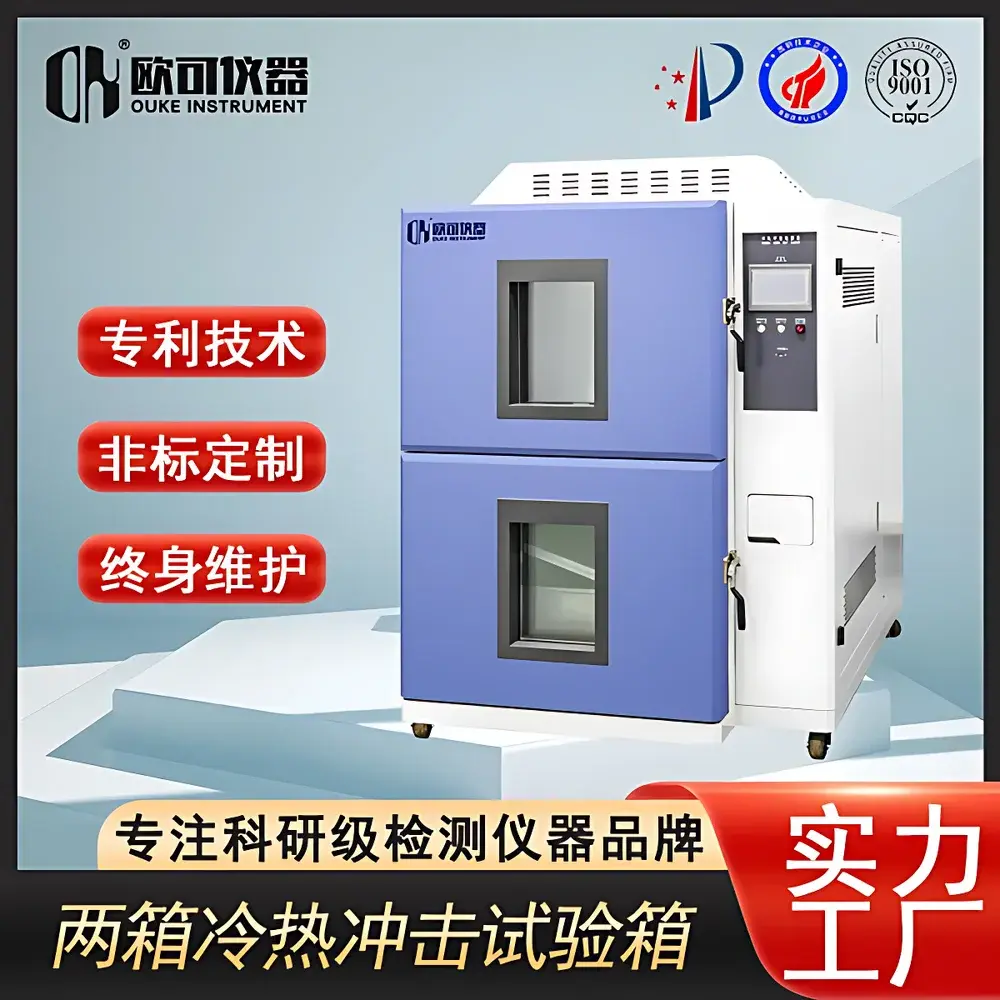
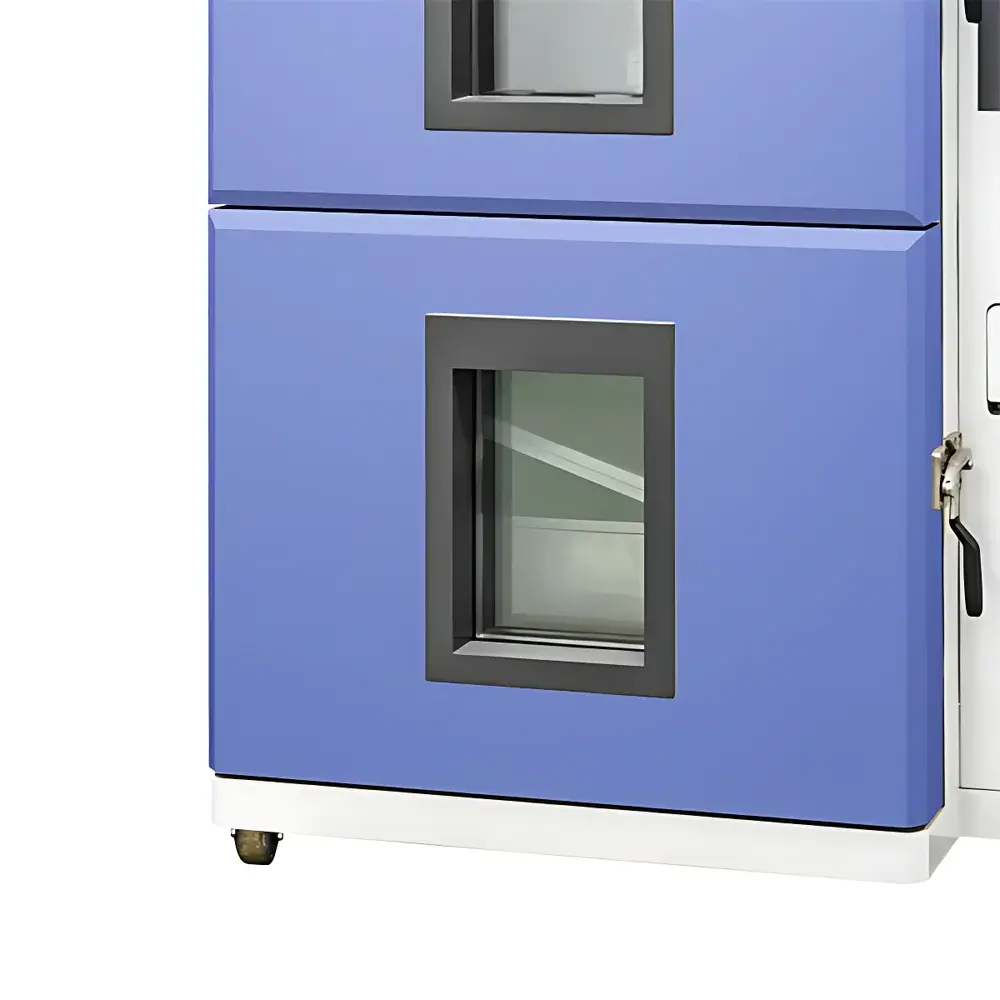
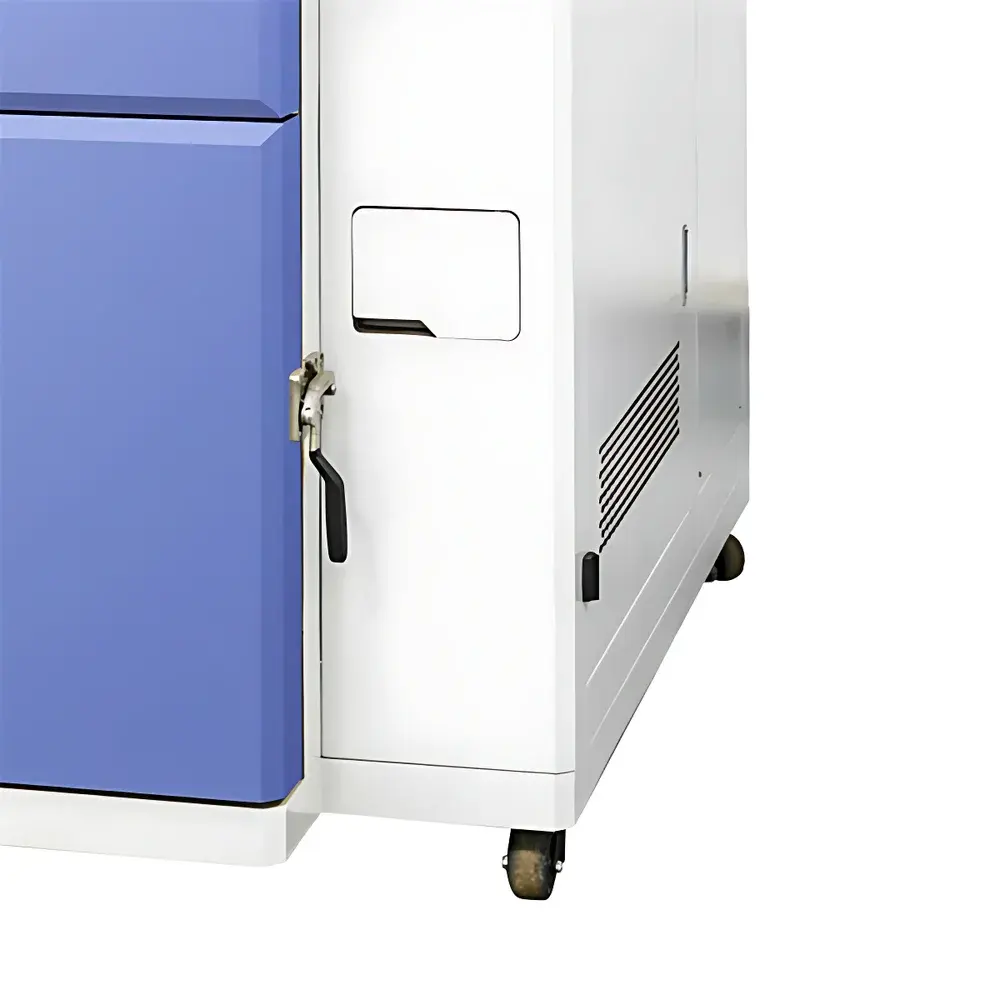
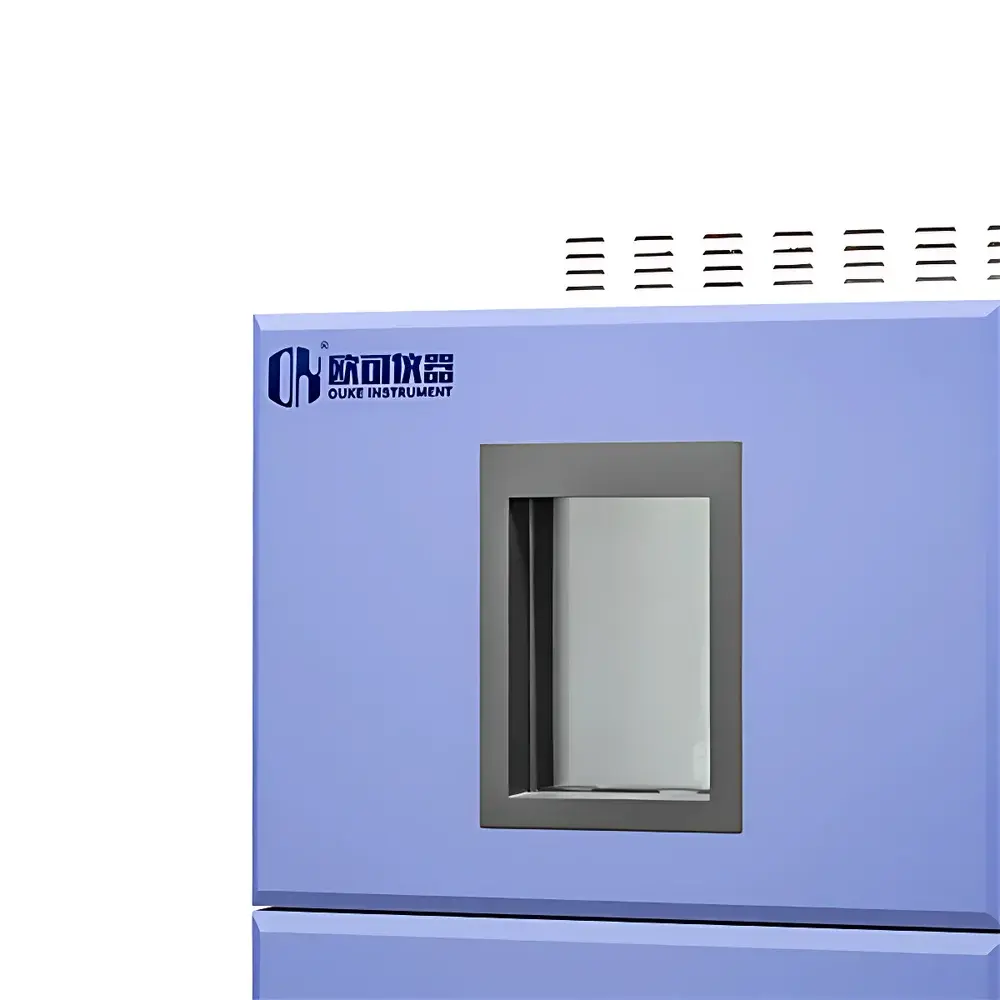
OK 0K-TS-49.33 Thermal Shock Test Chamber
| Brand | OK |
|---|---|
| Origin | Guangdong, China |
| Manufacturer Type | Direct Manufacturer |
| Product Category | Domestic |
| Model | 0K-TS-49.33 |
| High-Temperature Range | +150 °C |
| Low-Temperature Range | −50 °C |
| Thermal Shock Range | −50 °C to +150 °C |
| Temperature Stability | ±2 °C |
| Heating Rate | ≤10 s (to reach target temp after transfer) |
| Cooling Rate | ≤10 s (to reach target temp after transfer) |
Overview
The OK 0K-TS-49.33 Thermal Shock Test Chamber is an engineered environmental test system designed to subject electronic components, automotive modules, aerospace assemblies, and precision optical devices to rapid, repetitive transitions between extreme high- and low-temperature environments. Unlike temperature cycling or rapid thermal transition chambers—which impose gradual, ramp-based thermal stress—the 0K-TS-49.33 delivers true thermal shock via discrete, step-change exposure. Its core operational principle relies on either dual-chamber basket transfer (two-box configuration) or triple-chamber air-switching (three-box configuration), enabling specimen temperature transitions within ≤10 seconds—meeting the stringent timing requirements of MIL-STD-883 Method 1010.8, IEC 60068-2-14 (equivalent to GB/T 2423.22), and JESD22-A104. This capability exposes failure mechanisms rooted in coefficient of thermal expansion (CTE) mismatch, interfacial delamination, solder joint fracture, hermetic seal leakage, and transient contact resistance shifts—phenomena that remain undetected under slower thermal profiles.
Key Features
- Dual operational architecture: Configurable as either a two-box basket-transfer system (for compact, mechanically robust specimens) or a three-box air-switching system (for large, powered, or vibration-sensitive units requiring static positioning during testing)
- Guaranteed thermal transition time ≤10 seconds—from specimen entry into hot/cold zone to attainment of target setpoint—verified per IEC 60068-2-14 Annex A
- Stable operating range: −50 °C to +150 °C, with chamber uniformity maintained at ±2 °C across the active test volume
- High-reliability pneumatic actuation (two-box) and servo-controlled damper systems (three-box) ensure repeatable, low-maintenance operation over >50,000 cycles
- Integrated real-time monitoring of chamber temperatures, transfer timing, and door/damper position—logged with timestamped metadata for audit readiness
- Compliance-ready control architecture supporting user-defined test profiles, multi-step sequences, and conditional branching (e.g., dwell time, cycle count, pass/fail logic)
Sample Compatibility & Compliance
The 0K-TS-49.33 accommodates specimens up to standard mid-size industrial dimensions (internal test volume: 49.33 L; exact cavity dimensions available upon request). Two-box configurations support specimens weighing ≤15 kg on the transfer basket; three-box variants permit static loading up to 30 kg in the central test zone. All configurations comply with essential safety and electromagnetic compatibility directives (IEC 61000-6-2/6-4, UL 61010-1). The system is fully compatible with GLP and GMP-aligned validation protocols—including IQ/OQ/PQ documentation packages—and supports 21 CFR Part 11-compliant electronic signatures and audit trails when paired with OK’s optional TraceLog™ software suite. Test execution adheres strictly to the thermal shock definitions and timing tolerances specified in MIL-STD-883H, IEC 60068-2-14 Ed. 4.0 (2021), and JEDEC JESD22-A104D.
Software & Data Management
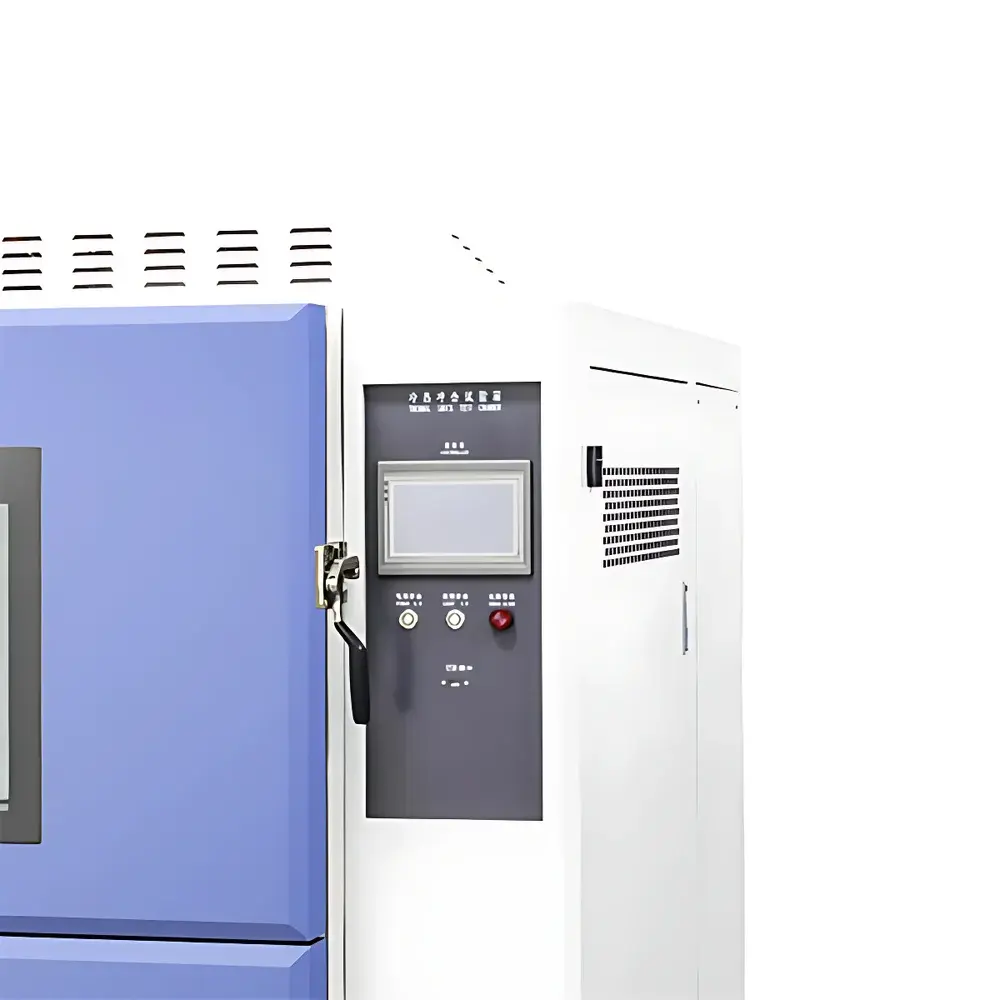
The chamber operates under OK’s proprietary ThermaControl™ v4.2 firmware, featuring a 7-inch capacitive touchscreen HMI with intuitive drag-and-drop profile editing. All test data—including chamber thermocouple readings (Type T, Class 1), transfer event timestamps, and alarm logs—are stored internally (≥12 months at 1 Hz sampling) and exportable via USB or Ethernet (Modbus TCP, OPC UA optional). Optional TraceLog™ software provides automated report generation compliant with ISO/IEC 17025 clause 7.8.2, including uncertainty estimation for temperature deviation and timing repeatability. Raw data files are saved in CSV and XML formats, ensuring full traceability and third-party analysis compatibility.
Applications
- Failure analysis labs validating solder joint integrity in BGA, QFN, and wafer-level CSP packages under JEDEC stress conditions
- Automotive Tier-1 suppliers qualifying ADAS sensors, power inverters, and battery management systems per AEC-Q200 Rev D
- Aerospace component manufacturers performing qualification per RTCA DO-160 Section 4 (Temperature Shock)
- LED and optoelectronic module producers assessing epoxy adhesion, lens bonding, and phosphor layer stability
- Quality assurance departments conducting incoming inspection per IPC-J-STD-002 and IPC-SM-785
FAQ
What distinguishes thermal shock testing from temperature cycling?
Thermal shock applies instantaneous, step-function thermal stress to reveal brittle failures (e.g., cracking, delamination); temperature cycling subjects samples to linear ramps to assess fatigue life and progressive degradation.
Does this chamber support liquid nitrogen (LN₂) cooling?
The base 0K-TS-49.33 configuration uses mechanical refrigeration only; LN₂ assist is available as a factory-installed option for sub-−65 °C low-temp extension and accelerated cooling performance.
Is calibration certification included?
A NIST-traceable initial calibration certificate (covering all chamber sensors and timing subsystems) is supplied with each unit; annual recalibration services are offered through OK’s ISO/IEC 17025-accredited calibration lab.
Can the system be integrated into an existing MES or LIMS environment?
Yes—via standard Ethernet interface with configurable REST API endpoints and SCADA-ready Modbus TCP registers for bi-directional status and command exchange.
What maintenance intervals are recommended?
Preventive maintenance is advised every 1,000 operating hours or annually (whichever occurs first), focusing on refrigerant pressure verification, damper actuator lubrication, and thermocouple drift check per ASTM E220.



