
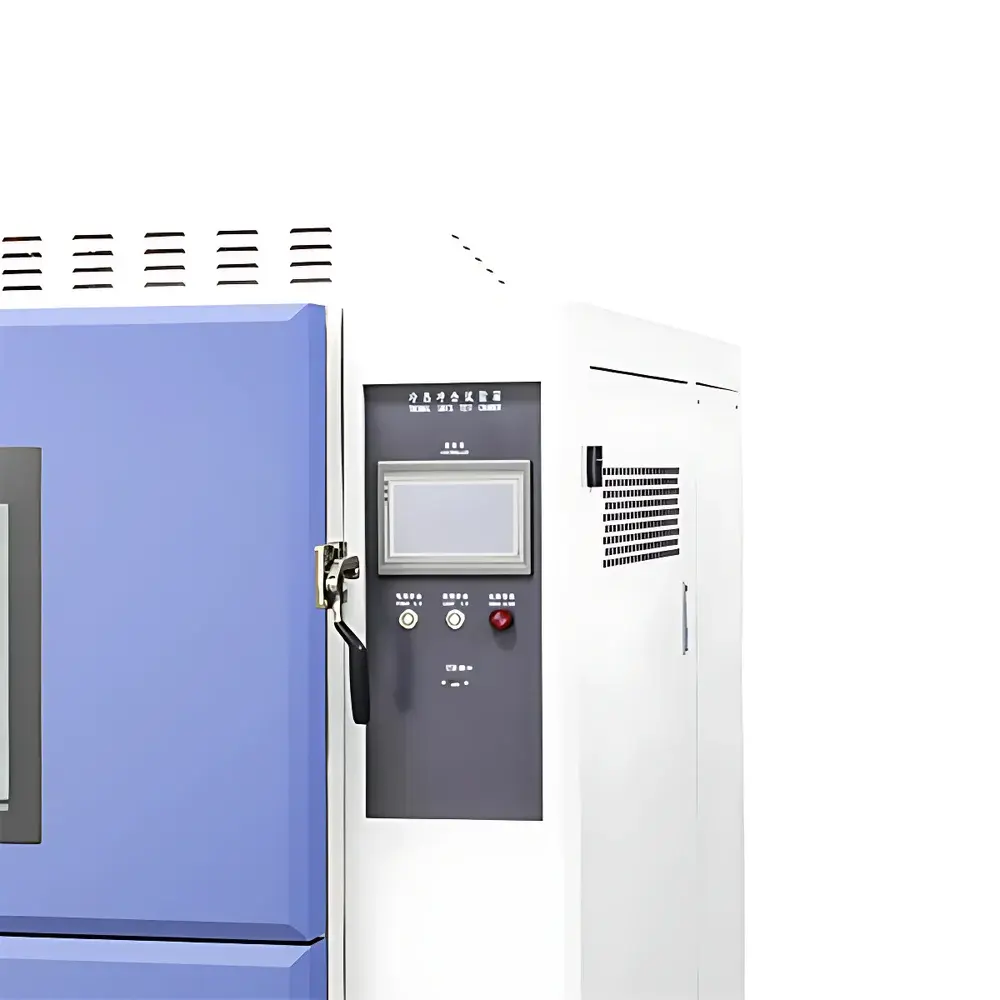
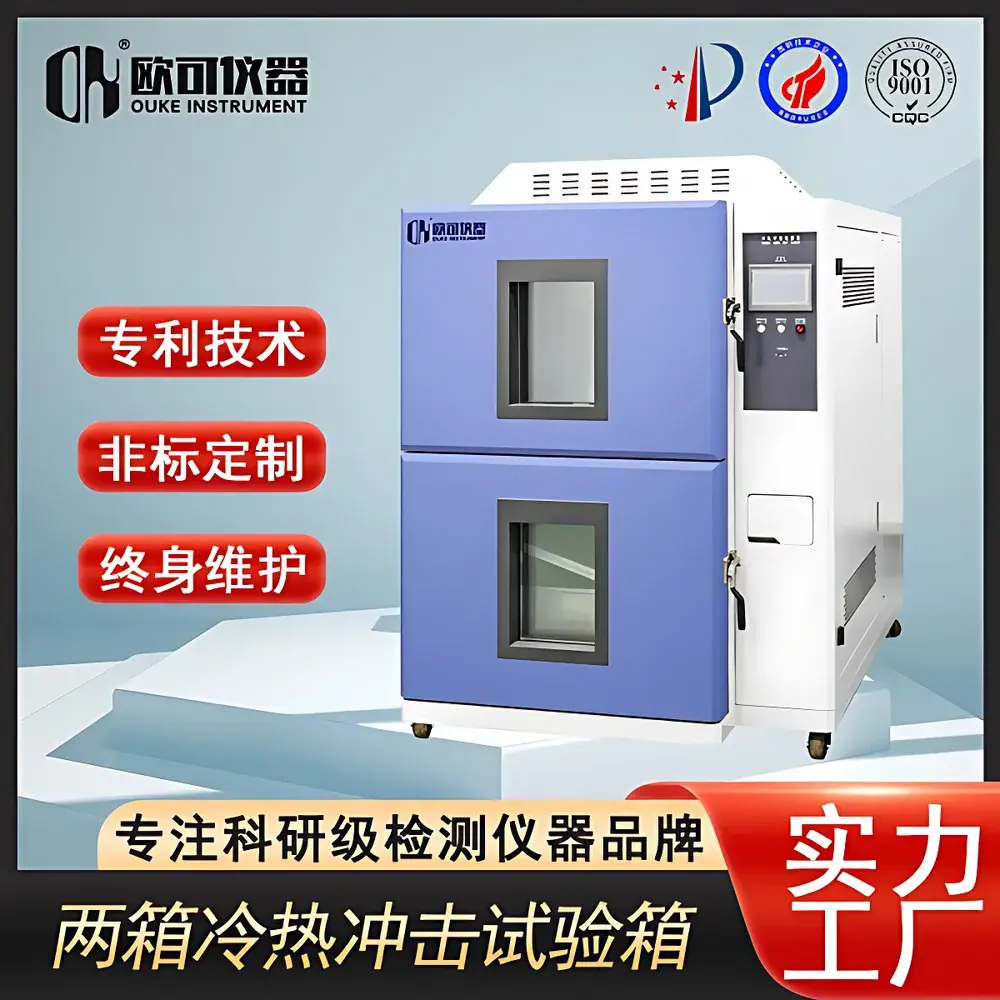
OK 0K-TS-49.6 Thermal Shock Test Chamber
| Brand | OK |
|---|---|
| Origin | Guangdong, China |
| Manufacturer Type | Direct Manufacturer |
| Product Category | Domestic |
| Model | 0K-TS-49.6 |
| High Temperature Range (°C) | +150 |
| Low Temperature Range (°C) | −60 |
| Thermal Shock Range (°C) | −60 to +150 |
| Temperature Stability (°C) | ±2 |
| Heating Rate | ≤20 s (to target temp) |
| Cooling Rate | ≤20 s (to target temp) |
Overview
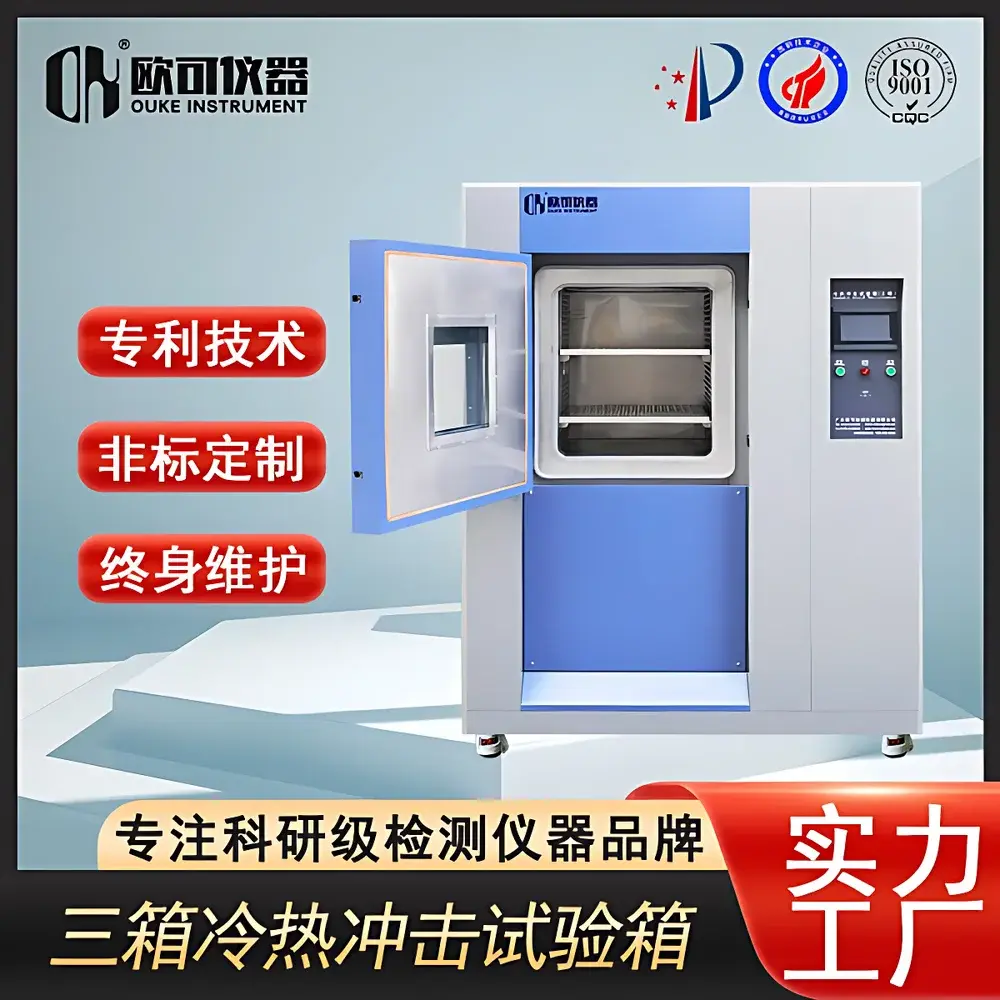
The OK 0K-TS-49.6 Thermal Shock Test Chamber is an engineered environmental test system designed to subject electronic components, automotive modules, aerospace assemblies, and packaging materials to rapid, repetitive transitions between extreme high- and low-temperature environments. Unlike temperature cycling or rapid thermal transition chambers—which apply linear ramp profiles—the 0K-TS-49.6 implements true thermal shock per the physical principle of abrupt thermal displacement: it delivers step-change temperature exposure with minimal dwell time at intermediate states. This replicates real-world stress events such as component mounting onto heated PCBs, outdoor-to-indoor deployment in arctic climates, or avionics re-entry thermal transients. The chamber operates in strict compliance with internationally recognized shock test standards including IEC 60068-2-14 (equivalent to GB/T 2423.22), MIL-STD-883 Method 1010.8, and JESD22-A104D—each defining critical performance criteria for transfer time, temperature overshoot, and stabilization tolerance.
Key Features
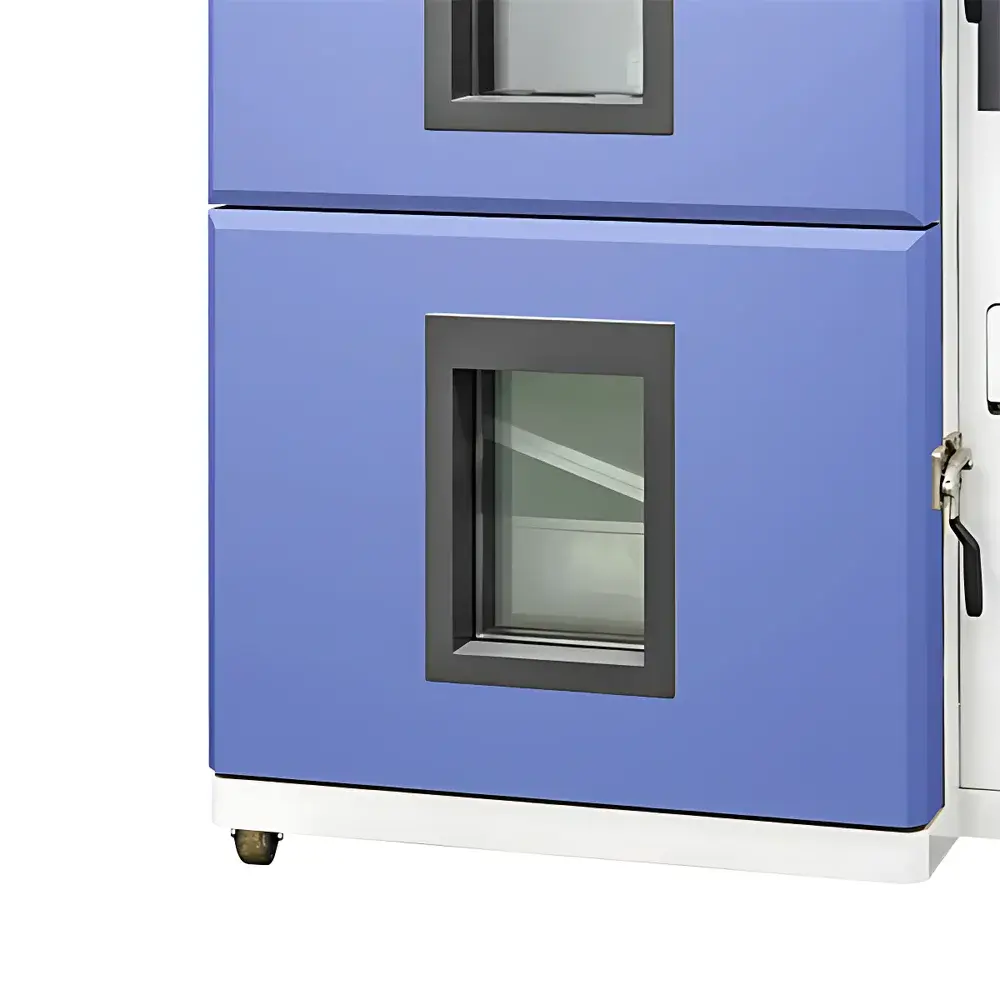
- Two-zone (hot/cold) dual-chamber architecture with pneumatically actuated specimen basket—enabling ≤10-second transfer between conditioned zones
- Independent high-efficiency refrigeration and heating circuits: −60 °C to +150 °C operational range with ±2 °C chamber stability under load
- Programmable shock profiles: customizable dwell times (1 min to 999 min), cycle counts (1 to 9999), and sequence logic (e.g., hot→cold→hot or cold→hot→cold)
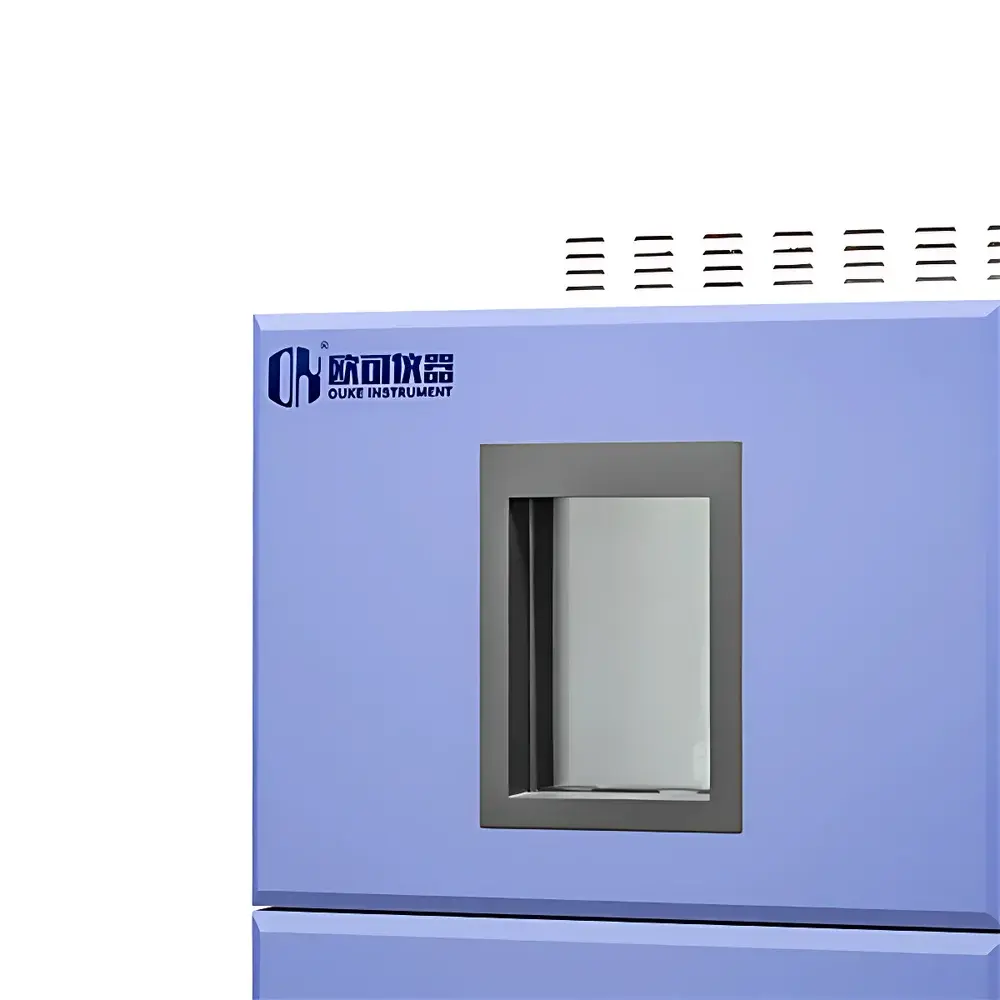
- Robust stainless-steel interior with insulated double-wall construction and non-condensing air purge system to suppress frost accumulation during low-temperature phases
- Integrated safety interlocks: over-temperature cutoff, door position monitoring, refrigerant pressure sensors, and emergency stop circuit per IEC 61000-6-2 EMC requirements
- Modular design supports optional upgrades including LN2 assist for sub−65 °C capability and Ethernet-based remote diagnostics
Sample Compatibility & Compliance
The 0K-TS-49.6 accommodates specimens up to 400 mm × 400 mm × 400 mm (W×D×H) with maximum payload of 20 kg on the transfer basket. Its mechanical transfer mechanism is optimized for rigid, self-contained units—such as IC packages, connectors, soldered PCBAs, and molded housings—that tolerate brief inertial loading (<5 g peak acceleration during basket motion). For vibration-sensitive or powered-in-test applications, the chamber may be operated in static mode using external thermal shunts or synchronized with third-party data acquisition systems via TTL trigger outputs. All test procedures align with ISO/IEC 17025-accredited laboratory practices; full audit trails—including timestamped temperature logs, cycle counters, and alarm records—are retained for GLP/GMP traceability. Calibration certificates are issued per ISO/IEC 17025 Annex A.3 and traceable to NIM (China National Institute of Metrology).
Software & Data Management
Control and monitoring are managed through OK’s proprietary TSC-Manager v3.2 software, running on embedded Linux with a 10.1″ capacitive touchscreen HMI. The interface supports multi-step program editing, real-time dual-zone temperature overlay graphs, and CSV export of all sensor channels (chamber A, chamber B, basket surface, ambient intake). Data integrity complies with FDA 21 CFR Part 11 requirements: user role-based access control (admin/operator/viewer), electronic signatures for test initiation and report approval, and immutable audit logs recording every parameter change, manual override, or alarm event. Optional OPC UA integration enables seamless connection to MES platforms (e.g., Siemens Opcenter, Rockwell FactoryTalk) for automated test scheduling and SPC-driven quality gate enforcement.
Applications
- Failure analysis of solder joint integrity in lead-free assemblies per IPC-J-STD-001 and IPC-A-610
- Qualification testing of MEMS sensors, optical modules, and battery management systems per AEC-Q200 and UL 1642
- Reliability screening of plastic encapsulated microcircuits (PEMs) under JEDEC JESD22-A104D conditions
- Validation of hermetic seal performance in medical device housings and implantable electronics
- Material compatibility assessment of adhesives, conformal coatings, and potting compounds across thermal expansion mismatch thresholds
FAQ
What distinguishes thermal shock testing from temperature cycling?
Thermal shock applies discontinuous, step-function temperature transitions (typically ≤10 s transfer time) to induce mechanical stress from differential expansion; temperature cycling uses continuous ramping (e.g., 5–15 °C/min) to simulate cumulative fatigue over hundreds of cycles.
Does this chamber support liquid nitrogen (LN₂) injection?
The base 0K-TS-49.6 model does not include LN₂ integration, but the chassis is pre-piped and rated for retrofit installation of cryogenic assist kits to extend low-temperature capability to −80 °C.
Can I monitor device-under-test (DUT) electrical parameters during shock cycles?
Yes—through the rear-panel feedthrough ports (4× SMA, 2× 12-pin D-sub), users may route power, signal, and ground lines to external SMUs or oscilloscopes while maintaining chamber integrity and EMI shielding.
Is calibration documentation included with shipment?
Each unit ships with a factory calibration report covering temperature uniformity (±1.5 °C across working volume), transfer time verification (≤8.2 s verified at 23 °C ambient), and sensor linearity (NIST-traceable Pt100 probes).
How is compliance with MIL-STD-883 Method 1010.8 verified?
OK performs internal validation using ASTM E2202-compliant reference thermocouples mounted directly on the basket surface and within the specimen zone—ensuring measured transition time meets the ≤10 s requirement defined in Clause 4.2.1 of the standard.



