
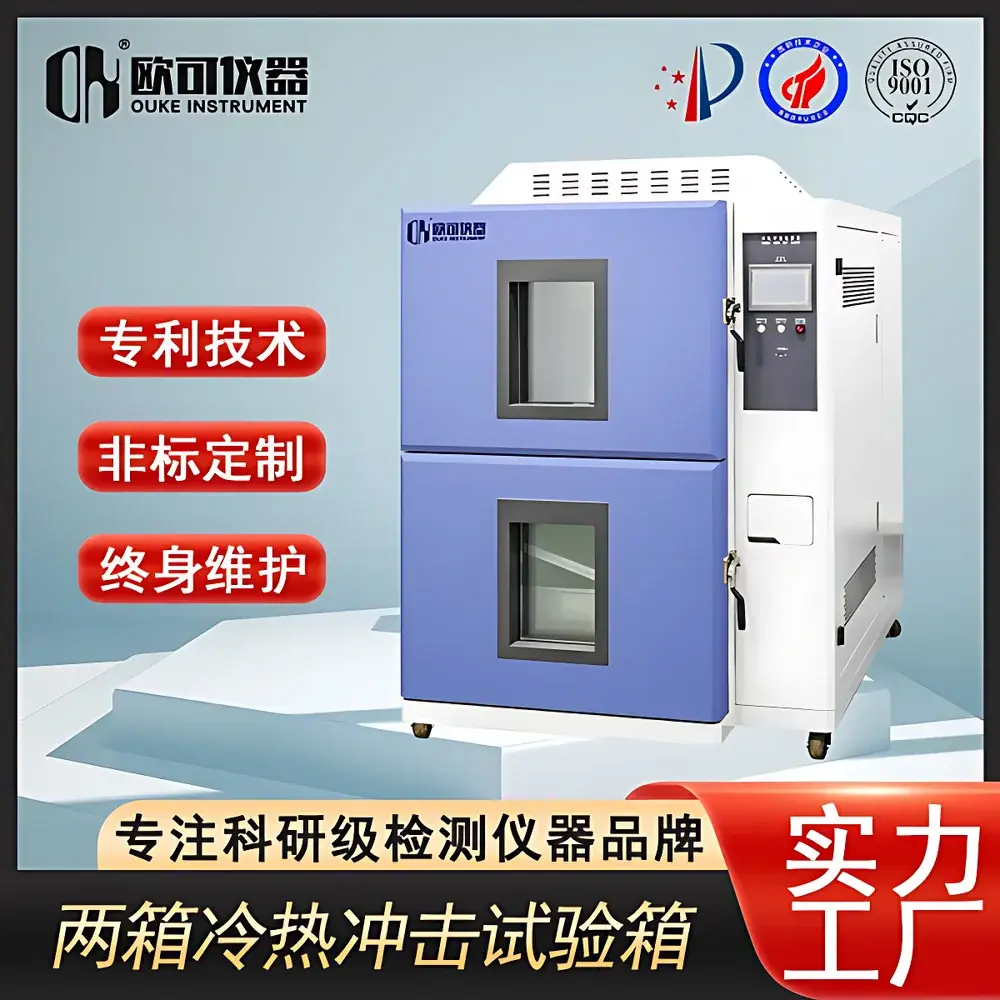
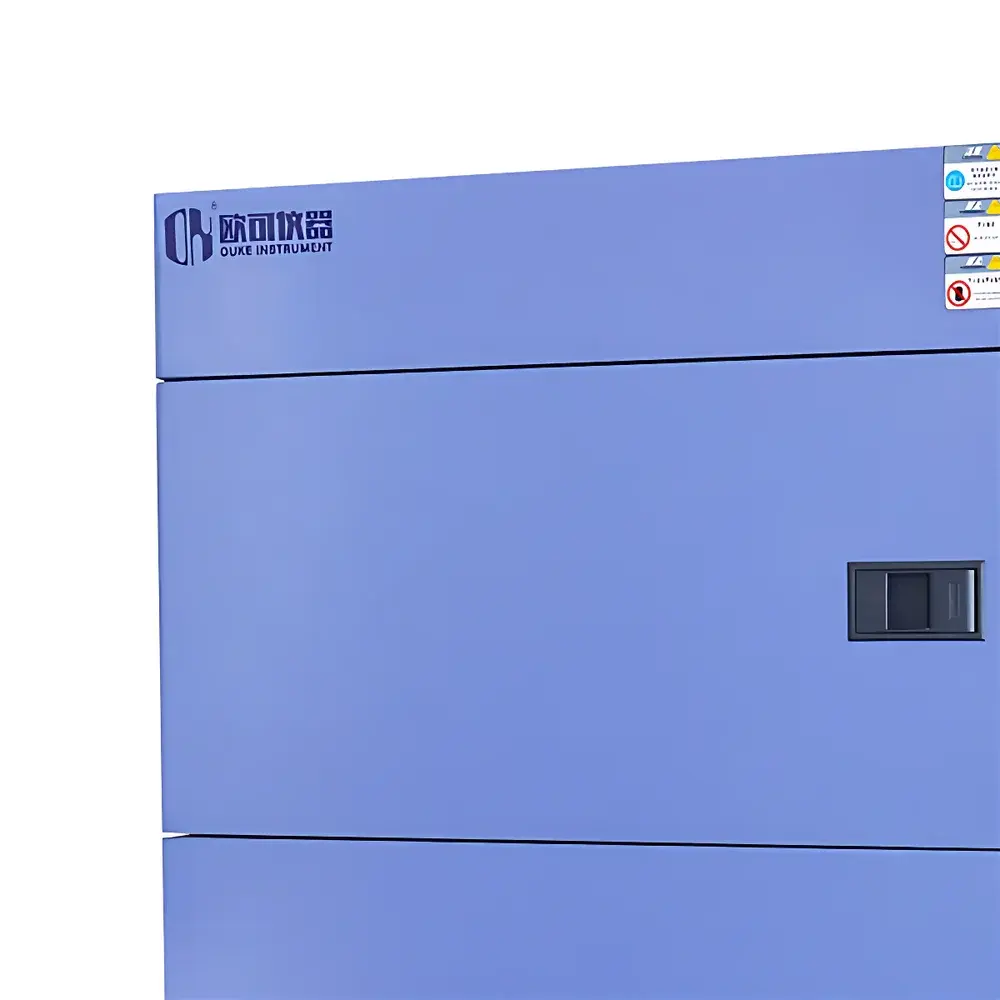
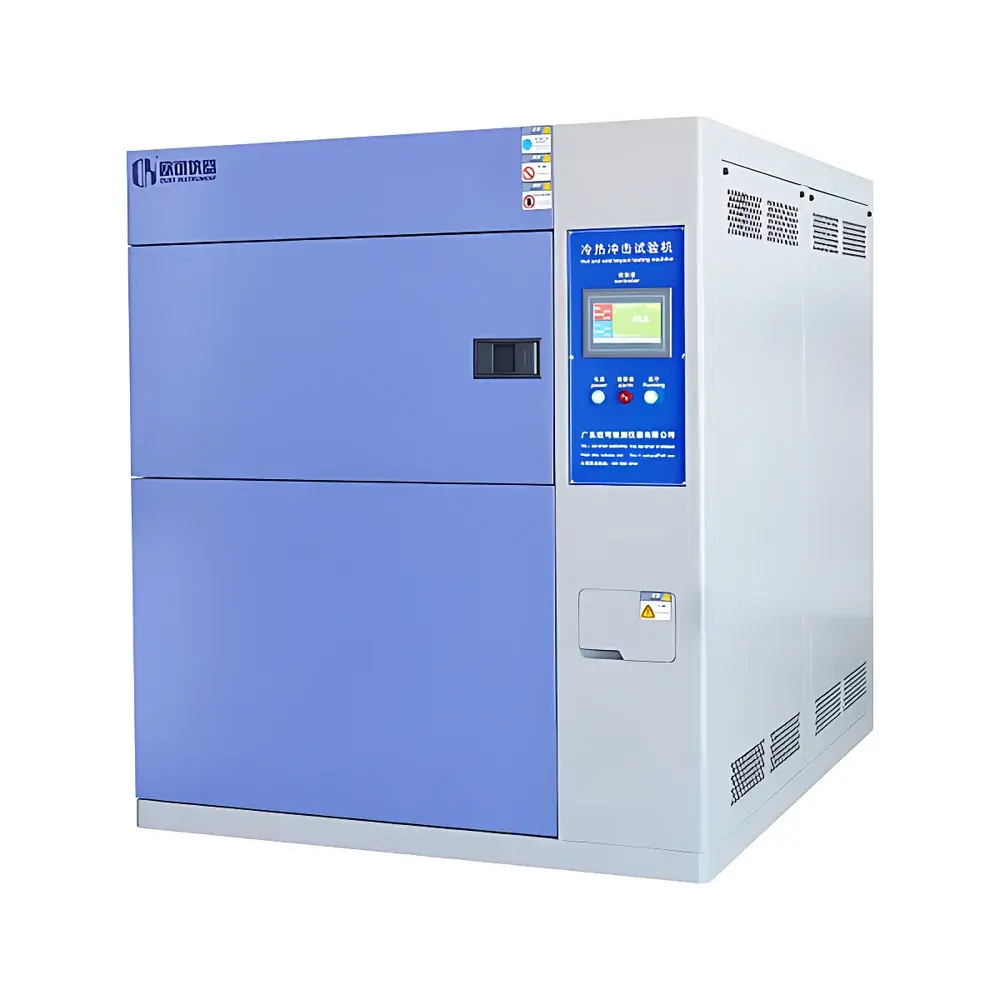
OK 0K-TS-49.66 Thermal Shock Test Chamber
| Brand | OK |
|---|---|
| Origin | Guangdong, China |
| Manufacturer Type | Direct Manufacturer |
| Model | 0K-TS-49.66 |
| High Temperature Range (°C) | +150 |
| Low Temperature Range (°C) | −50 |
| Thermal Shock Range (°C) | −40 to +150 |
| Temperature Stability (°C) | ±2 |
| Ramp Rate (Heating/Cooling) | ≤20 s for chamber transition (not linear ramp rate) |
Overview
The OK 0K-TS-49.66 Thermal Shock Test Chamber is an engineered environmental test system designed to subject electronic components, automotive modules, aerospace assemblies, and packaging materials to rapid, repetitive transitions between extreme high- and low-temperature environments. Unlike temperature cycling or fast thermal ramp chambers—which apply controlled, linear temperature gradients—this chamber delivers true thermal shock stress via discrete, stepwise temperature exposure. Its operational principle adheres to the fundamental definition in IEC 60068-2-14 (identical to GB/T 2423.22) and MIL-STD-883 Method 1010: a specimen must be transferred—or exposed to conditioned air—between two thermally stabilized zones within a defined transition time (≤10 s), inducing transient thermal gradients that expose interfacial weaknesses, coefficient-of-thermal-expansion (CTE) mismatches, solder joint fatigue, delamination, and hermetic seal failure.
Key Features
- Two-Zone Dual-Chamber Architecture: Integrates independent high-temperature (+150 °C) and low-temperature (−50 °C) chambers with precise PID-controlled refrigeration and heating systems, ensuring stable setpoint maintenance (±2 °C) during dwell phases.
- High-Speed Transfer Mechanism: Utilizes pneumatically actuated basket movement to achieve ≤20-second transition time between thermal zones—meeting the stringent timing requirements of JESD22-A104 and MIL-STD-883H for qualification-level testing.
- Robust Structural Design: Constructed with SUS304 stainless steel interior and high-density polyurethane insulation (≥150 mm thickness) to minimize thermal leakage and support repeatable thermal inertia profiles.
- Programmable Test Sequencing: Supports multi-step shock profiles including dwell time, number of cycles, and sequence direction (e.g., cold→hot→cold), with non-volatile memory retention for audit-ready test definitions.
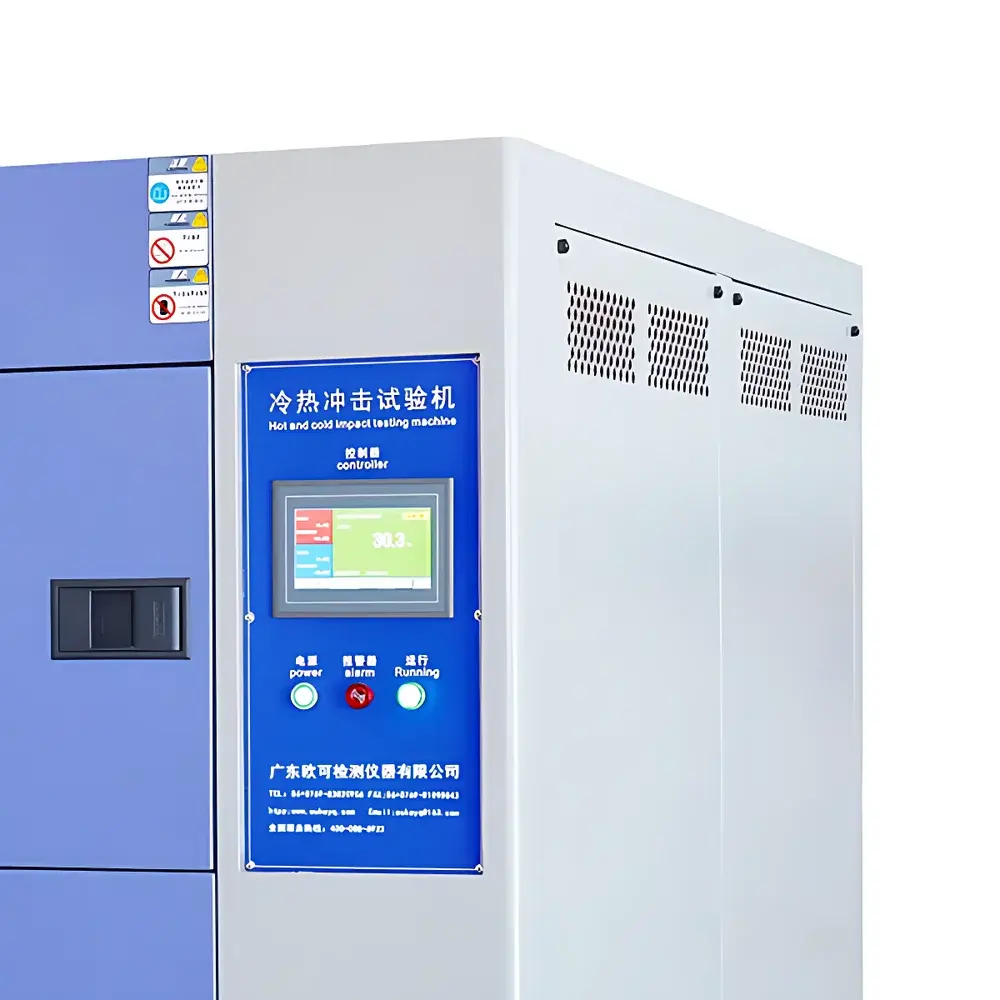
- Real-Time Monitoring Interface: Equipped with calibrated PT100 sensors at sample location and chamber walls, delivering synchronized temperature logging at 1 Hz resolution via embedded RS485/Modbus RTU or optional Ethernet/IP interface.
Sample Compatibility & Compliance
The 0K-TS-49.66 accommodates specimens up to standard benchtop dimensions (W × D × H: 400 × 400 × 400 mm) and supports static mounting or basket-based loading. It is suitable for PCBAs, IC packages (QFP, BGA, CSP), sensors, LED modules, battery cells, and molded plastic housings. The chamber satisfies functional compliance with IEC 60068-2-14 (Test Nb), MIL-STD-883H Method 1010.8, JESD22-A104D, and AEC-Q200 stress verification protocols. All control firmware and data logs are structured to support GLP/GMP-aligned validation documentation, including user-accessible calibration certificate templates and traceable sensor ID tagging.
Software & Data Management
Bundled OK-TSC Control Software (v3.2+) provides Windows-based configuration, real-time graphing, and automated report generation in PDF/CSV formats. The software enforces role-based access control (operator, engineer, administrator), maintains full audit trails per FDA 21 CFR Part 11 requirements—including electronic signatures, change history, and immutable log archiving—and supports integration with LIMS or MES platforms via OPC UA or RESTful API endpoints. Raw temperature time-series data is timestamped with UTC synchronization and includes metadata such as cycle count, dwell duration, and chamber status flags (e.g., “door open”, “refrigerant low”)
Applications
- Qualification testing of automotive ECUs under ISO 16750-4 and LV-124 thermal shock clauses
- Reliability screening of semiconductor devices prior to burn-in and final test
- Validation of adhesive bond integrity in medical device enclosures
- Failure analysis of MEMS sensors subjected to field-relevant thermal transients
- Process capability assessment of reflow-soldered assemblies in contract manufacturing
- Accelerated life modeling for conformal-coated electronics deployed in aerospace avionics bays
FAQ
What distinguishes thermal shock testing from temperature cycling?
Thermal shock applies instantaneous, discontinuous temperature transitions between two stable zones—inducing mechanical stress from differential expansion. Temperature cycling uses a single chamber with controlled ramp rates (e.g., 10 °C/min), causing cumulative thermal fatigue over hundreds or thousands of cycles.
Is this unit compliant with MIL-STD-883H?
Yes—the 0K-TS-49.66 meets Method 1010.8 requirements for transition time, dwell stability, and thermal gradient uniformity across the test volume when operated within its specified ambient conditions (15–30 °C, ≤70% RH).
Can the chamber operate continuously for extended qualification runs?
It supports unattended operation for ≥1,000 cycles with integrated compressor protection logic, refrigerant pressure monitoring, and automatic fault logging—validated per IEC 61000-4-11 voltage dip immunity and CE EMC Directive 2014/30/EU.
Does the system support external power feedthroughs for powered-in-test (PIT)?
Optional 4-channel low-noise feedthroughs (rated to 300 VAC/5 A) are available with IP65-rated bulkhead connectors, enabling real-time functional monitoring during shock exposure.
How is calibration traceability maintained?
Each unit ships with NIST-traceable calibration certificates for all chamber and sample-zone PT100 sensors, with annual recalibration intervals defined in accordance with ISO/IEC 17025:2017 and documented in the Equipment Qualification File (EQF).



