
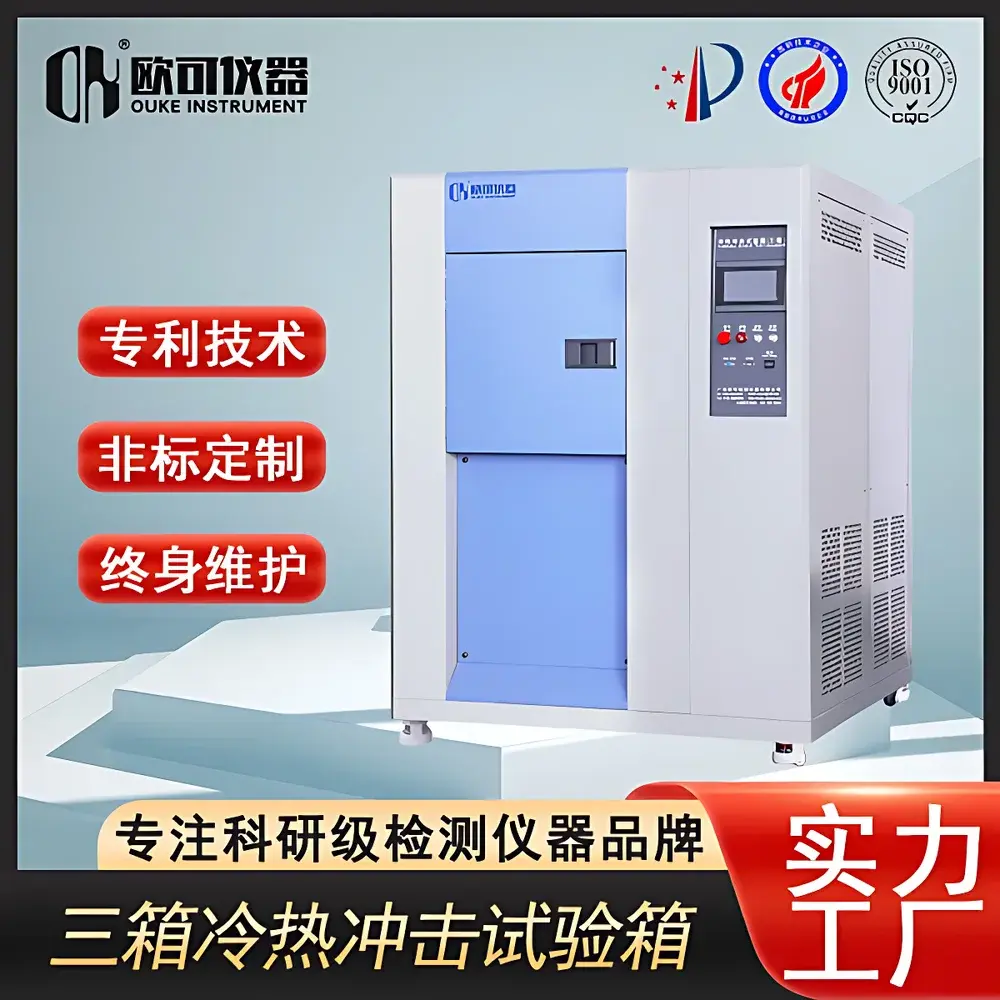
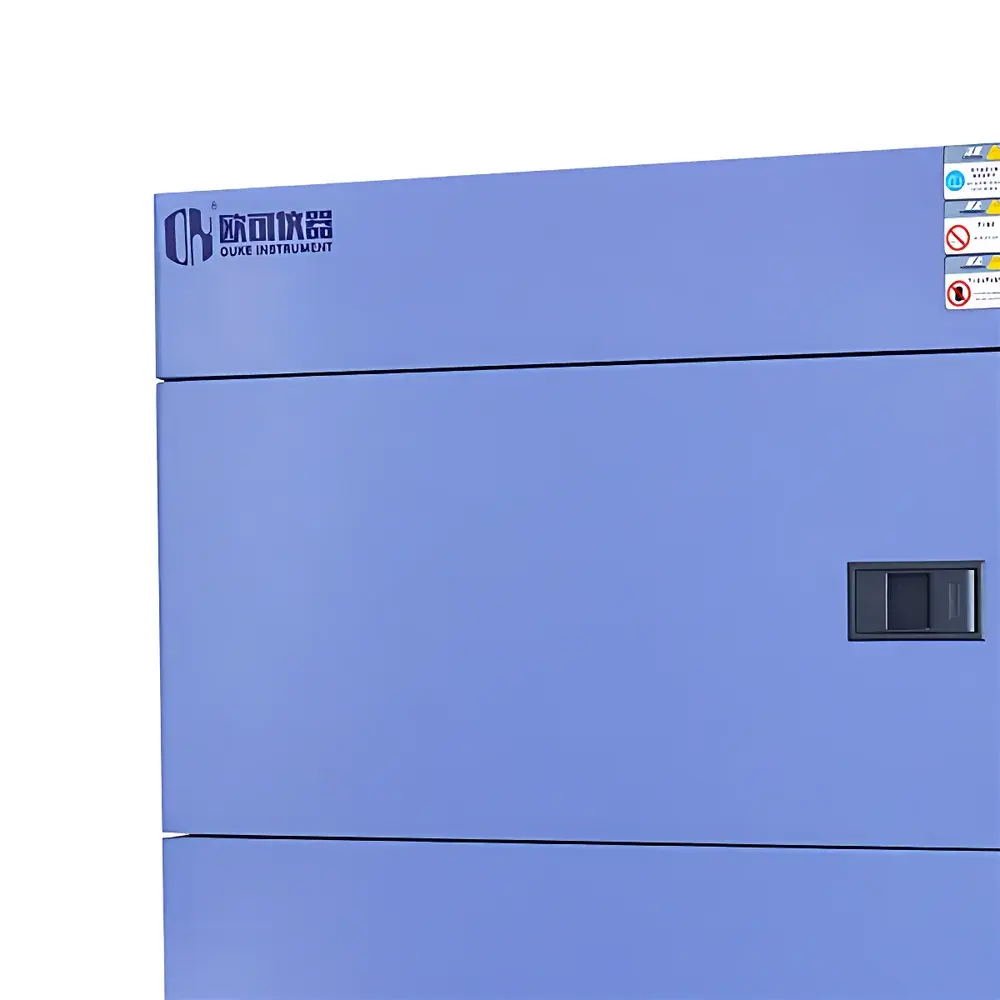
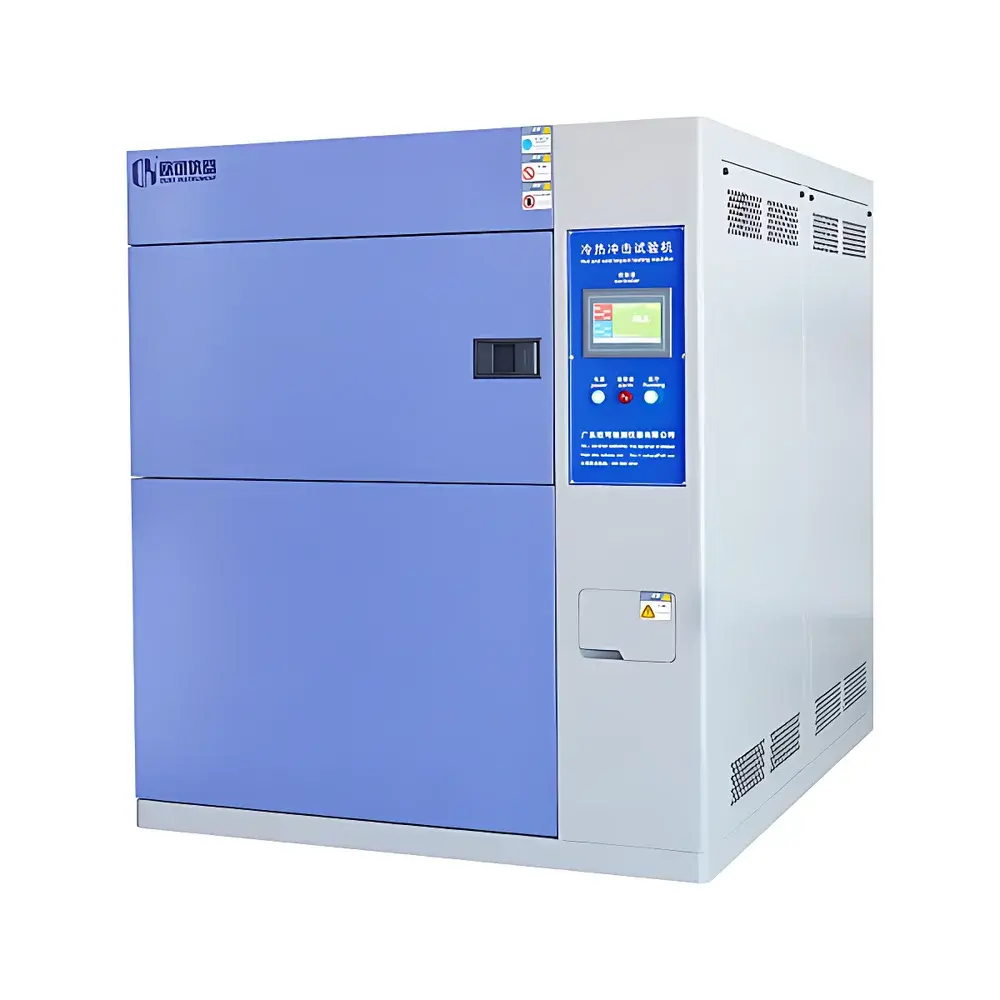
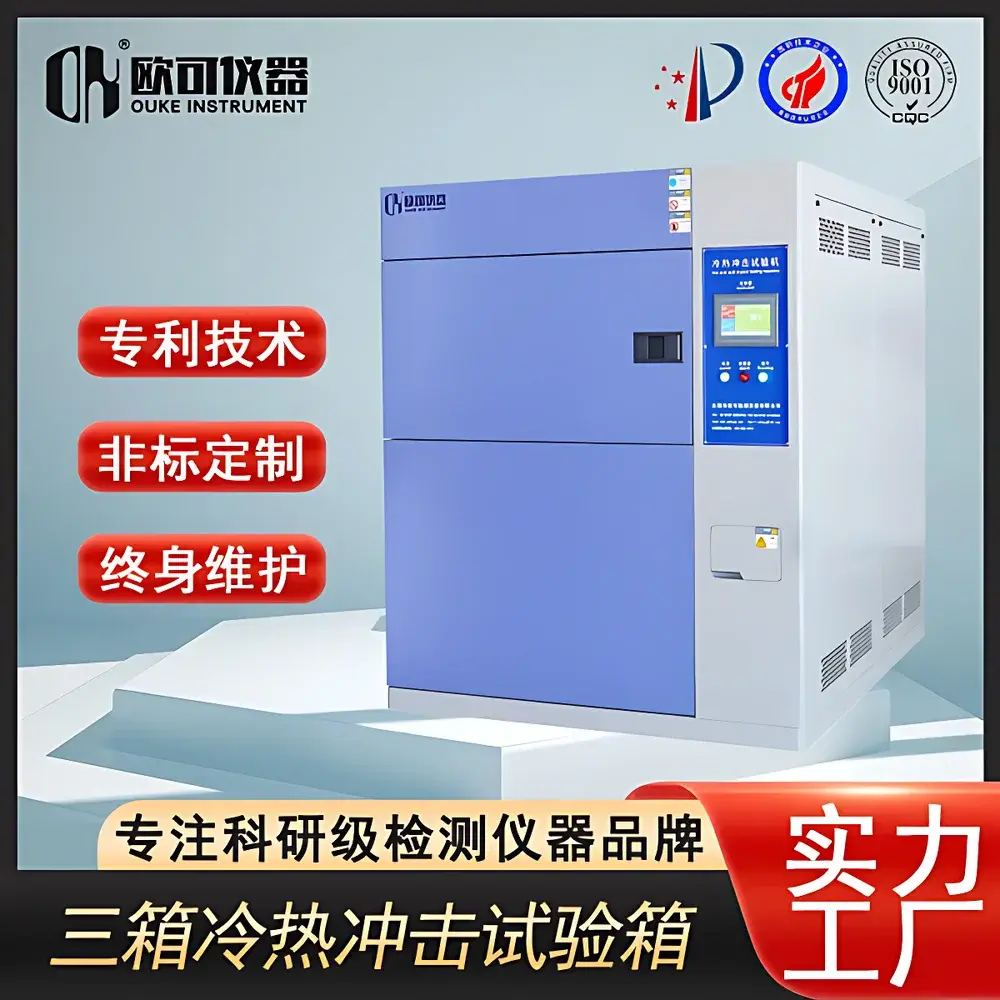
OK 0K-TS-49.666 Thermal Shock Test Chamber
| Brand | OK |
|---|---|
| Origin | Guangdong, China |
| Manufacturer Type | Direct Manufacturer |
| Model | 0K-TS-49.666 |
| High Temperature Range (°C) | +150 |
| Low Temperature Range (°C) | −45 |
| Thermal Shock Range (°C) | −45 to +150 |
| Temperature Stability (°C) | ±2 |
| Heating Rate | ≤20 s (to target temp) |
| Cooling Rate | ≤20 s (to target temp) |
Overview
The OK 0K-TS-49.666 Thermal Shock Test Chamber is an engineered environmental test system designed to subject electronic components, automotive modules, aerospace assemblies, and advanced packaging materials to rapid, repetitive transitions between extreme high- and low-temperature environments. Unlike conventional temperature cycling or rapid thermal transition chambers—which impose gradual, linear temperature gradients—this chamber implements true thermal shock per IEC 60068-2-14, MIL-STD-883 Method 1010.8, and JESD22-A104. Its operational principle relies on discrete, stepwise temperature exposure: the test specimen is exposed to a stable high-temperature environment (up to +150 °C), then transferred—within ≤20 seconds—to a stable low-temperature environment (down to −45 °C), or vice versa. This abrupt thermal displacement induces transient mechanical stress due to differential thermal expansion across material interfaces, exposing latent defects such as interfacial delamination, solder joint cracking, wire bond lift-off, and hermetic seal failure.
Key Features
- Two-chamber (basket-transfer) architecture with independent high- and low-temperature zones, enabling direct specimen relocation via pneumatic actuation
- Temperature stability maintained at ±2 °C within each chamber during dwell phases, ensuring repeatability across qualification runs
- Verified transfer time ≤20 seconds from one chamber’s setpoint to the other’s—meeting Class 5 requirements of IEC 60068-2-14 for severe shock profiles
- Stainless-steel internal construction with insulated double-wall panels and silicone-sealed access doors for long-term thermal integrity
- Programmable controller supporting up to 999 cycles, multi-step dwell times, and automatic logging of chamber temperatures and transfer timestamps
- Integrated safety interlocks including over-temperature cutoff, door-open detection, and emergency stop circuitry compliant with IEC 61000-6-2 and UL 61010-1
Sample Compatibility & Compliance
The 0K-TS-49.666 accommodates specimens up to standard industrial board sizes (e.g., 450 × 450 × 200 mm W×D×H) on its motorized transfer basket. It supports both powered-in and unpowered testing configurations, though electrical feedthroughs are not included by default. The chamber meets essential regulatory prerequisites for reliability validation in regulated sectors: it operates within the temperature bounds required by AEC-Q200 for passive components and IPC-9701 for printed wiring board thermal cycling. While not certified to ISO/IEC 17025, its control system provides traceable temperature records suitable for GLP-compliant lab documentation. All thermal profiles conform to the mandatory dwell-time and transition-time definitions in IEC 60068-2-14 Ed. 3.0 (2022), and are directly applicable to US DoD procurement specifications referencing MIL-STD-883H.
Software & Data Management
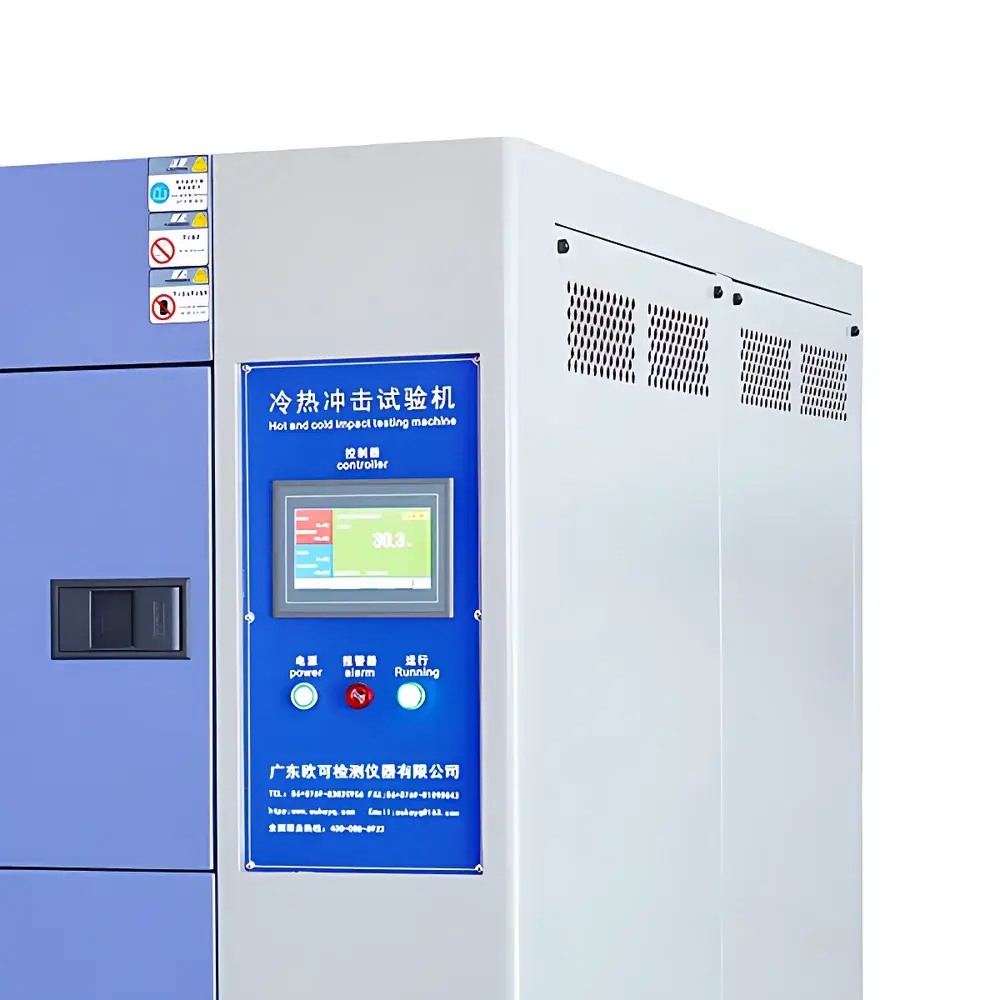
The embedded controller features a 7-inch color touchscreen HMI with intuitive menu navigation and real-time dual-zone temperature visualization. Test programs—including ramp/dwell sequences, cycle counts, and alarm thresholds—are stored internally with timestamped execution logs. Data export is supported via USB 2.0 to CSV format, preserving chamber temperature readings (sampled at 1 Hz), basket position status, and fault event codes. Optional Ethernet connectivity enables remote monitoring and integration into centralized test management platforms (e.g., LabVIEW or custom MES). Audit trails comply with basic data integrity expectations for non-GxP environments; however, full 21 CFR Part 11 compliance requires third-party validation of user access controls and electronic signature workflows.
Applications
- Qualification of semiconductor packages (QFN, BGA, CSP) under JEDEC JESD22-A104
- Validation of automotive ECUs per ISO 16750-4 and GMW3172 Section 5.2.3
- Reliability screening of lithium-ion battery modules prior to accelerated life testing
- Failure analysis support for root cause identification of thermally induced fractures in ceramic substrates and metal-ceramic hybrids
- Process capability assessment of reflow soldering and underfill cure parameters in SMT lines
FAQ
What distinguishes thermal shock testing from temperature cycling?
Thermal shock imposes instantaneous, discontinuous temperature transitions between two stable extremes—measured by transfer time (≤10–20 s)—to assess catastrophic failure modes. Temperature cycling applies continuous, linear ramps (e.g., 10 °C/min) over extended durations to evaluate cumulative fatigue damage.
Is liquid nitrogen required for the −45 °C low-temperature zone?
No. The system achieves −45 °C using a cascade refrigeration circuit with R404A/R23 mixed-refrigerant stages, eliminating dependency on external cryogenic supply.
Can this chamber perform dwell-time-variable profiles?
Yes. Dwell duration in either temperature zone is fully programmable from 1 minute to 999 hours per step, allowing simulation of real-world thermal soak conditions before shock initiation.
Does the basket movement introduce mechanical vibration that could confound results?
The pneumatic transfer mechanism is damped and calibrated to limit acceleration to <0.5 g peak during transit. Vibration signatures are documented in the factory acceptance test report and fall below ISO 2041 Class D limits for laboratory-grade instrumentation.
How is temperature uniformity verified across the test volume?
Uniformity is validated per IEC 60068-3-5 using nine calibrated PT100 sensors placed on a 3×3 grid at nominal specimen height. Results show ≤±1.5 °C deviation at steady state in both chambers.



