
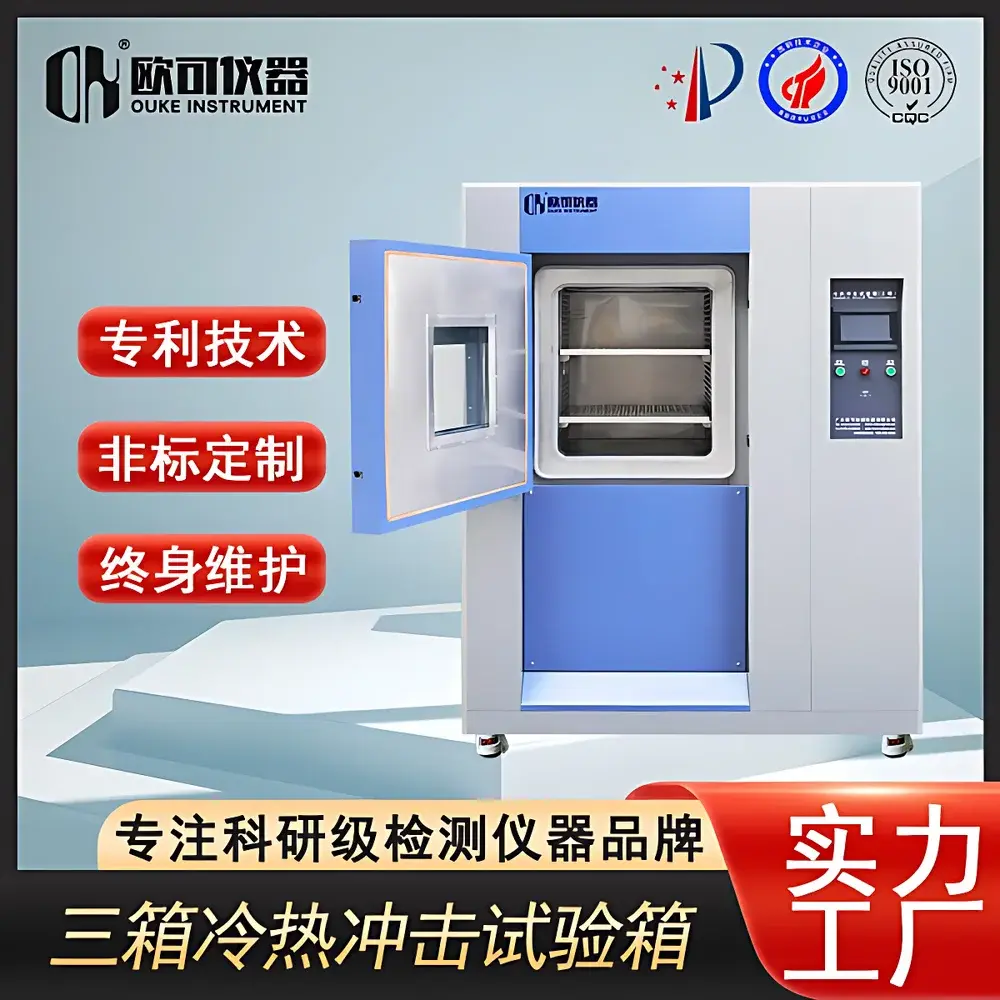
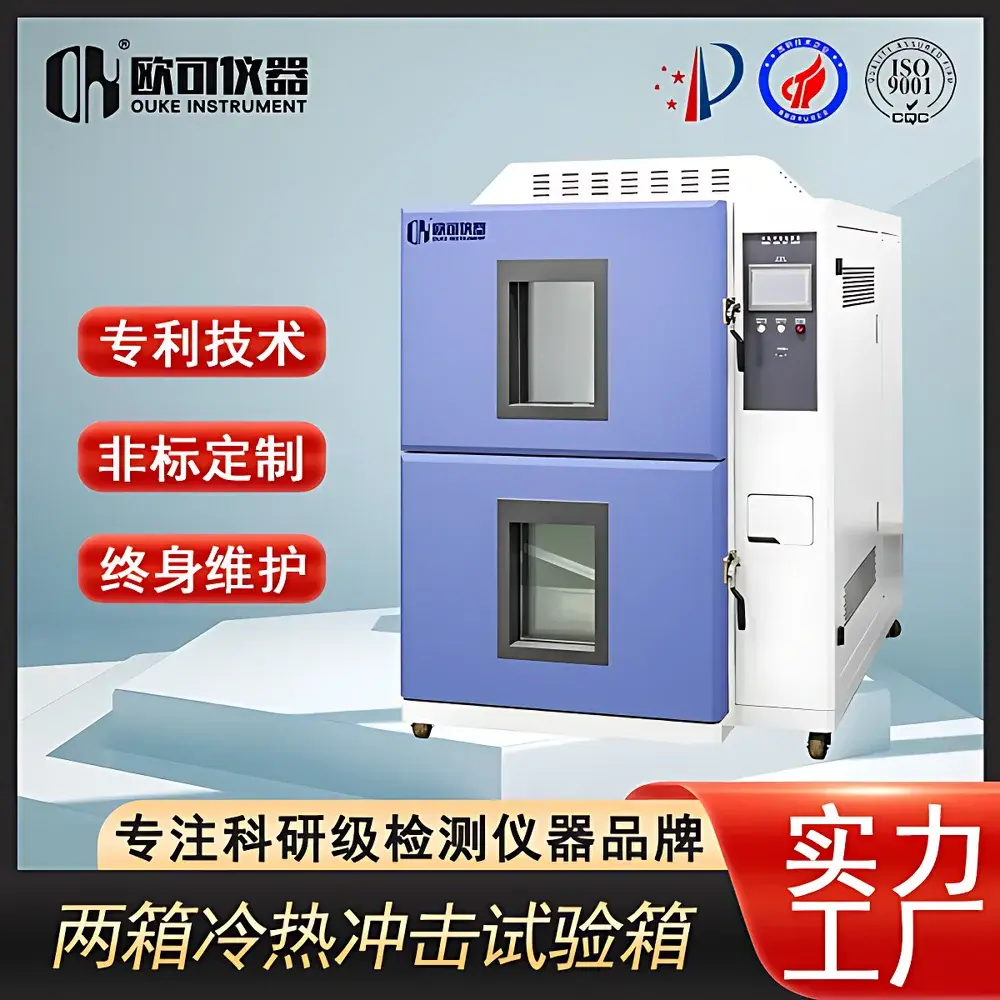
OK 0K-TS-49.9 Thermal Shock Test Chamber
| Brand | OK |
|---|---|
| Origin | Guangdong, China |
| Manufacturer Type | Direct Manufacturer |
| Model | 0K-TS-49.9 |
| High Temperature Range | +150 °C |
| Low Temperature Range | −20 °C |
| Thermal Shock Range | −20 °C to +150 °C |
| Temperature Stability | ±2 °C |
| Heating Rate | 5 °C/s |
| Cooling Rate | 5 °C/s |
Overview
The OK 0K-TS-49.9 Thermal Shock Test Chamber is an engineered environmental test system designed to subject electronic components, automotive modules, aerospace assemblies, and polymer-based devices to rapid, repetitive transitions between extreme high- and low-temperature environments. Unlike temperature cycling or rapid thermal ramping chambers, this unit implements true thermal shock testing—defined by abrupt, step-change exposure rather than linear ramp profiles. Its operational principle conforms to the fundamental requirement of thermal shock standards: achieving a defined temperature transition at the sample location within a strictly bounded time window (typically ≤10 seconds). The chamber supports two primary mechanical architectures—dual-chamber basket-transfer and triple-chamber air-switching—both calibrated to deliver reproducible thermal transients aligned with MIL-STD-883 Method 1010.8, IEC 60068-2-14 (equivalent to GB/T 2423.22), and JESD22-A104. It is not intended for fatigue-based thermal cycling; its purpose is failure-mode acceleration via instantaneous thermal stress.
Key Features
- Dual- or triple-chamber configurable architecture: Selectable basket-transfer (two-zone) or air-valve switching (three-zone) configuration based on specimen mass, fragility, and functional test requirements.
- High-fidelity thermal transient delivery: Achieves nominal heating and cooling rates of 5 °C per second across the specified operating range (−20 °C to +150 °C), verified at the specimen interface using traceable Pt100 sensors.
- Stable ambient holding: Maintains temperature stability within ±2 °C during dwell phases, ensuring consistent baseline conditions before and after each shock event.
- Programmable shock sequencing: Supports multi-step profiles including dwell time, number of cycles, direction (high→low or low→high), and optional recovery stabilization intervals.
- Robust mechanical design: Dual-chamber variant employs pneumatic basket actuation with position feedback; triple-chamber variant utilizes fail-safe solenoid air valves and high-turbulence axial fans for sub-2-second airflow redirection.
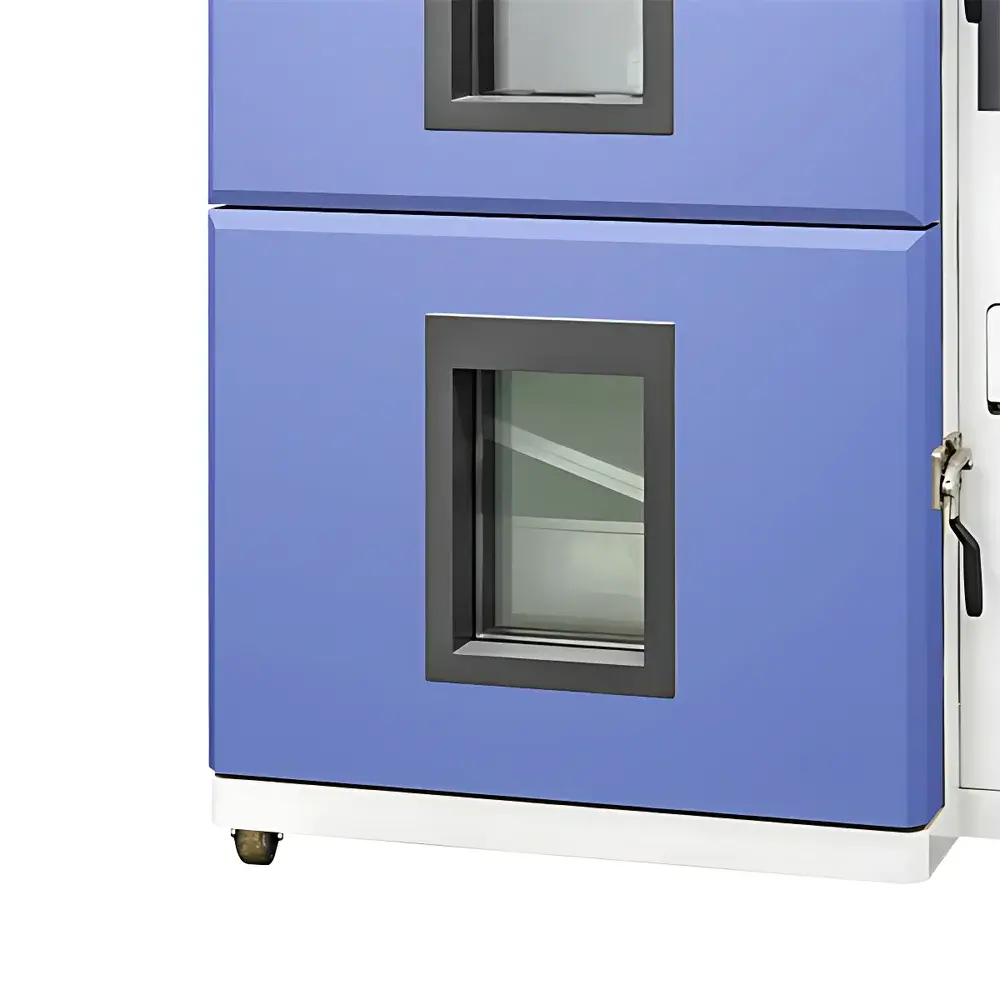
- Industrial-grade insulation and sealing: Multi-layer vacuum-insulated panels and dual-lip silicone gaskets minimize thermal leakage and cross-contamination between zones.
Sample Compatibility & Compliance
The OK 0K-TS-49.9 accommodates specimens up to standard industrial footprint dimensions (customizable upon request) and supports static or dynamic electrical monitoring during testing. Its mechanical and thermal performance has been validated against internationally recognized qualification protocols. It meets the core timing criteria of IEC 60068-2-14 for “transition time” (time required for the test specimen to move from one thermal zone to another and reach 90% of target temperature), as well as the thermal gradient and dwell specifications outlined in MIL-STD-883H Clause 1010.8. For regulated industries, the system’s programmable logic controller (PLC) architecture enables audit-ready operation under GLP and GMP frameworks when paired with optional data logging and electronic signature modules compliant with FDA 21 CFR Part 11 requirements.
Software & Data Management
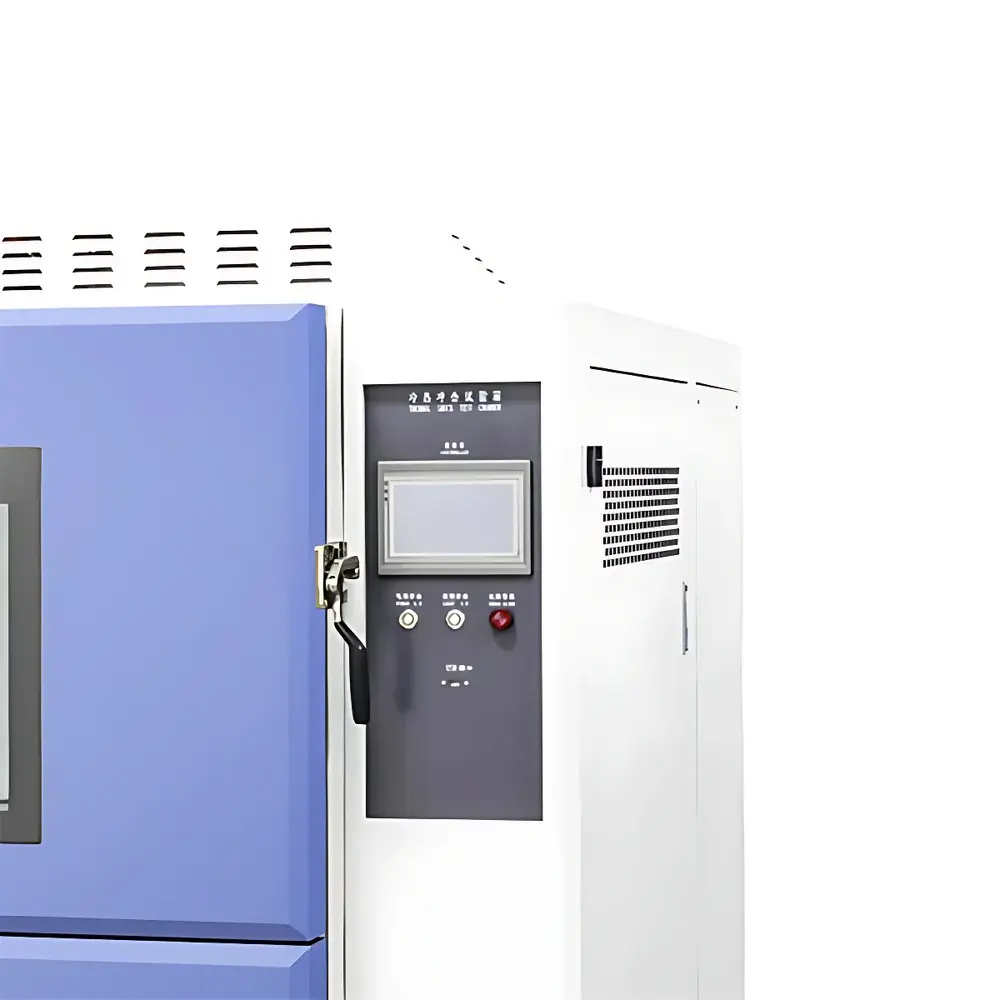
Control is executed via an embedded industrial HMI running OK’s proprietary TSCore™ firmware, supporting ISO/IEC 17025-aligned calibration traceability and real-time thermocouple channel monitoring (up to 8 external inputs). All test parameters—including setpoints, cycle count, dwell duration, valve/basket status, and measured specimen surface temperature—are timestamped and stored locally on encrypted SD media. Export formats include CSV and PDF reports compatible with LIMS integration. Optional Ethernet/IP or Modbus TCP interfaces allow remote supervision and alarm forwarding to SCADA or MES platforms. Firmware updates are delivered via signed binary packages to ensure integrity and version control.
Applications
- Failure analysis of solder joint integrity in PCBAs under thermal mismatch stress.
- Validation of hermetic seal reliability in MEMS sensors and optoelectronic housings.
- Qualification of battery module enclosures for electric vehicles exposed to rapid ambient shifts.
- Screening of adhesive bond strength in multi-material automotive trim assemblies.
- Reliability assessment of ceramic capacitors and power semiconductors per AEC-Q200 stress profiles.
- Material-level evaluation of coefficient-of-thermal-expansion (CTE) mismatch in hybrid packaging systems.
FAQ
What distinguishes thermal shock testing from temperature cycling?
Thermal shock applies discrete, near-instantaneous temperature steps to induce mechanical fracture from differential expansion; temperature cycling uses controlled ramps to assess cumulative thermal fatigue over hundreds or thousands of cycles.
Is the 5 °C/s rate measured in the chamber air or at the specimen?
This rate reflects the average thermal gradient observed at the standardized reference sensor location (per IEC 60068-3-10), calibrated under loaded conditions with representative thermal mass.
Can this chamber support liquid nitrogen (LN₂) augmentation?
The base model operates with mechanical refrigeration only. LN₂ injection is available as a factory-installed option for extended low-temperature capability (e.g., −40 °C or lower) and accelerated cooling response.
Does the system include validation documentation?
Yes—each unit ships with a Factory Acceptance Test (FAT) report, temperature uniformity mapping data, and traceable calibration certificates for all critical sensors per ISO/IEC 17025 guidelines.
How is compliance with MIL-STD-883 ensured during operation?
Test sequences are preconfigured to match Method 1010.8 dwell durations, transition thresholds, and thermal overshoot limits; automated pass/fail evaluation is embedded in the reporting engine.



