
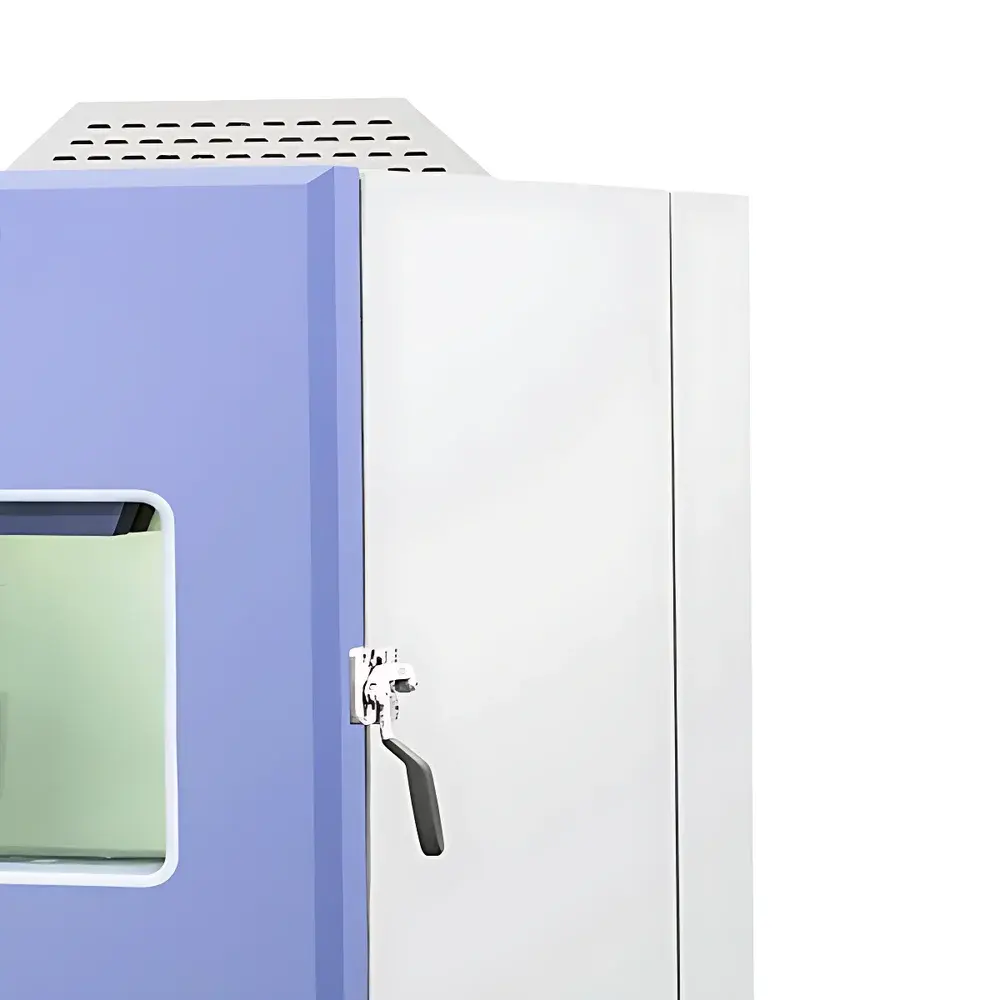
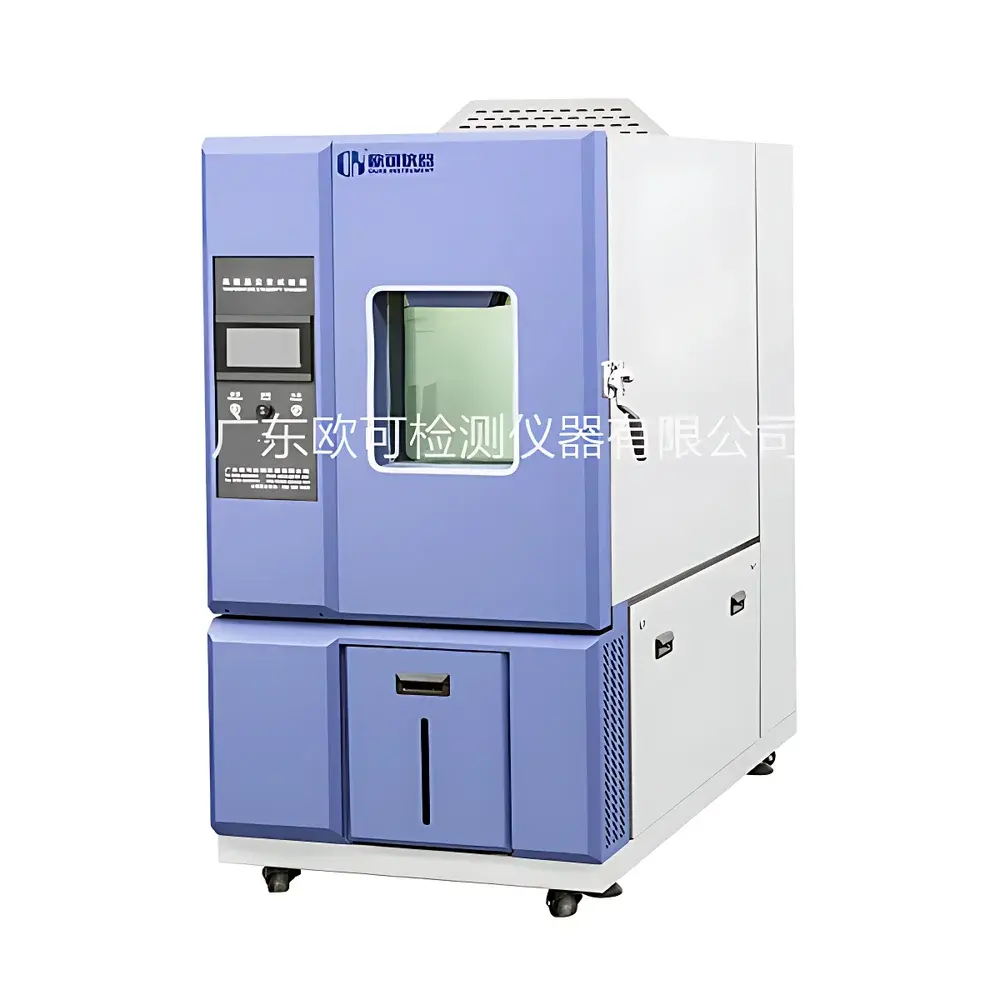
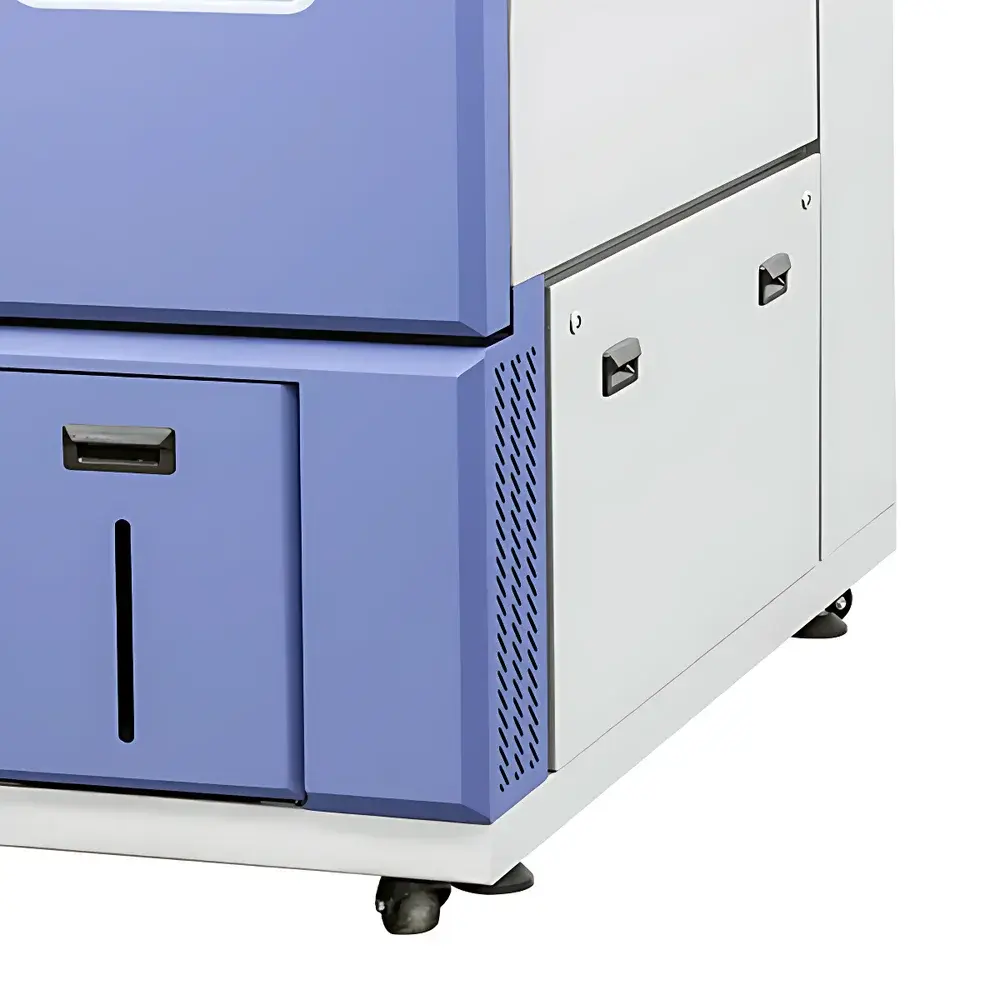
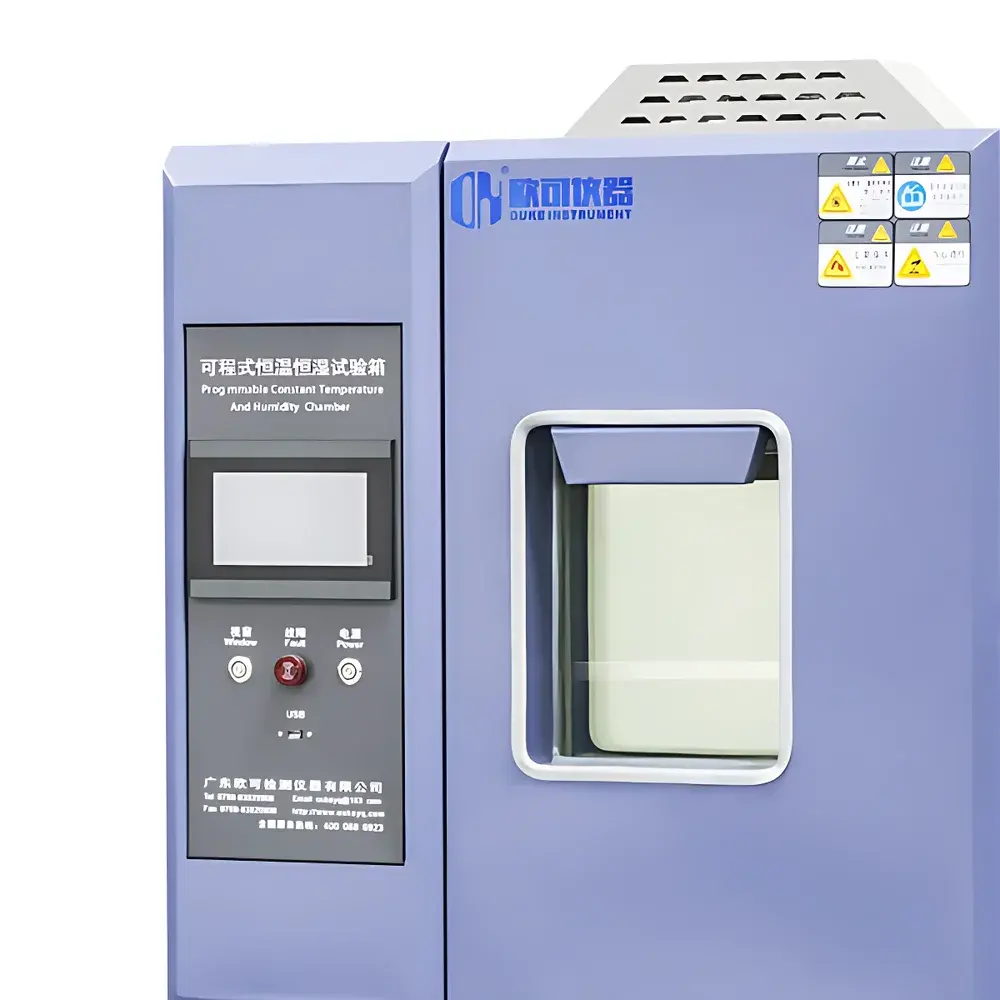
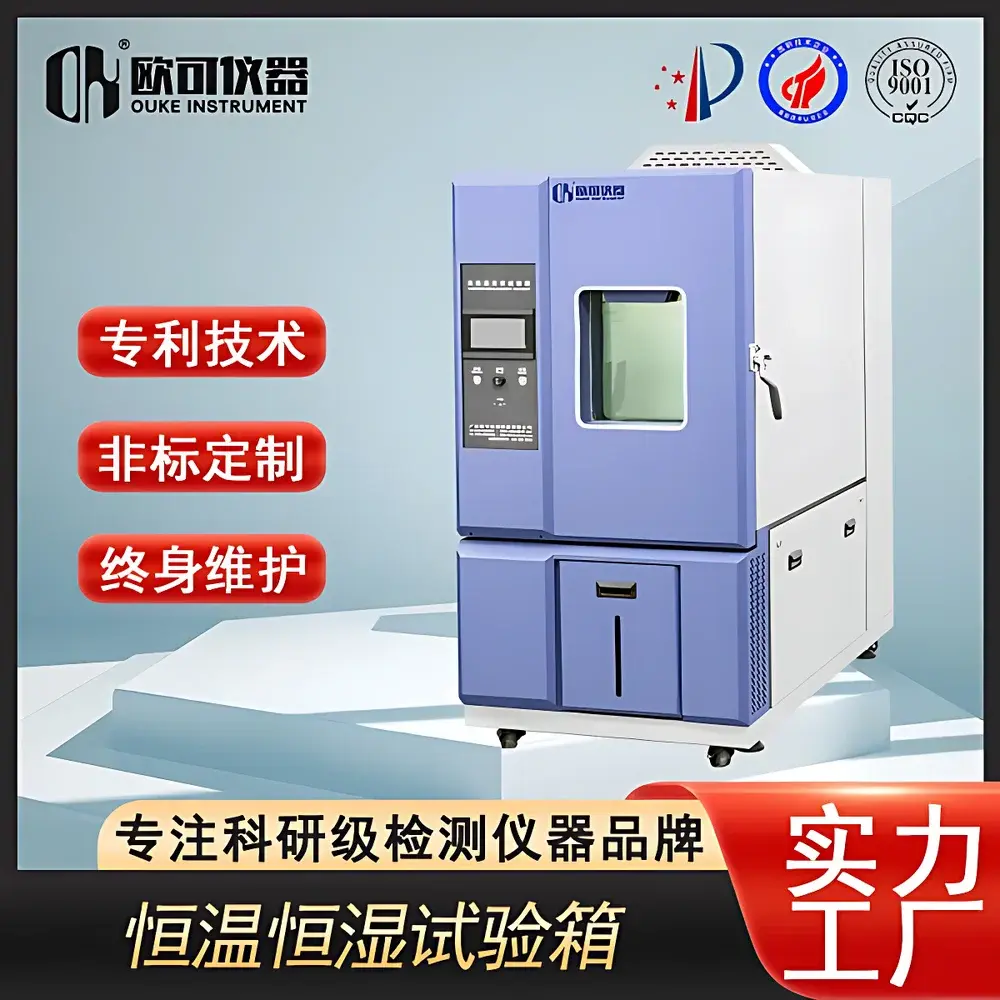
OK-TH-100.3 Benchtop Temperature and Humidity Controlled Environmental Test Chamber
| Brand | Other Brands |
|---|---|
| Origin | Guangdong, China |
| Manufacturer Type | Authorized Distributor |
| Product Origin | Domestic (China) |
| Model | OK-TH-100.3 |
| Price | USD 2,650 (FOB Guangdong) |
| Instrument Type | Benchtop |
| Condensation Method | Air-Cooled |
| Temperature Range | −50 °C to +150 °C |
| Humidity Range | 20–98 % RH |
| Temperature Uniformity | ≤ ±2 °C |
| Temperature Fluctuation | ±1 °C (high-temp), ±2 °C (low-temp) |
| Humidity Uniformity | ≤ ±3 % RH |
| Humidity Fluctuation | ±3 % RH |
| Heating Rate | 1.0–3.0 °C/min |
| Internal Chamber Dimensions (W×D×H) | 800 × 600 × 500 mm |
Overview
The OK-TH-100.3 is a benchtop temperature and humidity controlled environmental test chamber engineered for precision static verification and routine operational qualification in quality control laboratories, R&D facilities, and manufacturing environments. Unlike dynamic performance validation protocols—such as temperature/humidity uniformity mapping or ramp-rate certification—the OK-TH-100.3’s design supports rigorous pre-operational static testing: a foundational safety and integrity assessment conducted prior to commissioning, after maintenance, or during periodic equipment requalification. This process adheres to core principles of IEC 61010-1 (Safety Requirements for Electrical Equipment for Measurement, Control, and Laboratory Use) and aligns with GLP (Good Laboratory Practice) and ISO/IEC 17025 documentation requirements for test equipment verification. The chamber employs a dual-loop PID-controlled refrigeration system with air-cooled condensation, resistive heating elements, and ultrasonic or surface-evaporation humidification—ensuring stable thermal mass response and minimal latent moisture hysteresis during static inspection phases.
Key Features
- Robust stainless-steel inner chamber (304 grade) with seamless welding and electropolished finish for corrosion resistance and ease of contamination-free inspection.
- Integrated door seal integrity verification port—compatible with smoke generation or differential pressure testing per ASTM E741 for static leakage assessment.
- Dedicated electrical safety access points: isolated terminal blocks for insulation resistance measurement (IEC 61010-compliant test points between live conductors and chassis ground).
- Ground continuity monitoring interface with labeled grounding studs (<0.1 Ω resistance path verified per UL 61010-1 Annex G).
- Controller firmware supports “Standby Diagnostic Mode”: power-on without climate activation, enabling functional verification of display, touch interface, sensor readouts, and program storage—all while maintaining zero thermal load on compressors or humidifiers.
- Modular auxiliary subsystems—including removable water reservoir, visible compressor oil sight glass, and accessible fan motor housing—for visual and tactile mechanical inspection per manufacturer-recommended static checklists.
Sample Compatibility & Compliance
The OK-TH-100.3 is not intended for sample conditioning during static testing; rather, its structural and electrical architecture is optimized to support standardized pre-use verification of environmental test infrastructure. It complies with national and international safety directives applicable to laboratory-grade environmental chambers, including GB/T 10586 (Chinese standard for environmental test equipment), IEC 60068-3-5 (Environmental testing—Part 3-5: Supporting documentation and guidance—Thermal and cold testing), and EN 61000-6-3 (EMC emission limits). Static verification procedures performed using this chamber satisfy prerequisites outlined in ISO/IEC 17025:2017 Clause 6.4.6 (Verification of Equipment Prior to Use) and FDA 21 CFR Part 211.68(a) (Laboratory Equipment Calibration and Verification). All safety-critical components—including emergency stop circuitry, overtemperature cut-off relays, and humidity overpressure relief valves—are factory-tested and documented in the delivered Equipment Verification Dossier.
Software & Data Management
The embedded controller features a non-volatile memory module that retains configuration settings and diagnostic logs across power cycles. During static testing, the system records timestamped events—including power-up sequences, UI responsiveness metrics, and real-time ambient sensor readings—without initiating climate control algorithms. Audit-trail functionality meets basic ALCOA+ (Attributable, Legible, Contemporaneous, Original, Accurate, Complete, Consistent, Enduring, Available) expectations for lab equipment verification records. Exportable CSV logs include insulation resistance values (if connected via optional external megohmmeter interface), grounding continuity measurements, and controller self-test results. No cloud connectivity or remote access is implemented—ensuring data sovereignty and alignment with internal IT security policies governing laboratory instrumentation.
Applications
- Pre-commissioning safety audit of environmental test infrastructure in pharmaceutical stability labs (per ICH Q1A–Q1E guidelines).
- Post-maintenance structural and electrical revalidation following compressor replacement, humidifier servicing, or control board upgrade.
- Periodic static verification per internal SOPs aligned with ISO/IEC 17025 Clause 6.4.10 (Equipment Verification Frequency).
- Training platform for laboratory technicians on standardized electrical safety testing (insulation resistance, grounding continuity, emergency stop validation).
- Supporting evidence generation for regulatory inspections—including FDA Pre-Approval Inspections (PAI) and MHRA laboratory audits—where documented static verification precedes dynamic calibration reports.
FAQ
What distinguishes static testing from dynamic performance validation?
Static testing evaluates mechanical integrity, electrical safety, and control logic functionality without activating climate control systems; dynamic validation measures actual temperature/humidity uniformity, stability, and ramp rates under operational load.
Is the OK-TH-100.3 suitable for ISO/IEC 17025-accredited calibration labs?
Yes—when used strictly for pre-operational verification per documented SOPs and supported by traceable test equipment (e.g., calibrated megohmmeters), it fulfills Clause 6.4.6 requirements for equipment verification prior to use.
Does the chamber include built-in insulation resistance measurement capability?
No—static electrical safety tests require external Class III-rated megohmmeters and grounding resistance testers; the chamber provides dedicated, labeled test points compliant with IEC 61010-1.
Can the controller store static test records independently?
Yes—up to 500 timestamped diagnostic events are retained in non-volatile memory and exportable via USB interface in CSV format.
What documentation is provided for static verification compliance?
The shipped package includes the Equipment Verification Dossier: Factory Test Report, Electrical Safety Certification Summary, Component Traceability Log, and a blank Static Test Record Template aligned with ISO/IEC 17025 Annex A.2.
Related Products



