
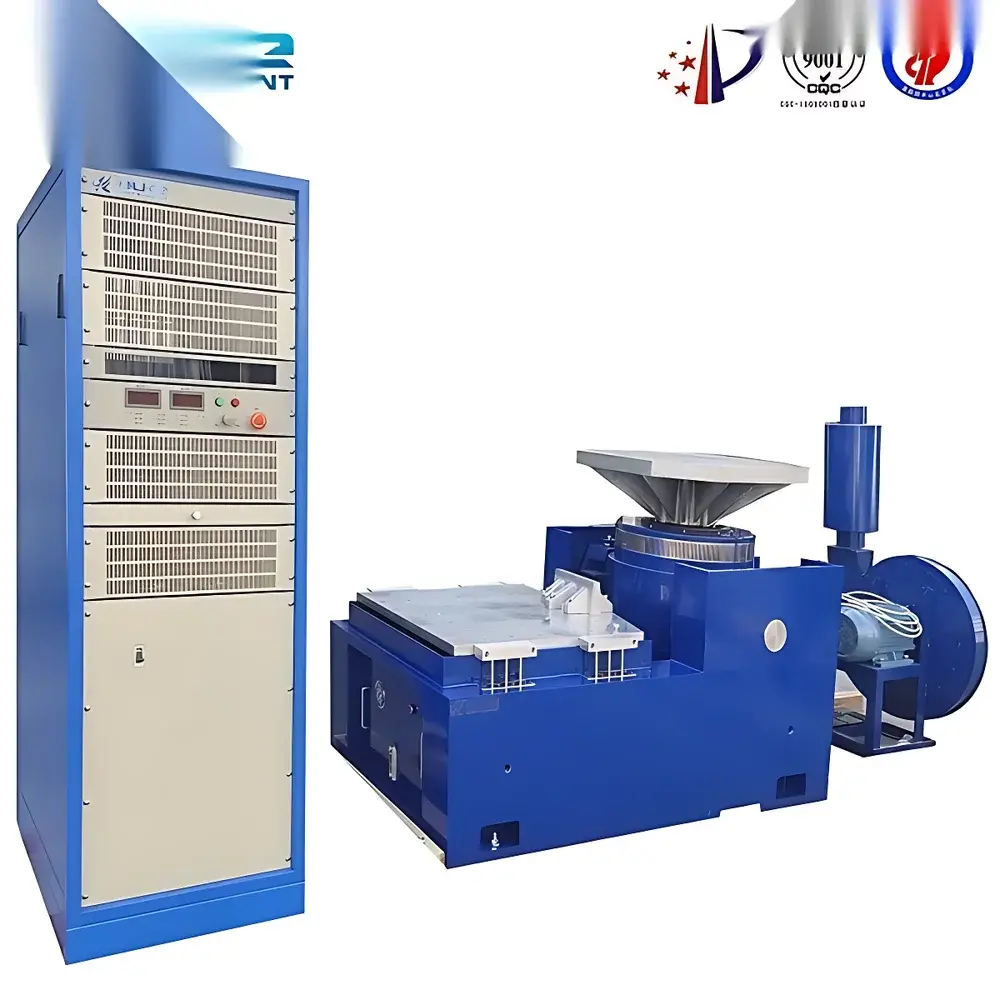
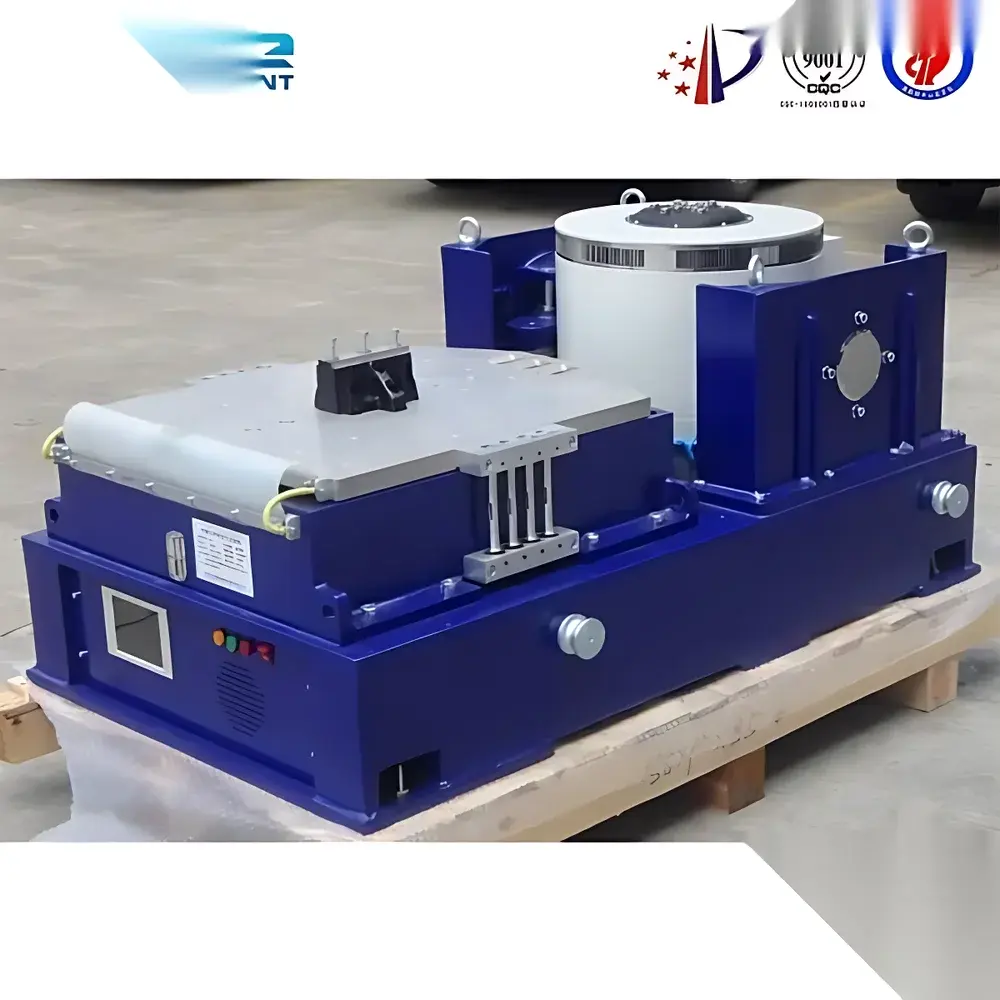
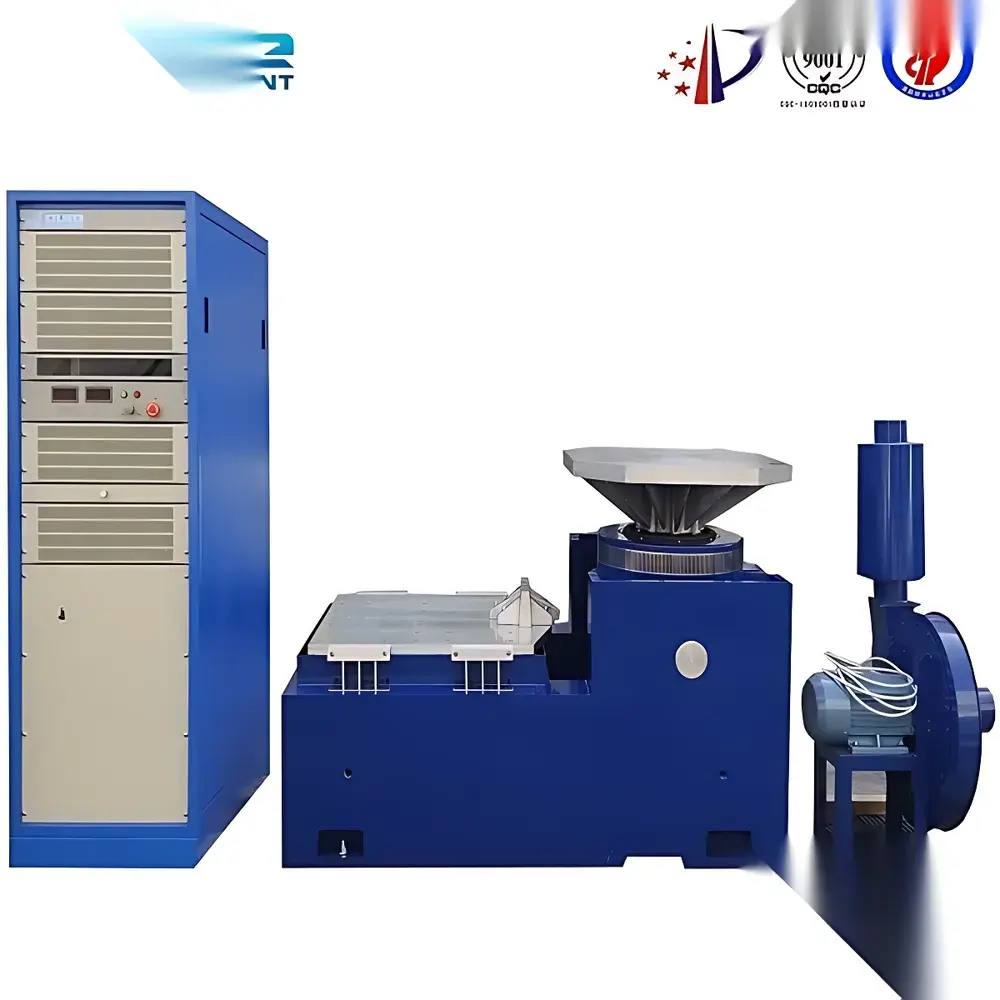
AS-100 High-Frequency Electromagnetic Vibration Shaker System
| Brand | Other Brands |
|---|---|
| Origin | Imported |
| Manufacturer Type | Authorized Distributor |
| Max Load Capacity | 100 kg |
| Frequency Range | 150–300 rpm |
| Stroke Amplitude | 25.4 mm |
| Vibration Mode | Reciprocating (Oscillatory, “Horse-Gallop” Type) |
| Table Dimensions | 1000 × 1100 mm |
| Power Consumption | 1 HP (746 W) |
| Net Weight | 200 kg |
| Operating Temperature | 5–40 °C |
| Relative Humidity | ≤85% RH |
| Input Voltage | AC 220 V (±10%) / 50 Hz or AC 380 V (±10%) / 50 Hz |
| Compliance Standards | EN 71, ANSI Z535, UL 61010-1, ASTM D999, ISTA 3A/3E |
Overview
The AS-100 High-Frequency Electromagnetic Vibration Shaker System is a robust, benchtop-to-floor-standing electrodynamic vibration test platform engineered for transport simulation and durability assessment of packaged goods and components. It operates on electromagnetic excitation principles—utilizing a high-torque DC or AC inverter-driven motor coupled with precision-balanced eccentric mass assembly—to generate controlled, repeatable reciprocating motion. Unlike servo-hydraulic or piezoelectric shakers, this system delivers cost-effective, maintenance-light performance optimized for compliance testing against international shipping and handling standards. Its oscillatory “horse-gallop” motion profile replicates the low-frequency, high-displacement dynamics encountered during road transport (simulated vehicle speeds: 25–40 km/h), making it especially suitable for pre-shipment validation across consumer electronics, automotive subassemblies, medical device packaging, toys (per EN 71-1), and ceramic ware. The system is not intended for sine dwell, random, or shock testing; its design prioritizes long-duration, high-cycle fatigue evaluation under defined frequency-amplitude envelopes.
Key Features
- Programmable multi-segment operation: Up to 15 user-defined segments per test sequence, each configurable for target frequency and dwell time, with infinite looping capability.
- Linear sweep mode: Adjustable upper/lower frequency bounds and sweep duration for progressive stress profiling.
- Logarithmic sweep function: Supports three directional modes—low-to-high, high-to-low, and bidirectional cyclic—enabling spectral energy distribution analysis across resonant bands.
- Octave-based frequency progression: Configurable 1–15-step exponential scaling for accelerated life testing aligned with industry-standard acceleration factors.
- Digital frequency display: Real-time RPM readout via integrated LED interface for immediate operational verification.
- Low-noise synchronous belt drive: Ensures mechanical isolation, minimizes harmonic distortion, and extends service intervals without lubrication.
- Modular rail-mount sample fixture system: Facilitates rapid, tool-free loading/unloading of irregular or heavy specimens (up to 100 kg) while maintaining center-of-gravity alignment.
- Structurally damped base frame: Heavy-duty channel steel chassis with elastomeric anti-vibration pads eliminates need for anchoring—supports stable operation on standard concrete floors.
Sample Compatibility & Compliance
The AS-100 accommodates rigid and semi-rigid packaged units up to 1000 × 1100 mm footprint and 100 kg mass, including cartons, trays, molded plastic housings, and assembled PCB modules. Its 25.4 mm peak-to-peak stroke and 150–300 rpm range align with test profiles specified in ASTM D999 (vibration testing of packaged-products), ISTA 3A (general simulation for parcel delivery) and ISTA 3E (engineered systems for flat-rate carriers). It satisfies mechanical safety requirements per UL 61010-1 and toy safety benchmarks under EN 71-1 Clause 8.2 (mechanical and physical properties). While not certified for GLP/GMP-regulated validation, its repeatability and traceable control parameters support internal quality audits and supplier qualification protocols. Note: Acceleration and displacement quantification require external instrumentation (e.g., IEPE accelerometers + data acquisition system); no onboard transducers are integrated.
Software & Data Management
The AS-100 operates as a standalone unit with front-panel digital controls. For automated test execution, data logging, and report generation, optional RS-485 interface hardware and PC-based control software are available separately. Compatible software packages support CSV export, time-stamped event tagging, and basic statistical summary (cycle count, elapsed runtime, fault flags). All configurations adhere to fundamental data integrity expectations for non-regulated environments—though the system does not implement FDA 21 CFR Part 11-compliant electronic signatures, audit trails, or user-role access control. Integration with LabVIEW or MATLAB is feasible via Modbus RTU protocol upon installation of the communication module.
Applications
This shaker system is routinely deployed in QC laboratories for: transport simulation of e-commerce packaging; fatigue screening of solder joints in automotive ECUs; resonance detection in consumer appliance housings; drop-and-vibration correlation studies per MIL-STD-810H Method 514.7 (tailored low-frequency sweeps); and durability benchmarking of furniture hardware assemblies. It serves as a primary tool in third-party certification labs performing ISTA-certified test plans and supports R&D teams evaluating damping material efficacy under sustained oscillatory loading. Its fixed-stroke, variable-speed architecture makes it particularly effective for comparative pass/fail assessments rather than parametric modeling.
FAQ
Does the AS-100 include built-in acceleration or displacement sensors?
No. Real-time acceleration and amplitude measurement require external instrumentation—such as calibrated IEPE accelerometers and a compatible DAQ system—purchased separately.
Can the system operate continuously for extended durations (e.g., 72+ hours)?
Yes. Designed for unattended operation under ambient conditions (5–40 °C, ≤85% RH), with thermal protection circuitry and sealed bearing assemblies rated for >10,000 hours MTBF.
Is ISO/IEC 17025 calibration documentation available?
Calibration certificates traceable to NIST or national metrology institutes may be provided by authorized service partners upon request; factory calibration covers frequency accuracy ±0.5% and timing stability ±0.2 s/hour.
What maintenance is required?
Annual inspection of belt tension, motor brush wear (DC version), and structural fastener integrity. No scheduled lubrication is needed due to maintenance-free drivetrain design.
Does the unit meet CE marking requirements?
Compliance with EMC Directive 2014/30/EU and Low Voltage Directive 2014/35/EU is achieved when installed per manufacturer-specified grounding and cable separation guidelines; CE self-declaration documentation is supplied with shipment.



