
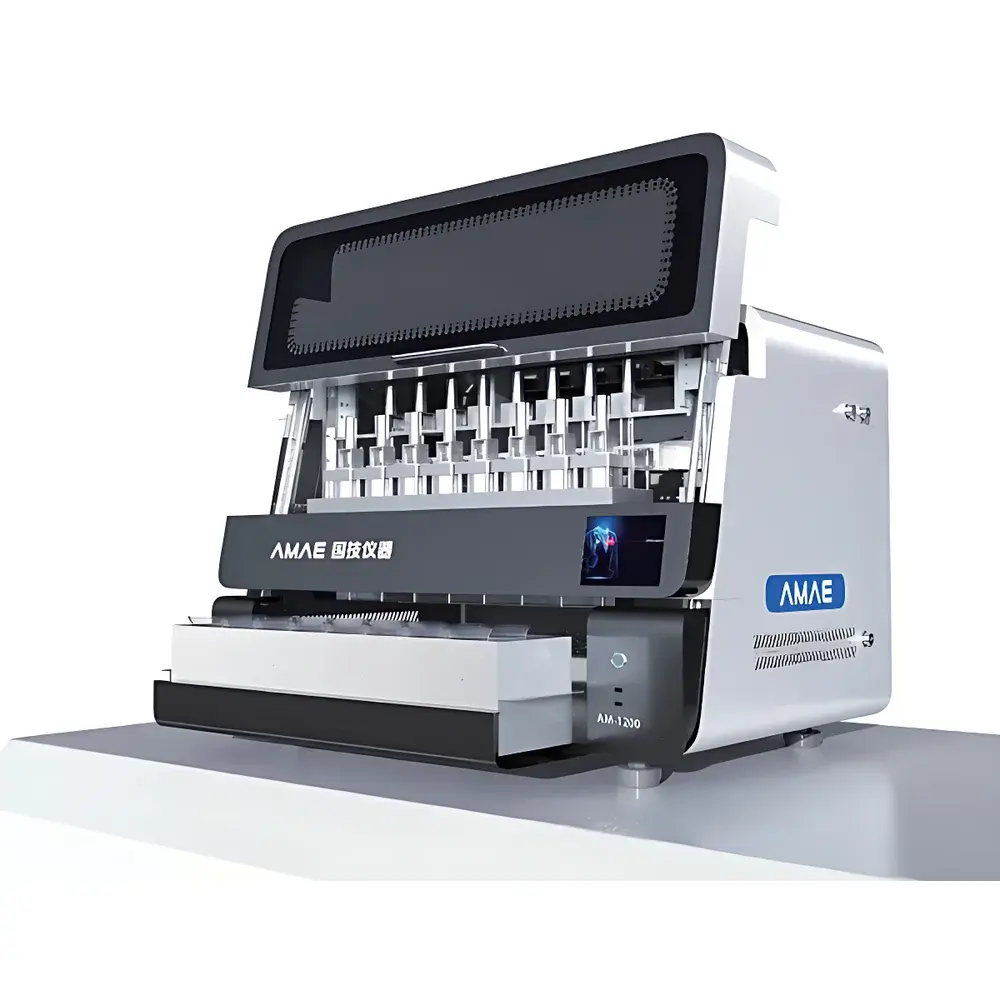
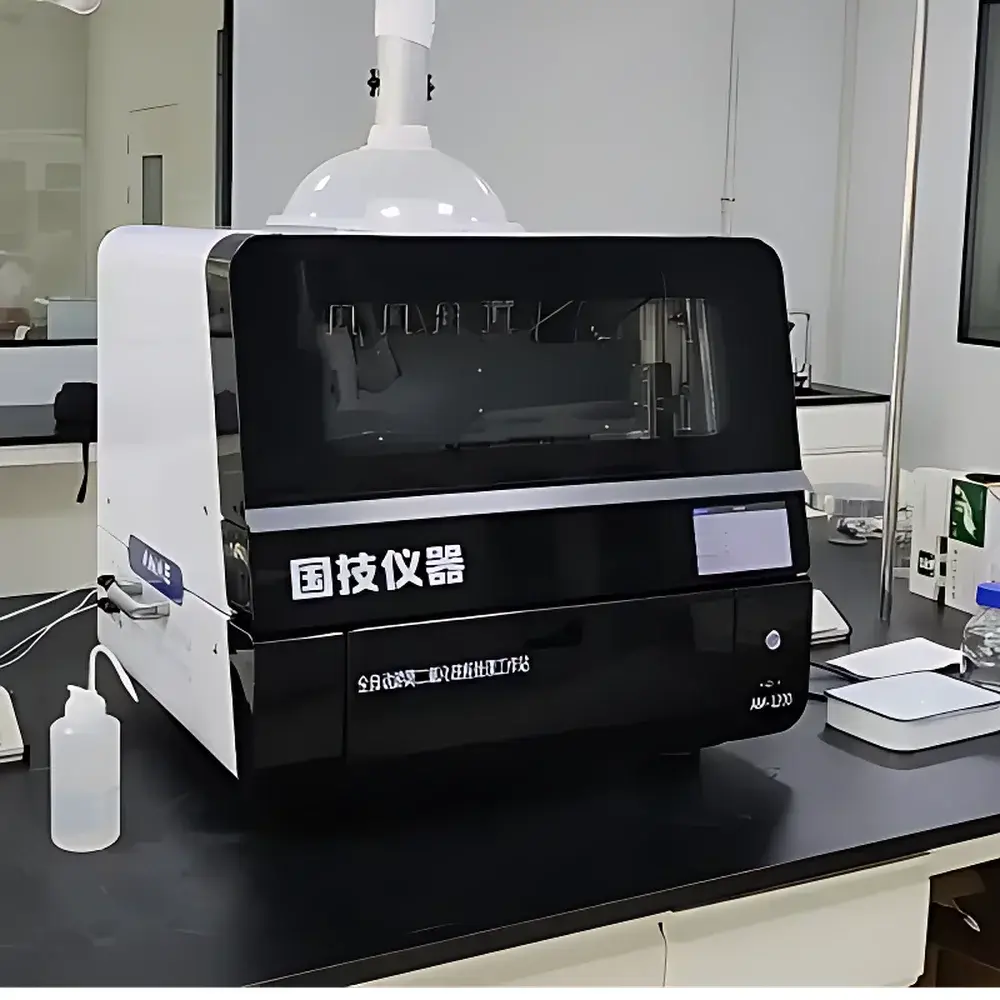
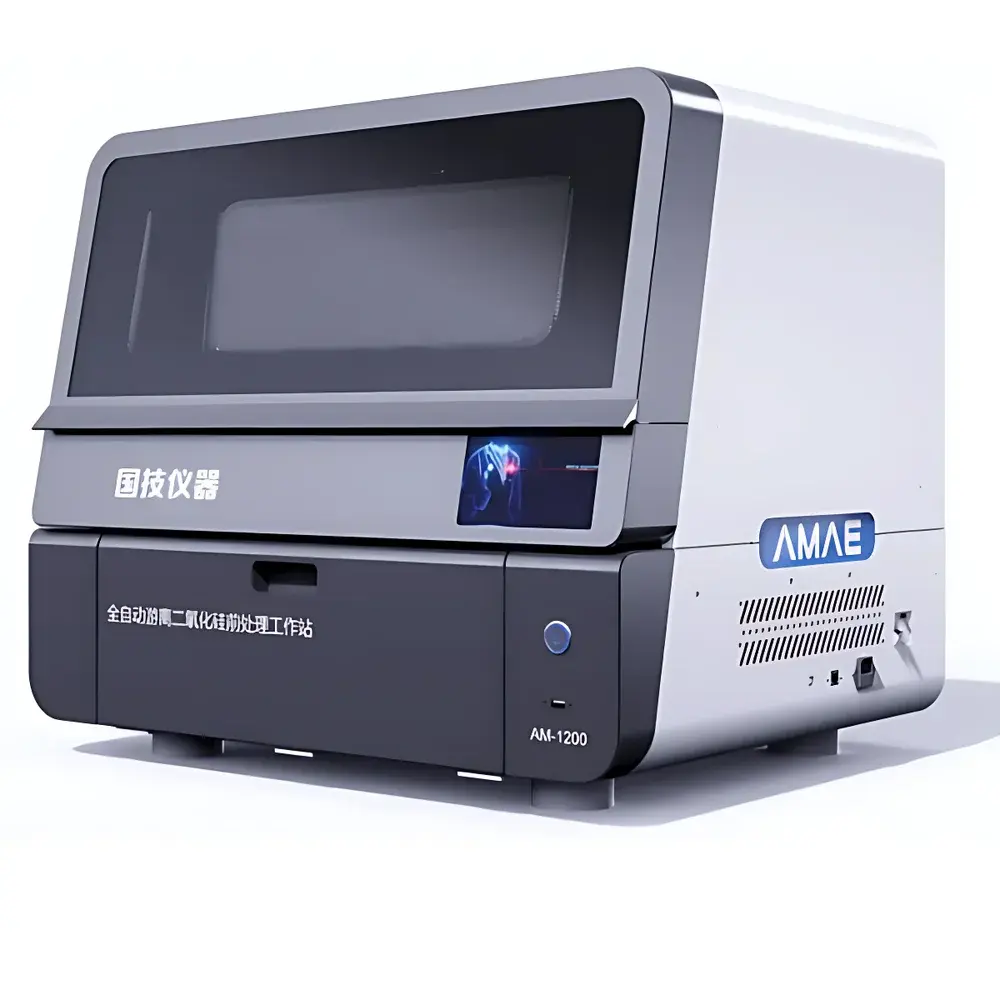
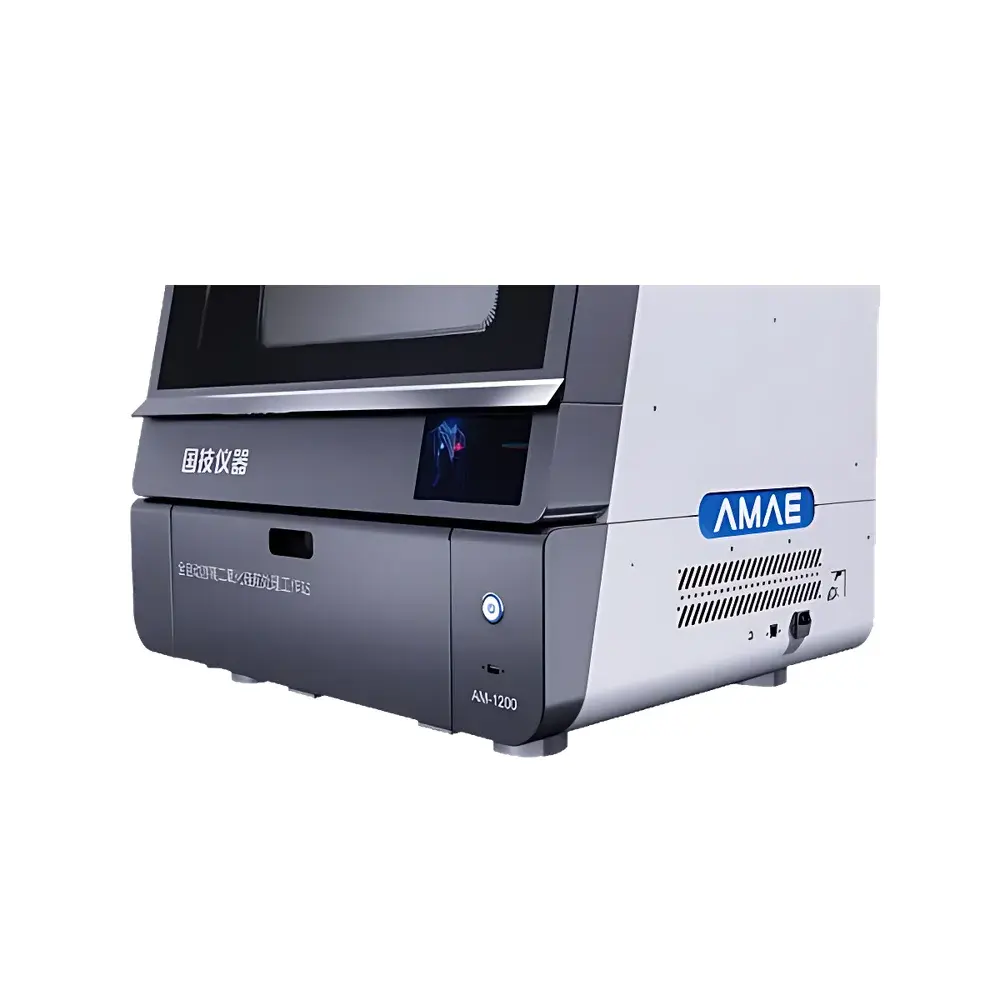
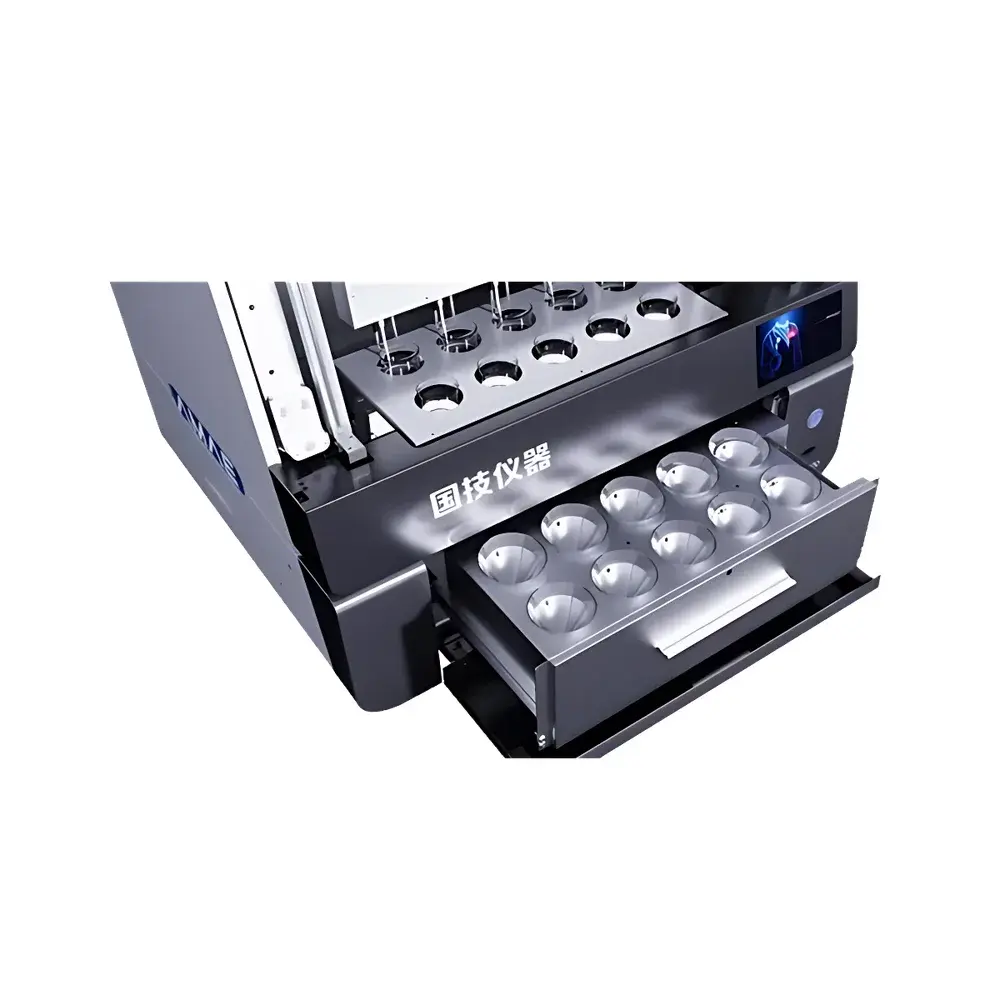
AM-1200 Series Automated Free Silica Sample Preparation Workstation (by AMAE)
| Brand | AMAE |
|---|---|
| Origin | Guangdong, China |
| Model | AM-1200 Series |
| Type | Fully Automated Sample Preparation Workstation for Free Silica Determination (Pyrophosphoric Acid Method) |
| Sample Throughput | Up to 5 samples simultaneously (10-sample unattended sequence) |
| Temperature Control | Full-process constant-temperature heating (acid digestion & deionized water rinse) |
| Liquid Transfer Method | Vacuum-assisted non-contact transfer |
| Residual Volume | <0.5% |
| Data Logging | Real-time parameter recording with timestamped audit trail |
| Compliance Support | Designed to meet requirements of GBZ/T 192.4–2018, ISO 13797:2021 (Determination of respirable crystalline silica), and GLP-aligned documentation practices |
| User Interface | 7-inch high-resolution color touchscreen |
| Safety Features | Interlocked access door, integrated silent fume extraction (ductable to lab hood), active cooling, auto-drying function |
| Expandability | Modular architecture supports future integration of alternative digestion modules |
| Firmware Update | USB flash drive–based update protocol |
| Consumables | Standardized 50 mL high-purity quartz or ceramic crucibles (900 °C rated) |
Overview
The AM-1200 Series Automated Free Silica Sample Preparation Workstation is an engineered solution for laboratories performing quantitative determination of respirable crystalline silica (RCS) in occupational dust samples according to the pyrophosphoric acid hydrolysis method—standardized in national and international protocols including GBZ/T 192.4–2018 (China), ISO 13797:2021, and NIOSH Method 7602. This workstation replaces manual, operator-dependent digestion and filtration steps with a fully automated, thermally controlled process chain. It executes sequential acid digestion, hot water rinsing, vacuum-assisted filtration, and post-processing drying—all within a single enclosed platform. The system operates on the principle of controlled thermal decomposition followed by selective dissolution of amorphous silicates while preserving crystalline quartz and cristobalite structures for subsequent gravimetric or XRD quantification. Its design prioritizes metrological integrity: minimizing analyte loss during liquid transfer, stabilizing reaction kinetics via uniform temperature maintenance (±1 °C), and eliminating inter-operator variability inherent in benchtop procedures.
Key Features
- Fully automated workflow: Single-touch initiation of digestion, filtration, rinsing, drying, and cooling—no manual intervention required during processing.
- Vacuum-driven liquid handling: Non-contact transfer ensures <0.5% residual volume per step, critical for mass balance accuracy in low-mass dust samples (typically 0.5–5 mg).
- Independent multi-channel architecture: Five parallel digestion/filtration modules operate autonomously; each includes dedicated temperature-controlled heating zones for H3PO4 digestion (245 °C) and DI water rinse (95 °C).
- Integrated safety subsystems: Interlocked front access door halts operation upon opening; built-in low-noise fume extraction ducts directly to laboratory exhaust; active Peltier-based cooling reduces crucible surface temperature to <50 °C prior to retrieval.
- Real-time process monitoring: 7-inch capacitive touchscreen displays live status per channel—including temperature profiles, vacuum pressure, elapsed time, and stage completion indicators.
- Audit-ready data management: Timestamped logs capture setpoints, actual temperatures, vacuum levels, cycle durations, and user actions—exportable as CSV or printable PDF for GLP/GMP compliance.
- Modular expandability: Standardized mechanical and communication interfaces allow future integration of complementary modules (e.g., microwave-assisted digestion, automated ashing).
Sample Compatibility & Compliance
The AM-1200 accepts standard 25-mm or 37-mm PVC, PET, or mixed-cellulose ester (MCE) air sampling filters loaded with workplace dust. It accommodates filter masses up to 100 mg and supports both gravimetric pre-weighing and post-digestion residue weighing using compatible analytical balances (via RS-232/USB interface). All wet chemistry steps conform to the procedural constraints defined in GBZ/T 192.4–2018, particularly the 245 °C phosphoric acid reflux duration (150 min), controlled cooling rate (<5 °C/min), and mandatory 105 °C drying before final weighing. System validation data demonstrate RSD <5% (n=10) across low-, mid-, and high-concentration QC standards (0.1–20% SiO2 w/w), meeting ISO/IEC 17025 traceability expectations for accredited testing labs. Data records comply with ALCOA+ principles (Attributable, Legible, Contemporaneous, Original, Accurate, Complete, Consistent, Enduring, Available) and support FDA 21 CFR Part 11 readiness when paired with validated LIMS software.
Software & Data Management
Embedded firmware provides local control and logging without dependency on external PCs. All operational parameters—including digestion temperature ramp profiles, vacuum hold times, rinse volumes, and drying setpoints—are configurable via the touchscreen interface and stored in non-volatile memory. Experimental metadata (user ID, sample ID, date/time stamp, method version) is embedded in every data file. Export options include USB-stored CSV files containing full time-series sensor data and summary reports compliant with ISO 17025 clause 7.8.2. Remote monitoring and method deployment are enabled via optional Ethernet/Wi-Fi connectivity, allowing centralized fleet management in multi-instrument environments. Firmware updates are performed securely via encrypted USB drives, with automatic version verification and rollback capability.
Applications
This workstation serves industrial hygiene laboratories conducting routine RCS analysis for OSHA PEL and ACGIH TLV compliance; mining, construction, and ceramics manufacturing QA/QC departments; national reference laboratories performing proficiency testing; and academic research groups studying silica-related pulmonary fibrosis mechanisms. It is equally suited for method development studies requiring high-reproducibility digestion conditions, such as evaluating alternative acid systems or validating new filter substrates. Its modular design also enables adaptation to related applications—including heavy metal leaching (TCLP/SEP), total carbon determination, or organic solvent extraction—through hardware and software reconfiguration.
FAQ
What regulatory standards does the AM-1200 support?
It is engineered to execute the pyrophosphoric acid method per GBZ/T 192.4–2018 and ISO 13797:2021, with hardware and data logging features aligned with ISO/IEC 17025 and GLP requirements.
Can the system handle mixed-dust matrices (e.g., cement + coal dust)?
Yes—its robust thermal control and programmable digestion profiles accommodate variable ash content and matrix interference, provided samples fall within specified mass limits and filter compatibility.
Is method validation documentation available?
AMAE provides IQ/OQ documentation templates, performance qualification protocols, and raw validation datasets (RSD, recovery, linearity) upon request for laboratory-specific PQ execution.
How is calibration maintained across channels?
Each module contains independent PT100 sensors calibrated traceably to NIST-certified references; annual verification is recommended using certified temperature standards.
What consumables require regular replacement?
Primary wear items include vacuum filter membranes (polytetrafluoroethylene, 0.45 µm), acid-resistant gaskets, and high-temperature crucibles—lifespan varies by usage frequency and sample corrosivity.



