
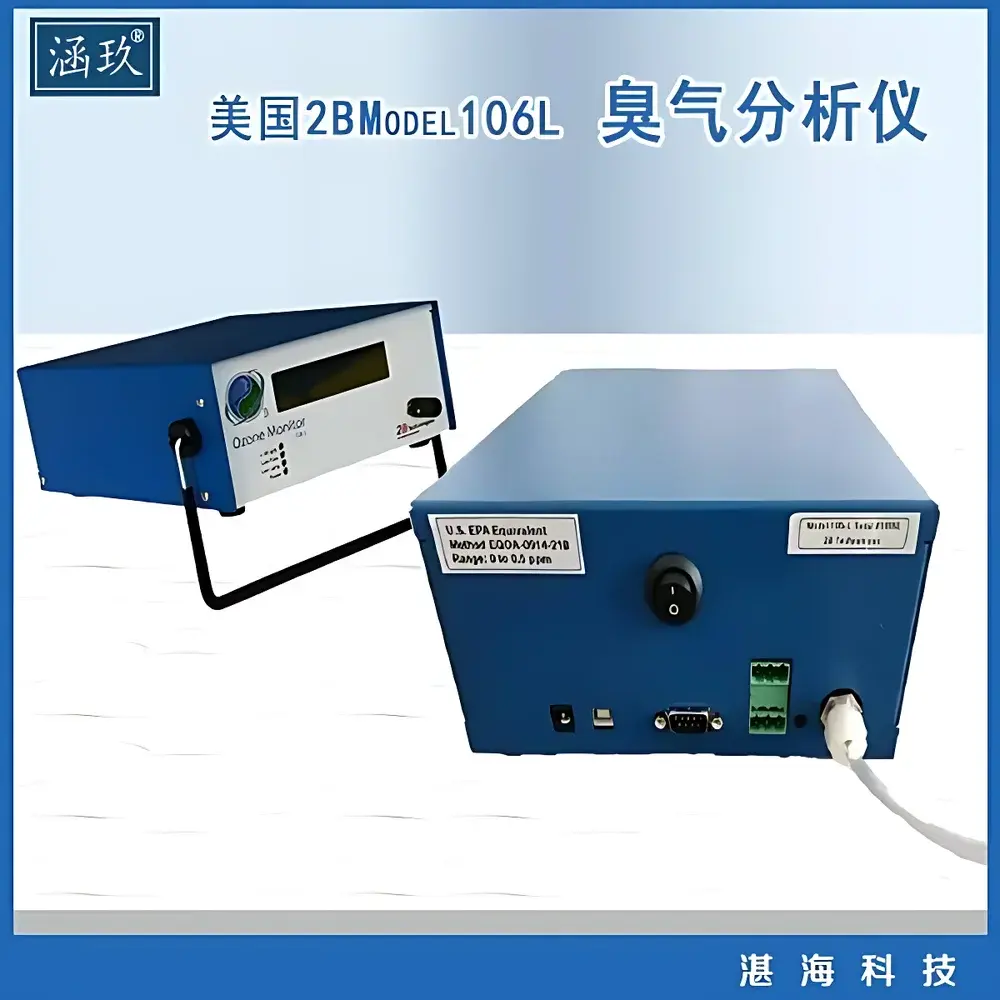
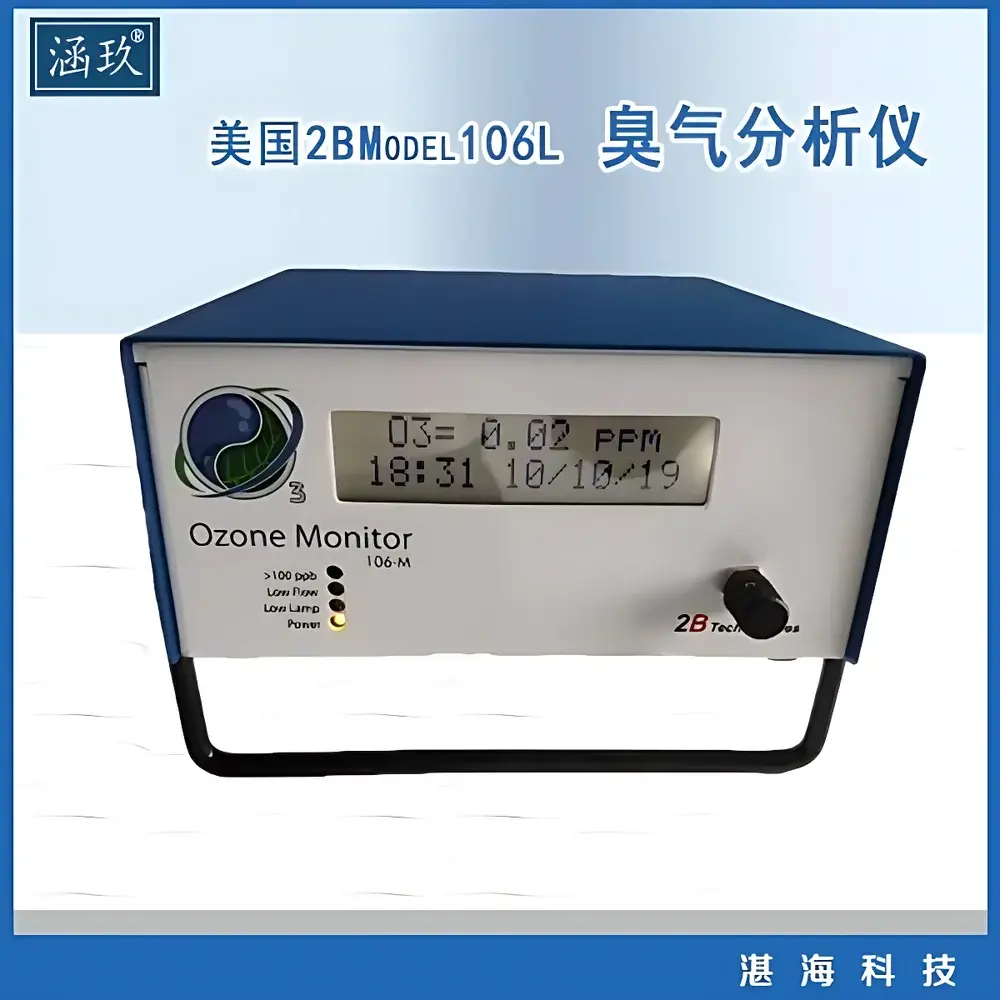
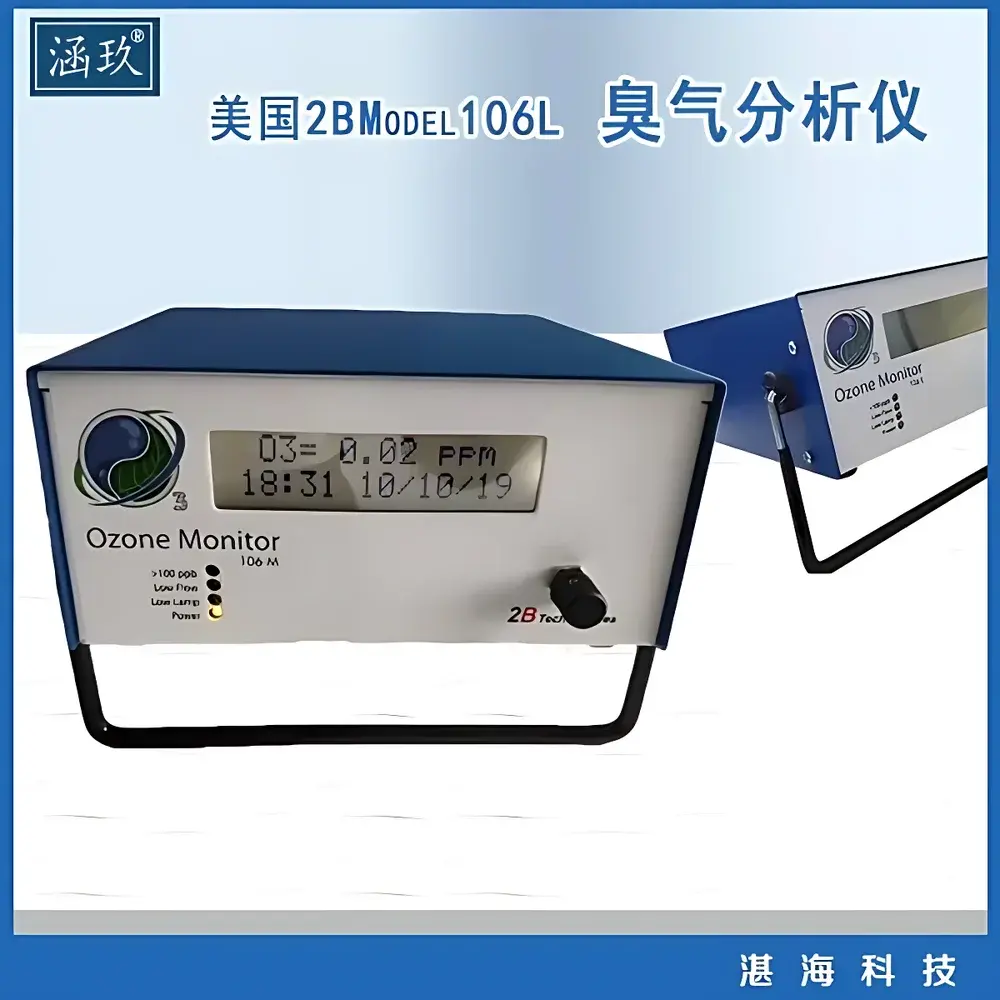
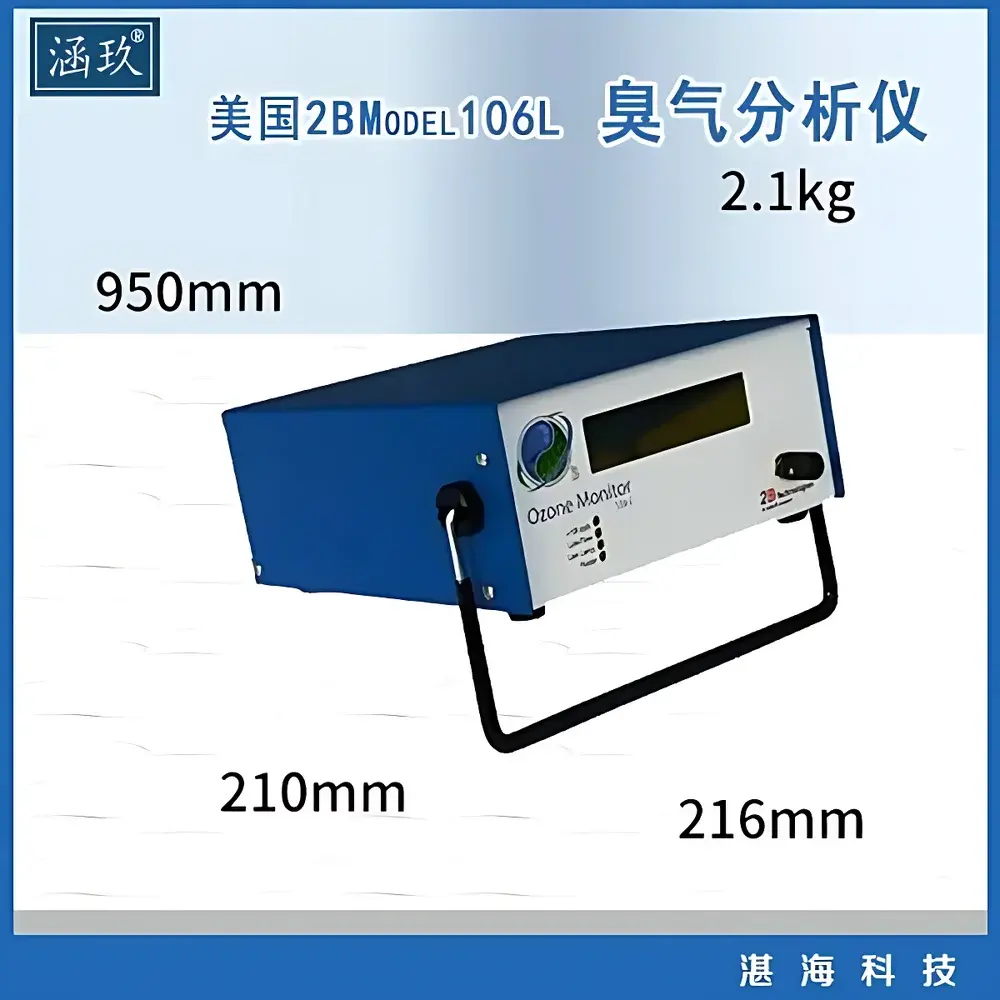
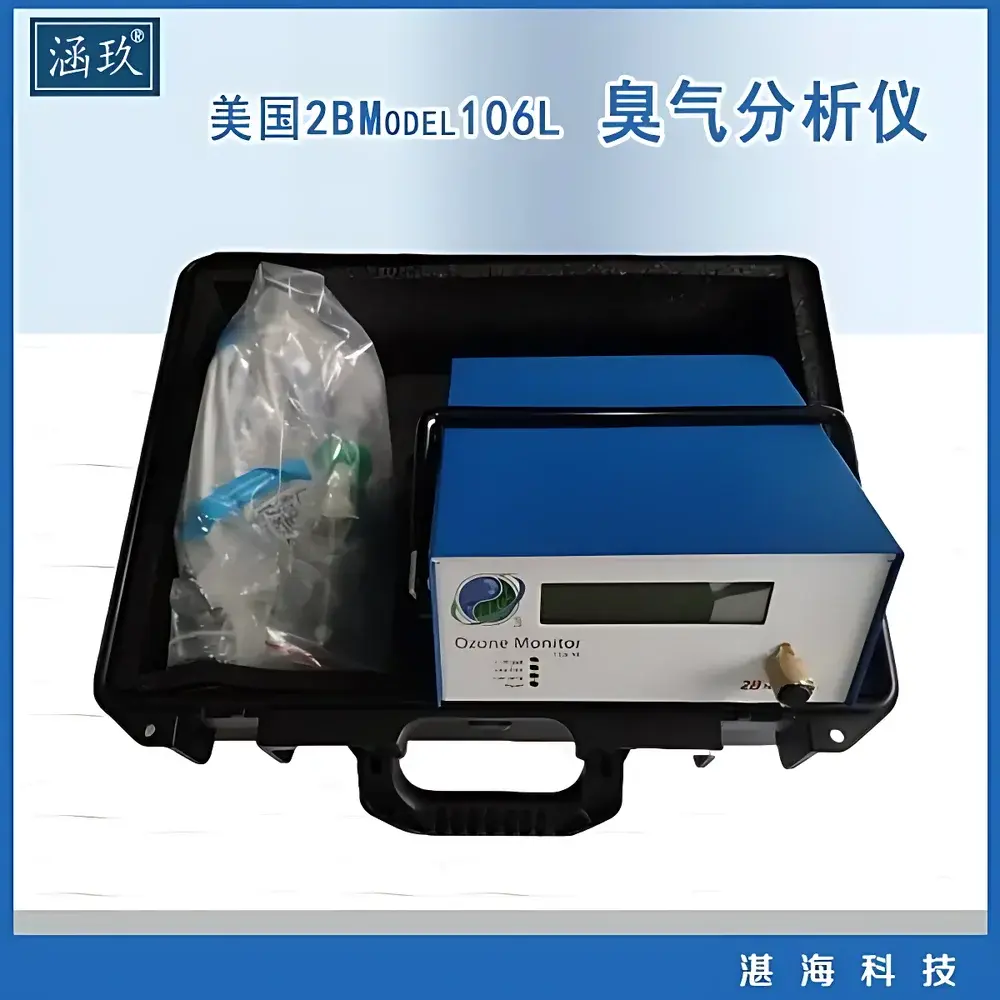
2B Technologies Model 106L UV Absorption Ozone Analyzer
| Brand | 2B Technologies |
|---|---|
| Model | Model 106L |
| Measurement Principle | UV Absorption at 254 nm |
| Range | 0–100 ppm (standard), extendable to 0–1000 ppm (optional) |
| Resolution | 0.1 ppb |
| Accuracy | ±2% of reading or ±1 ppb (whichever is greater) |
| Response Time (T90) | <10 seconds |
| Detection Limit | <0.5 ppb |
| Lamp Lifetime | >1 year continuous operation |
| Operating Temperature | 0–40 °C |
| Power Supply | 12 V DC, 0.5 A |
| Output | Analog (0–2.5 V, 0–5 V, 0–10 V) and RS-232/RS-485 digital interface |
| Dimensions | 24.1 × 17.8 × 9.5 cm |
| Weight | 1.8 kg |
| Compliance | CE, RoHS, NIST-traceable calibration certificate included |
Overview
The 2B Technologies Model 106L UV Absorption Ozone Analyzer is a compact, field-deployable instrument engineered for high-precision, real-time measurement of ozone (O₃) concentration in ambient air, industrial process streams, and laboratory environments. It operates on the well-established principle of ultraviolet absorption spectroscopy at the characteristic 254 nm wavelength—where ozone exhibits strong, selective absorbance—enabling quantitative determination via the Beer–Lambert law. Unlike electrochemical or metal oxide semiconductor sensors, this optical method delivers inherent stability, minimal drift, and immunity to cross-interference from common gases such as NO₂, SO₂, and VOCs. The Model 106L is optimized for applications requiring reliable monitoring across a broad dynamic range—from sub-ppb background levels up to 1000 ppm in high-concentration industrial settings—making it suitable for both regulatory compliance and process control.
Key Features
- High-sensitivity dual-beam UV photometric design with temperature-stabilized mercury vapor lamp and precision optical path
- Real-time analog and digital outputs (RS-232/RS-485) compatible with SCADA, DAQ systems, and data loggers
- Onboard microprocessor with non-volatile memory for configuration storage, zero/span history, and diagnostic logs
- Integrated temperature and pressure compensation algorithms to maintain accuracy under variable environmental conditions
- Low power consumption (6 W typical) enabling battery or solar-powered deployment in remote locations
- Modular construction with user-replaceable optical components and lamp—no factory recalibration required after routine maintenance
- Front-panel LED display with intuitive menu navigation and status indicators for operational health
Sample Compatibility & Compliance
The Model 106L accepts sample gas flows between 0.5–2.0 L/min without external pumping; an optional integrated diaphragm pump ensures consistent flow in low-pressure or low-flow scenarios. Sample conditioning (e.g., particulate filtration, moisture removal) is recommended for humid or dirty gas streams to prevent optical window fouling. The analyzer meets CE marking requirements for electromagnetic compatibility (EMC Directive 2014/30/EU) and low-voltage safety (LVD Directive 2014/35/EU). While not certified to EPA EQOA or EN 14625 for regulatory reference methods, it is widely employed in supplemental monitoring networks, indoor air quality studies, and occupational hygiene assessments where traceable performance and long-term stability are prioritized. Each unit ships with a NIST-traceable calibration certificate and is validated against primary standard ozone generators per ASTM D5012-21 protocols.
Software & Data Management
The Model 106L supports direct communication via ASCII-based serial protocol, allowing seamless integration with third-party software platforms including LabVIEW, MATLAB, Python (PySerial), and commercial environmental data management systems. 2B Technologies provides free Windows-compatible configuration and logging utility (OzoneView™), which enables real-time plotting, automated zero/span scheduling, alarm threshold setting, and export to CSV or Excel formats. All configuration changes, calibration events, and system errors are timestamped and stored in non-volatile memory—supporting audit-ready records aligned with GLP and ISO/IEC 17025 documentation practices. Optional firmware upgrades enhance data security features, including password-protected parameter access and configurable data retention policies.
Applications
- Ambient air quality monitoring networks (urban, rural, and roadside stations)
- Indoor air quality assessment in hospitals, laboratories, and cleanrooms
- Ozone generator output verification and feedback control in water treatment and sterilization systems
- Process monitoring in semiconductor fabrication, pharmaceutical manufacturing, and food packaging facilities
- Field validation of satellite-derived tropospheric ozone profiles and model evaluation campaigns
- Educational and research use in atmospheric chemistry, environmental engineering, and sensor development labs
FAQ
How often does the Model 106L require calibration?
Calibration frequency depends on application criticality and regulatory context; for general environmental monitoring, biannual zero/span verification is recommended. For GMP or ISO 17025-compliant operations, quarterly calibration with NIST-traceable standards is advised.
Can the instrument operate unattended for extended periods?
Yes—its solid-state design, low power draw, and internal diagnostics support continuous operation for >6 months with periodic filter replacement and lamp inspection.
Is the Model 106L suitable for measuring ozone in humid gas streams?
Humidity can attenuate UV signal and cause condensation on optical surfaces; we recommend installing a Nafion™ dryer or chilled mirror dew point controller upstream when RH exceeds 70%.
Does the analyzer comply with FDA 21 CFR Part 11 requirements?
While the hardware supports audit trails and electronic signatures via compatible host software, full Part 11 compliance requires implementation within a validated enterprise system—not at the instrument level alone.
What maintenance is required beyond lamp replacement?
Annual cleaning of the sample inlet, optical windows, and flow path with isopropyl alcohol; inspection of O-rings and gaskets; and verification of flow rate using a calibrated rotameter or mass flow meter.
Related Products







