
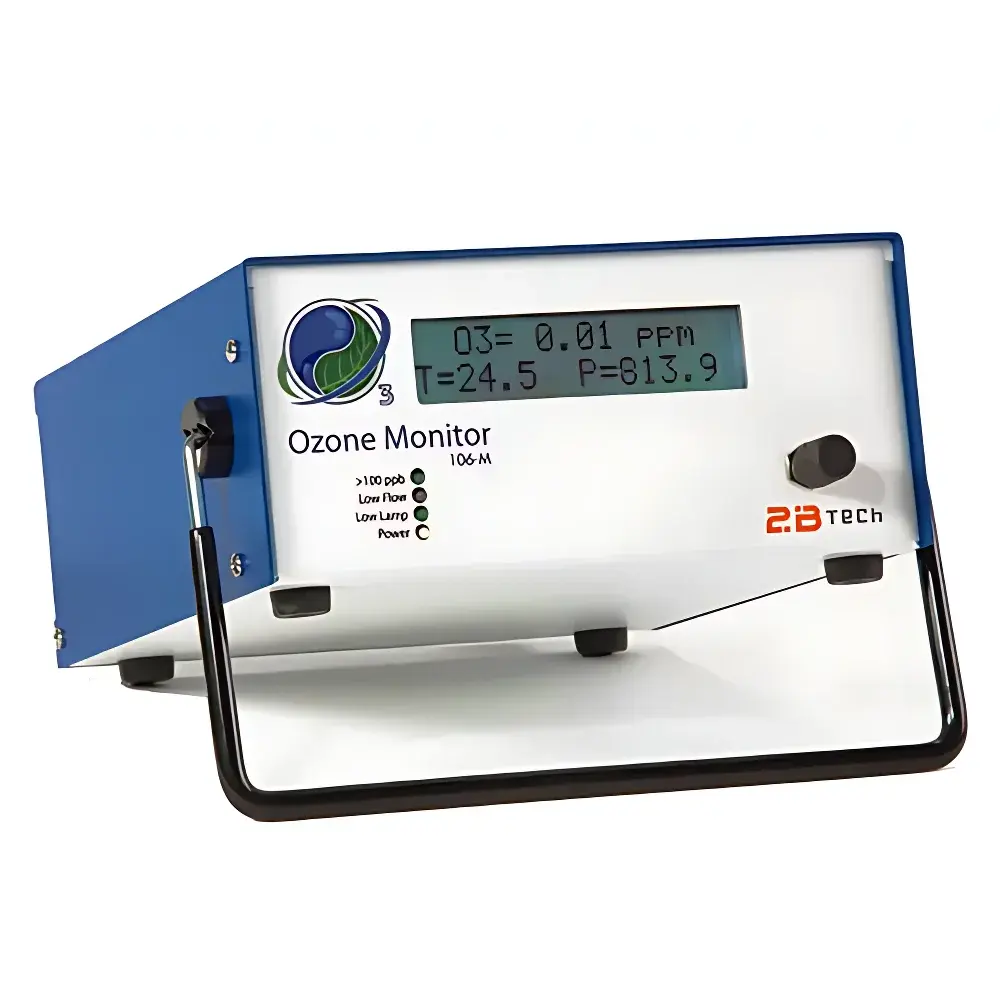
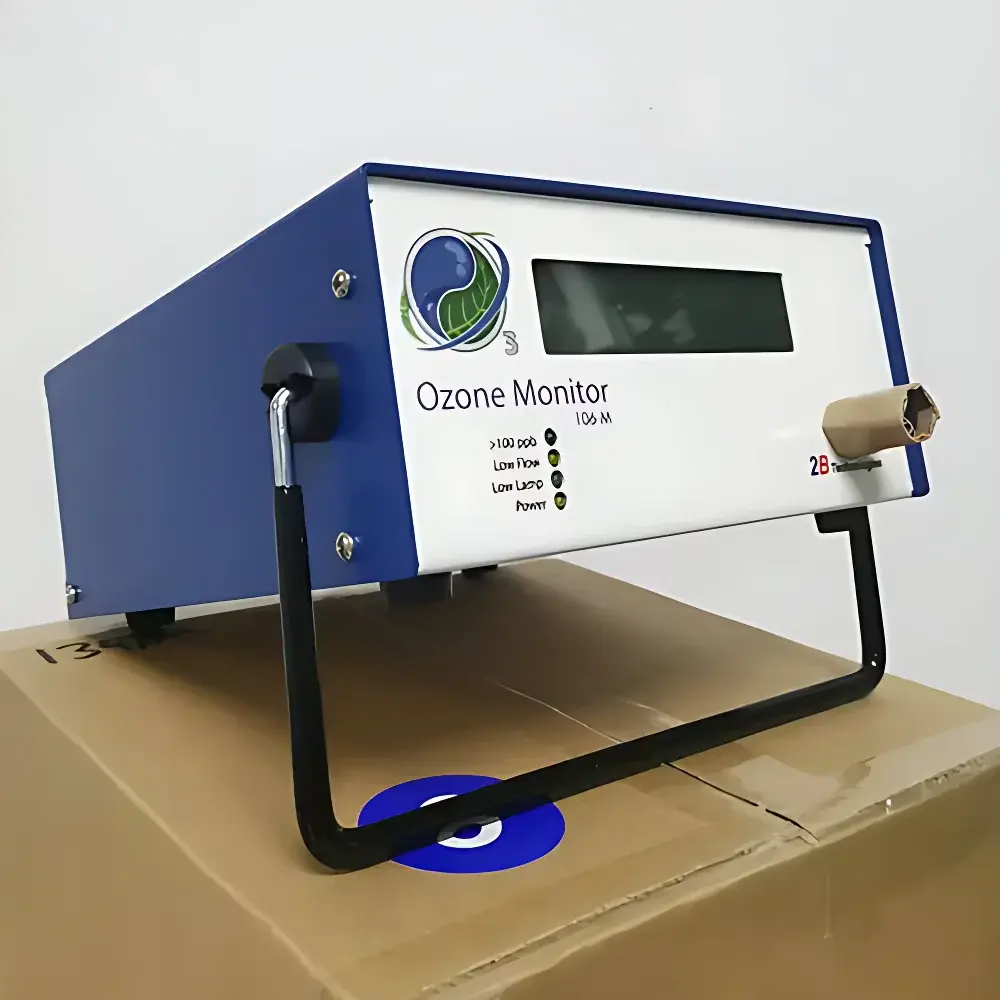
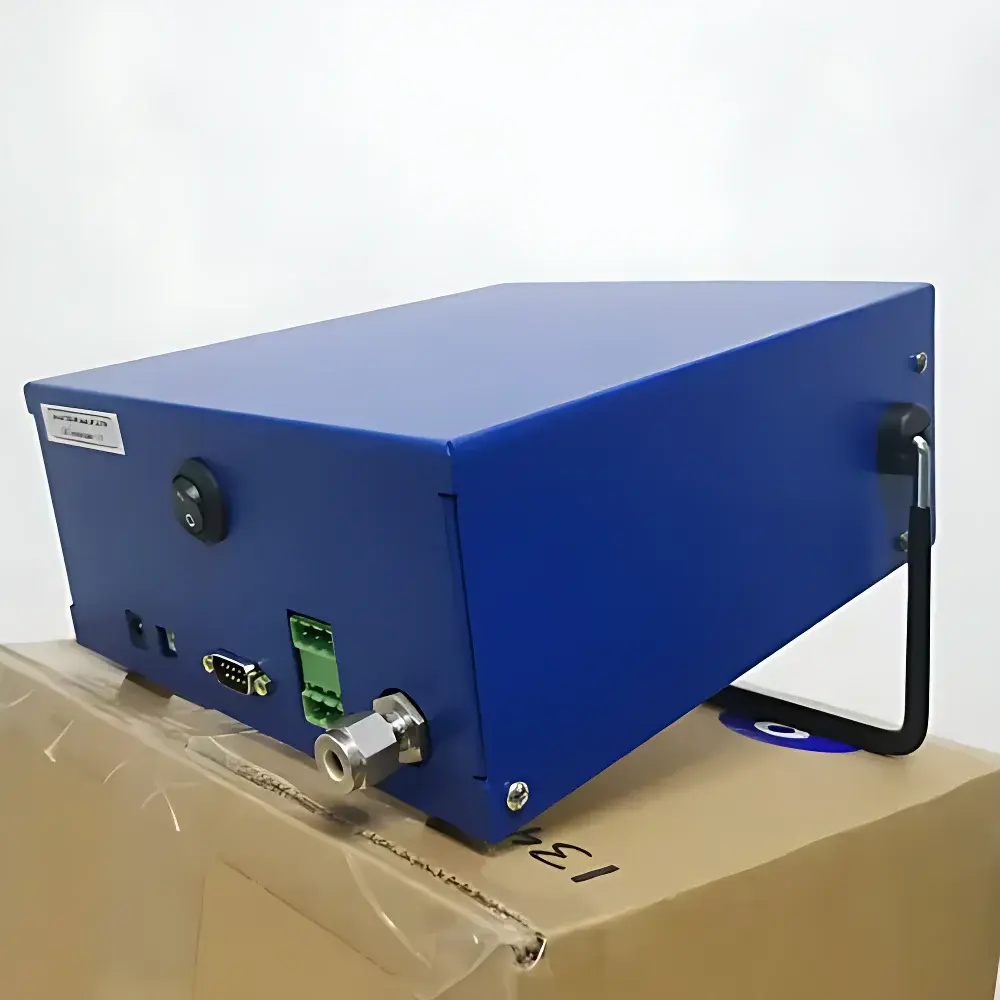
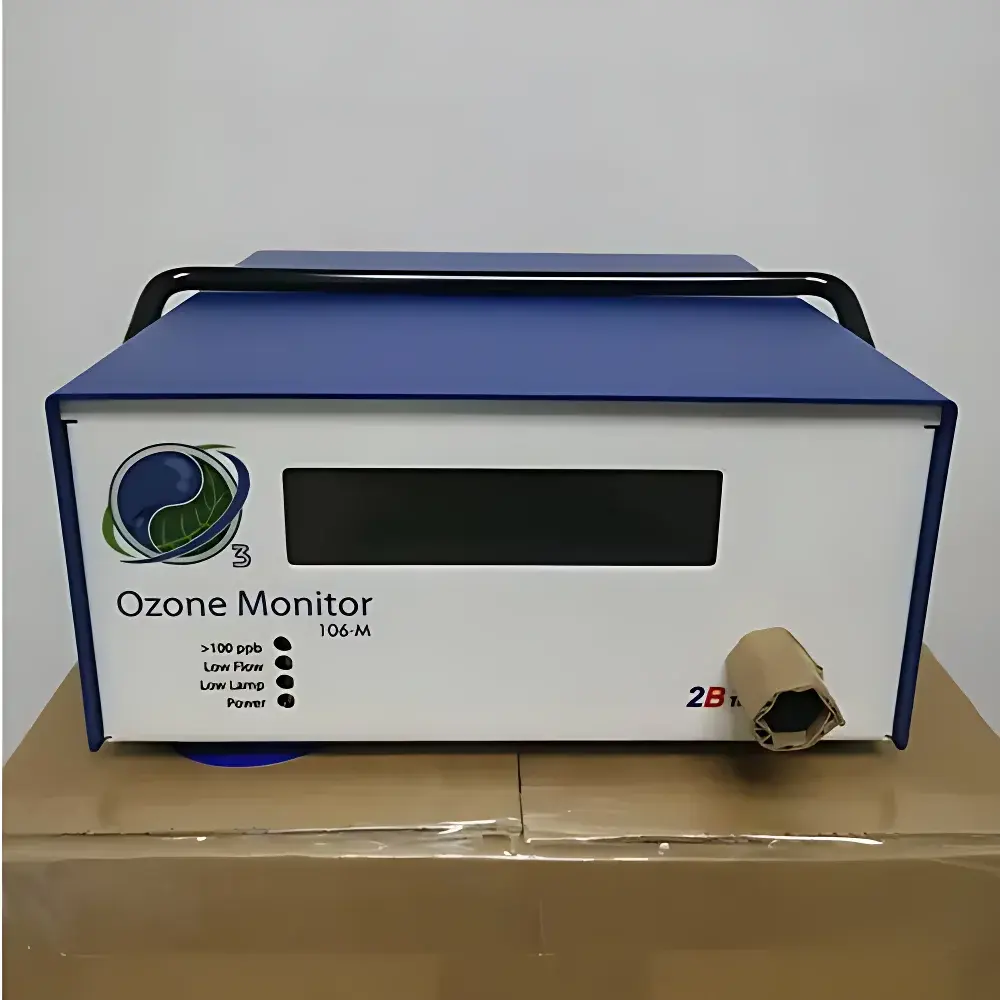
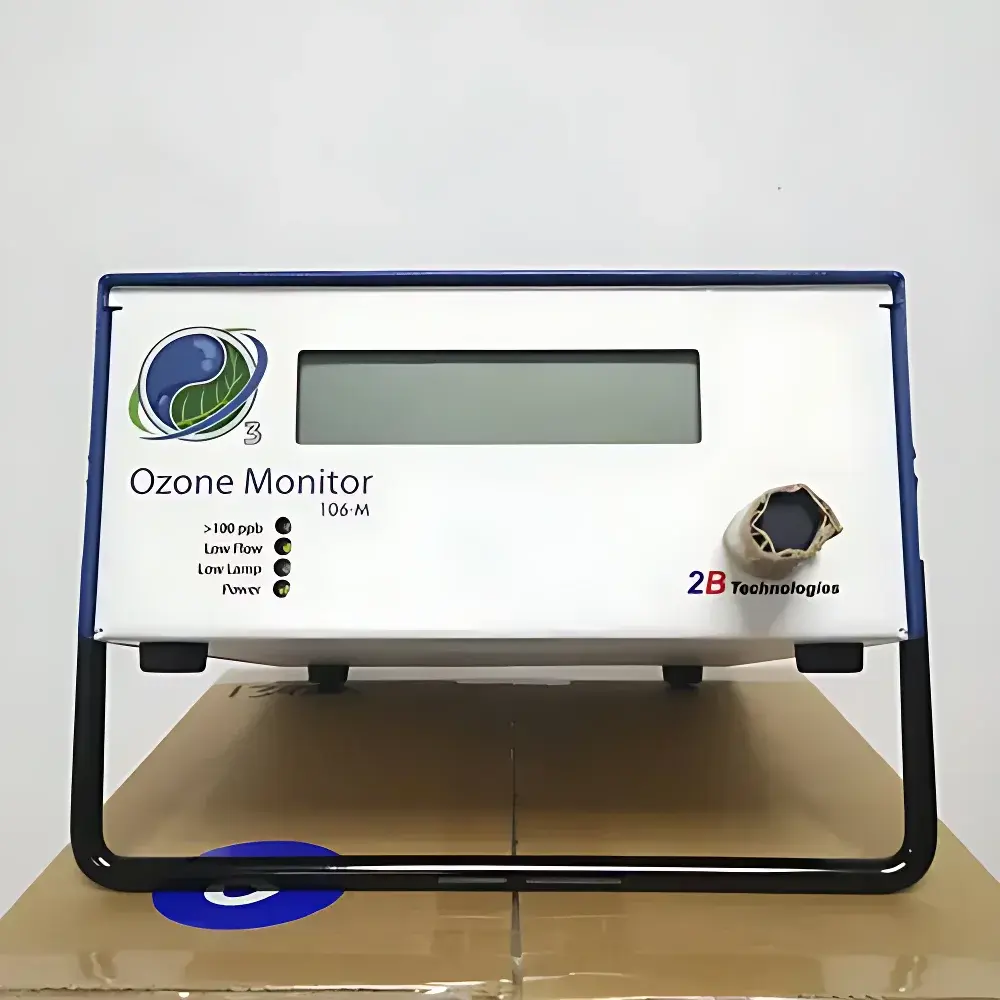
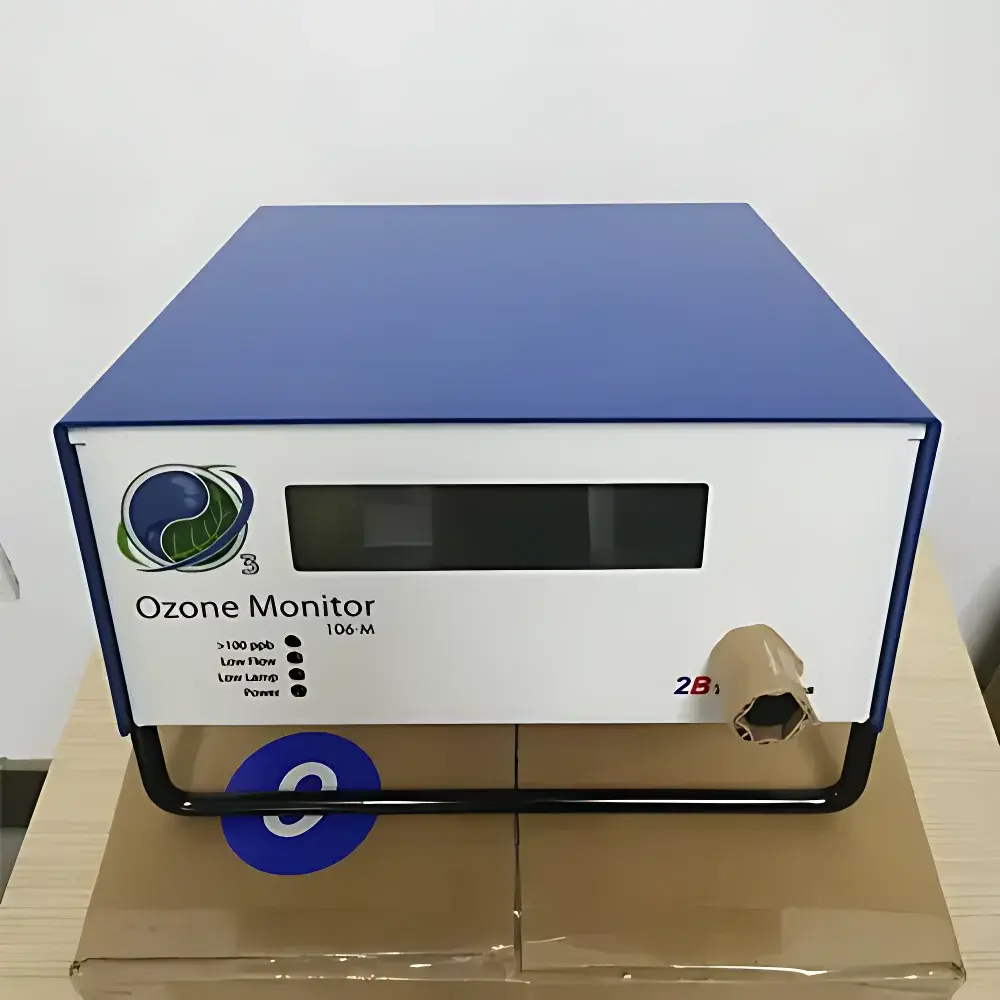
2B Technologies Model 106M UV Absorption Ozone Analyzer
| Brand | 2B Technologies |
|---|---|
| Origin | USA |
| Model | Model 106M |
| Weight | 2.1 kg (4.7 lb) |
| Measurement Principle | UV absorption at 254 nm |
| Range | 0–1000 ppmv |
| Resolution | 0.01 ppmv |
| Accuracy | ±0.01 ppmv or ±2% of reading |
| Sampling Interval | 10 s (configurable averaging: 10 s, 1 min, 5 min, 1 hr) |
| Flow Rate | ~1 L/min |
| Data Storage | 12,288 points |
| Output Interfaces | USB, RS-232, 0–2.5 V analog, 4–20 mA |
| Power | 12 V DC or 120/240 V AC, 4.2 W |
| Dimensions | 9.5 × 21.0 × 21.6 cm (3.75 × 8.25 × 8.50 in) |
| Compliance | NIST-traceable calibration, compatible with EPA reference method EQOA-0808-191 for ozone monitoring |
Overview
The 2B Technologies Model 106M is a high-performance, portable ultraviolet (UV) absorption ozone analyzer engineered for precise, real-time measurement of ozone (O3) concentration in ambient air, industrial process streams, and controlled environments. It operates on the well-established Beer–Lambert principle, utilizing a stable low-pressure mercury lamp emitting at 254 nm—the strong Hartley band absorption peak of ozone—to quantify ozone density with minimal spectral interference from other atmospheric constituents. Unlike electrochemical or semiconductor sensors, this optical method delivers inherent stability, long-term reproducibility, and immunity to cross-sensitivity from humidity, VOCs, or nitrogen oxides—critical for regulatory-grade data collection and scientific validation. The Model 106M is optimized for the mid-range ozone scale (0–1000 ppmv), bridging the gap between trace-level environmental monitoring (e.g., Model 106-L) and high-concentration industrial applications (e.g., Model 106-H), making it uniquely suited for occupational safety, sterilization validation, and chamber qualification.
Key Features
- True UV photometric detection at 254 nm with dual-beam optical path for drift compensation and enhanced baseline stability
- Configurable sampling interval down to 10 seconds—enabling rapid transient response during ozone generator ramp-up, purge cycles, or chamber leak testing
- Integrated DewLine™ Nafion® dryer system for active water vapor management, minimizing humidity-induced absorbance artifacts without chemical scrubbers or chilled mirrors
- Low power consumption (4.2 W typical) and compact footprint (9.5 × 21.0 × 21.6 cm) support battery-operated field deployment, UAV-mounted sensing, or permanent installation in space-constrained cleanrooms
- Onboard non-volatile memory stores up to 12,288 data points—scalable retention from 1.4 days (10-s averages) to over 1.4 years (1-hr averages)
- Dual analog outputs (0–2.5 V and 4–20 mA) with user-selectable full-scale ranges (0–1, 0–10, 0–100 ppmv, or custom) for seamless integration into SCADA, PLC, or BMS systems
- Programmable relay outputs with independent high/low setpoints (0.000–100.000 ppmv) for automated alarm triggering, equipment interlock, or ventilation control
Sample Compatibility & Compliance
The Model 106M accepts sample gas at a nominal flow rate of 1 L/min and accommodates inlet concentrations ranging from sub-ppbv background levels up to 1000 ppmv—covering applications from ambient urban air quality networks to high-dose ozone sterilization chambers. Its Nafion®-based dew point management ensures robust performance across relative humidity levels up to 95% RH without condensation risk. The instrument is factory calibrated against NIST-traceable ozone standards and conforms to U.S. EPA Equivalent Method designation EQOA-0808-191 for ozone analyzers used in ambient monitoring networks. While not certified for Class I Div 1 hazardous locations, its design supports operation in ISO Class 5–8 cleanrooms (pharmaceutical, semiconductor, medical device manufacturing) and complies with general requirements for GLP-compliant ozone validation per USP , , and ISO 14644-3 Annex B for gaseous decontamination process monitoring.
Software & Data Management
Data acquisition and configuration are managed via 2B Technologies’ proprietary EnviroLog software (Windows-based), which supports real-time plotting, remote firmware updates, and export to CSV, Excel, or XML formats. All stored measurements include timestamp, temperature, pressure, and diagnostic flags (e.g., lamp intensity, flow status, filter saturation). The device maintains an internal audit trail of calibration events, zero/span checks, and user-initiated configuration changes—supporting basic 21 CFR Part 11 readiness when deployed with controlled access and electronic signature protocols. USB and RS-232 interfaces enable direct connection to laptops or embedded controllers; analog outputs facilitate integration into legacy infrastructure where digital connectivity is restricted.
Applications
- Long-term unattended ozone monitoring in remote or off-grid locations using solar-charged battery systems
- Real-time verification of ozone concentration profiles during VHP (vaporized hydrogen peroxide) + ozone hybrid decontamination cycles in isolators and RABS
- Validation and routine monitoring of ozone-based sterilization processes in pharmaceutical cleanrooms, biotech labs, and food processing facilities
- Occupational exposure assessment near ozone generators, corona discharge units, or UV-ozone cleaning stations
- Calibration transfer standard for field-deployed low-cost ozone sensors in air quality research networks
- Process control feedback for ozone dosing in advanced oxidation process (AOP) water treatment systems
FAQ
What is the minimum detectable ozone concentration for the Model 106M?
The effective lower limit of detection is approximately 1.5 ppbv under optimal conditions, determined by signal-to-noise ratio and baseline stability over the 10-second integration period.
Can the Model 106M be used for continuous monitoring in a Class A cleanroom?
Yes—it meets mechanical and electromagnetic compatibility requirements for ISO 14644-1 Class 5 environments; however, users must implement appropriate inlet filtration (e.g., PTFE membrane) and verify particulate ingress protection per facility SOPs.
Does the instrument require periodic recalibration, and how is it performed?
Annual NIST-traceable recalibration is recommended; zero calibration uses synthetic air or nitrogen, while span calibration employs a certified ozone generator or permeation tube source traceable to NIST Standard Reference Material (SRM) 2690.
Is the DewLine™ dryer serviceable in the field?
The Nafion® dryer module is sealed and maintenance-free for typical operation; replacement is required only after extended exposure to high-humidity or contaminated gas streams—typically every 12–24 months depending on duty cycle.
How does the Model 106M handle pressure and temperature variations during measurement?
Internal temperature and pressure sensors feed real-time corrections to the absorption algorithm; all reported concentrations are normalized to standard temperature and pressure (STP: 0°C, 101.325 kPa) unless otherwise configured.
Related Products







