
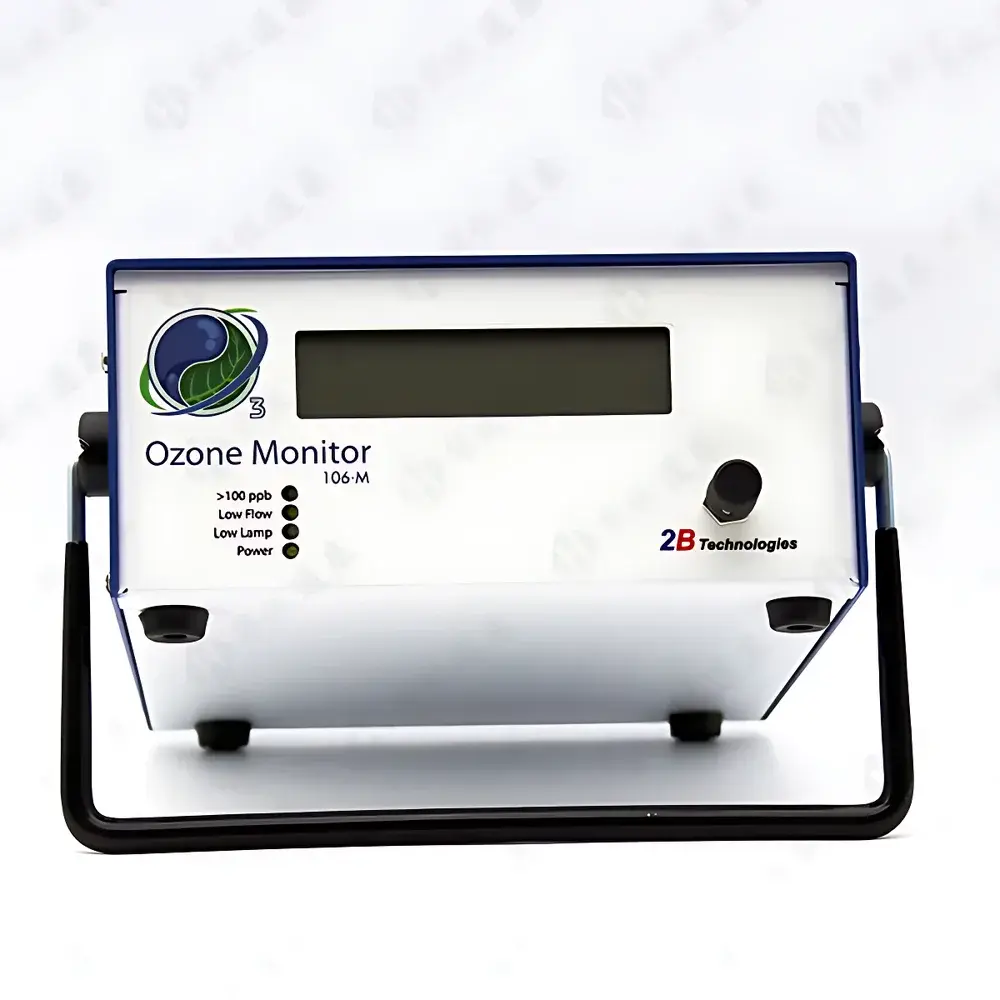
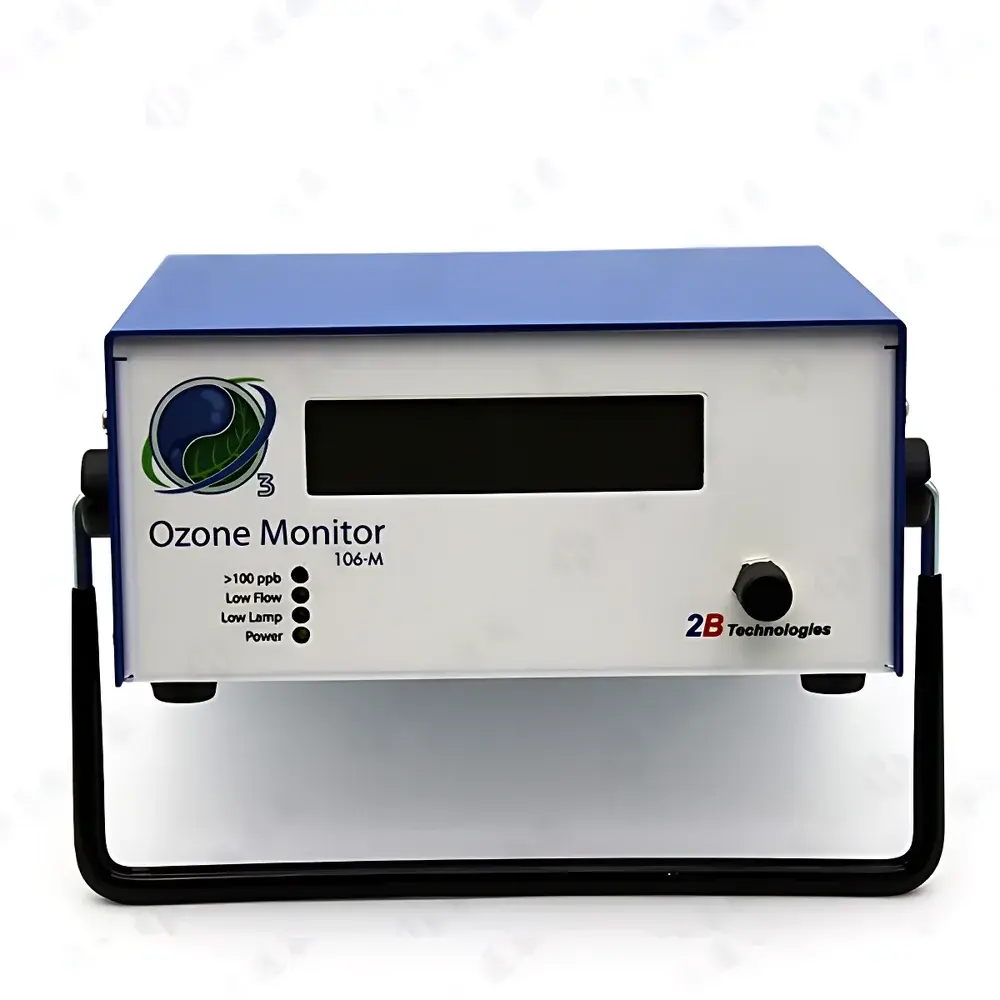
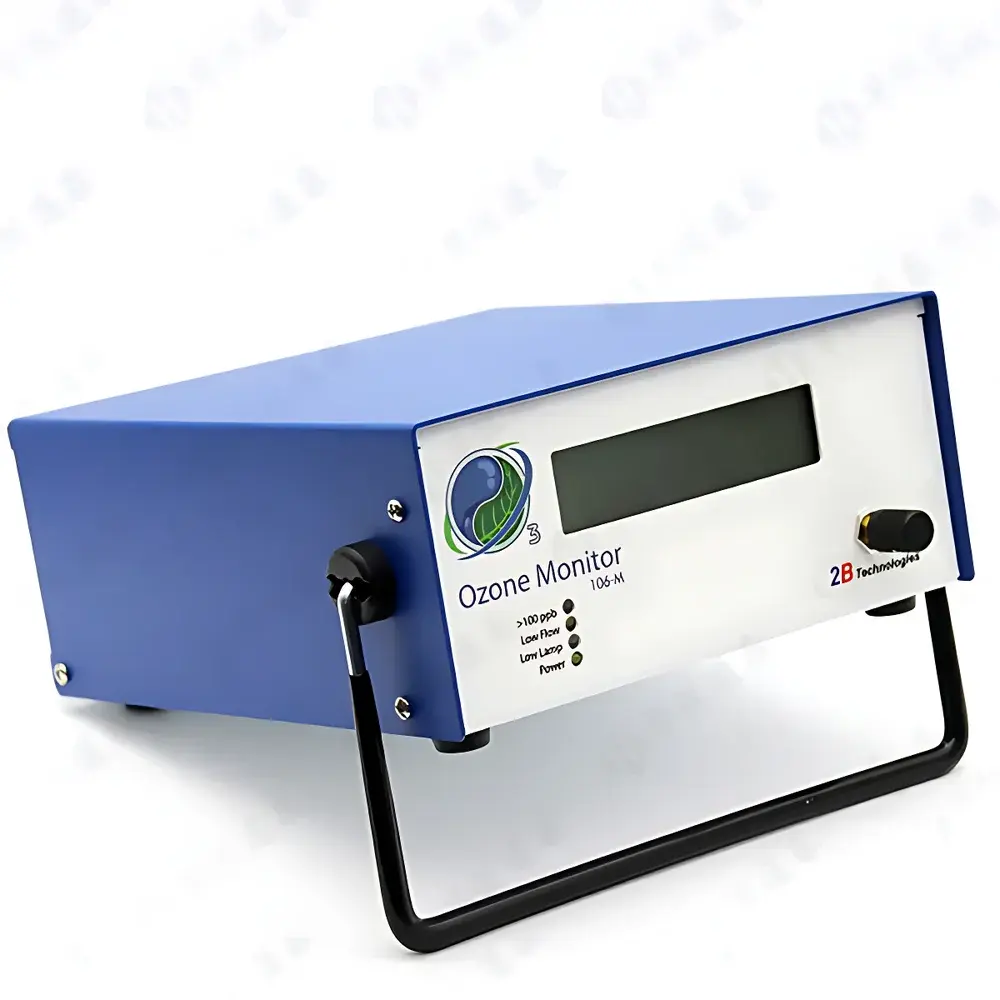
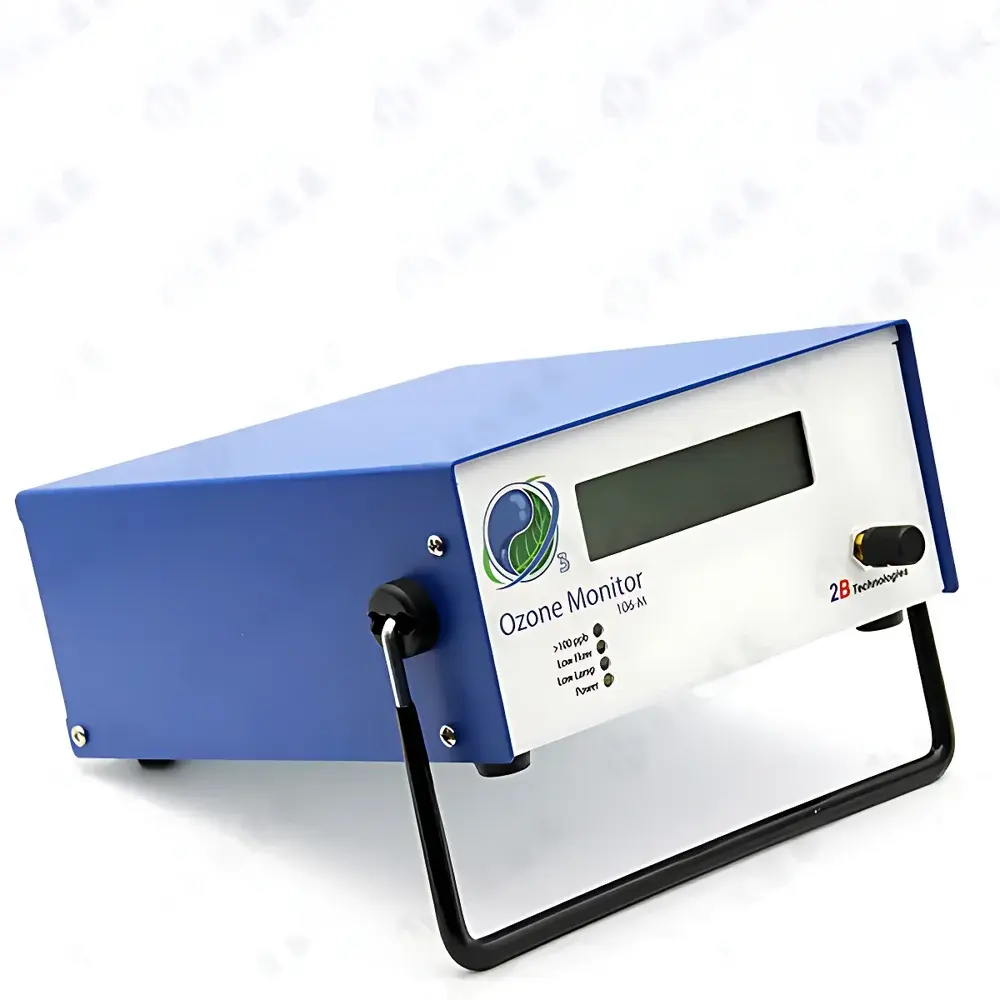
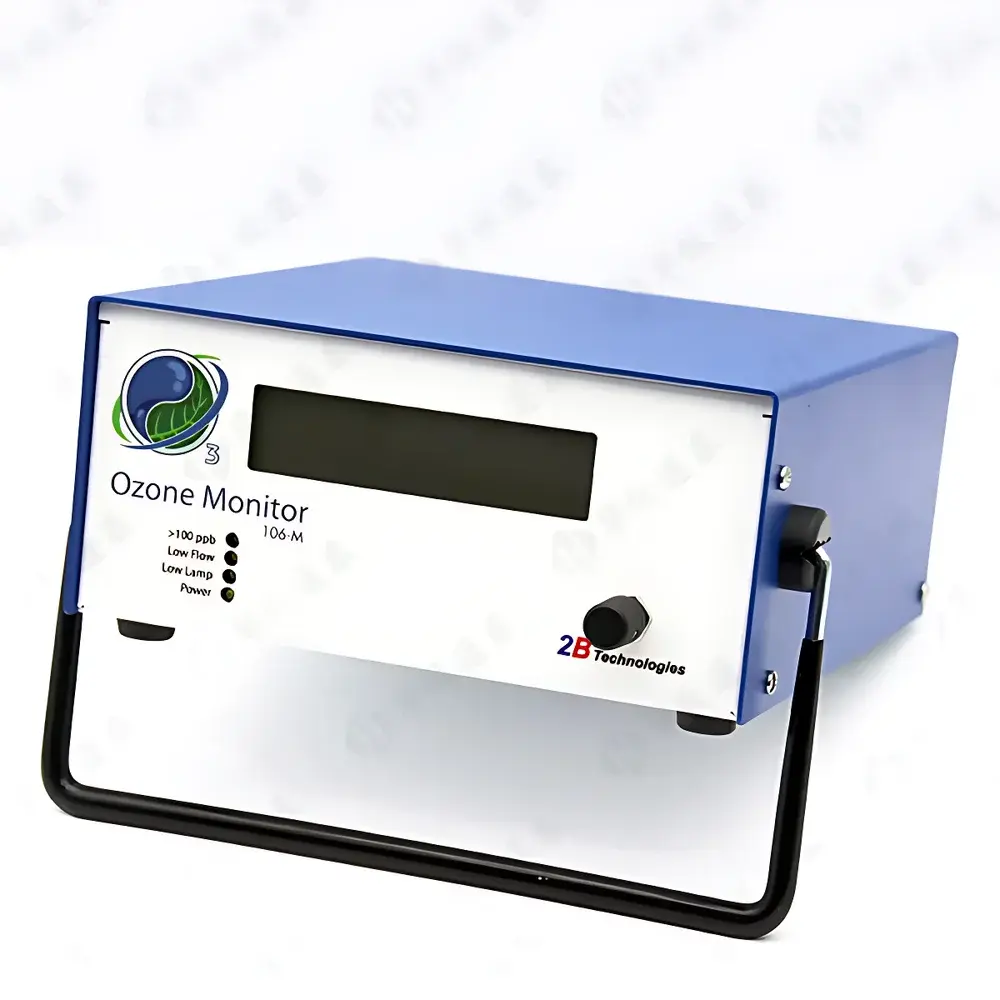
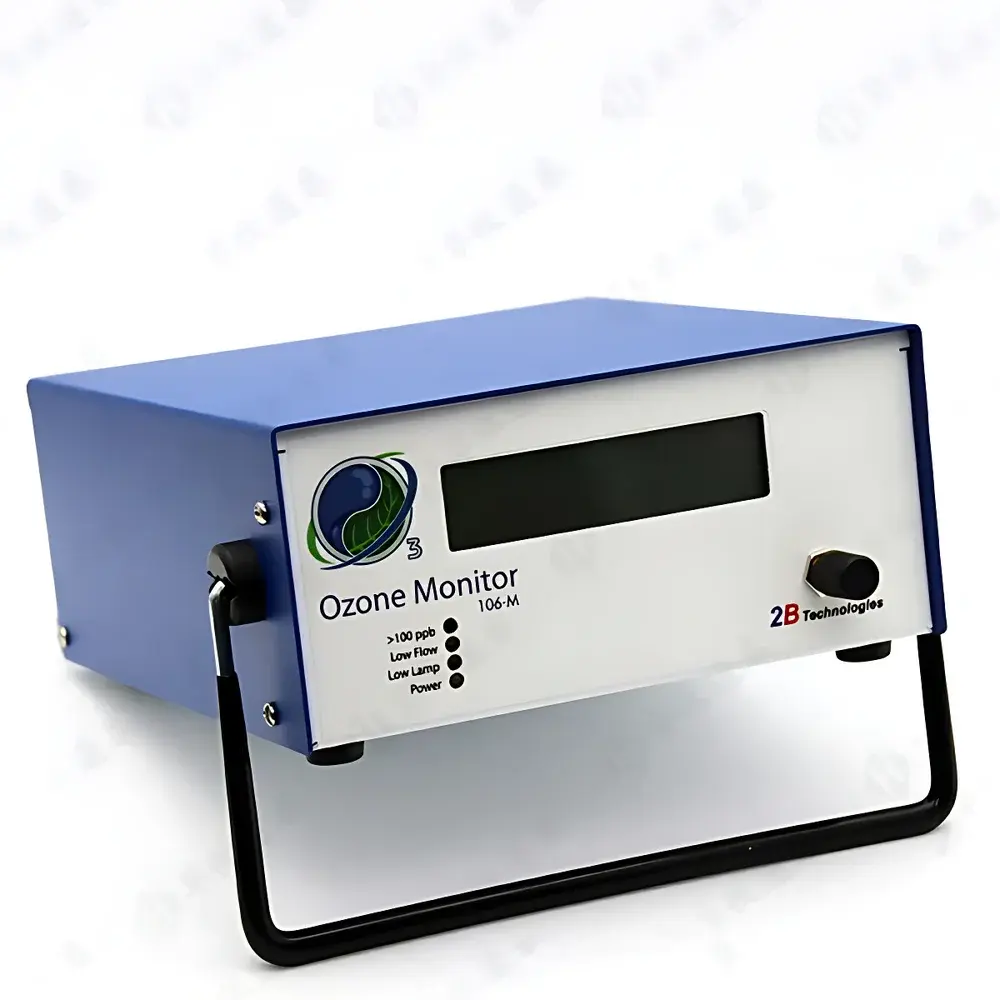
2B Technologies Model 106MH Ozone Analyzer
| Brand | 2B Technologies |
|---|---|
| Origin | USA |
| Model | Model 106MH |
| Instrument Type | Fixed-Mount Ozone Analyzer |
| Measurement Range | 0–10,000 ppm (0–1 vol%) |
| Response Time | 2 s |
| Measurement Interval | 2 s |
| Optical Principle | UV Absorption at 254 nm |
| Flow Rate | 1 L/min |
| Data Storage Capacity | 32,736 rows (e.g., 113 days at 5-min averaging) |
| Output Interfaces | USB, RS-232, 0–2.5 V analog, 4–20 mA |
| Display | Integrated LCD |
| Power | 11–28 VDC, 500 mA, 6 W |
| Dimensions | 9 × 20 × 24 cm (3.65 × 7.9 × 9.4 in) |
| Weight | 1.9 kg (4.2 lb) |
| Compliance | Designed for EPA-compliant ambient and industrial ozone monitoring per Method TO-11A principles |
| Enclosure Options | Standard or NEMA-rated housing available |
Overview
The 2B Technologies Model 106MH Ozone Analyzer is a fixed-mount, laboratory- and field-deployable instrument engineered for high-speed, high-fidelity measurement of ozone (O₃) across an extended concentration range of 0–10,000 ppm (equivalent to 0–1 vol%). It operates on the well-established principle of ultraviolet absorption spectroscopy at 254 nm — a wavelength where ozone exhibits strong, selective absorbance with minimal spectral interference from common atmospheric constituents such as oxygen, nitrogen, or water vapor. This physical measurement method ensures traceable, drift-stable performance without consumables or calibration gases under routine operation. With a native measurement interval of 2 seconds and sub-second optical response time, the Model 106MH supports real-time process monitoring, rapid ozone decay kinetics studies, and dynamic exposure assessments in industrial oxidation systems, water treatment off-gas streams, and semiconductor cleanroom environments.
Key Features
- Ultra-fast 2-second measurement cycle enables detection of transient ozone spikes and rapid concentration gradients.
- Dual-range optical path design optimized for high-sensitivity and high-dynamic-range operation within the 0–10,000 ppm span.
- Integrated temperature and pressure compensation algorithms ensure accuracy across varying environmental conditions (operating range: 0–40 °C, <90% RH non-condensing).
- Modular architecture: All critical electronics—including UV LED source, photodetector, microcontroller, and signal conditioning circuitry—are mounted directly onto a single printed circuit board, minimizing thermal drift and mechanical hysteresis.
- Configurable data averaging options (10 s, 1 min, 5 min, 1 h) allow users to balance temporal resolution with signal-to-noise ratio based on application requirements.
- Multiple output protocols support seamless integration into SCADA, DCS, and PLC-based control systems—USB and RS-232 for digital logging, 0–2.5 V analog and 4–20 mA for analog loop interfacing.
- NEMA-rated enclosure option available for outdoor or harsh industrial deployments requiring ingress protection (IP65 equivalent).
Sample Compatibility & Compliance
The Model 106MH is validated for continuous sampling of dry or humidified air, nitrogen, oxygen, and synthetic process gas matrices. It complies with the fundamental optical and metrological principles outlined in U.S. EPA Reference Method TO-11A for ambient ozone monitoring and aligns with ISO 13964:2021 (Gas analysis — Determination of ozone concentration by UV absorption). While not certified as a Federal Equivalent Method (FEM), its performance characteristics—including baseline stability ( 0.9999 across full scale), and repeatability (±0.5% of reading)—meet or exceed requirements for Class II industrial hygiene and process control applications. The analyzer requires no zero/span gas for routine operation but supports manual or automated calibration verification using NIST-traceable ozone standards.
Software & Data Management
Data acquisition and configuration are managed via the vendor-supplied 2B Technologies Ozone Logger software (Windows-compatible), which supports real-time plotting, CSV export, alarm thresholding, and firmware updates. Internal memory stores up to 32,736 timestamped records; at default 5-minute averaging, this provides over 113 days of autonomous operation. All stored data include embedded metadata: measurement timestamp (UTC), raw absorbance values, compensated concentration, temperature, pressure, and diagnostic flags. Audit trails and user-access logs are not natively supported; however, the instrument’s deterministic output protocol allows external systems to implement FDA 21 CFR Part 11-compliant electronic record retention when integrated with validated data acquisition platforms.
Applications
- Real-time monitoring of ozone concentration in industrial ozone generators used for water disinfection, odor control, and advanced oxidation processes (AOPs).
- In-line verification of ozone dose delivery in pharmaceutical cleanrooms and medical device sterilization tunnels.
- Field validation of ambient ozone levels near industrial emission sources, supporting regulatory reporting and dispersion modeling.
- Research-grade kinetic studies of ozone decomposition in catalytic reactors or plasma-assisted chemical systems.
- OEM integration into custom gas analyzers, environmental sensor networks, or portable multi-gas platforms (see OEM-106 variant).
FAQ
What is the minimum detectable ozone concentration for the Model 106MH?
The specified resolution is 0.1 ppm, with a lower limit of quantitation (LLOQ) defined as 0.05 ppm or 2% of reading—whichever is greater.
Can the Model 106MH operate continuously in high-humidity environments?
Yes, it is rated for operation up to 90% relative humidity (non-condensing); however, condensation on optical surfaces must be prevented via sample drying or heated sample lines if dew point exceeds ambient temperature.
Is the instrument compatible with Modbus or other industrial communication protocols?
No native Modbus support; communication is limited to ASCII-over-serial (RS-232/USB) and analog current/voltage outputs. Protocol translation requires external gateway hardware.
Does the Model 106MH require annual recalibration?
While not mandatory, biannual verification against a traceable ozone standard is recommended for applications requiring documented metrological traceability.
Can the internal data logger be accessed remotely?
Remote access is only possible via physical USB connection or through host PC software; no built-in Ethernet, Wi-Fi, or cellular interface is provided.
Related Products







