
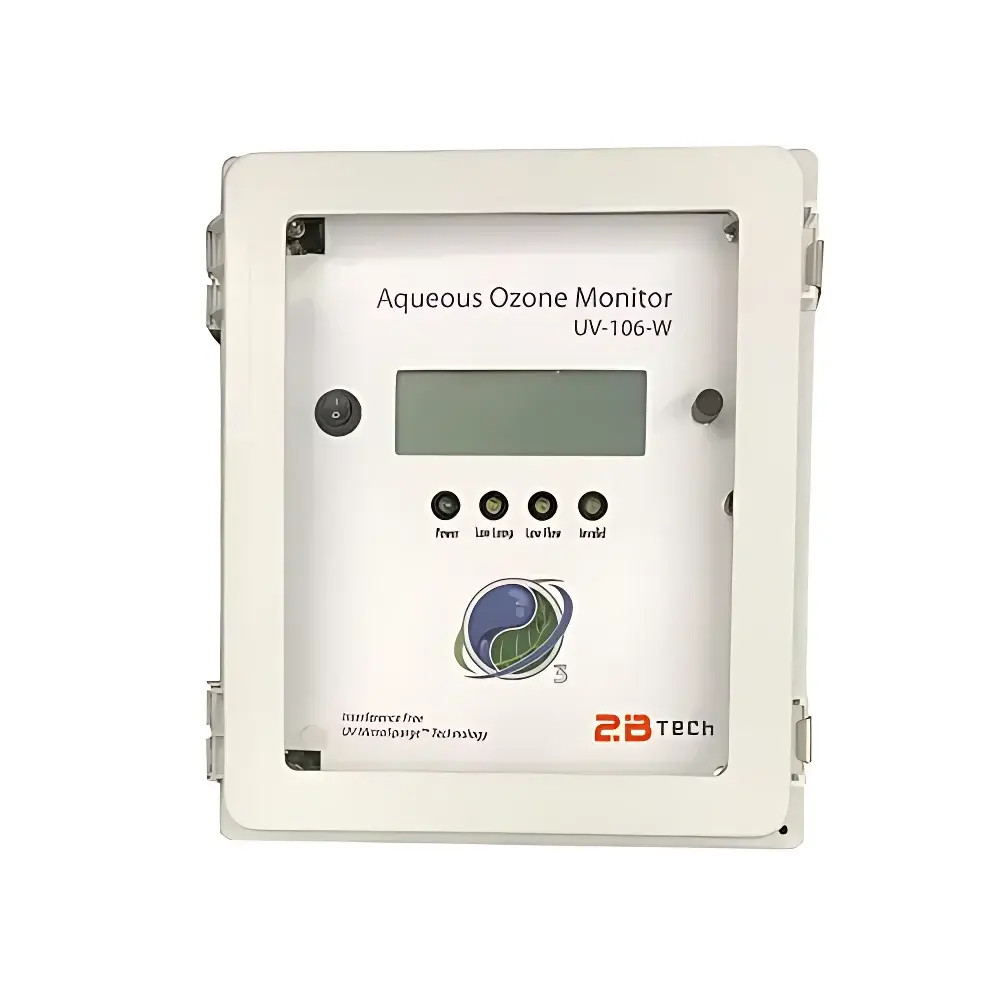
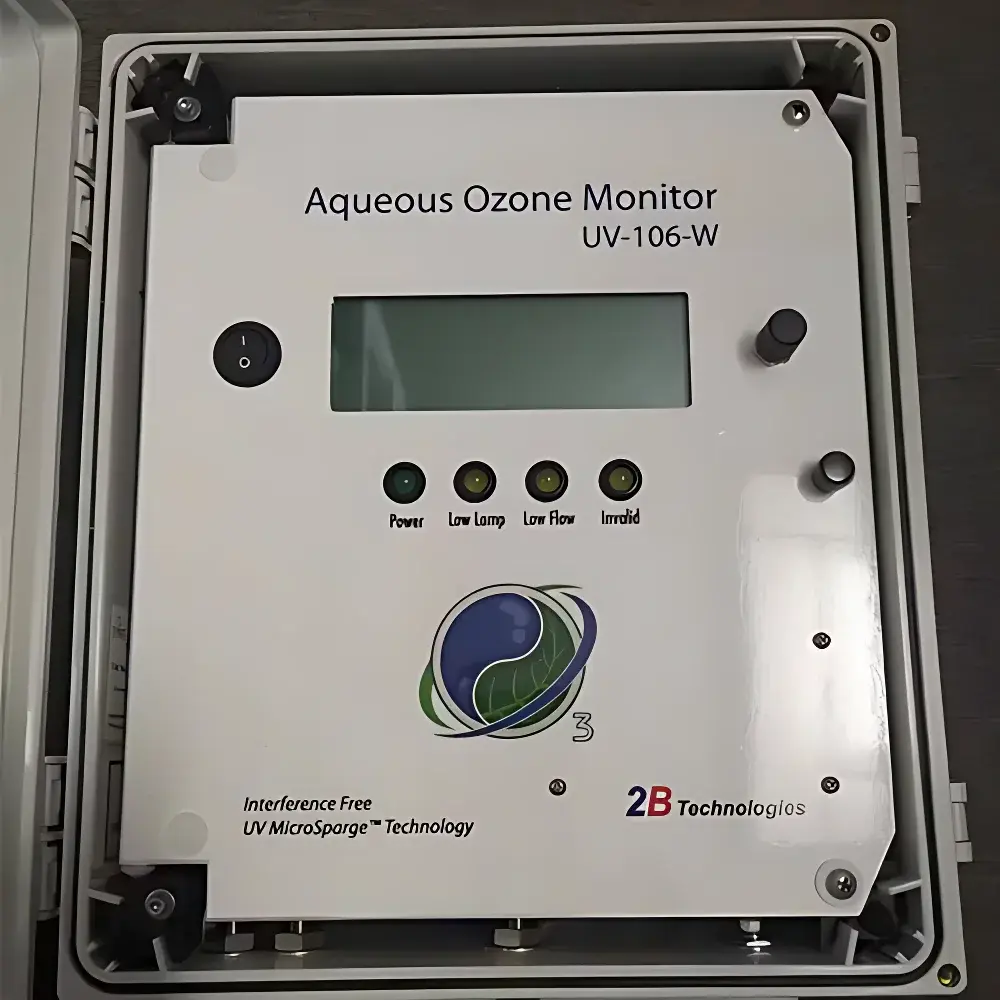
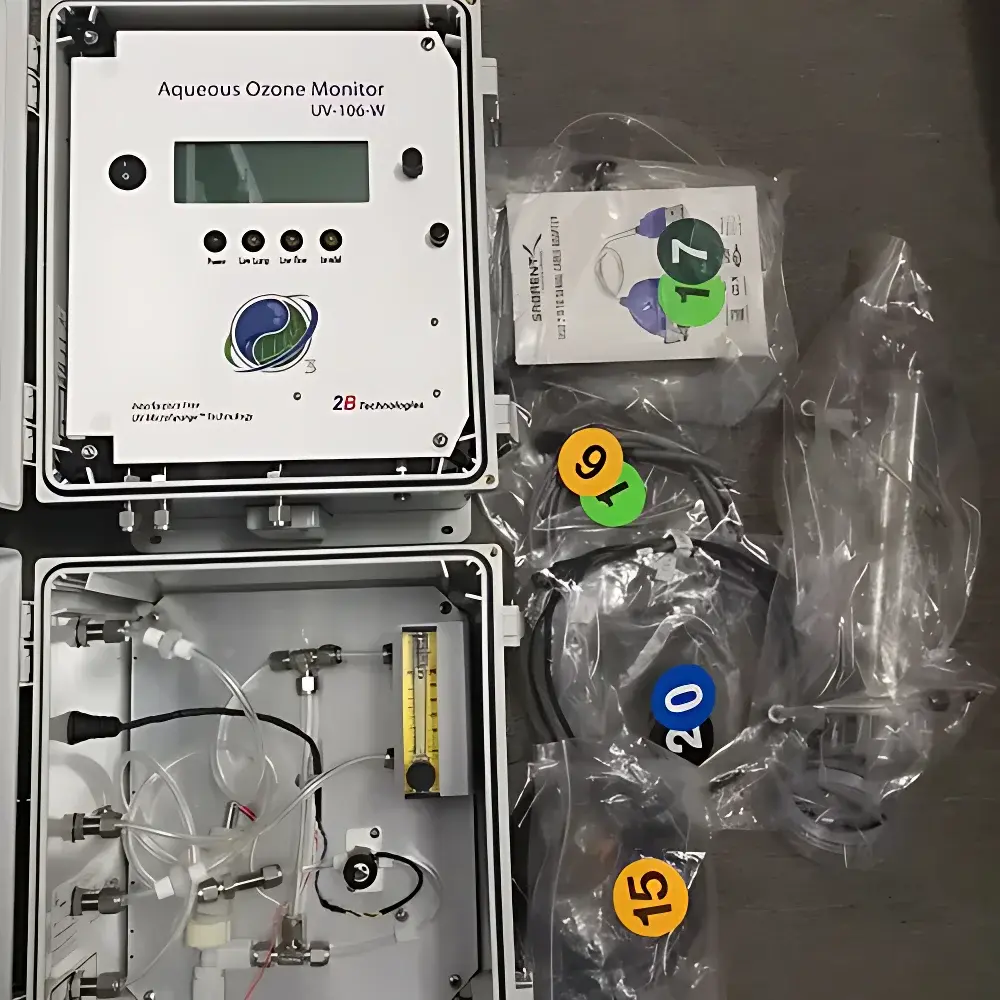
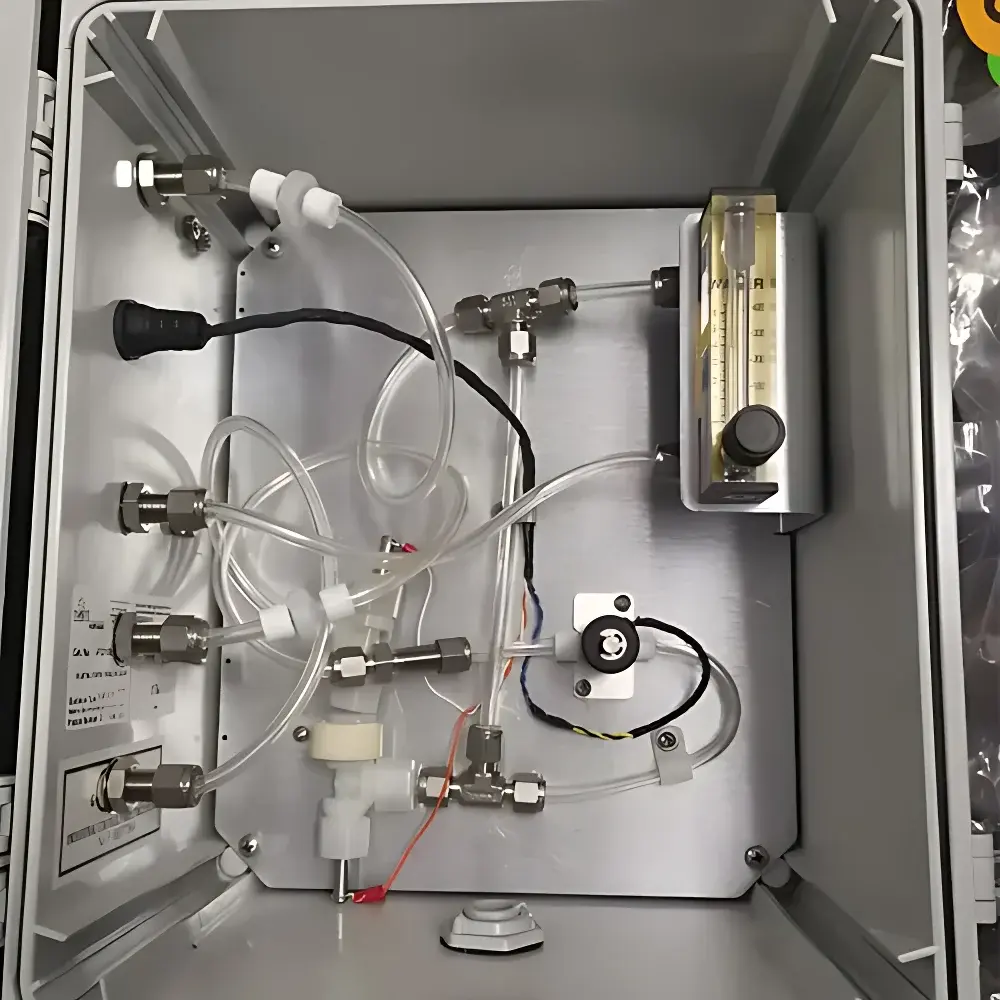
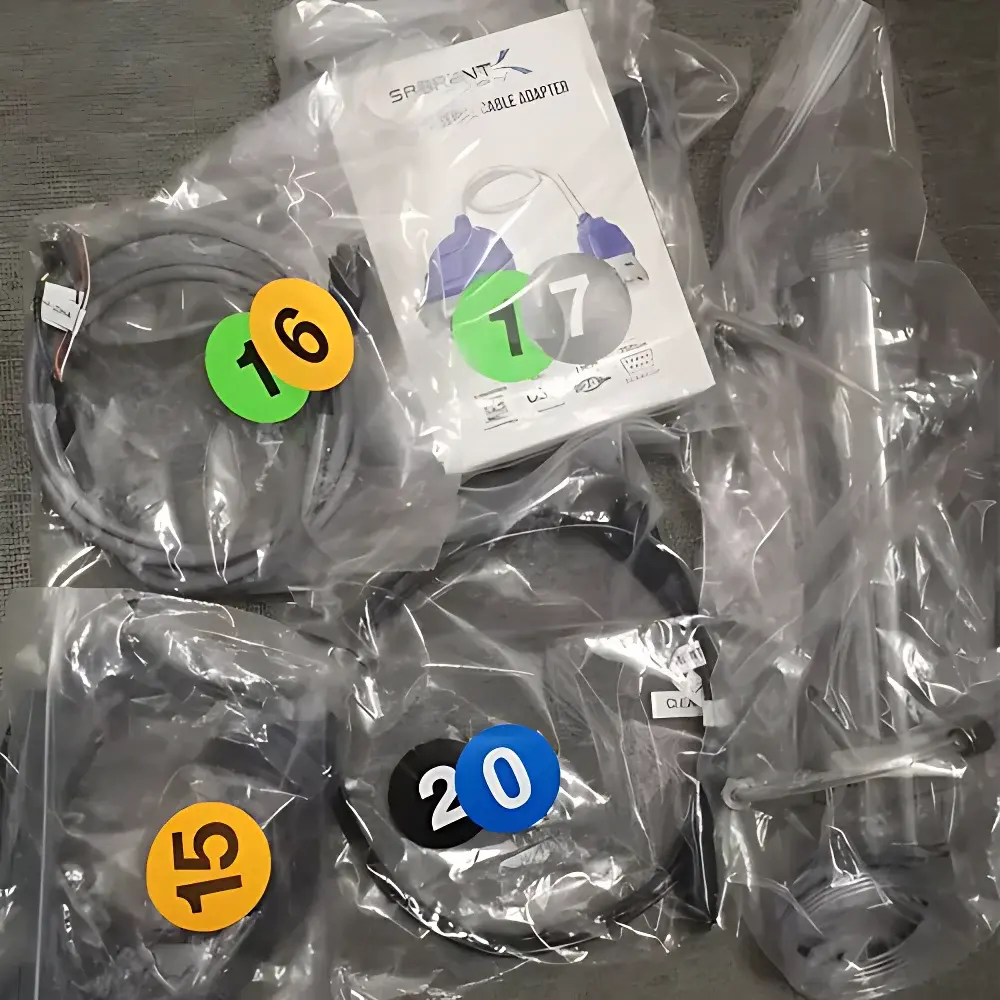
2B Technologies Model UV-106-W Dissolved Ozone Analyzer
| Brand | 2B Technologies |
|---|---|
| Origin | USA |
| Model | UV-106-W |
| Instrument Type | Portable |
| Measurement Range | 0–100 ppm (g/m³, µg/mL, mg/L) |
| Detection Limit | 0.1 ppm |
| Response Time | 20 s |
| Zero Drift | <0.05 ppm/month |
| Resolution | 0.1 ppm |
| Data Update Interval | 10 s |
| Accuracy | ±0.05 ppm or ±1% of reading |
| Sampling Flow Rate | 12 mL/min |
| Operating Pressure | 0–50 psi (burst pressure >100 psi) |
| Power | 11–14 VDC, 2.2 A @ 12 V (26.4 W) |
| Data Logger Capacity | 16,368 records |
| Dimensions | 33.8 × 30.5 × 18.5 cm |
| Weight | 6.6 kg |
Overview
The 2B Technologies Model UV-106-W is a portable, laboratory-grade dissolved ozone (DO₃) analyzer engineered for high-fidelity, interference-free quantification of aqueous ozone across diverse water matrices—from ultrapure semiconductor process water to municipal drinking water and industrial cooling systems. Unlike membrane-based electrochemical or optical sensors—whose performance degrades due to fouling, biofilm accumulation, or chemical passivation—the UV-106-W employs a patented micro-spray vaporization technique. A precisely metered 2 mL water sample is pneumatically atomized into a heated impactor chamber, where dissolved ozone rapidly partitions into the gas phase via controlled thermal decomposition kinetics. The liberated ozone gas is then swept through a dual-beam, temperature-stabilized UV photometer operating at 254 nm, leveraging the well-characterized molar absorptivity of ozone in the Hartley band. This gas-phase measurement eliminates matrix effects from suspended solids, turbidity, dissolved organics, inorganic ions (e.g., Cl⁻, NO₂⁻), and colloidal particles—enabling trace-level accuracy without sample filtration, reagent addition, or calibration drift correction.
Key Features
- True interference-free operation: Measures ozone exclusively in the gas phase after complete volatilization—no membrane, no electrolyte, no consumables.
- Real-time data acquisition: 10-second measurement update interval with user-selectable averaging (10 s, 1 min, 5 min, or 1 h).
- High-resolution detection: 0.1 ppm resolution across full 0–100 ppm range (equivalent to 0.1 mg/L or 100 µg/mL).
- Robust environmental rating: NEMA-rated enclosure suitable for wet, outdoor, or industrial environments; IP65-compliant against dust and low-pressure water jets.
- Integrated data management: Onboard non-volatile memory logs 16,368 timestamped records—supporting up to 57 days at 5-minute averaging.
- Dual analog outputs: Factory-calibrated 4–20 mA and 0–2.5 V outputs, both field-adjustable for integration with PLCs, SCADA, or DCS systems.
- Comprehensive diagnostics: LED status indicators for power, flow rate (low-flow alarm), measurement validity, and system fault conditions.
Sample Compatibility & Compliance
The UV-106-W is validated for use with waters spanning extreme physicochemical conditions: conductivity from 0.055 µS/cm (Type I ultrapure water) to >2,000 µS/cm (chlorinated surface water), turbidity up to 100 NTU, and total suspended solids ≤100 mg/L. Its vaporization-based architecture ensures compliance with ASTM D5462–22 (“Standard Test Method for Determination of Dissolved Ozone in Water by Ultraviolet Absorption”) and supports GLP/GMP audit readiness through deterministic, physics-based measurement traceability. While not intrinsically certified for hazardous locations, the instrument meets UL/CSA Class 2 circuit requirements and is compatible with explosion-proof enclosures per NEC Class I, Division 2 when installed in optional junction boxes with SPDT relay outputs.
Software & Data Management
Data export is supported via RS-232 serial interface (ASCII protocol) and USB virtual COM port, enabling direct connection to Windows/Linux-based acquisition software or custom LabVIEW/Python scripts. All logged data include UTC timestamps, raw absorbance values, calculated concentration, temperature-compensated lamp intensity, and diagnostic flags. The firmware implements write-protected audit trails for configuration changes and supports FDA 21 CFR Part 11–compliant electronic signatures when paired with validated third-party LIMS platforms. No proprietary drivers are required—standard CDC ACM class enumeration enables plug-and-play operation on modern OS versions.
Applications
- Drinking water treatment: Real-time monitoring of ozone contact chambers and clearwells to ensure CT-value compliance per EPA Guidance Manual for Disinfection and Sterilization.
- Pharmaceutical water systems: USP <1231> purified water and WFI loop validation, where membrane sensor drift compromises pharmacopeial compliance.
- Food & beverage processing: Ozone dosing control in bottle rinsing, CIP sanitation, and produce wash lines.
- Swimming pool & spa management: Automated feedback control of ozone generators to maintain 0.1–0.4 ppm residual while minimizing bromate formation.
- Electronics manufacturing: Ultrapure water (UPW) quality assurance in wafer cleaning processes where sub-ppb interferences invalidate amperometric sensors.
- Research & development: Kinetic studies of ozone decay in natural organic matter (NOM)-rich waters, requiring artifact-free baseline stability over multi-day deployments.
FAQ
Does the UV-106-W require routine membrane replacement or electrolyte refilling?
No—this instrument contains no membranes, electrodes, or liquid electrolytes. The only scheduled maintenance is periodic inspection of the spray nozzle and impactor surfaces per manufacturer’s quarterly checklist.
Can it measure ozone in seawater or high-salinity brines?
Yes, provided total dissolved solids (TDS) remain below 35,000 ppm and free chlorine concentration is <0.5 ppm. High chloride may accelerate stainless steel wetted-part corrosion over extended exposure; optional Hastelloy C-276 wetted components are available.
Is calibration traceable to NIST standards?
Yes—each unit ships with a certificate of calibration verified against NIST-traceable ozone gas standards generated via primary UV photolysis of oxygen, with uncertainty <±1.2% (k=2).
What is the minimum sample volume required per analysis?
Exactly 2.0 ± 0.1 mL per measurement cycle. The integrated peristaltic pump delivers consistent volumetric delivery at 12 mL/min, ensuring repeatability independent of inlet pressure or viscosity.
How does the instrument handle transient flow interruptions?
An internal flow sensor triggers automatic hold-mode upon detection of <8 mL/min for >5 s, suspending measurement and logging an event flag—preventing erroneous zero-drift compensation during low-flow conditions.
Related Products







