
2mag bioREACTOR Series — Parallel Miniaturized Bioreactor System for High-Throughput Microscale Cultivation
| Brand | 2mag |
|---|---|
| Origin | Germany |
| Model | bioREACTOR |
| Temperature Range | 0–65 °C |
| Working Volume per Vessel | 8–15 mL |
| Number of Parallel Reactors | 8 or 48 |
| Construction Materials | Stainless Steel (316L) and Borosilicate Glass |
| Sterilization Method | Autoclavable (121 °C, 20 min) |
Overview
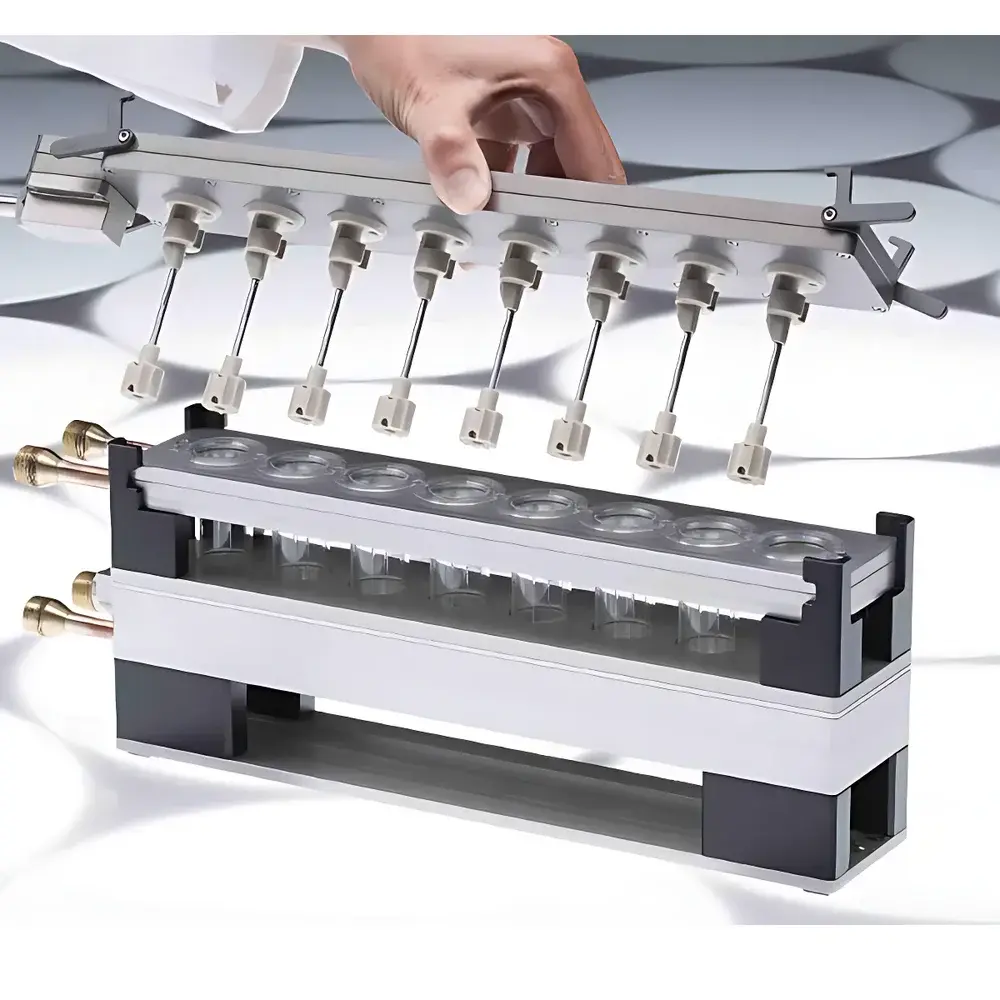
The 2mag bioREACTOR Series is a modular, parallel miniaturized bioreactor platform engineered for precision-controlled microbial and mammalian cell cultivation at the microscale. Based on contactless magnetic induction stirring and non-invasive optical sensing, it operates on the principle of scalable, gas-driven mixing with integrated real-time monitoring of critical process parameters—primarily dissolved oxygen (DO) and pH—without membrane electrodes or fluidic penetrations. Designed for seamless integration into early-stage bioprocess development workflows, the system enables direct translation from milliliter-scale screening to benchtop and pilot-scale bioreactors via consistent kLa (>0.4 s−1) and power input normalization. Its compact footprint, autoclavable construction, and compatibility with standard 96-well footprint geometries support GLP-compliant, high-reproducibility experimentation across fermentation, strain selection, media optimization, and metabolic engineering studies.
Key Features
- Contactless magnetic induction drive: Eliminates mechanical seals and shafts; ensures full sterility and zero risk of cross-contamination between vessels.
- Real-time, non-invasive optical DO and pH monitoring: Uses fluorescence-based sensor spots embedded in vessel bottoms—no calibration drift, no electrolyte leakage, no maintenance.
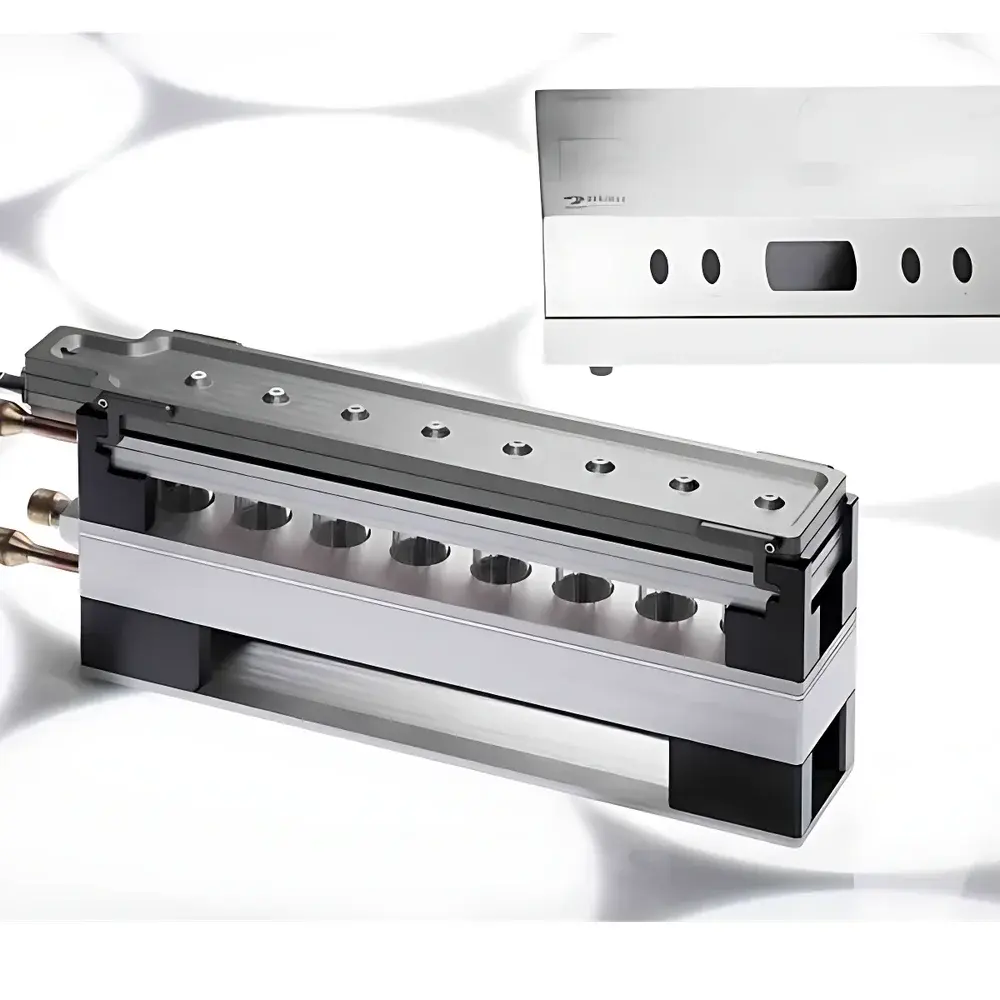
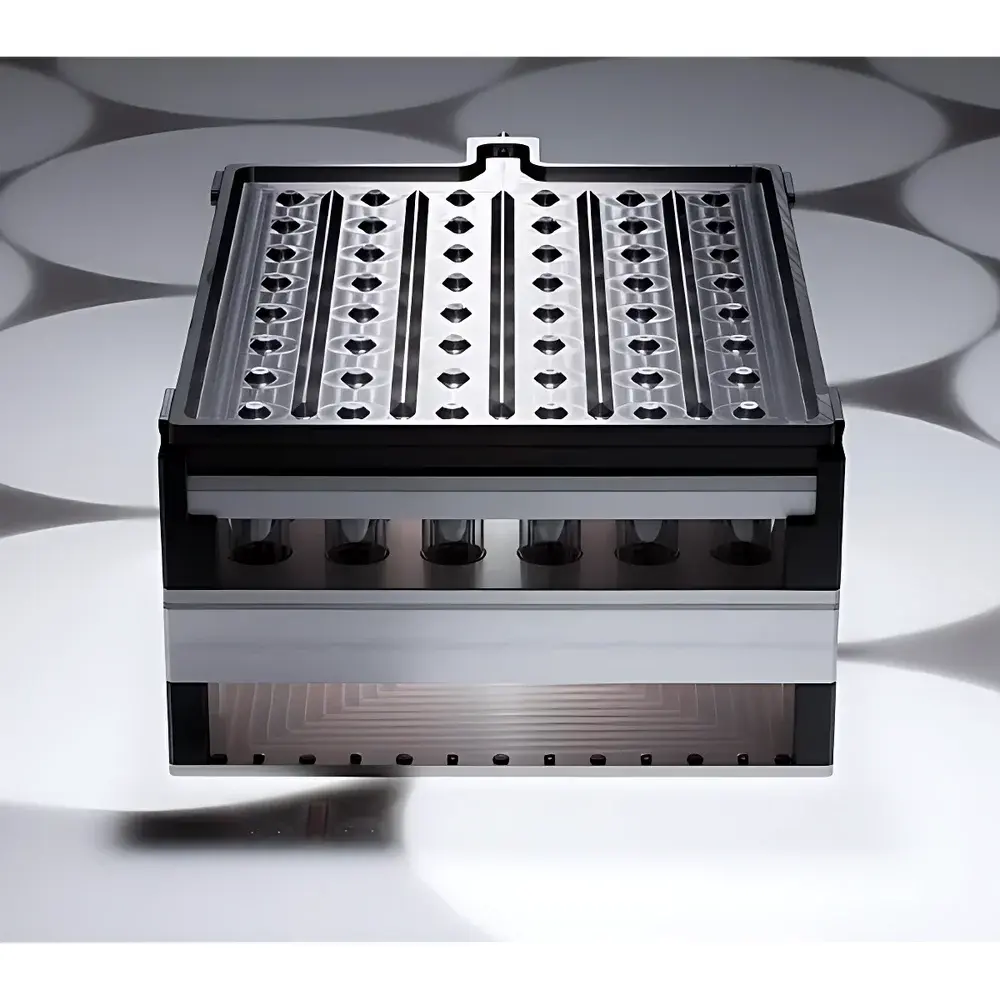
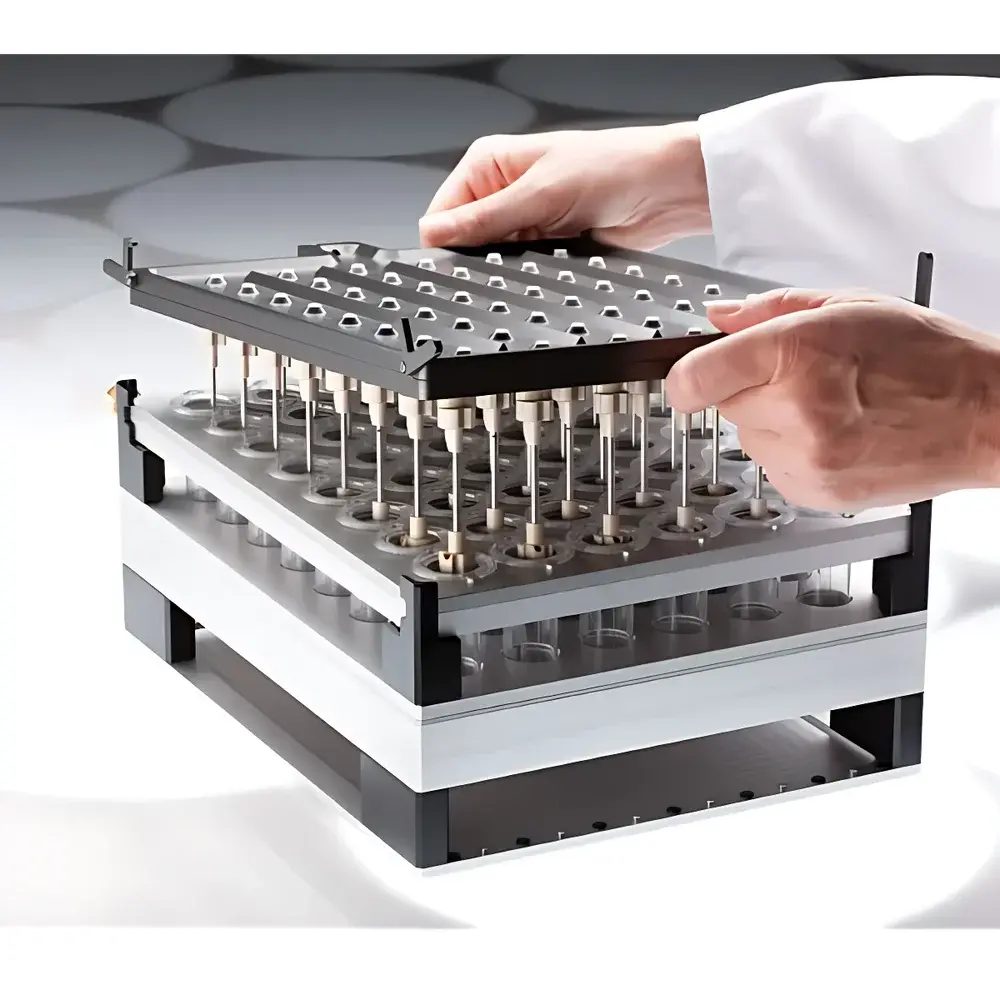
- Configurable parallel architecture: Available in 8-vessel (bioREACTOR8) and 48-vessel (bioREACTOR48) formats—both maintain identical per-vessel geometry, mixing dynamics, and sensor placement for inter-channel comparability.
- Precise thermal control: Peltier-based temperature regulation from 0 °C to 50 °C (with integrated Pt100 sensor); passive heating up to 65 °C possible without active feedback.
- Gas management via sterile headspace aeration: Independent gas inlets per vessel enable programmable O2/N2/CO2 blending; avoids liquid-phase sparging and foam generation.
- Automated stirring speed control with continuous motor load monitoring: Detects viscosity shifts, pellet formation, or impeller stalling—enabling adaptive agitation profiles.
- Modular integration readiness: Standardized mechanical and electrical interfaces (RS485, analog I/O) support direct coupling with Hamilton Microlab® STAR™, Tecan Freedom EVO®, or custom robotic liquid handlers.
Sample Compatibility & Compliance
The bioREACTOR accommodates suspension cultures of bacteria (e.g., E. coli, Bacillus), yeasts (S. cerevisiae, P. pastoris), filamentous fungi, and anchorage-independent mammalian cells. Vessels are constructed from USP Class VI-certified borosilicate glass and electropolished AISI 316L stainless steel—fully compliant with ISO 10993-5 (cytotoxicity) and EU Regulation (EC) No 1935/2004 for materials in contact with biological substances. All wetted parts withstand repeated autoclaving at 121 °C for 20 minutes. The system supports 21 CFR Part 11–compliant data logging when paired with validated software (e.g., 2mag BioControl Suite), including electronic signatures, audit trails, and role-based access control—meeting GMP-aligned QC/QA requirements for preclinical bioprocess documentation.
Software & Data Management
The 2mag BioControl Suite provides centralized configuration, real-time visualization, and export-ready reporting for all measured parameters (temperature, DO, pH, agitation speed, gas flow). It features built-in statistical comparison tools for parallel batch analysis, automatic outlier detection based on stirring torque variance, and CSV/PDF export conforming to ISA-88/ISA-95 data structure conventions. Raw sensor data is timestamped with microsecond resolution and stored locally with SHA-256 checksum integrity verification. Optional OPC UA server module enables bidirectional communication with MES or LIMS platforms—facilitating automated metadata tagging (e.g., strain ID, passage number, medium lot) during robotic sample loading.
Applications
- Strain screening and selection under controlled redox and pH gradients
- Media formulation and feed strategy optimization using Design of Experiments (DoE)
- Kinetic modeling of growth, product formation, and substrate consumption
- Toxicity and inhibition profiling of novel antimicrobials or metabolic intermediates
- Enzyme production and secretion kinetics in recombinant hosts
- Process characterization for QbD (Quality by Design) submissions to regulatory agencies
- Chemical biotransformation and cascade enzymatic synthesis under aerobic/anaerobic conditions
FAQ
Can the bioREACTOR be used for anaerobic cultivation?
Yes—via nitrogen or argon sparging of the headspace and optical DO monitoring down to 0.1% saturation, enabling strict redox control without liquid-phase gas injection.
Is vessel sterilization limited to autoclaving?
Autoclaving is the primary validated method; however, gamma irradiation (25 kGy) of pre-assembled disposable vessels (glass + silicone gaskets) is also supported per manufacturer qualification data.
What level of scalability validation is provided?
2mag supplies correlation datasets demonstrating linear kLa and volumetric power transfer scaling from bioREACTOR8 to 2 L and 10 L stirred-tank reactors—aligned with ASTM E2500-13 guidelines for equipment qualification.
Does the system support fed-batch or perfusion modes?
Yes—through programmable per-vessel liquid addition via integrated syringe pump interfaces or external robotic dispensers; perfusion is enabled using gravity-fed or pressure-regulated hollow-fiber modules mounted externally.
How is pH calibration performed?
Optical pH sensors are factory-calibrated against NIST-traceable buffer standards (pH 4.01, 7.00, 10.01); field recalibration is not required but can be executed using two-point aqueous buffer immersion per ISO 15197:2013 Annex B protocols.
Related Products



