
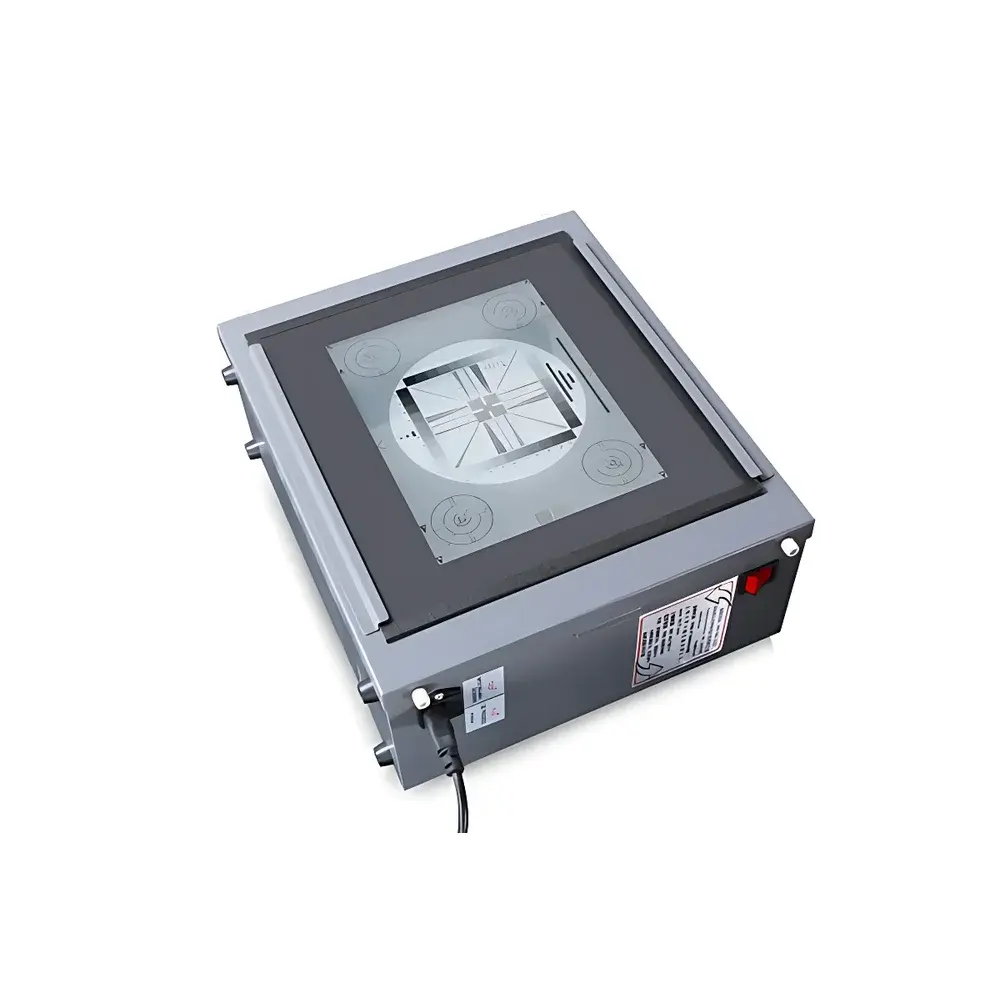
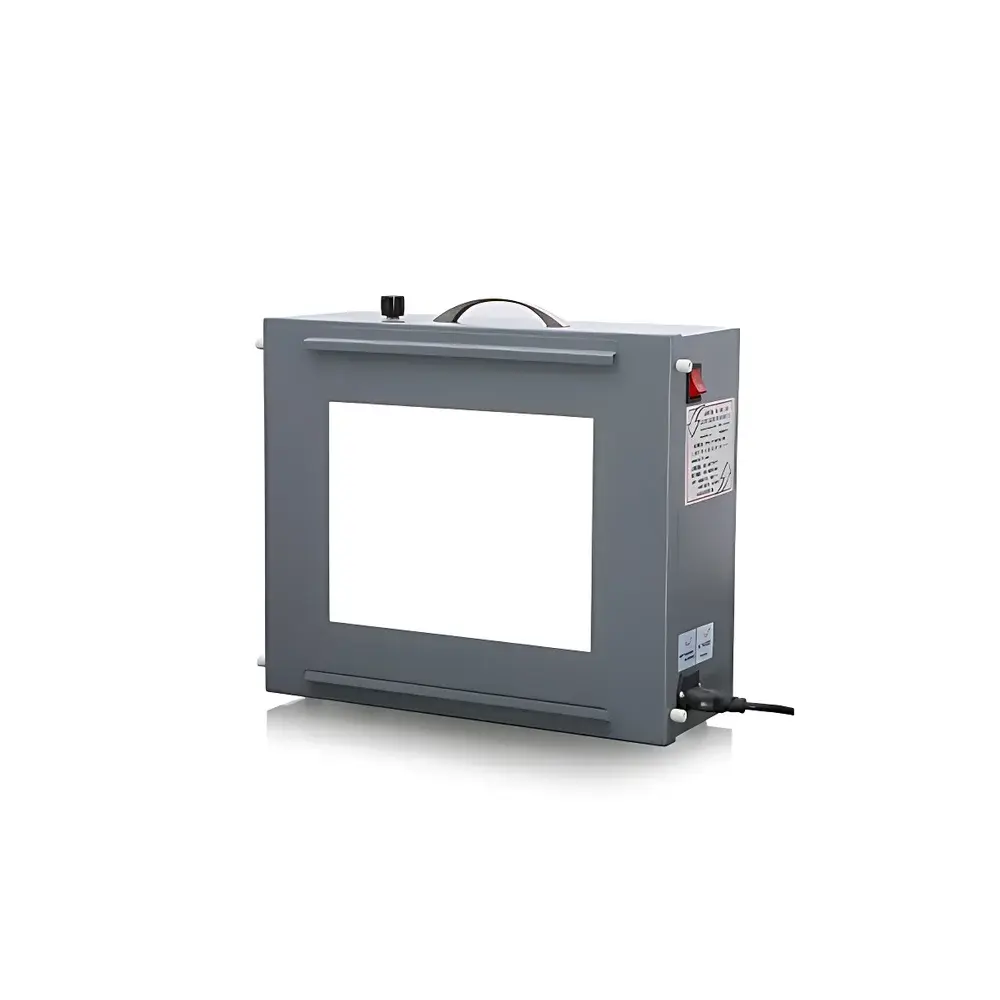
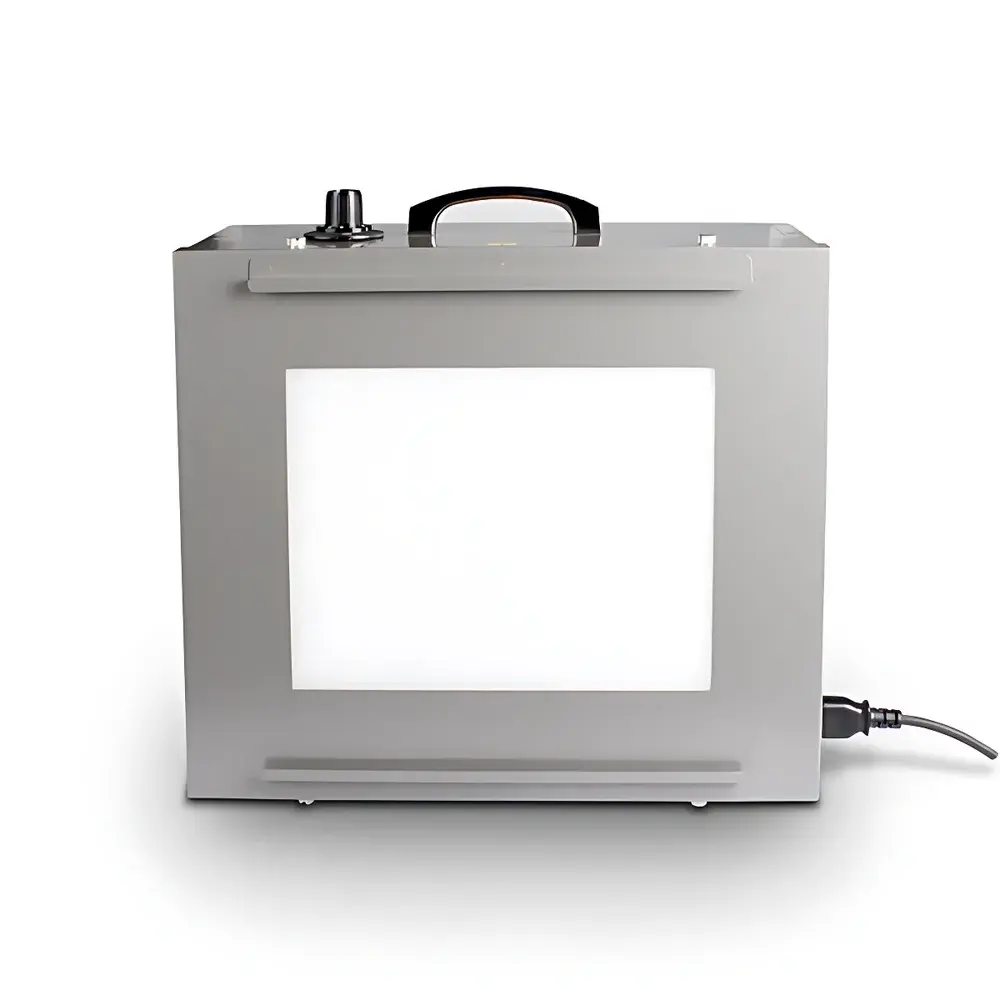
3nh CC3100 Transmissive Camera Color Matching Light Cabinet
| Brand | 3nh |
|---|---|
| Model | CC3100 |
| Light Source | 3100K (±200K) × 4 lamps |
| Uniformity | >95% |
| Luminance Range | 100–4400 cd/m² (adjustable) |
| Illuminance Range | 250–10,000 lux (adjustable) |
| Power Supply | AC 230 V, 50/60 Hz |
| High-Frequency Illumination | 20 kHz |
| Operating Temperature | 10–40 °C |
| Operating Humidity | <80% RH (non-condensing) |
| External Dimensions | 38.5 W × 34 H × 15 D cm |
| Viewing Area | 25 W × 19 H cm |
| Compliance | CE, ISO 9001:2008, FCC, RoHS, TÜV, SCM |
Overview
The 3nh CC3100 Transmissive Camera Color Matching Light Cabinet is an engineered optical evaluation system designed specifically for objective color assessment and calibration of imaging devices under controlled, standardized illumination. Unlike reflective light booths, the CC3100 employs a transmissive architecture—light passes through the test target (e.g., ISO 12233 resolution chart, grayscale wedge, or color transmission standard) before reaching the camera sensor—enabling precise simulation of backlit display conditions, film-based media inspection, and digital image sensor characterization. Its core photometric design conforms to CIE S 002:2022 and ISO/CIE 13655:2017 requirements for spectral stability and spatial uniformity in transmissive viewing environments. The cabinet integrates four independently stabilized 3100K tungsten-halogen lamps with high-frequency electronic ballasts (20 kHz), eliminating visible flicker and ensuring temporal stability critical for automated camera testing workflows.
Key Features
- Transmissive optical path optimized for camera sensor calibration, LCD backlight evaluation, and photographic film analysis
- Four 3100K (±200K) tungsten-halogen lamps delivering stable, continuous-spectrum illumination with CCT traceability to NIST-traceable standards
- Optical uniformity exceeding 95% across the 25 cm × 19 cm viewing plane—validated per ISO 12233 Annex D and ASTM E308-22 methodology
- Dual-range luminance control (100–4400 cd/m²) and illuminance adjustment (250–10,000 lux), enabling compliance with ISO 17321-1 (digital camera color rendering) and IEC 62676-5 (surveillance camera lighting validation)
- High-frequency electronic driver (20 kHz) eliminates stroboscopic effects and ensures compatibility with global shutter and rolling shutter sensors operating at frame rates up to 120 fps
- Rugged aluminum alloy chassis with thermally insulated housing maintains thermal equilibrium during extended operation (10–40 °C ambient, <80% RH non-condensing)
Sample Compatibility & Compliance
The CC3100 accommodates standard transmissive targets including ISO 12233:2017 resolution charts (SFR, MTF), IT8.7/4 transmission targets, Kodak Q-13/Q-14 grayscale wedges, and custom-printed film-based color references. Its spectral output meets the CIE illuminant A definition (3100K ±200K) and supports conformance testing per ISO 17321-1 Annex B (camera color accuracy), ISO/TR 20775:2019 (transmission densitometry), and GB/T 3978–2008 (Chinese national standard for standard illuminants). All electrical components are certified to CE, RoHS, FCC, and TÜV safety directives; quality management follows ISO 9001:2008 protocols. The unit is suitable for GLP-compliant laboratories performing camera QC in medical imaging, industrial machine vision, and consumer electronics manufacturing.
Software & Data Management
While the CC3100 operates as a standalone hardware platform, its calibrated luminance and CCT outputs integrate seamlessly with third-party camera test software suites—including Imatest Master, DxO Analyzer, and ChromaChecker—via analog voltage feedback or external photometer synchronization. Built-in RS-232 and optional USB-to-serial interfaces support automated script-driven intensity ramping and logging. Audit trails for lamp usage hours, calibration history, and environmental monitoring (optional external sensor input) can be exported in CSV format for FDA 21 CFR Part 11–compliant documentation when paired with validated laboratory information management systems (LIMS).
Applications
- Objective evaluation of color fidelity, white balance convergence, and dynamic range in smartphone, automotive ADAS, and medical endoscope cameras
- Backlight uniformity verification for OLED/LCD displays using transmissive Mura detection targets
- Calibration and validation of spectroradiometers and imaging photometers against known transmissive reference standards
- Quality control of photographic film, radiographic film, and optical filters requiring consistent transmission-based illumination
- Research-grade optical characterization in university labs and national metrology institutes conducting CIE TC 1-90 or ISO/IEC JTC 1/SC 27–aligned studies
FAQ
What is the difference between the CC3100 and CC5100 models?
The CC3100 is configured exclusively with 3100K tungsten-halogen sources for warm-white transmissive evaluation, while the CC5100 uses 5100K daylight-balanced lamps. Both share identical mechanical, electrical, and photometric specifications.
Can the CC3100 be used for reflective color matching?
No—it lacks a reflective viewing chamber, diffuser panels, or surround geometry required for CIE 116-1995 compliant reflective assessment. It is purpose-built for transmissive applications only.
Is lamp replacement user-serviceable?
Yes—lamps are accessible via front-panel tool-free access and feature standardized G9 base sockets. Replacement lamps are supplied with factory spectral calibration certificates.
Does the unit include a photometric calibration certificate?
A factory-issued calibration report (traceable to NIM China) is included with each shipment, covering luminance uniformity, CCT deviation, and temporal stability at three intensity setpoints.
How does the 20 kHz high-frequency drive benefit camera testing?
It eliminates aliasing artifacts caused by interaction between lamp modulation and sensor readout timing—critical for accurate MTF, SNR, and temporal noise measurements per ISO 15739 and EMVA 1288 standards.




