
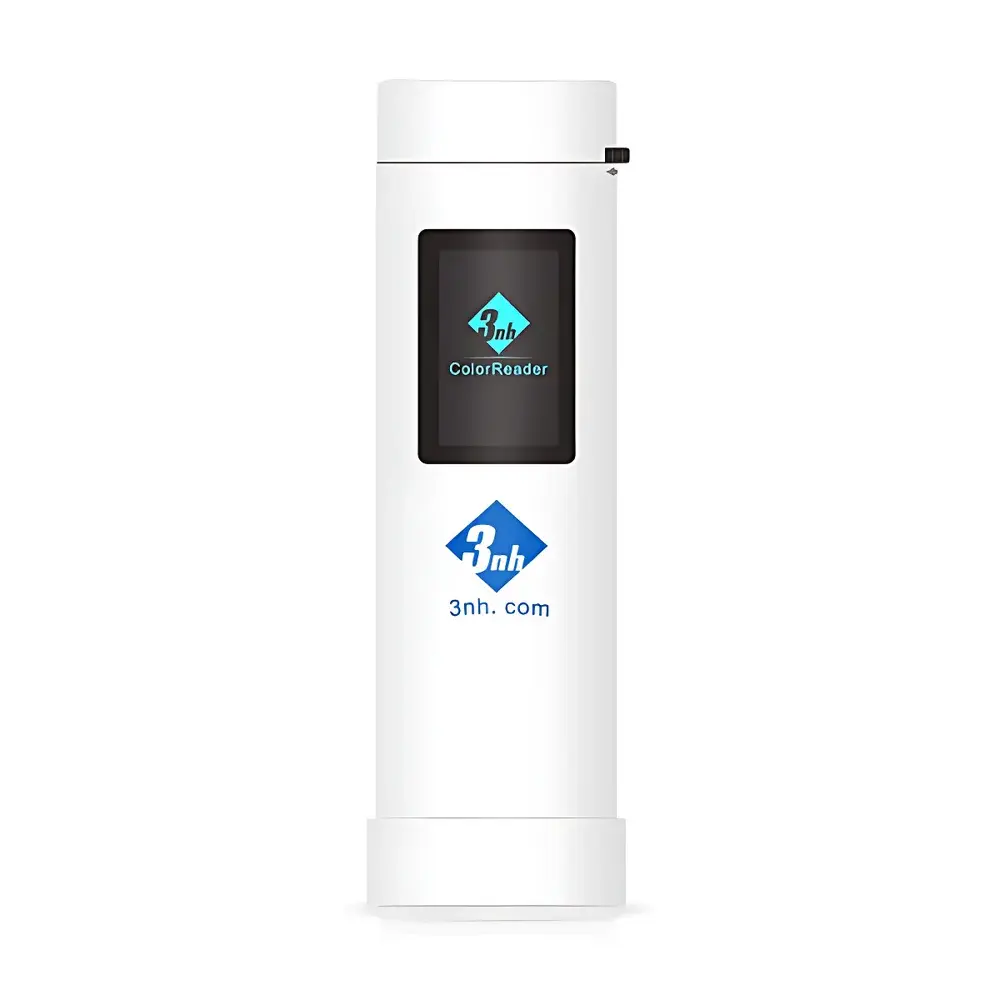
3nh CR3 Portable Colorimeter with Dual-Mode Smart Operation
| Brand | 3nh |
|---|---|
| Origin | Guangdong, China |
| Manufacturer Type | Direct Manufacturer |
| Product Category | Domestic |
| Model | CR3 |
| Product Type | Spectrophotometric Colorimeter |
| Instrument Form Factor | Portable |
| Optical Geometry | d/8° Integrating Sphere (SCI mode) |
| Illuminants | D65, A, C, D50, D55, D75, F1–F12 (including CWF, TL84, TL83/U30, TPL5, DLF) |
| Spectral Range | 400–700 nm |
| Repeatability | ΔE*ab ≤ 0.05 (after warm-up and calibration |
Overview
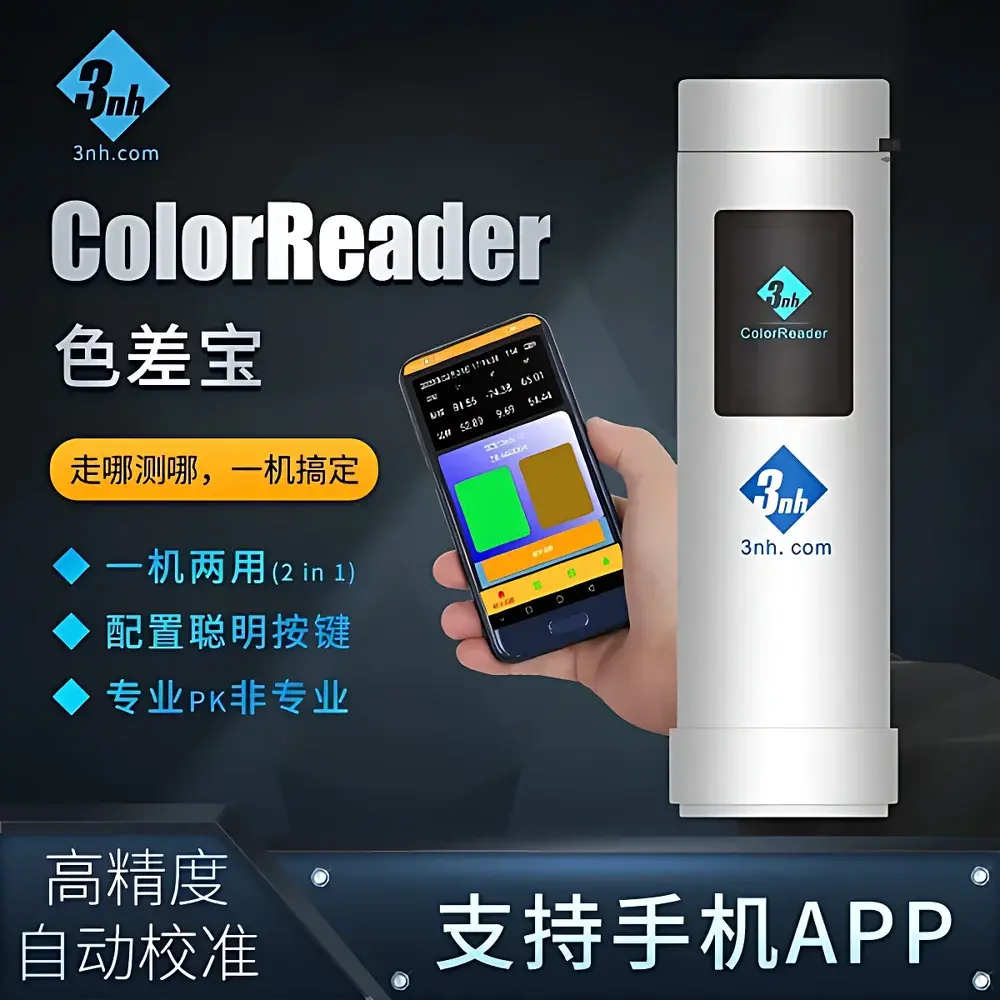
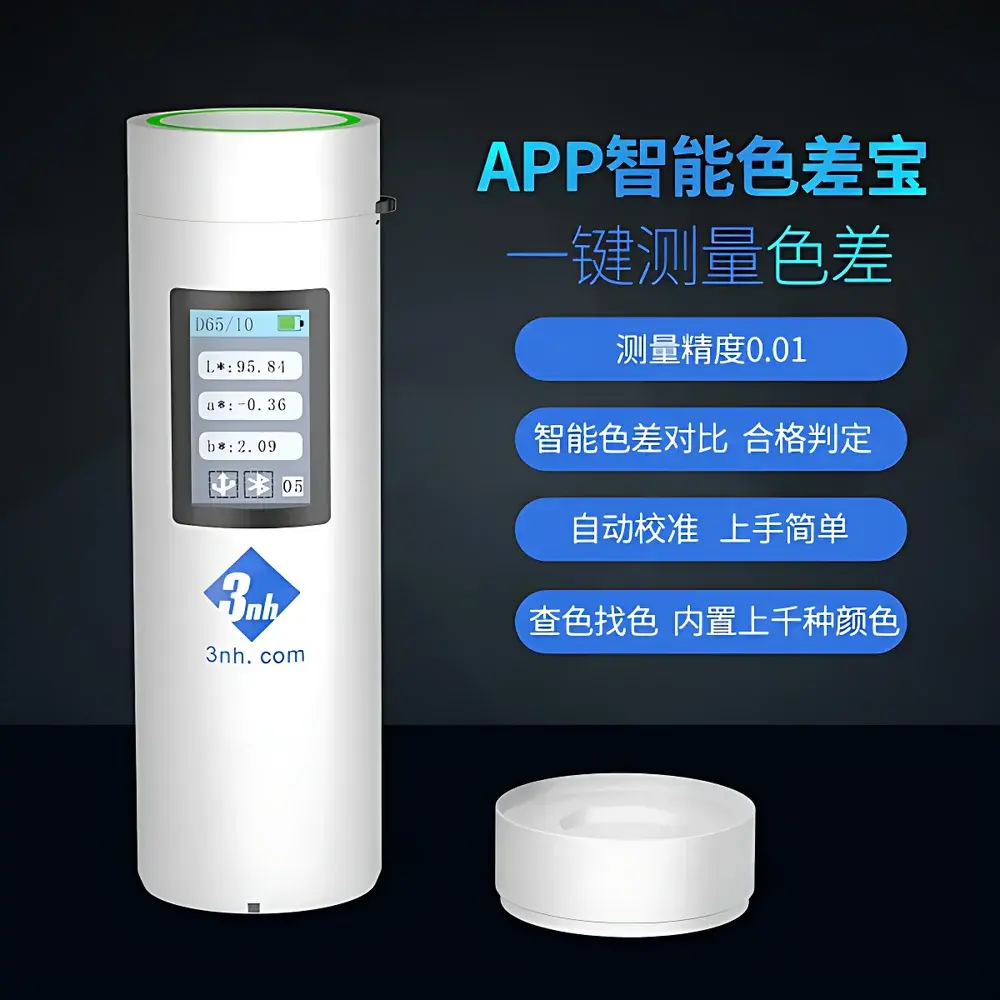
The 3nh CR3 Portable Colorimeter is an industrial-grade spectrophotometric color measurement instrument engineered for high-precision, field-deployable color quality control in manufacturing environments. It operates on the CIE-compliant d/8° integrating sphere geometry (Specular Component Included, SCI), ensuring consistent measurement of both diffuse and specular reflectance—critical for evaluating textured, glossy, or coated surfaces across plastics, paints, textiles, ceramics, and electronics. Unlike basic tristimulus meters, the CR3 employs full-spectrum LED illumination combined with dual-path CMOS sensor architecture and interference-filter-based spectral separation, delivering true spectrophotometric data rather than interpolated RGB approximations. Its compact form factor (Ø30 × 100 mm, 88 g) and integrated IPS 1.14″ color display enable standalone operation, while Bluetooth 5.0 connectivity enables seamless synchronization with the MOBCCS mobile application for real-time data visualization, cloud-based database management, and multi-standard compliance reporting.
Key Features
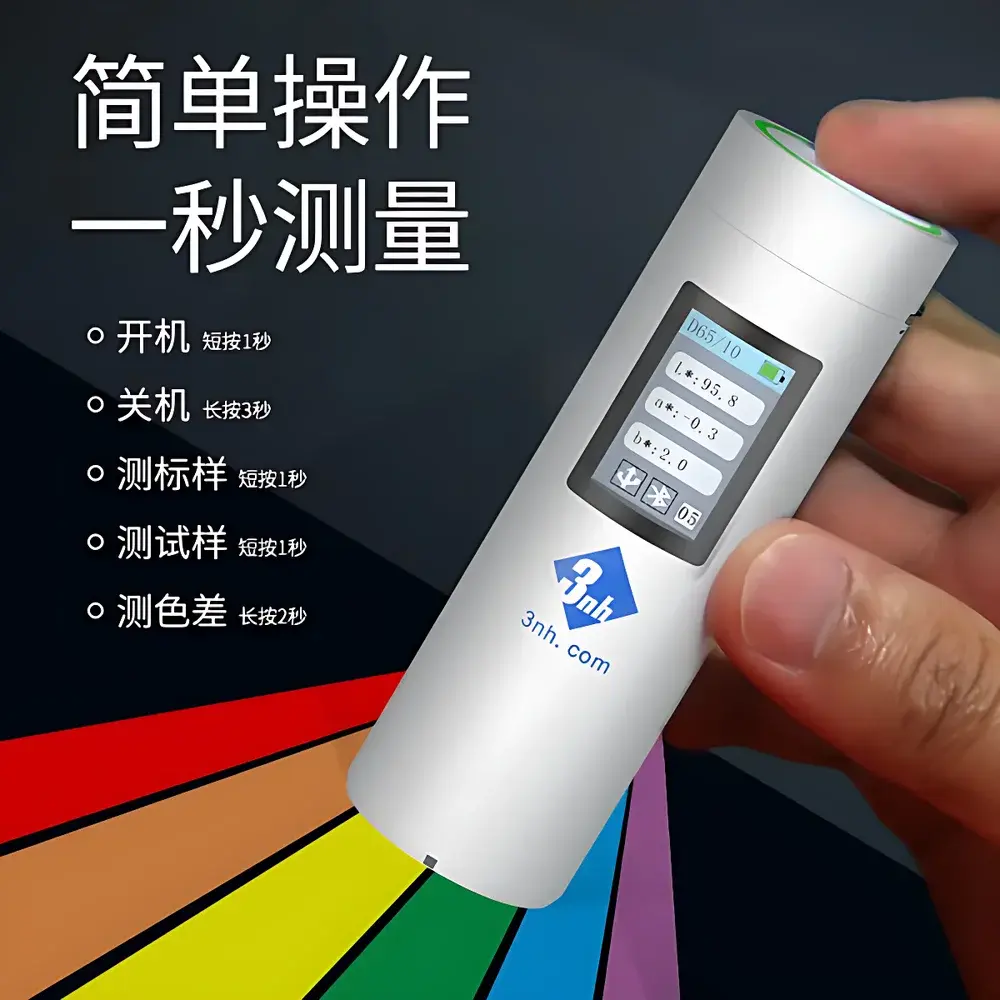
- Dual-Mode Operational Architecture: Functions as a fully autonomous colorimeter via its dedicated “Smart Button” interface—supporting independent calibration, measurement, data recall, and pass/fail evaluation without external devices.
- Non-Contact Auto-Calibration: Implements proprietary proximity-sensing technology to perform automatic white/black tile verification without physical contact, eliminating cross-contamination risk and preserving long-term reference stability—fully aligned with ISO 13655 and ASTM E308 requirements for reference integrity.
- Full-Spectrum Illumination & Dual-Path Detection: Utilizes broadband LED sources covering 400–700 nm and dual CMOS photodetectors within a Φ20 mm integrating sphere with high-reflectance barium sulfate coating, minimizing stray light and enhancing signal-to-noise ratio.
- High-Capacity Onboard Power System: Equipped with a rechargeable lithium-ion battery (Type-C interface) supporting up to 12,000 consecutive measurements per charge—validated under continuous use conditions per IEC 62368-1 safety guidelines.
- Multi-Illuminant & Multi-Observation Support: Configurable for 2° and 10° standard observer angles and 14 standardized illuminants—including D65 (daylight), TL84 (retail lighting), CWF (cool white fluorescent), and D50 (graphic arts)—enabling cross-industry color evaluation consistency.
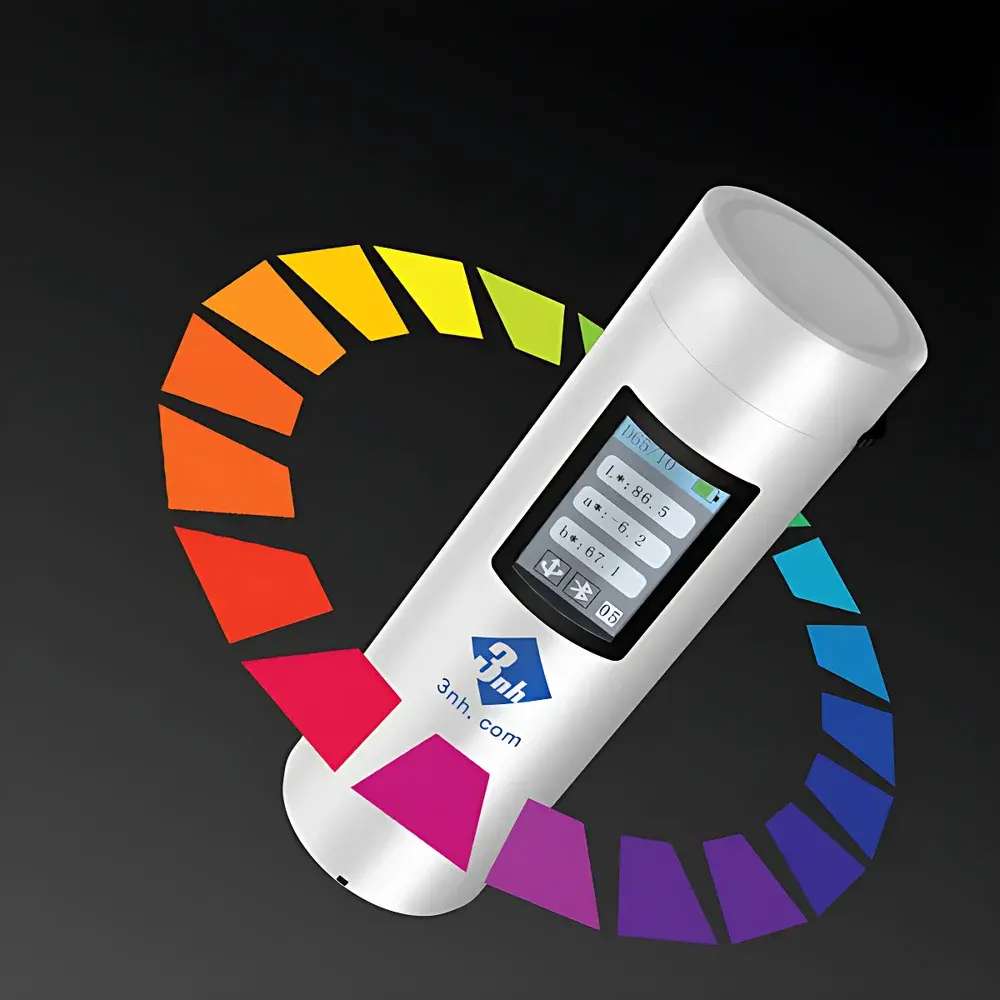
- Comprehensive Color Space & Difference Engine: Computes values in CIE LAB, XYZ, Yxy, LCh, CIE LUV, sRGB, Hunter Lab, βxy, and DIN Lab99, with nine industry-standard ΔE formulas including ΔE*00 (CIEDE2000), ΔE*cmc (1:1 & 2:1), and DIN ΔE99.
Sample Compatibility & Compliance
The CR3 is validated for non-destructive, surface-reflection measurements on flat or gently curved solid samples with aperture size Ø8 mm. It supports routine evaluation of pigmented polymers, solvent- and water-based coatings, woven and knitted fabrics, glazed ceramic tiles, and anodized metal finishes. Measurement repeatability (ΔE*ab ≤ 0.05) meets ISO 17999:2022 performance criteria for portable spectrophotometers used in QC labs and production lines. The device complies with electromagnetic compatibility standards EN 61326-1 and safety standard IEC 61010-1. Its optical design conforms to CIE Publication No. 15:2018 and GB/T 3978–2008 for geometric and photometric specifications. While not FDA 21 CFR Part 11–certified out-of-the-box, audit trails, user access logs, and electronic signature support are available through the SQCX PC software suite for GLP/GMP-aligned environments.
Software & Data Management
The CR3 integrates natively with two complementary software platforms: MOBCCS (mobile) and SQCX (desktop). MOBCCS enables real-time color capture, spectral curve overlay, pass/fail thresholding, color simulation, metamerism index (Mt) calculation, whiteness (WI) and yellowness (YI) indexing per ASTM E313/D1925, and Munsell C/2 conversion. Users can curate private cloud-hosted color libraries, conduct inter-sample comparisons across multiple standards (e.g., RAL, Pantone, NCS), and generate PDF reports with embedded spectral data. SQCX extends functionality with SPC charting, batch statistical analysis, tolerance zone mapping, and export to CSV, Excel, or XML formats compatible with enterprise QMS systems. Both platforms enforce role-based access control and maintain immutable measurement metadata (timestamp, operator ID, illuminant, observer, calibration status).
Applications
The CR3 serves as a primary color verification tool in OEM supplier qualification workflows, particularly where rapid on-site audits are required—such as automotive interior trim validation, consumer electronics housing matching, textile dye lot approval, architectural coating consistency checks, and ceramic glaze batch release. Its portability and smartphone integration reduce reliance on centralized lab instruments, shortening feedback loops between production floor and quality assurance. In R&D settings, it supports formulation iteration by quantifying small ΔE shifts during pigment dispersion optimization or UV-cure process development. Educational institutions utilize the CR3 for hands-on instruction in color science fundamentals, CIE colorimetry, and industrial metrology best practices.
FAQ
Does the CR3 require annual recalibration by an accredited lab?
No—its non-contact auto-calibration system maintains traceability to factory-set references; however, periodic verification against NIST-traceable standards (e.g., BCRA Series II tiles) is recommended every 6 months in regulated environments.
Can the CR3 measure transparent or translucent materials?
Not directly—it is designed for reflective mode only; transmission or haze measurements require accessory holders and are outside its specified operational scope.
Is spectral data export supported?
Yes—raw reflectance spectra (10 nm intervals, 400–700 nm) are exportable via MOBCCS and SQCX in .csv format for third-party analysis in MATLAB, Python, or commercial spectroscopy software.
What is the expected lifetime of the LED light source?
Rated for ≥3 million measurements or 5 years of typical industrial use, per IES LM-80 testing protocols—no user-replaceable lamp module is provided.
How does the CR3 handle ambient light interference during measurement?
Its synchronized pulsed illumination and time-gated detection suppress ambient contribution; measurements remain stable under typical indoor lighting (≤1000 lux), though direct sunlight exposure should be avoided per ISO 13655 Annex B guidance.





