
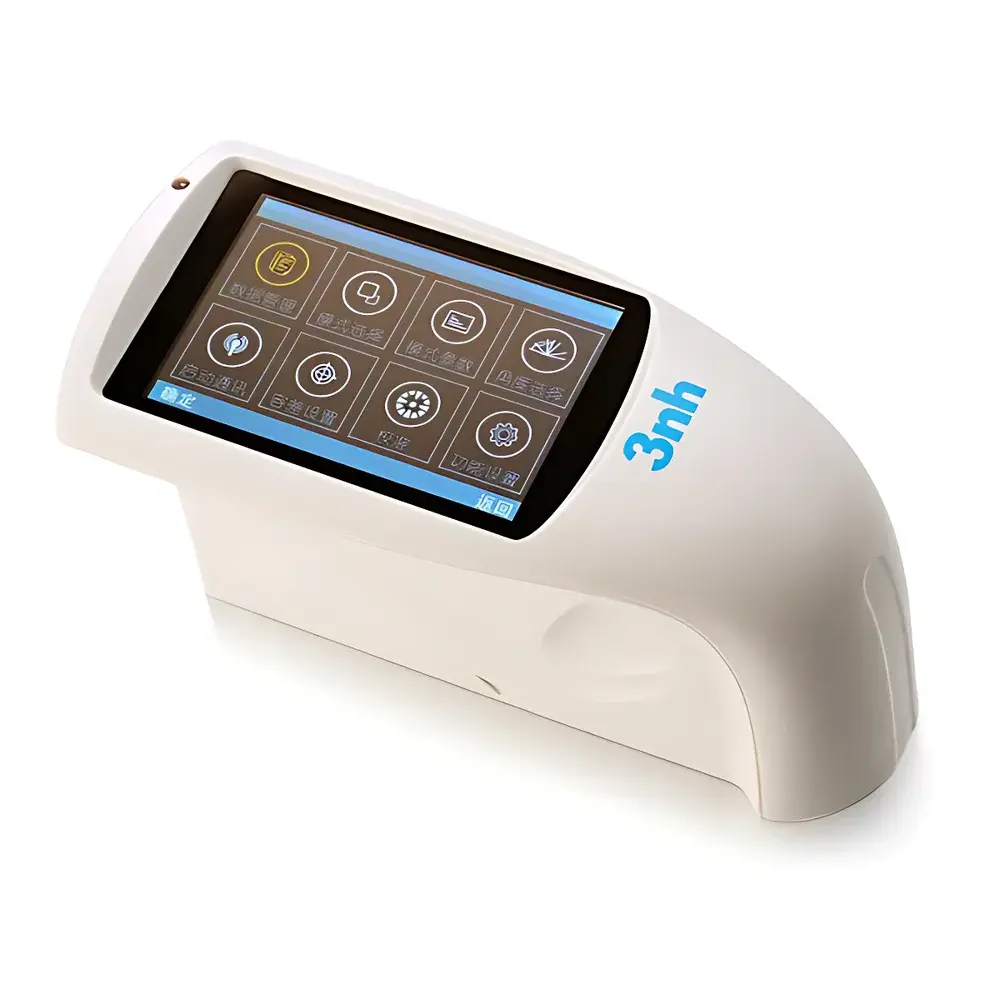
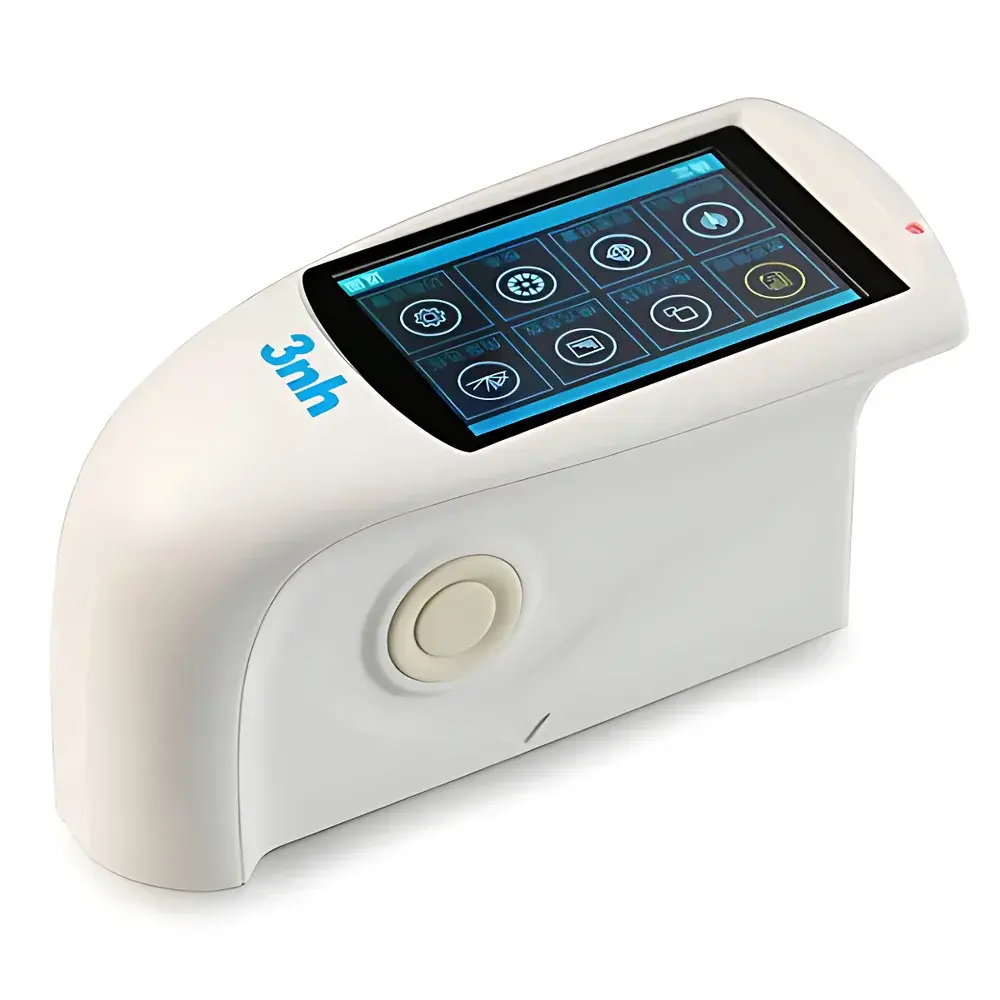
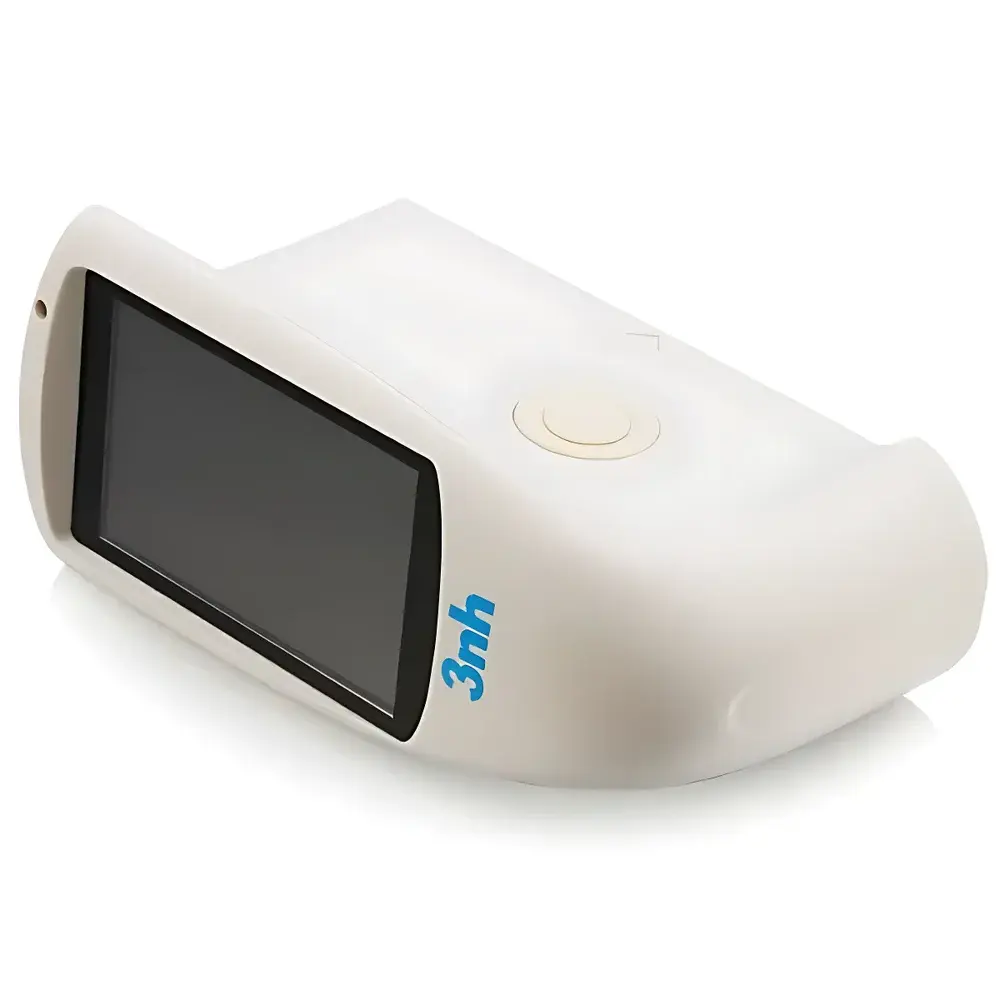
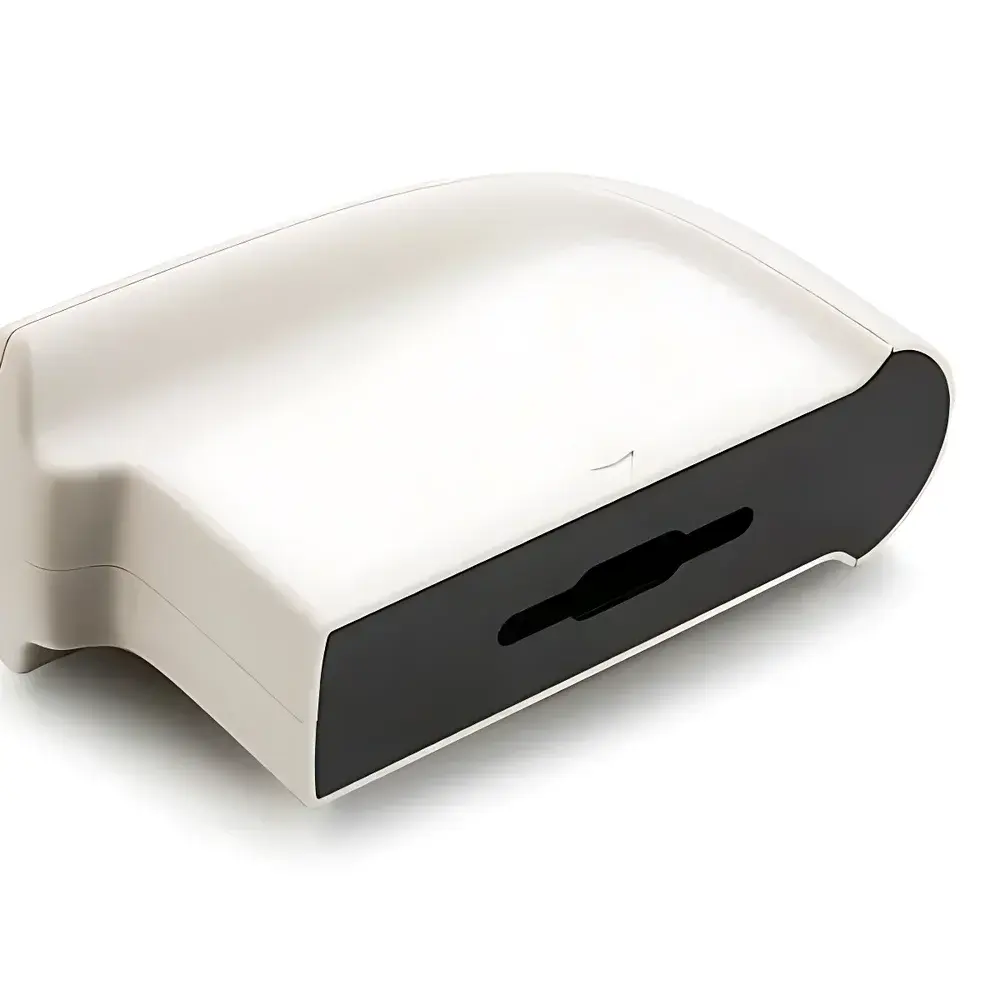
3nh NHG60 Gloss Meter for Stone, Ceramic & Plastic Surfaces
| Brand | 3nh |
|---|---|
| Origin | Shanghai, China |
| Manufacturer Type | Direct Manufacturer |
| Country of Origin | China |
| Model | NHG60 |
| Product Type | Manual Gloss Meter |
| Measurement Angle | 60° |
| Compliance | ISO 2813, GB/T 9754 |
| Display | Full-Touch LCD Interface |
| Power Supply | Rechargeable Internal Lithium Battery |
| Software Support | Dedicated PC-Based Data Management Software |
Overview
The 3nh NHG60 Gloss Meter is a precision optical instrument engineered for reliable, repeatable measurement of specular gloss on non-metallic, planar surfaces—including natural and engineered stone, glazed ceramics, thermoplastics, painted coatings, and laminated composites. Operating exclusively at the standardized 60° geometry per ISO 2813 and GB/T 9754, the NHG60 quantifies surface reflectance by comparing the intensity of light reflected at the specular angle to that of a calibrated black glass reference standard (defined as 100 GU). Its optical architecture employs a stabilized LED source, precision collimating optics, and a silicon photodiode detector with temperature-compensated signal processing—ensuring minimal drift across ambient operating conditions (10–40°C, <85% RH non-condensing). Unlike multi-angle gloss meters, the NHG60’s fixed 60° configuration optimizes sensitivity and resolution in the mid-gloss range (10–700 GU), where most architectural and industrial finish specifications are defined.
Key Features
- ISO 2813- and GB/T 9754-compliant 60° gloss measurement geometry with NIST-traceable calibration validation
- Full-touch capacitive LCD interface with intuitive icon-driven navigation and real-time statistical display (mean, min, max, SD)
- Integrated rechargeable lithium-ion battery supporting >12 hours of continuous operation without external power
- Rugged anodized aluminum housing rated IP52 for dust resistance and incidental moisture exposure
- Auto-zero function and built-in reference standard verification routine to ensure daily measurement integrity
- Zero maintenance optical path—no moving parts, no consumables, no alignment required during service life
Sample Compatibility & Compliance
The NHG60 is validated for use on flat or gently curved surfaces with radius ≥250 mm. It accommodates matte to high-gloss finishes on ceramic tiles, granite/marble slabs, PVC and ABS injection-molded parts, powder-coated metal substrates, and acrylic sheeting. Surface roughness must remain below Ra 0.8 µm to avoid diffuse scattering artifacts. The instrument meets CE marking requirements under the EU Measuring Instruments Directive (MID) Annex MI-001 for non-automatic weighing and optical measuring instruments. While not certified for pharmaceutical GMP environments, its data export protocol and software audit trail support GLP-aligned quality documentation workflows when used in QC labs for ASTM C1524 (ceramic tile gloss), ISO 1382 (plastic surface appearance), and EN 14411 (ceramic floor/wall tile classification).
Software & Data Management
The included PC-based application (Windows 10/11 compatible) enables full traceability and structured reporting. Users can configure test templates with pass/fail thresholds, assign sample IDs and batch metadata, and generate PDF or CSV reports compliant with internal QA documentation standards. All measurement sessions are time-stamped and logged with operator ID (via optional Windows login integration). The software supports FDA 21 CFR Part 11–aligned features including electronic signatures, audit trail export (with immutable timestamps), and user role-based access control (Admin, Operator, Viewer). Raw data files retain original sensor output, allowing retrospective recalibration or reprocessing if reference standard values are updated.
Applications
- QC inspection of polished stone slabs prior to shipment—verifying consistency against architectural specification limits (e.g., ASTM C627 “Dynamic Coefficient of Friction” gloss correlation)
- In-line gloss verification of extruded plastic profiles and injection-molded automotive interior trim components
- Batch-to-batch comparison of ceramic glaze firing results in kiln process optimization studies
- Supplier qualification audits where gloss uniformity across large-format tiles is contractually mandated
- R&D evaluation of anti-glare surface treatments on acrylic signage and display enclosures
FAQ
What is the measurement range and resolution of the NHG60?
The NHG60 measures gloss units (GU) from 0 to 1000 GU with 0.1 GU resolution. Its optimal repeatability (σ ≤ 0.2 GU) is validated within the 10–700 GU range per ISO 2813 Annex B.
Does the NHG60 require annual recalibration?
While no mandatory annual recalibration is stipulated, users must perform daily verification using the supplied black glass standard before critical measurements. Full recalibration by an accredited metrology lab is recommended every 12 months or after physical impact.
Can the NHG60 measure curved surfaces?
It is designed for flat or low-curvature surfaces (radius ≥250 mm). Measurements on tighter radii introduce geometric error due to beam divergence and should be avoided unless validated per ASTM D523 Annex A3.
Is the software compatible with LIMS systems?
Yes—the software exports .CSV files with column headers aligned to common LIMS ingestion schemas (e.g., Sample_ID, Test_Date, Operator, Avg_Gloss, Std_Dev). Custom API integration is available upon request.
What environmental conditions affect measurement accuracy?
Ambient temperature fluctuations >2°C/min or relative humidity >85% may induce thermal lensing in the optical path. Stable lab conditions (23±2°C, 50±5% RH) are recommended for metrological-grade work.



