
3nh NR60CP Portable Color Difference Meter for Printing Ink Measurement
| Brand | 3nh |
|---|---|
| Origin | Guangdong, China |
| Manufacturer | Yes |
| Country of Origin | China |
| Model | NR60CP |
| Product Type | Color Difference Meter |
| Instrument Type | Portable |
| Optical Geometry | 8°/diffuse (8/d) |
| Light Source | LED |
| Spectral Range | 360–750 nm |
| Repeatability | ΔE*ab ≤ 0.05 |
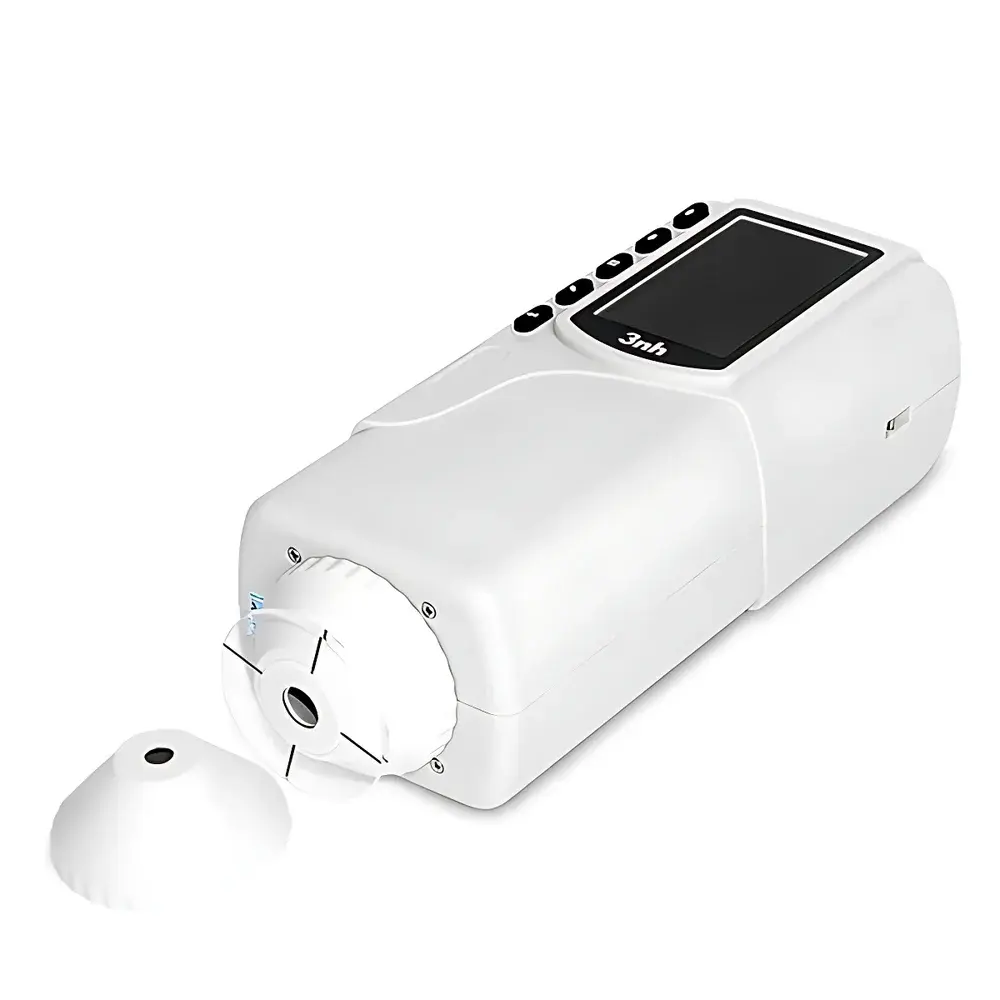
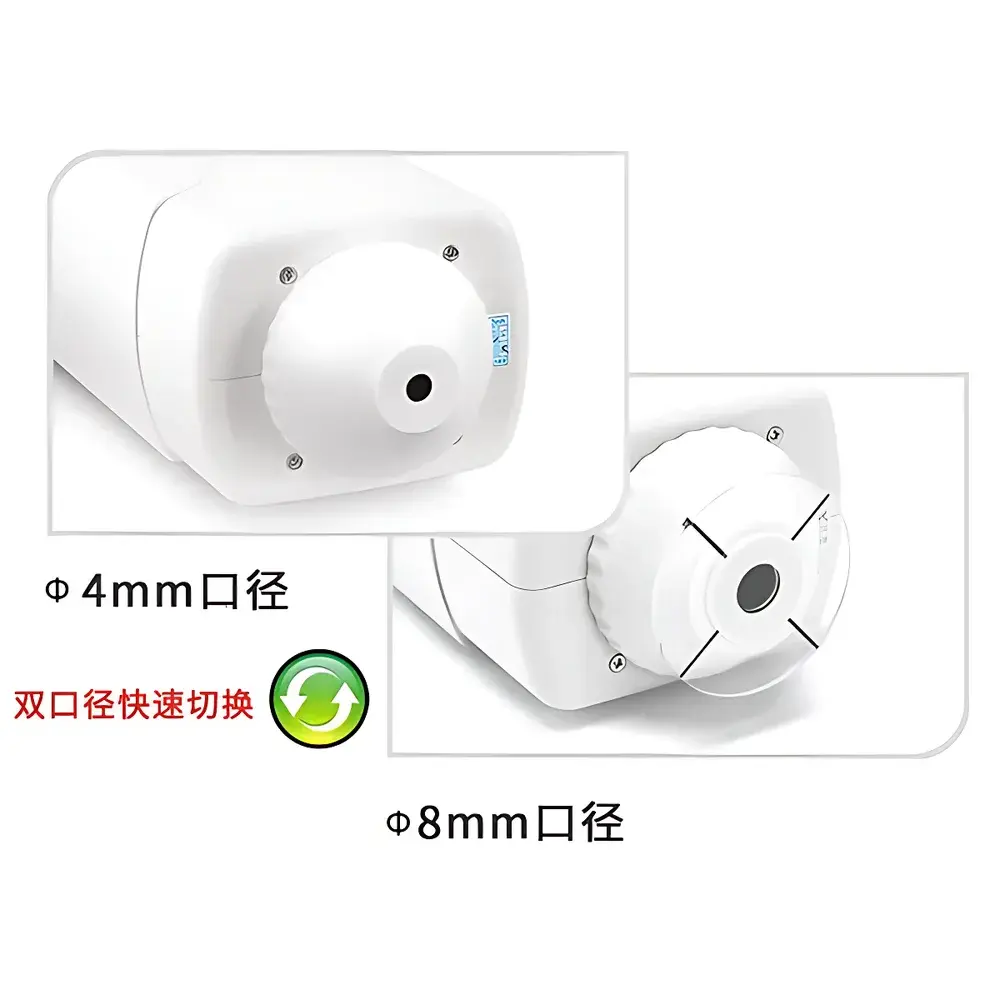
| Apertures | Φ8 mm & Φ4 mm selectable |
| Calibration Standard | NIST-traceable white tile included |
| Battery | Rechargeable Li-ion, high-capacity |
| Measurement Stability | Enhanced via optimized integrating sphere design |
| Compliance | Meets JJG 595–2019 (Chinese National Verification Regulation for Colorimeters) |
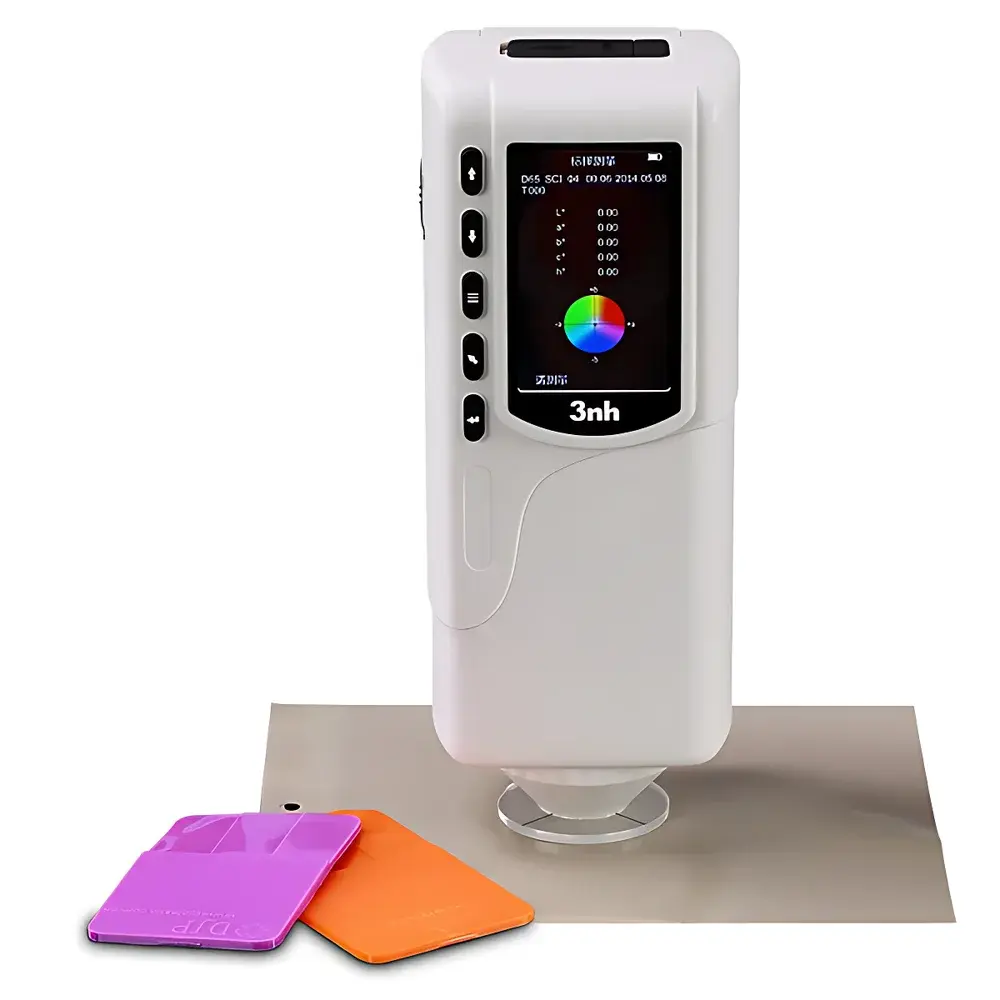
| Color Spaces | CIE LAB, LCH, RGB, XYZ, Yxy, Hunter Lab |
| Color Indices | ΔE*ab, ΔE*cmc, ΔE*94, ΔE*00, ΔE(Hunter), WI (ASTM E313), YI (ASTM D1925 & ASTM E313), ISO Brightness, Tint, Saturation, etc. |
Overview
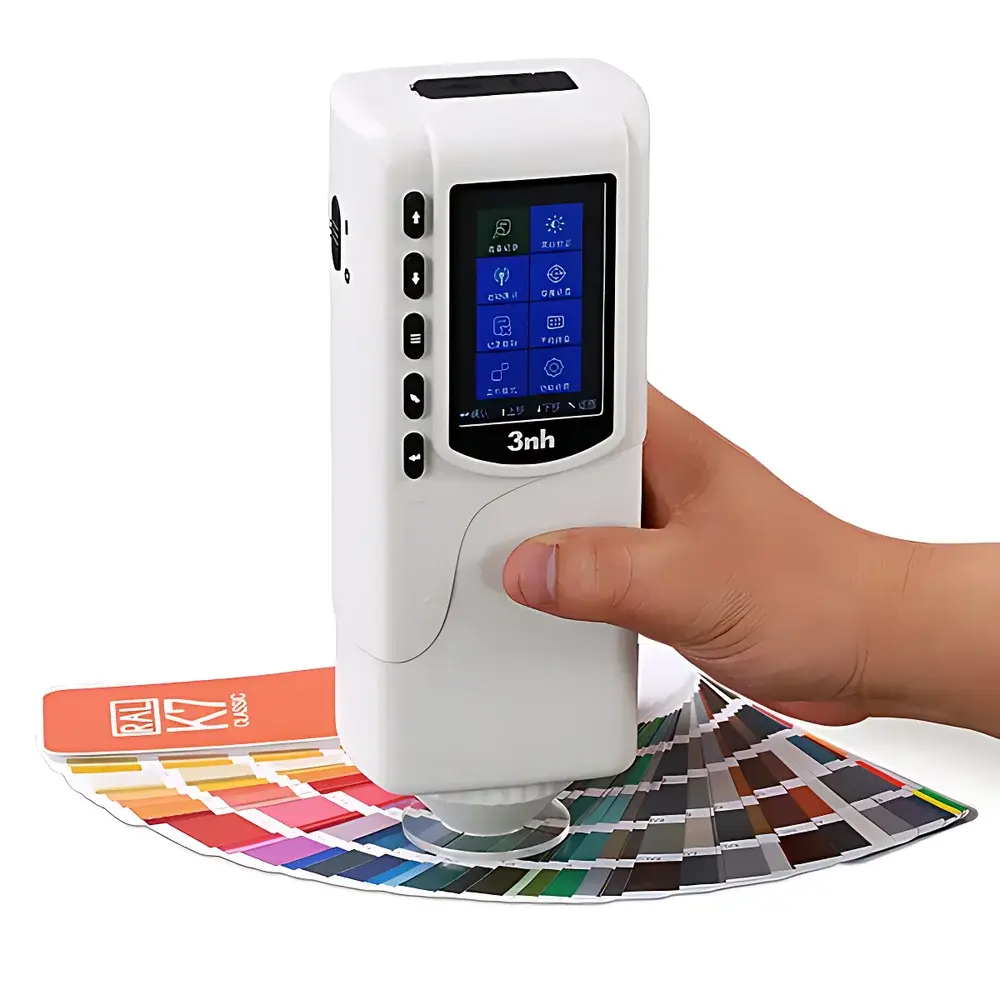
The 3nh NR60CP Portable Color Difference Meter is an industrial-grade spectrophotometric instrument engineered for precise color measurement and quality control in printing, ink formulation, packaging, and prepress environments. Operating on the CIE 8°/diffuse (8/d) optical geometry with a d/8° illuminant configuration—compliant with ISO 7724-1, CIE No. 15, and ASTM E308—the NR60CP captures reflectance spectra across the visible spectrum (360–750 nm) using a stable, long-life LED light source. Its core functionality centers on quantifying color differences (ΔE) in standardized color spaces, particularly CIE L*a*b*, enabling objective pass/fail decisions against master standards. Designed for field and production-floor deployment, the NR60CP delivers laboratory-grade repeatability (ΔE*ab ≤ 0.05) validated under JJG 595–2019—the national metrological verification regulation for colorimeters in China—ensuring traceability to national standards through its integrated NIST-traceable ceramic white calibration tile.
Key Features
- Dual-aperture capability: Switch seamlessly between Φ8 mm (standard for large-area uniform surfaces) and Φ4 mm (optimized for small features, recessed areas, or fine-print registration marks) without hardware replacement.
- Enhanced optical stability: A redesigned integrating sphere with high-reflectance BaSO₄ coating minimizes stray light and thermal drift, improving signal-to-noise ratio and long-term measurement consistency.
- Multi-mode targeting system: Combines simultaneous visible illumination guidance and crosshair reticle projection for unambiguous sample positioning—critical for repeatable measurements on textured, glossy, or low-contrast ink films.
- Onboard calibration management: Stores user-defined white reference values and supports physical white tile recalibration at any time; factory white calibration data is embedded and accessible via software.
- Extended operational autonomy: High-capacity rechargeable lithium-ion battery supports >5,000 measurements per full charge, with USB-C charging and real-time battery status indication.
- Full-spectrum color evaluation: Computes over 15 industry-standard color metrics—including ΔE*ab, ΔE*00 (CIEDE2000), WI (ASTM E313), YI (ASTM D1925), and ISO brightness—directly on-device without external software dependency.
Sample Compatibility & Compliance
The NR60CP accommodates a broad range of printed substrates and ink systems, including offset, gravure, flexographic, and digital inks applied on paper, cardboard, PET, PVC, and metallic foils. Its dual-aperture design ensures reliable measurement on both flat macro-surfaces and micro-features such as halftone dots, barcodes, or spot colors within tight tolerances. The instrument complies with key international and regional standards governing color measurement instrumentation: ISO 7724-1 (colorimetry fundamentals), ISO 13655 (spectral measurement of printed materials), and JJG 595–2019 (metrological verification requirements). While not FDA 21 CFR Part 11–certified out-of-the-box, audit trails and user-access logs can be exported for internal GLP/GMP documentation workflows when paired with 3nh’s optional ColorExpert software.
Software & Data Management
The NR60CP interfaces natively with 3nh’s ColorExpert PC software (Windows only) via USB or Bluetooth. This platform enables advanced data visualization, statistical process control (SPC) charting (X-bar/R, Cp/Cpk), batch comparison reports, and spectral curve overlay analysis. All measurement records include timestamp, operator ID (assignable), aperture selection, illuminant/observer condition (e.g., D65/10°), and full spectral reflectance data (10-nm intervals). Export formats include CSV, Excel, PDF, and XML—facilitating integration into LIMS or enterprise QA databases. Firmware updates are delivered via software, ensuring continued alignment with evolving color science guidelines and regulatory expectations.
Applications
- Real-time ink formulation validation during R&D and pilot-scale production.
- In-line color verification prior to press start-up and during extended print runs.
- Supplier qualification and incoming material inspection of coated papers and specialty inks.
- Color deviation root-cause analysis—correlating ΔE shifts with substrate absorption, drying conditions, or fountain solution pH.
- Documentation of color conformance for ISO 12647-2 (process control for offset lithography) and GRACoL/SWOP certification audits.
- Calibration transfer between master proofing devices (e.g., Epson SureColor printers) and production presses.
FAQ
What does “8/d” optical geometry mean, and why is it preferred for printed materials?
The 8°/diffuse geometry illuminates the sample at 8° from the normal axis while collecting diffusely reflected light over a hemispherical solid angle. This configuration minimizes directional gloss influence and provides robustness against surface texture variations common in printed substrates.
Is the NR60CP suitable for measuring metallic or pearlescent inks?
While capable of capturing spectral reflectance, the NR60CP does not support multi-angle measurement (e.g., goniospectrophotometry); thus, it reports average color appearance under D65/10° but cannot resolve flip-flop or sparkle effects inherent to effect pigments.
How often should the instrument be calibrated?
Daily verification against the supplied white tile is recommended before critical measurements; full recalibration (including black trap verification) is advised weekly or after exposure to temperature/humidity extremes.
Can measurement data be synchronized across multiple NR60CP units in a facility?
Yes—ColorExpert supports centralized database configuration, allowing standardized master references, tolerance sets, and report templates to be deployed uniformly across all connected instruments.
Does the device meet international metrological traceability requirements?
Its built-in white calibration tile is certified to NIST-traceable standards; final traceability documentation (including uncertainty budget) is provided upon request for ISO/IEC 17025-accredited laboratories.




