
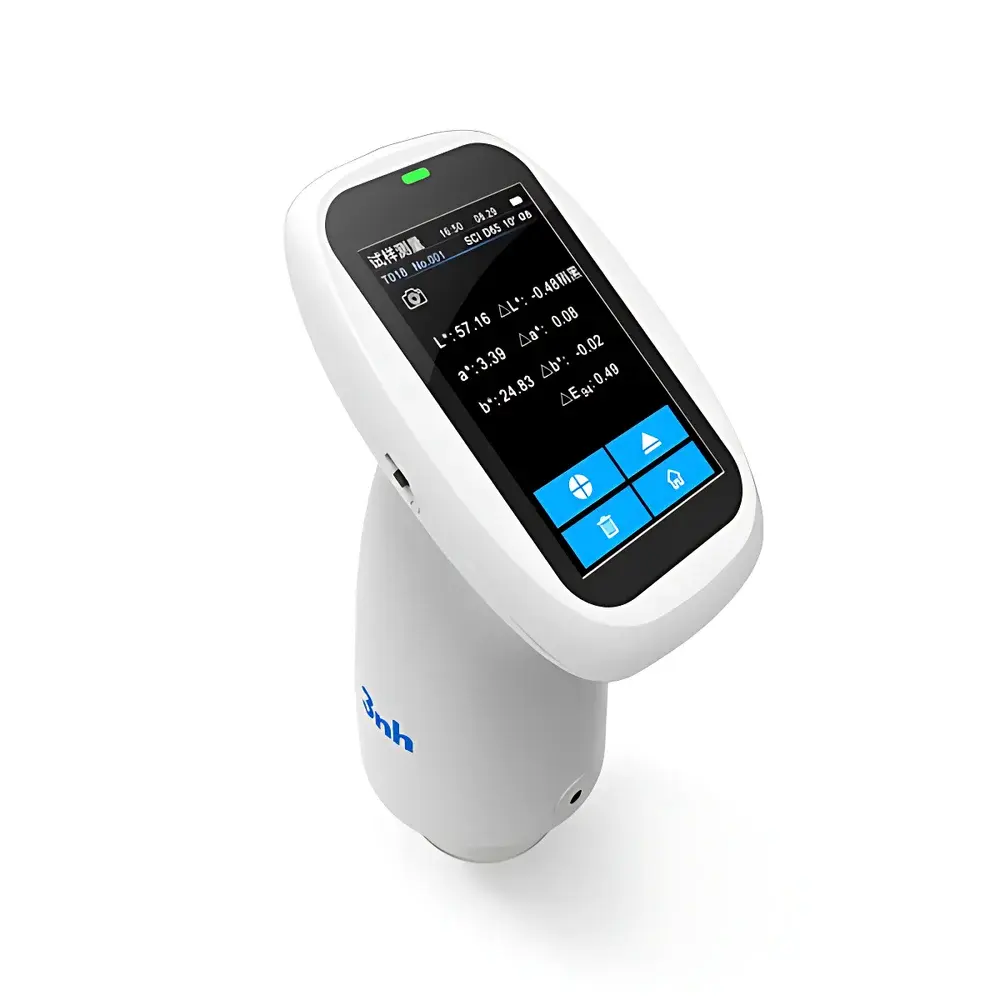
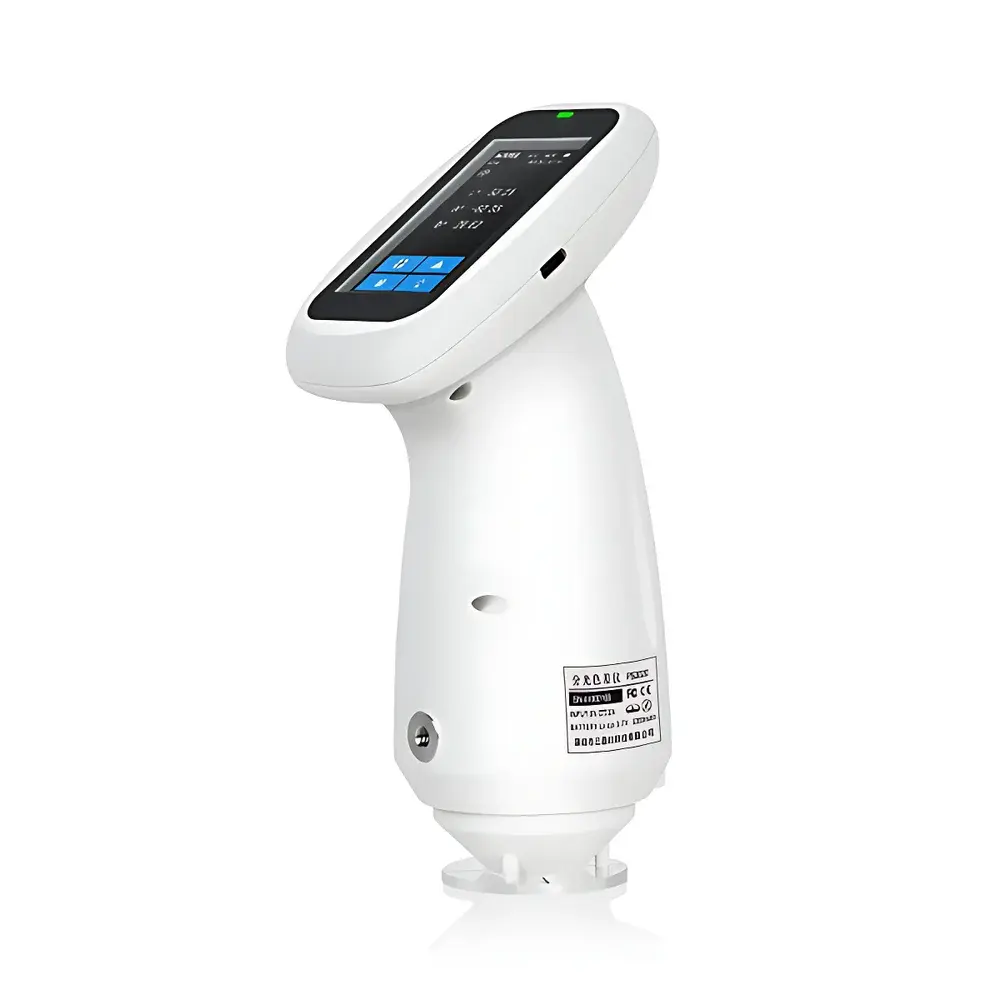
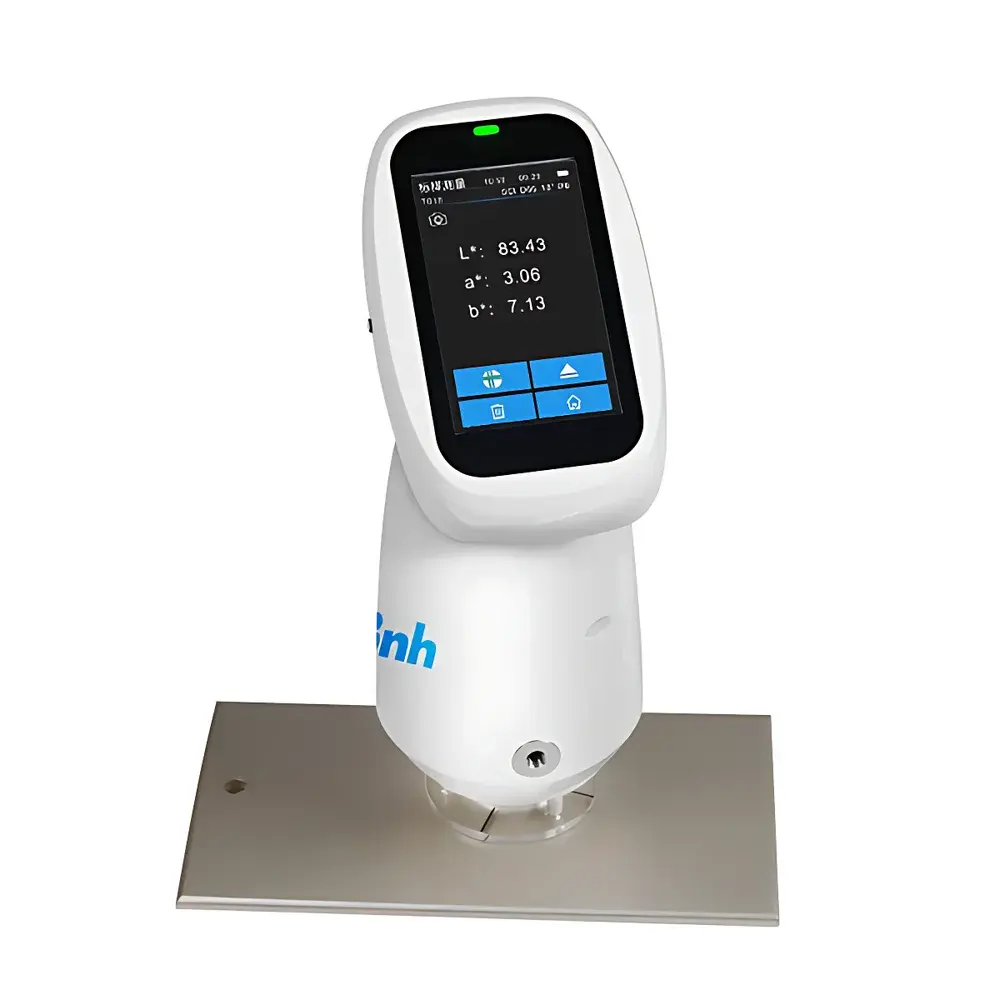
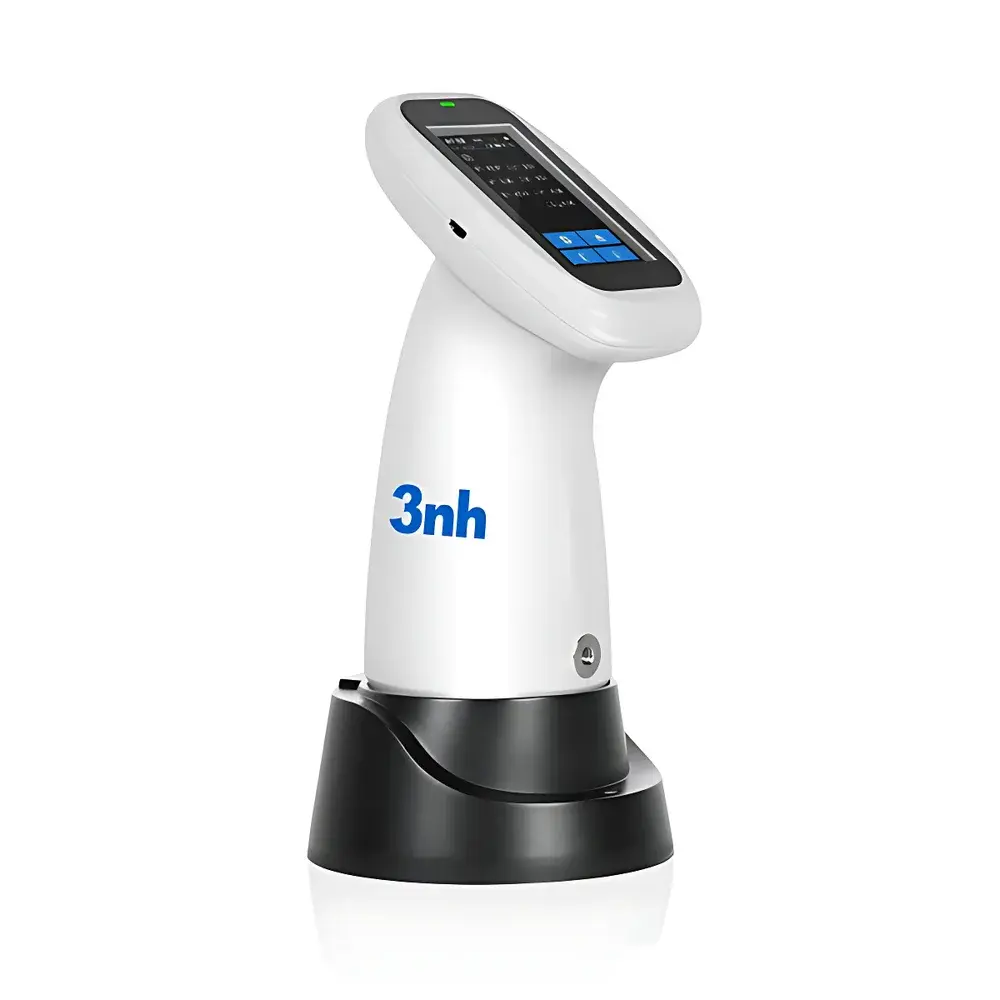
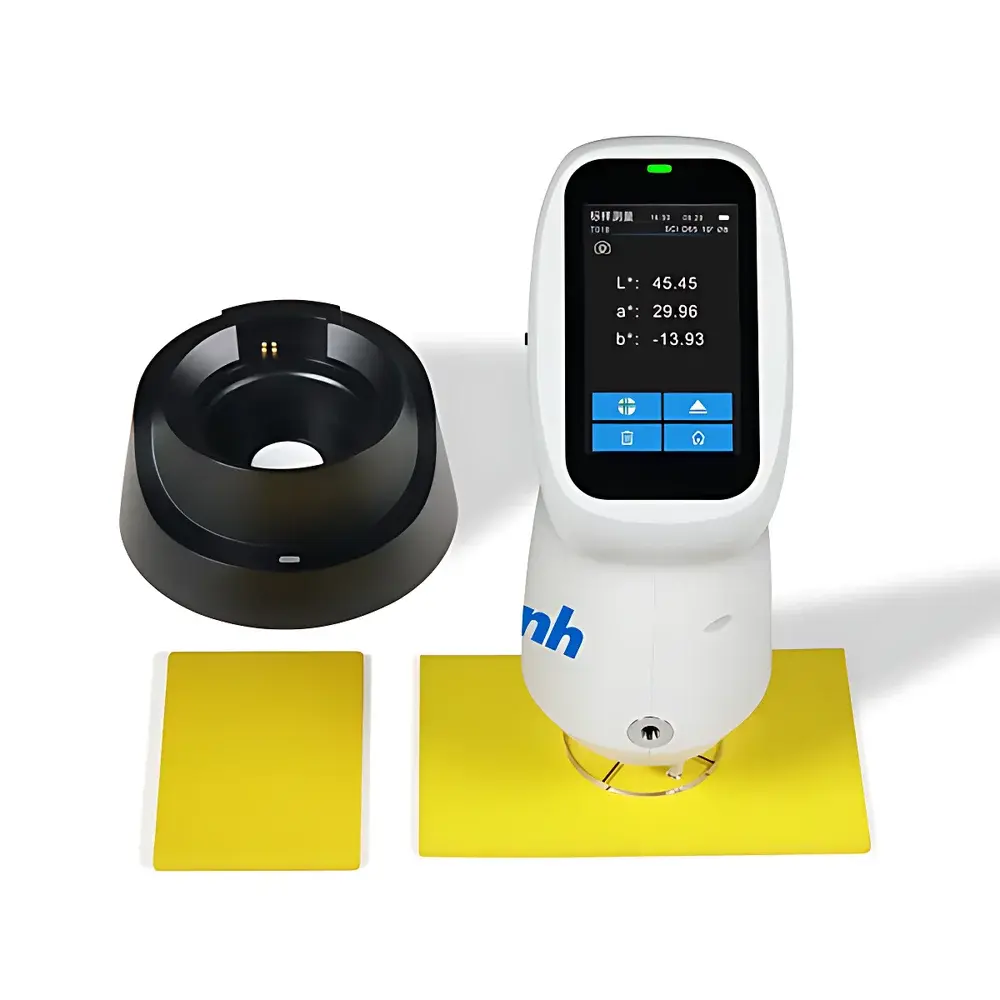
3nh PS2020 Portable High-Precision Spectrophotometric Colorimeter
| Brand | 3nh |
|---|---|
| Origin | Guangdong, China |
| Manufacturer Type | Direct Manufacturer |
| Product Category | Domestic |
| Model | PS2020 |
| Instrument Type | Portable |
| Optical Geometry | d/8° integrating sphere |
| Light Source | Full-spectrum LED array |
| Spectral Range | 400–700 nm |
| Repeatability | ΔE*ab ≤ 0.04 (SD, after warm-up and calibration, 30 measurements of standard white tile at 5 s intervals) |
Overview
The 3nh PS2020 Portable High-Precision Spectrophotometric Colorimeter is an ISO/IEC 17025-aligned, CIE-compliant benchtop-grade spectrophotometer engineered for field-deployable color measurement with laboratory-grade reproducibility. It operates on the fundamental principle of diffuse illumination at 8° viewing angle (d/8° geometry), conforming to CIE Publication No. 15, ISO 7724-1, ASTM E1164, DIN 5033-7, and GB/T 3978. The instrument employs dual-path CMOS spectral sensor architecture to capture full reflectance spectra across the visible range (400–700 nm) with high photometric linearity and low stray light. Its d/8° optical design supports both SCI (Specular Component Included) and SCE (Specular Component Excluded) measurement modes—enabling precise distinction between surface texture effects and intrinsic pigment properties. This capability is essential for quality control in industries where appearance consistency must be decoupled from gloss or surface finish variations, such as automotive coatings, plastic injection molding, textile dyeing, and packaging printing.
Key Features
- Full-spectrum LED illumination system (400–700 nm) with uniform spectral power distribution—eliminates gaps common in narrow-band white LEDs and ensures accurate characterization of fluorescent and optically brightened materials.
- Dual-channel CMOS spectrometer with integrated thermal stabilization—delivers rapid spectral acquisition (<1 s per measurement) and minimizes drift during extended operation.
- Φ4 mm fixed aperture (with optional Φ5 mm platform port) optimized for small-area sampling on curved, textured, or heterogeneous surfaces including molded plastics, printed labels, and woven fabrics.
- Motorized contact-based auto-calibration base with NIST-traceable ceramic white tile (R ≥ 95% across 400–700 nm)—ensures long-term stability and eliminates manual alignment errors.
- Comprehensive metrological validation: Each unit ships with a factory-issued calibration certificate traceable to China National Institute of Metrology (NIM), supporting GLP/GMP audit readiness and ISO 9001 compliance documentation.
- Ergonomic handheld form factor (94 × 68 × 188 mm; 270 g) with capacitive 2.8″ TFT display and intuitive touch interface—designed for >4-hour continuous use in production line environments.
Sample Compatibility & Compliance
The PS2020 accommodates solid, opaque, and semi-opaque samples across diverse industrial substrates—including thermoplastics (ABS, PC, PP), solvent-based and waterborne paints, cotton/polyester blends, ceramic glazes, and metallized films. Its d/8° geometry meets ASTM D2244 (color difference calculation), ASTM D313 (whiteness index), ASTM D1925 (yellowness index), and AATCC Evaluation Procedure 1 (colorfastness assessment). For regulatory workflows, the instrument supports FDA 21 CFR Part 11–compliant data integrity when used with SQCX software (audit trail, electronic signatures, role-based access). All spectral data are stored with embedded metadata (observer angle, illuminant, geometry, date/time, operator ID), satisfying ISO/IEC 17025 clause 7.5.2 on result reporting.
Software & Data Management
The bundled SQCX Quality Control Software (Windows-compatible, downloadable from 3nh official portal) provides full traceability across the color management lifecycle. It enables batch comparison against master standards, statistical process control (SPC) charting of ΔE*ab trends, pass/fail threshold configuration per product line, and automated PDF report generation compliant with internal QA templates or customer-specific formats (e.g., IATF 16949 PPAP submissions). Raw spectral curves (.spc), CIE XYZ tristimulus values, and derived indices (WI, YI, Mt, CMC ratios) are exportable in CSV, XML, or Excel. Cloud synchronization is not supported; all data reside locally or on designated network drives to maintain data sovereignty—critical for regulated manufacturing sites in EU and North America.
Applications
- Plastics & Electronics: In-line verification of injection-molded housings, PCB solder mask color, and display bezel finishes under D65 and TL84 illuminants.
- Paints & Coatings: Batch-to-batch consistency checks for automotive OEM refinish systems, architectural coatings, and coil coating lines using DIN 99 and CIEDE2000 tolerancing.
- Textiles & Apparel: Shade matching of dyed yarns and finished garments across multiple observers (2°/10°) and illuminants (D65, A, F2, U30) to assess metamerism risk.
- Printing & Packaging: Spot color verification on flexographic and offset-printed cartons, including spot varnish and foil stamping layers.
- Ceramics & Tiles: Glaze color uniformity monitoring across kiln batches using L*a*b* delta evaluation and Munsell C/2 conversion via mobile companion app.
FAQ
Is the PS2020 compliant with international color measurement standards?
Yes—it conforms to CIE No. 15, ISO 7724-1, ASTM E1164, DIN 5033-7, and GB/T 3978, with optical geometry and spectral response validated per these specifications.
What is the maximum allowable inter-instrument agreement (IIA) for multi-unit deployments?
Typical inter-instrument agreement is ΔE*ab ≤ 0.4 (average across BCRA Series II 12-color tile set under MAV/SCI mode), meeting industry requirements for cross-site color harmonization.
Can the device measure fluorescent or optically brightened samples accurately?
Yes—the full-spectrum LED source provides balanced irradiance across 400–700 nm, enabling reliable quantification of fluorescence excitation and emission without spectral truncation artifacts.
Does the instrument support FDA 21 CFR Part 11 compliance?
When used with SQCX software configured with audit trail logging, user authentication, and electronic signature protocols, it satisfies key technical controls for regulated environments.
How often must the white calibration tile be replaced or re-certified?
The included NIM-traceable ceramic tile is rated for ≥100,000 measurements; annual recalibration by an accredited lab is recommended for GMP-critical applications.




