
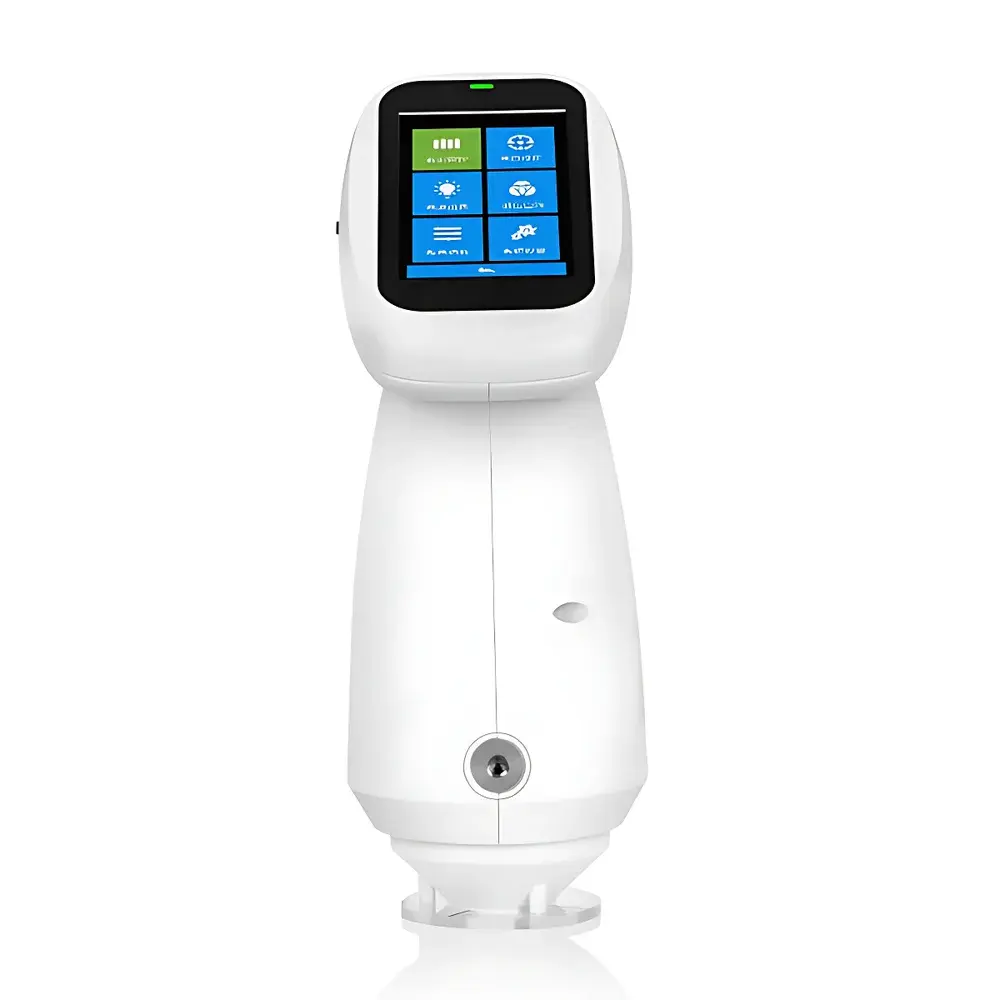
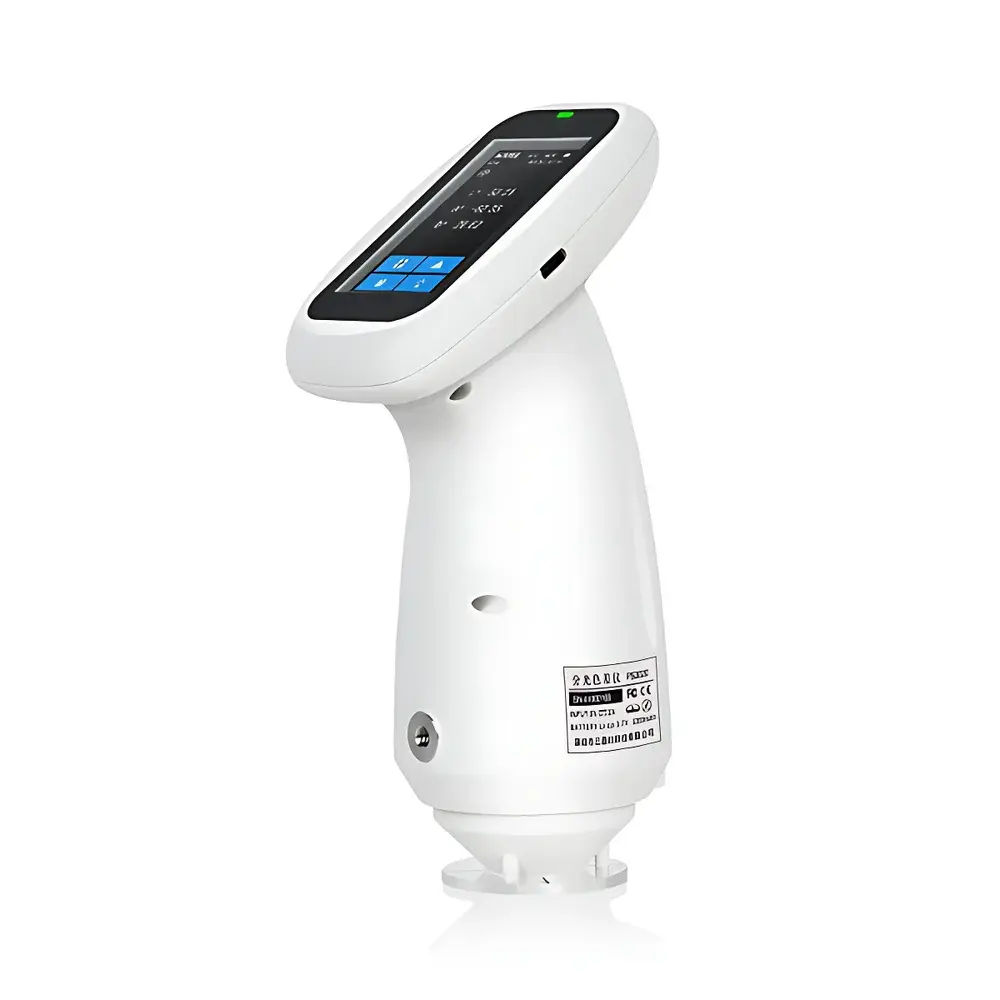
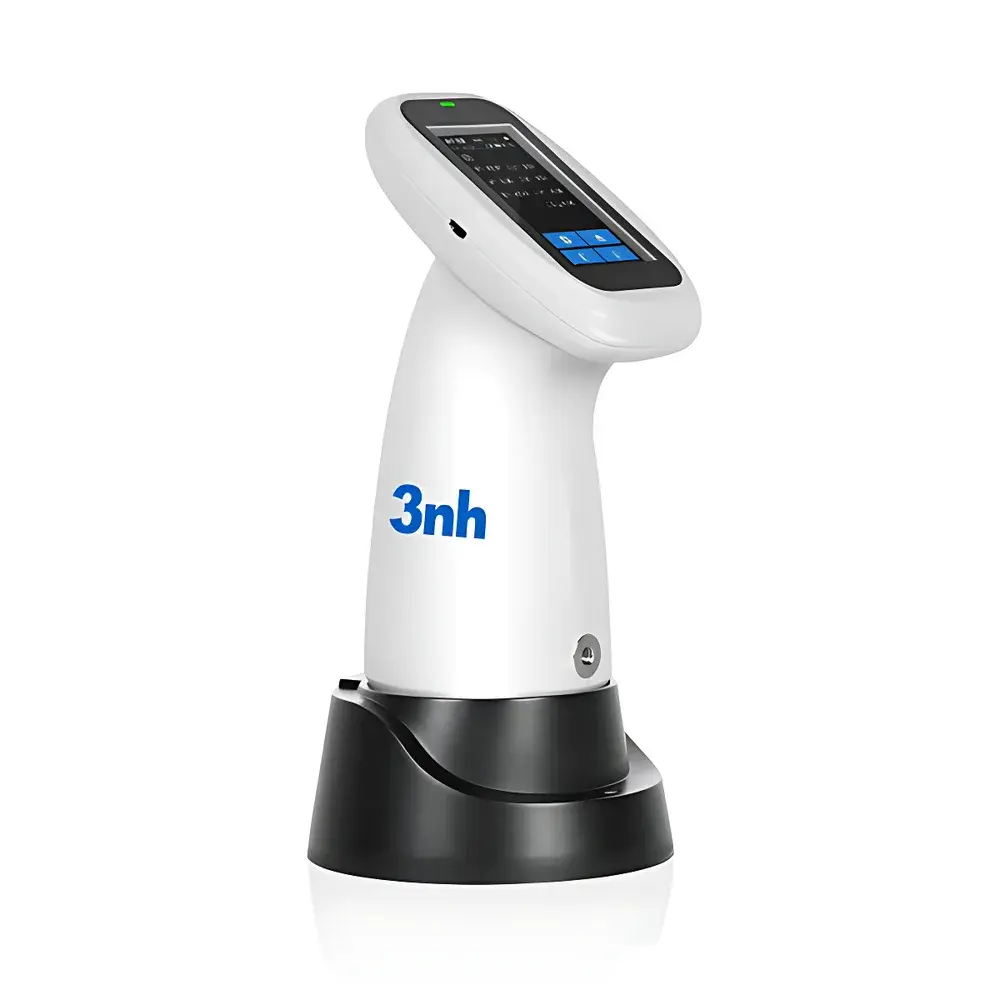
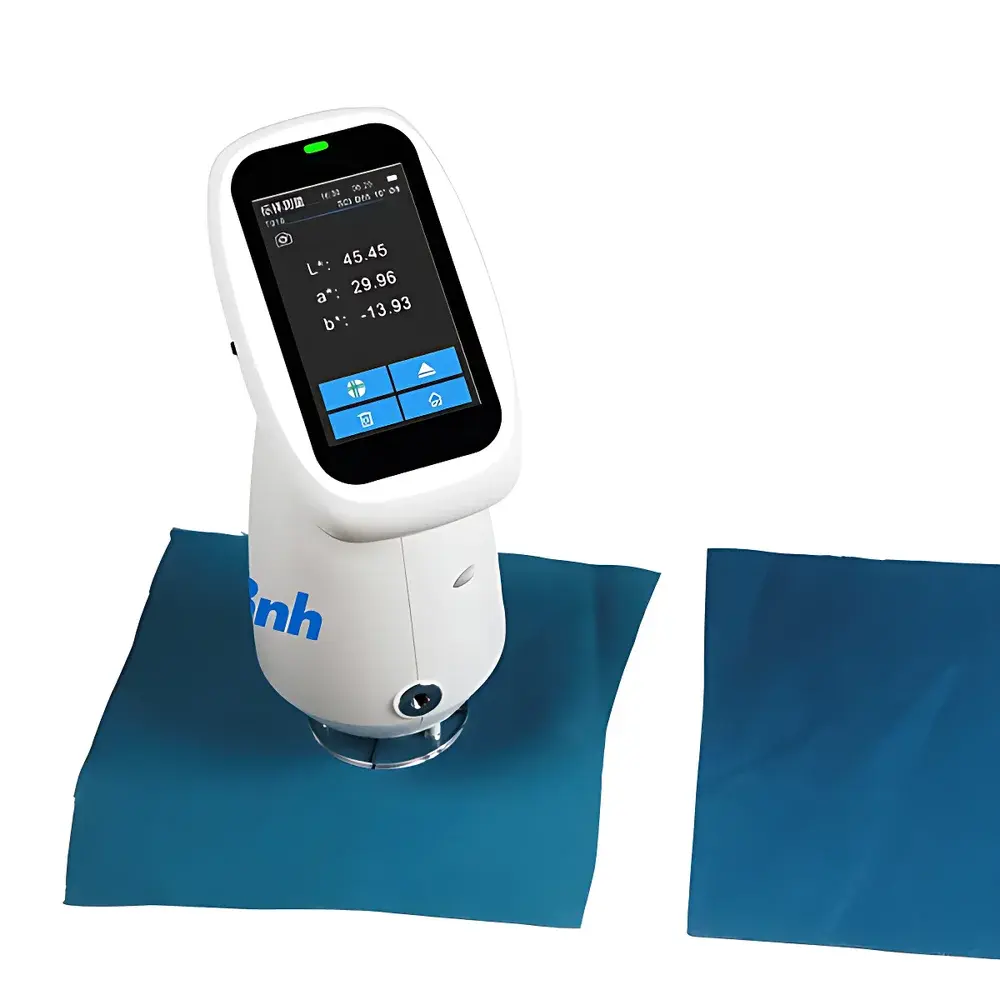
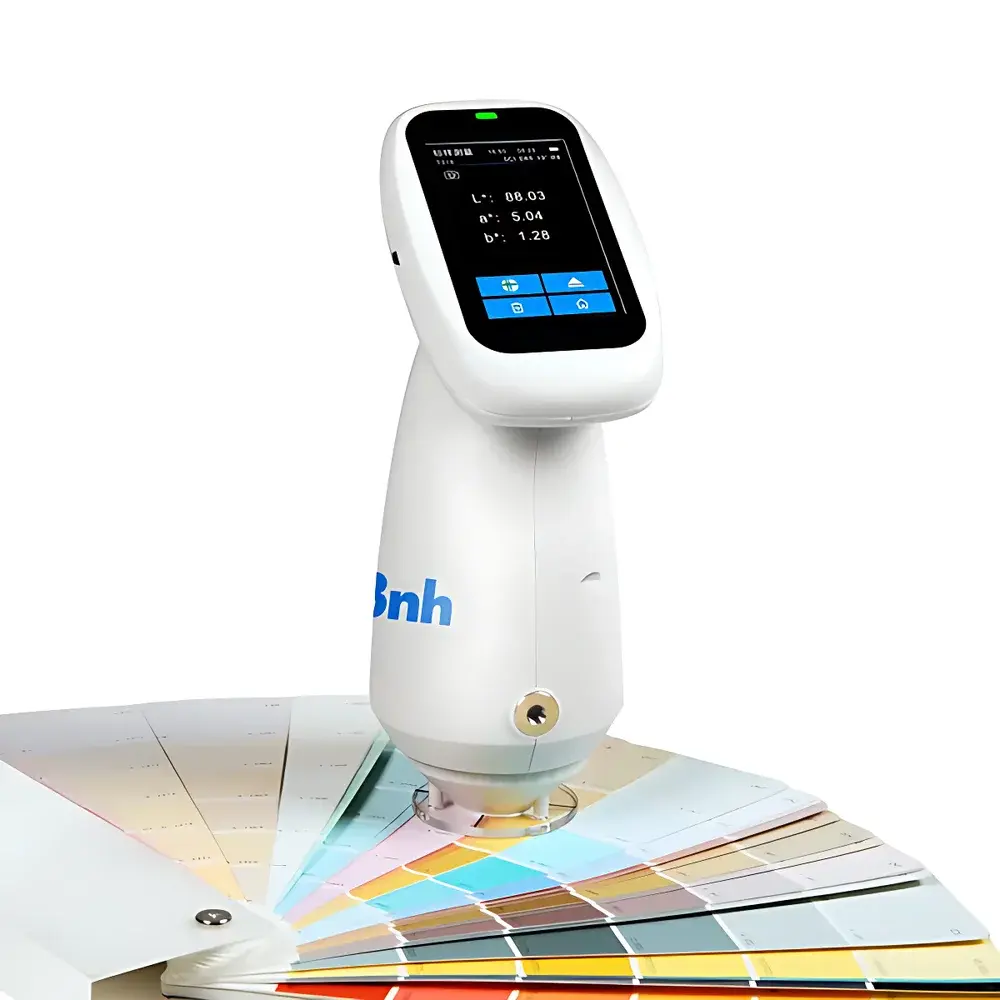
3nh PS2060 Handheld Spectrophotometric Colorimeter
| Brand | 3nh |
|---|---|
| Origin | Guangdong, China |
| Manufacturer Type | Manufacturer |
| Product Category | Domestic |
| Model | PS2060 |
| Product Type | Spectrophotometric Colorimeter |
| Instrument Type | Portable |
| Optical Geometry | d/8° integrating sphere |
| Light Source | Full-spectrum LED + UV LED |
| Spectral Range | 400–700 nm |
| Repeatability | ΔE*ab ≤ 0.03 (std dev, MAV/SCI, after warm-up and calibration, 30 measurements of white tile at 5 s intervals) |
Overview
The 3nh PS2060 Handheld Spectrophotometric Colorimeter is an ISO/IEC 17025-aligned portable color measurement instrument engineered for high-precision spectral reflectance analysis in industrial quality control environments. It operates on the CIE-compliant d/8° geometry with integrated SCI (Specular Component Included) and SCE (Specular Component Excluded) modes—enabling consistent evaluation of both diffuse and surface-reflected color components across textured, glossy, and matte substrates. Its core optical architecture employs a dual-channel CMOS spectrometer coupled with a 40 mm diameter integrating sphere, ensuring stable photon capture and minimized stray light interference. The instrument’s full-spectrum LED illumination (400–700 nm), augmented by a dedicated UV channel (365 nm peak), satisfies ASTM E308, ISO 7724-1, CIE No. 15, GB/T 3978, and DIN 5033 Teil 7 requirements for spectral colorimetry—including quantitative assessment of fluorescent enhancement in pigments, coatings, and optical brighteners.
Key Features
- Dual-mode optical path: Simultaneous SCI/SCE measurement in a single press—eliminating manual mode switching and reducing operator-induced variability.
- Triple-aperture system: Interchangeable measurement ports—MAV (Φ8 mm / Φ10 mm flat port), SAV (Φ4 mm / Φ5 mm flat port), and SSAV (1×3 mm tapered tip)—supporting precise targeting on curved surfaces, small-area samples (e.g., PCB solder masks), and recessed textures without repositioning.
- Real-time camera-assisted targeting: Integrated 2-megapixel CMOS camera with live view overlay enables centric placement verification prior to measurement—critical for minimizing edge effects and positional error in heterogeneous materials.
- Automated contact-based white calibration: Proprietary smart base with NIST-traceable ceramic white standard (R ≥ 95% across 400–700 nm, uniformity ±0.2%) ensures long-term photometric stability and eliminates manual recalibration drift.
- High-fidelity spectral acquisition: Dual-path CMOS sensor delivers 10-nm spectral resolution (FWHM), 0.01% reflectance resolution, and <0.08% repeatability in spectral reflectance (400–700 nm), meeting GLP audit requirements for raw spectral data integrity.
- Ergonomic industrial design: 270 g mass, low-center-of-gravity grip contour, and capacitive 2.8″ TFT touchscreen optimized for gloved operation and extended shift use in factory-floor conditions.
Sample Compatibility & Compliance
The PS2060 supports non-destructive reflectance measurement of solid, semi-solid, and powdered samples—including injection-molded plastics, solvent-borne and water-based paints, textile dyeings, ceramic glazes, printed packaging, and cosmetic emulsions. Its UV-enabled capability complies with ASTM D1925 (Yellowness Index), ASTM E313 (Whiteness Index), and ISO 105-J03 (fluorescent whitening agent quantification). All firmware and calibration routines are validated per ISO/IEC 17025:2017 clause 7.7 (Measurement Traceability), with individual unit certificates referencing CNAS-accredited calibration against NIM (National Institute of Metrology, China) reference standards. Device firmware includes built-in audit trail logging for GLP/GMP-regulated workflows, recording operator ID, timestamp, calibration event, and measurement parameters.
Software & Data Management
The PS2060 integrates natively with cross-platform color management software supporting Windows, macOS, Android, iOS, HarmonyOS, and WeChat Mini Programs. Cloud-synced database architecture enables centralized storage of up to 10,000 sample records per device (each storing concurrent SCI/SCE spectra), with role-based access control and versioned report generation. Software modules support CIEDE2000, CMC(2:1), DIN99, and Hunter ΔE calculations; spectral comparison overlays; metamerism index (Mt) computation; and compliance reporting per AATCC Evaluation Procedure 1, ISO 105-A02, and GB/T 250. Raw spectral data exports as CSV or JDX format satisfy FDA 21 CFR Part 11 requirements when deployed with electronic signature and audit trail configuration.
Applications
This instrument serves as a primary color verification tool in QC labs and production lines across regulated and non-regulated sectors: pigment formulation validation in automotive OEM paint shops; batch-to-batch consistency checks for medical device housings (ISO 13485); shade matching in textile dye houses (AATCC TM173); gloss-independent color release in packaging printing (ISO 12647-2); and fluorescence-corrected whiteness grading in paper and detergent manufacturing. Its portability enables on-site verification during supplier audits, incoming material inspection, and field service color correction—reducing reliance on lab-bound benchtop spectrophotometers.
FAQ
Does the PS2060 meet international metrological traceability requirements?
Yes—each unit ships with a CNAS-accredited calibration certificate linking spectral responsivity to NIM reference standards, satisfying ISO/IEC 17025 clause 6.6 and supporting regulatory submissions.
Can the instrument measure transparent or translucent films?
Not directly—the PS2060 is designed for opaque or diffusely reflecting surfaces. For transparent substrates, use with a black backing tile and confirm opacity via reflectance baseline check.
Is UV calibration performed automatically with each measurement?
No—UV output is stabilized via closed-loop LED driver control; UV calibration is conducted during factory certification and verified annually via optional service contract.
How is inter-instrument agreement maintained across a fleet of PS2060 units?
All units undergo BCRA Series II tile testing pre-shipment (ΔE*ab ≤ 0.3); field-level agreement is sustained using shared white calibration bases and cloud-synced reference standards.
What data security protocols apply to cloud-stored color datasets?
AES-256 encryption in transit and at rest; GDPR- and CCPA-compliant data residency options; optional on-premise server deployment for HIPAA or ITAR-controlled environments.




