
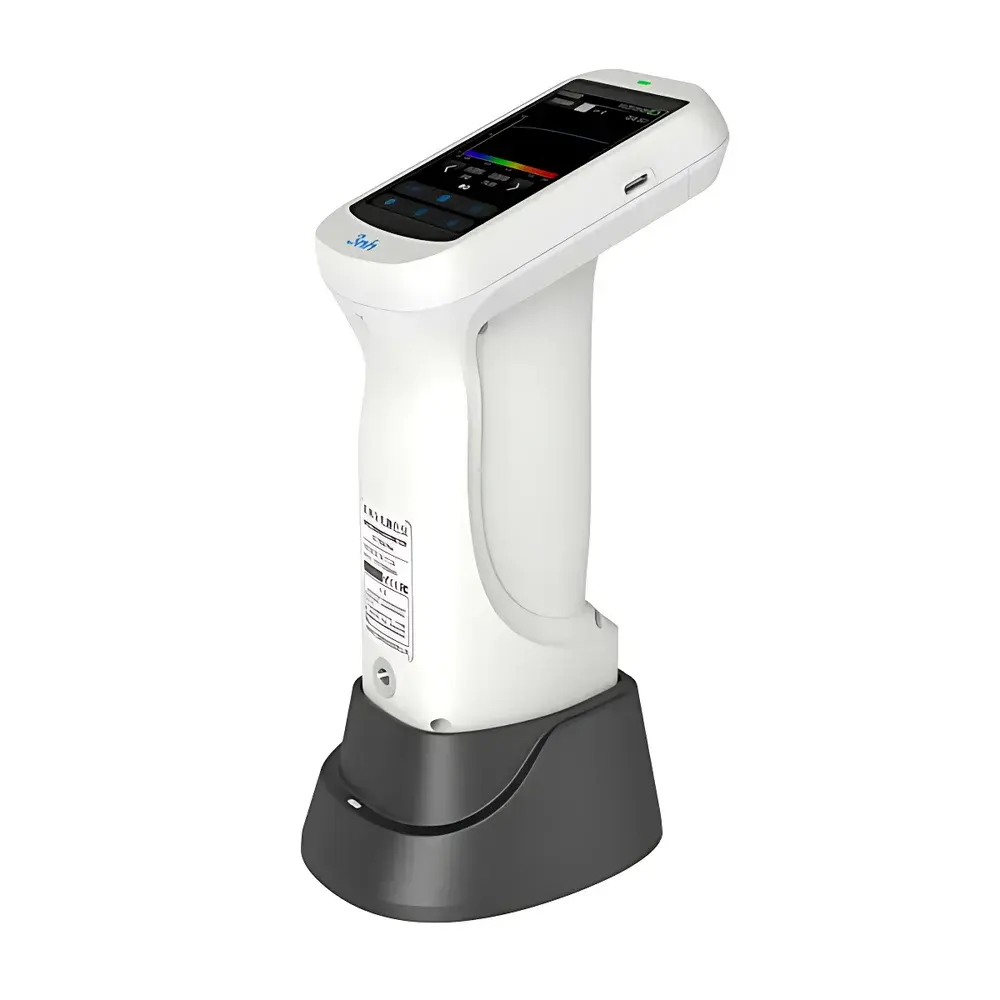
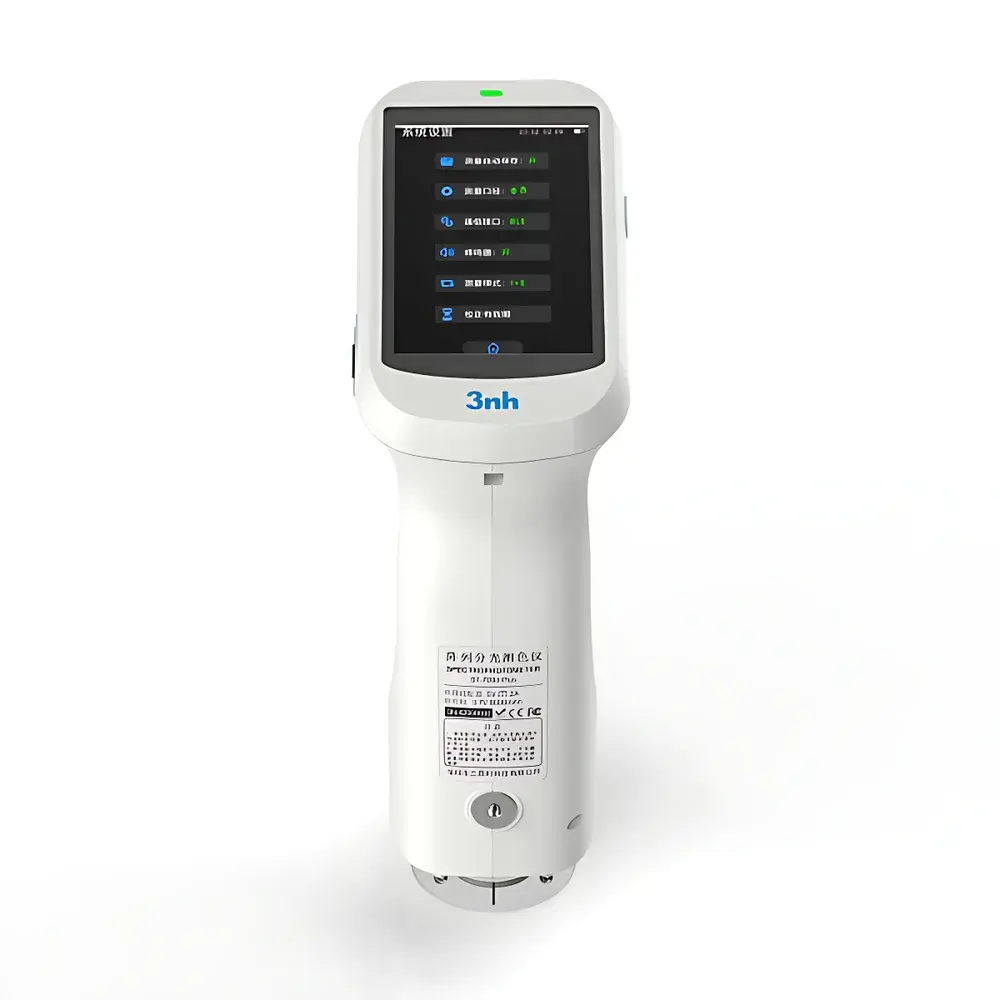
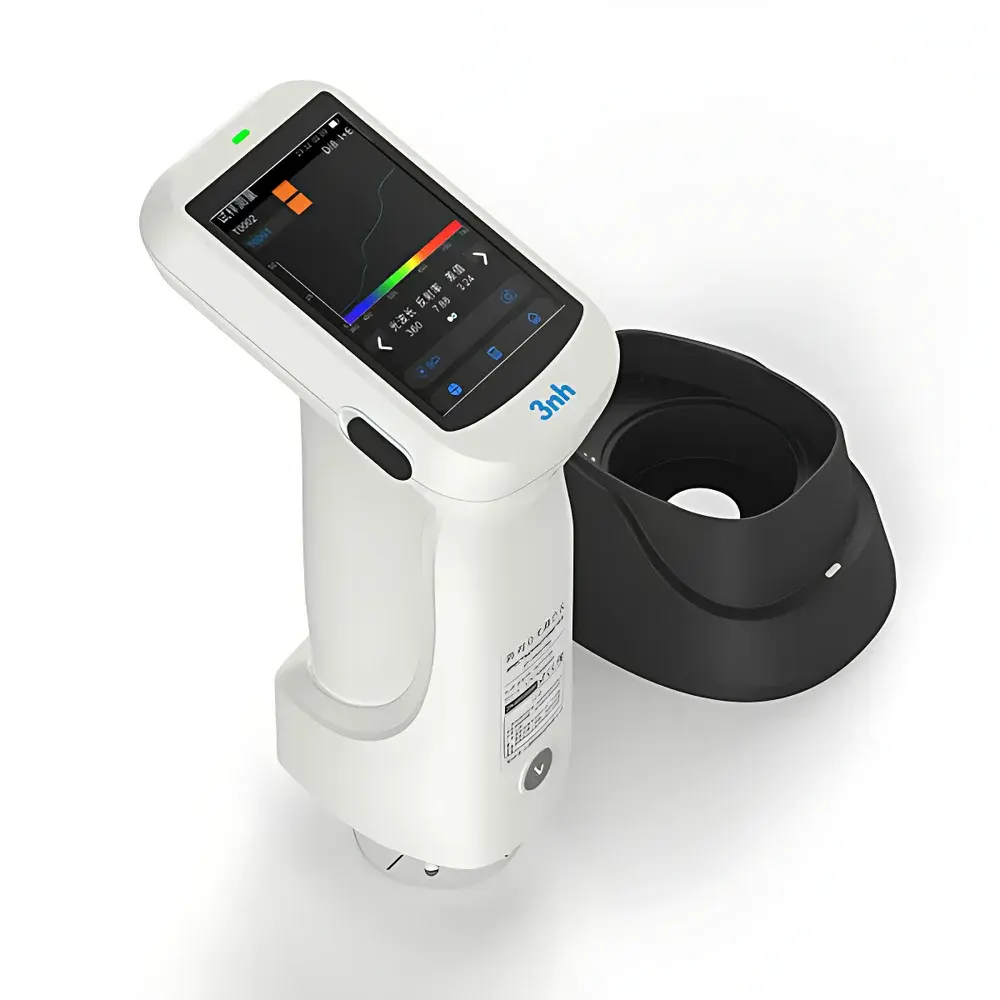
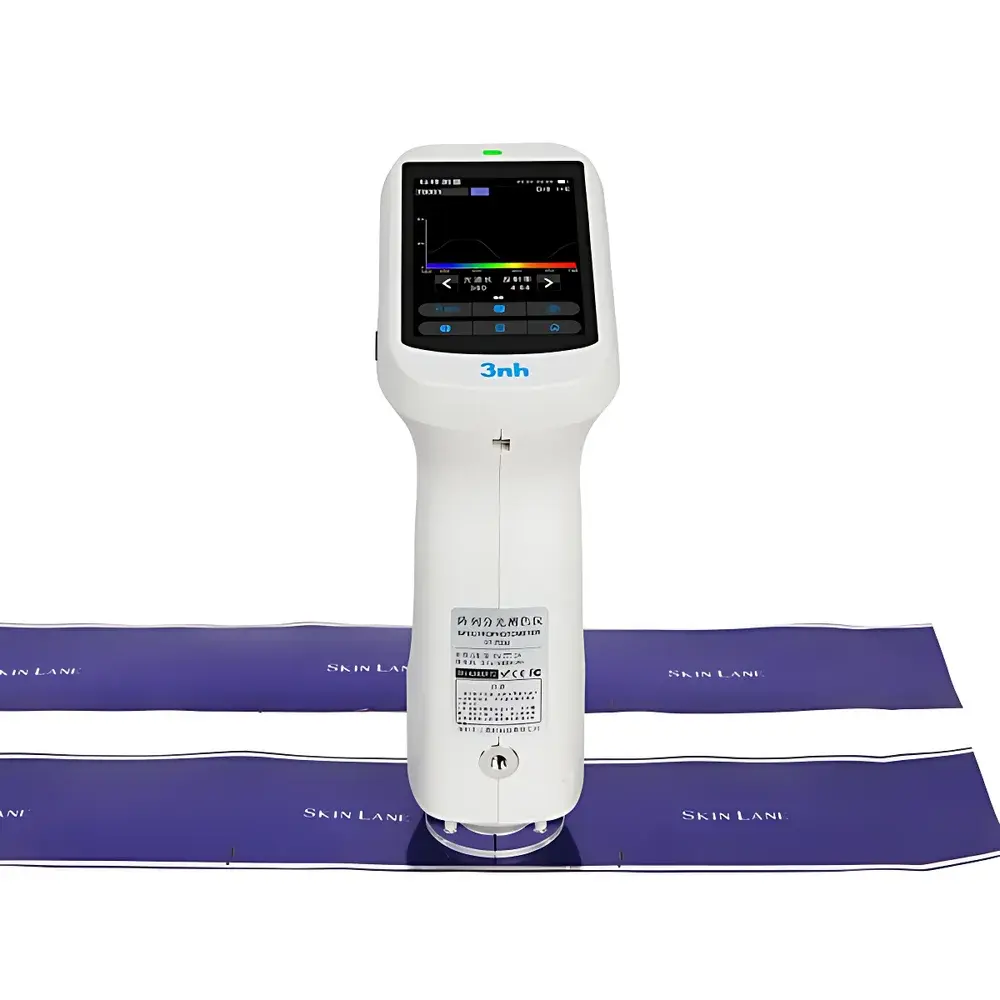
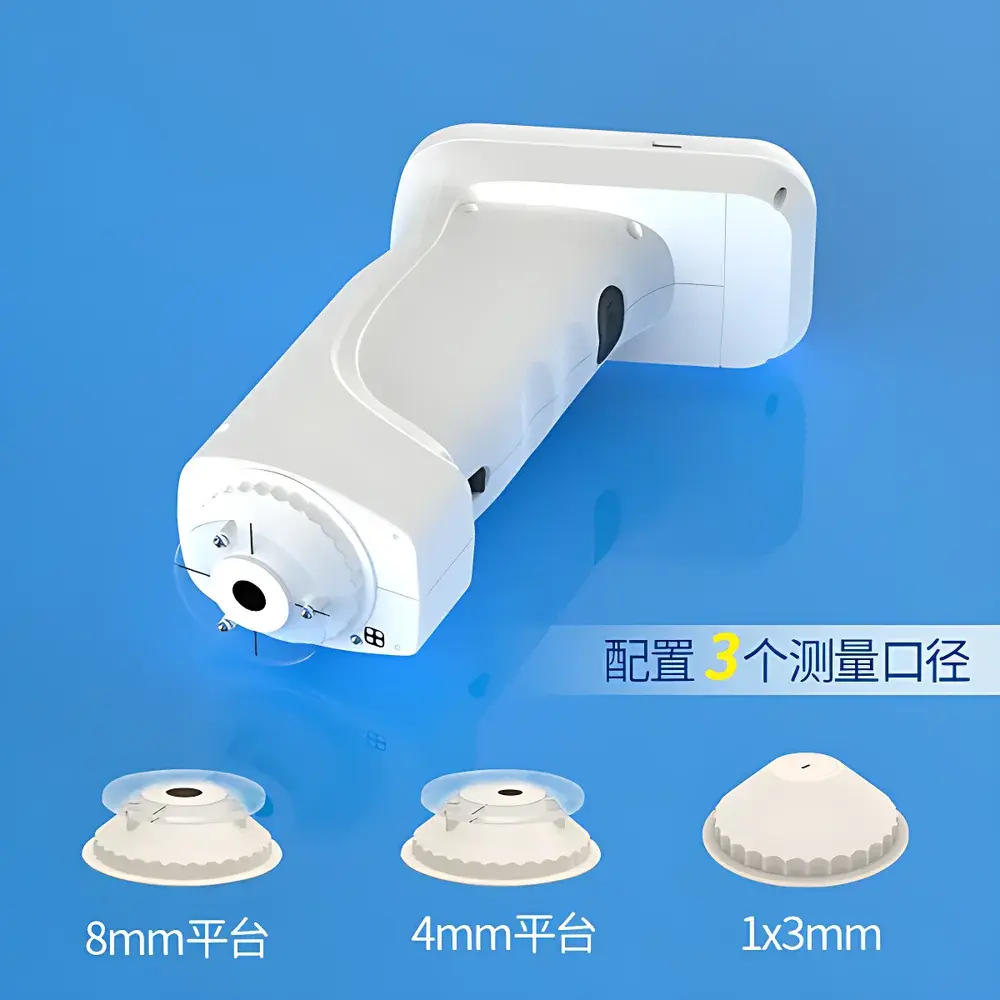
3nh ST-700d Array Spectrophotometric Colorimeter
| Brand | 3nh |
|---|---|
| Origin | Guangdong, China |
| Manufacturer Type | Direct Manufacturer |
| Product Type | Spectrophotometric Colorimeter |
| Instrument Form Factor | Portable |
| Optical Geometry | d/8° Integrating Sphere (SCI/SCE) |
| Illuminant | Full-Spectrum LED Array + UV LED |
| Spectral Range | 400–700 nm |
| Wavelength Interval | 10 nm |
| Repeatability | ΔE*ab ≤ 0.022 (MAV/SCI, after warm-up & calibration, 30 measurements of white tile at 5 s intervals) |
| Reflectance Standard Deviation | ≤ 0.07% (MAV/SCI) |
| Inter-Instrument Agreement | ΔE*ab ≤ 0.20 (BCRA Series II, 12 tiles, MAV/SCI) |
| Apertures | Ø8 mm, Ø4 mm, 1×3 mm |
| Measurement Time | ~1.5 s |
| Display | 3.5″ Capacitive TFT Touchscreen |
| Connectivity | USB, Bluetooth® 5.0 |
| Battery | 3.7 V / 5000 mAh Li-ion (≥8500 measurements per charge) |
| Weight | 435 g (instrument only) |
| Compliance | CIE No. 15, ISO 7724-1, ASTM E1164, DIN 5033 Teil 7, GB/T 3978, GB/T 18833 |
Overview
The 3nh ST-700d Array Spectrophotometric Colorimeter is a high-precision, portable benchtop-grade color measurement instrument engineered for industrial quality control and laboratory-grade color analysis. It employs a dual-row 40-element silicon photodiode array sensor coupled with planar grating-based spectral dispersion to deliver rapid, stable, and metrologically traceable reflectance data across the visible spectrum (400–700 nm). Unlike filter-based tristimulus meters, the ST-700d captures full spectral reflectance curves at 10 nm intervals—enabling rigorous color difference evaluation, spectral similarity assessment, and fluorescence compensation via integrated UV illumination. Its d/8° optical geometry with simultaneous SCI (Specular Component Included) and SCE (Specular Component Excluded) measurement modes conforms to CIE No. 15 and ISO 7724-1, ensuring compliance with international standards for color evaluation in textured, glossy, or matte surfaces. Designed for environments where inter-instrument consistency is critical—including multi-site manufacturing, R&D labs, and third-party testing facilities—the ST-700d achieves inter-instrument agreement of ΔE*ab ≤ 0.20 (BCRA Series II), supporting reliable color transfer and formulation validation.
Key Features
- Dual 40-channel silicon photodiode array sensor: Provides extended dynamic range, high signal-to-noise ratio, and immunity to saturation under strong illumination while maintaining sensitivity in low-reflectance conditions.
- Full-spectrum LED illuminant array (400–700 nm) + dedicated UV LED: Ensures uniform spectral power distribution across the visible band and enables accurate measurement of fluorescent materials without spectral gaps common in conventional white LEDs.
- Planar grating monochromator: Delivers consistent spectral resolution and long-term optical stability, minimizing wavelength drift over time and temperature fluctuations.
- Non-contact automatic calibration station: Integrates a certified reference tile (R ≥ 95%) with motorized positioning and real-time feedback to eliminate manual handling errors and ensure repeatable baseline establishment.
- Triple-aperture system: Includes Ø8 mm (standard field), Ø4 mm (small-area precision), and 1×3 mm (elongated slit for narrow features or printed lines), enabling adaptation to diverse sample geometries without mechanical recalibration.
- Integrated CMOS imaging module: Enables live camera-guided targeting for precise spatial registration—critical for heterogeneous surfaces, patterned textiles, or printed substrates where measurement location directly impacts result validity.
- Dual-optical-path architecture: Compensates for ambient thermal and luminous variations by referencing internal stability channels, enhancing measurement robustness during extended operation or in uncontrolled lab environments.
Sample Compatibility & Compliance
The ST-700d supports non-destructive, surface-normal reflectance measurement of solid, liquid, and powdered samples—including opaque plastics, metallic coatings, woven fabrics, paper stocks, ceramic glazes, pharmaceutical tablets, and food surfaces. Its d/8° sphere geometry minimizes texture-induced bias, making it suitable for ASTM D2244-compliant color difference reporting in automotive OEM supply chains and ISO 12647-2–aligned print verification workflows. The instrument meets requirements for GLP-compliant color documentation when paired with audit-trail-enabled software (e.g., 3nh Color Quality Manager), and its firmware architecture supports 21 CFR Part 11–compliant electronic signatures and user access controls via optional enterprise deployment. Regulatory alignment includes GB/T 2893 (safety color coding), GB/T 18833 (retroreflective sheeting), and AATCC TM173 (textile whiteness), with spectral data export formats compatible with QC databases used in FDA-regulated cosmetic and medical device manufacturing.
Software & Data Management
The ST-700d operates natively on embedded firmware and interfaces seamlessly with cross-platform applications: Windows desktop software (Color Quality Manager), iOS/Android mobile apps, WeChat Mini Programs, and HarmonyOS-compatible clients. All platforms support synchronized cloud backup, hierarchical user permissions, customizable pass/fail tolerances per L*a*b* axis, and automated report generation in PDF, CSV, or XML. Raw spectral data (31-point or interpolated 101-point) is exportable for advanced analysis in MATLAB, Python (via NumPy/Pandas), or commercial color formulation tools (e.g., X-Rite Color iMatch, Datacolor MatchText). Firmware updates are delivered OTA or via USB; calibration history, measurement logs, and operator metadata are retained with timestamped digital signatures—fulfilling traceability requirements under ISO/IEC 17025 and ICH Q5C stability protocols.
Applications
This spectrophotometer serves as a primary color verification tool across regulated and high-tolerance industries: pigment dispersion QC in automotive clear-coat production; batch-to-batch consistency checks for ISO 8254-certified paper; spectral matching of PANTONE®-defined textile dyes; fluorescence-corrected whiteness assessment of laundry detergents (ASTM E313); metamerism evaluation in display panel backlighting; and color stability monitoring of UV-cured dental composites. In research settings, its high repeatability (ΔE*ab ≤ 0.022) and spectral fidelity enable quantitative studies of aging effects on polymer chromophores, spectral shift analysis in OLED degradation, and correlation modeling between CIELAB metrics and human visual acceptability thresholds.
FAQ
What standards does the ST-700d comply with for spectral measurement?
It conforms to CIE Publication No. 15, ISO 7724-1, ASTM E1164, DIN 5033 Teil 7, and multiple Chinese national standards including GB/T 3978 and GB/T 18833.
Can the ST-700d measure fluorescent samples accurately?
Yes—its dedicated UV LED source (365 nm peak) excites fluorescent pigments, and the full-spectrum detector captures both reflected visible light and emitted fluorescence, enabling ASTM E308-compliant correction.
Is spectral data export supported for external analysis?
Yes—raw reflectance spectra (400–700 nm at 10 nm intervals) can be exported in CSV or XML format, retaining wavelength metadata and measurement conditions.
How is inter-instrument agreement validated?
Using BCRA Series II ceramic tiles; typical inter-unit ΔE*ab is ≤ 0.20 under MAV/SCI mode, verified per ISO/TR 11664-4 and supported by factory calibration certificates traceable to NIM (China National Institute of Metrology).
Does the device support GMP/GLP documentation workflows?
When used with the enterprise version of Color Quality Manager, it provides full audit trails, electronic signatures, user role management, and calibration event logging compliant with 21 CFR Part 11 and ISO/IEC 17025 clause 7.7.





