
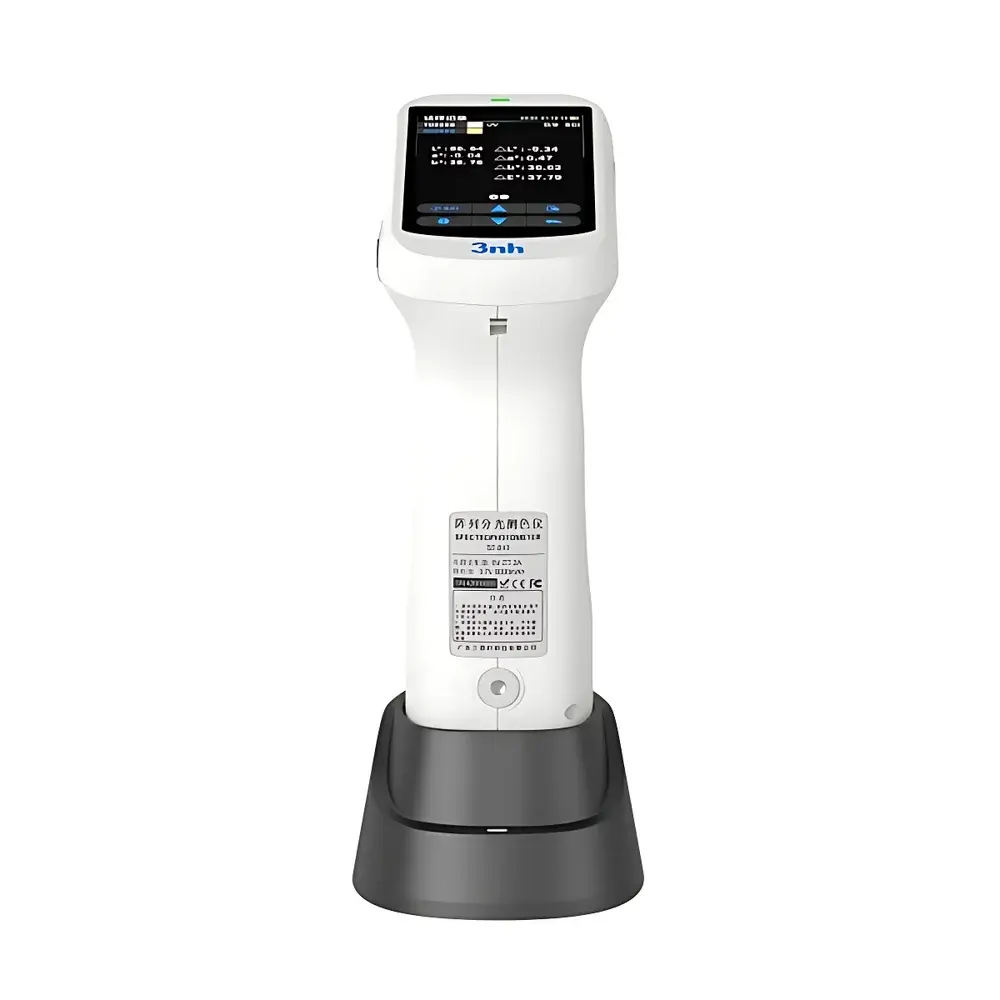
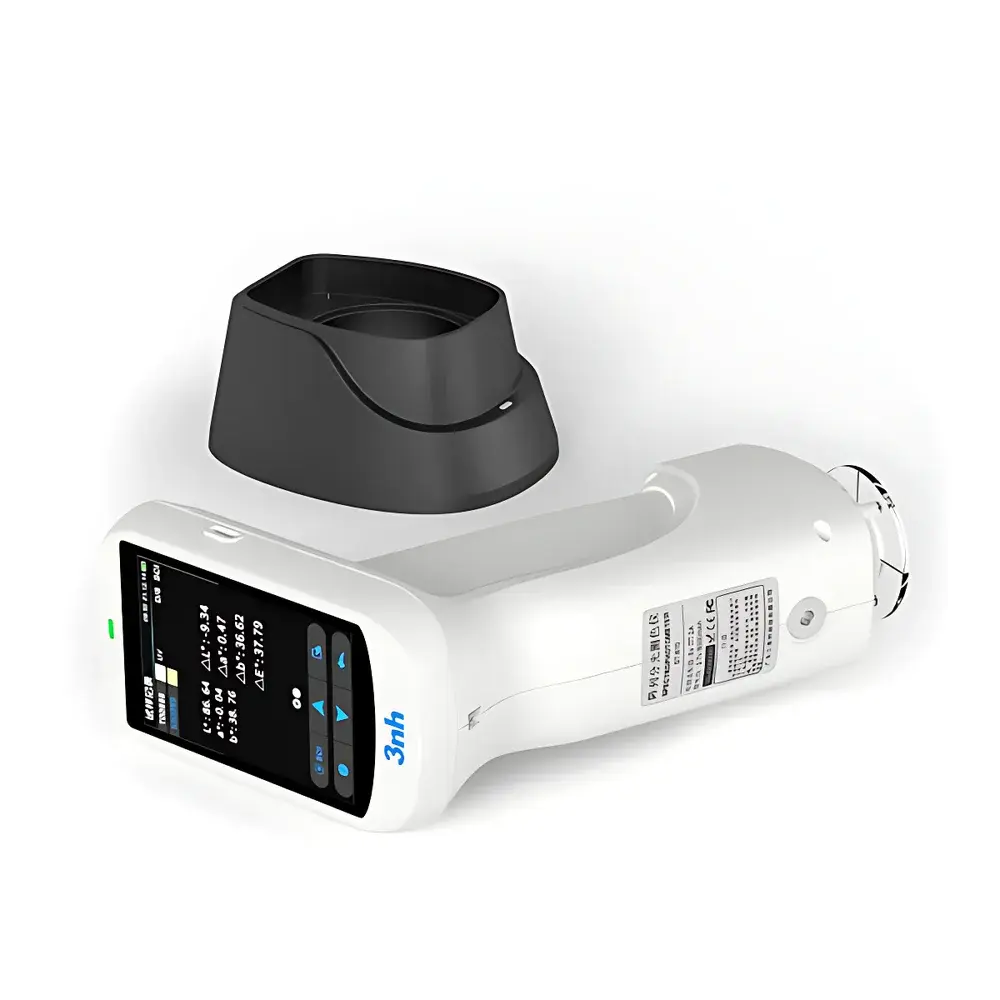
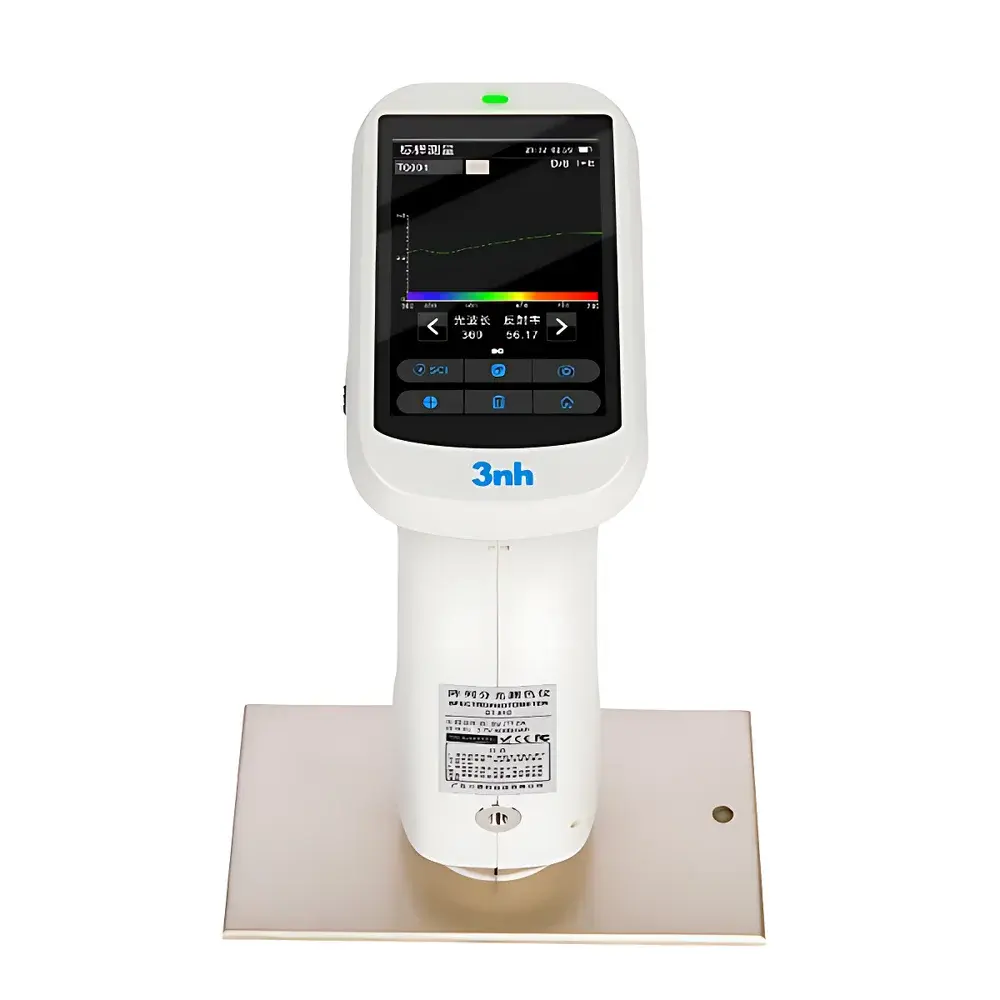
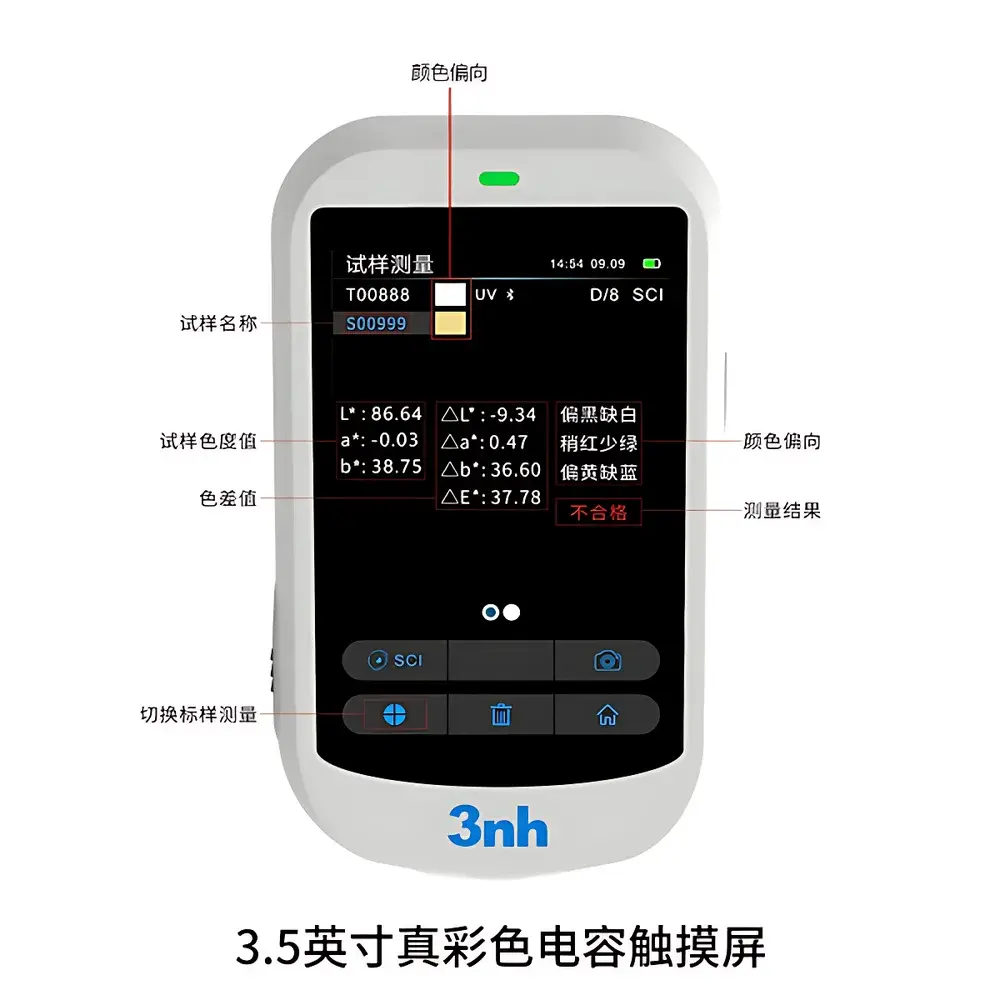
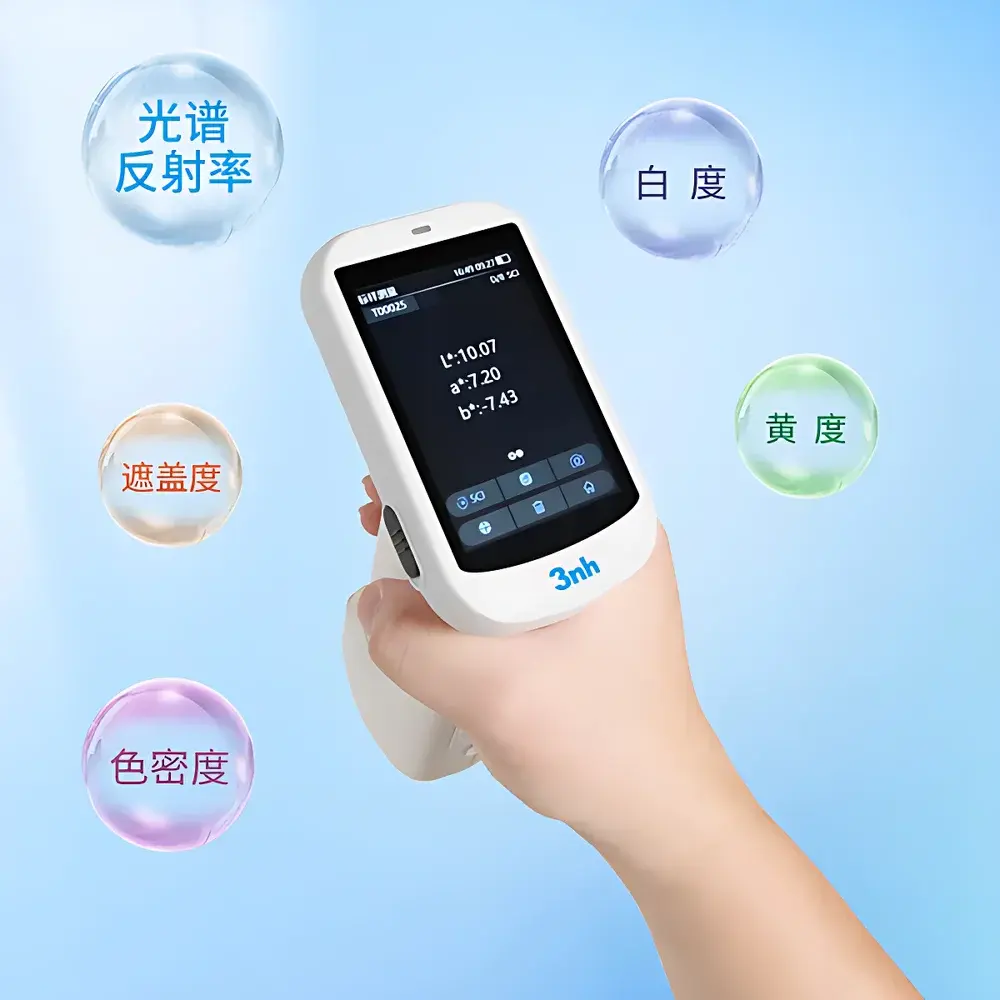
3nh ST810 Portable Spectrophotometer
| Brand | 3nh |
|---|---|
| Origin | Guangdong, China |
| Manufacturer Type | Direct Manufacturer |
| Product Type | Spectrophotometer |
| Instrument Form Factor | Portable |
| Optical Geometry | d/8° integrating sphere |
| Light Source | Full-spectrum LED + UV LED |
| Spectral Range | 400–700 nm |
| Repeatability | Chromaticity (MAV/SCI): ΔE*ab ≤ 0.01 |
| Spectral Reflectance (MAV/SCI) | Std. Dev. ≤ 0.07% |
Overview
The 3nh ST810 Portable Spectrophotometer is a high-precision, handheld color measurement instrument engineered for traceable, repeatable spectral reflectance analysis across industrial and laboratory environments. It operates on the CIE-compliant d/8° geometry with dual-mode SCI (Specular Component Included) and SCE (Specular Component Excluded) measurement capability—enabling accurate characterization of both matte and glossy surfaces without manual mode switching. The instrument employs full-spectrum LED illumination combined with a dedicated UV channel to ensure spectrally uniform irradiance from 400 nm to 700 nm at 10 nm intervals, supporting reliable evaluation of fluorescent whitening agents (FWAs), optical brighteners, and UV-reactive pigments. Its core photometric architecture integrates dual 40-element silicon photodiode arrays, delivering wide dynamic range response and mitigating saturation under high-reflectance conditions or signal loss under low-light samples. Designed for metrological integrity, the ST810 meets ISO 7724-1, ASTM E1164, DIN 5033-7, GB/T 3978, and CIE Publication No. 15 requirements—making it suitable for GLP-aligned quality control workflows in regulated manufacturing settings.
Key Features
- Full-Spectrum + UV Illumination: Integrated broadband LED array with independent UV channel ensures continuous spectral power distribution across 400–700 nm, eliminating interpolation artifacts and enabling robust measurement of UV-fluorescent materials per ASTM D1925 and ISO 11475.
- Dual-Array Photodetector System: Large-area dual 40-channel silicon photodiode array provides extended spectral responsivity and improved signal-to-noise ratio—critical for measuring low-reflectance textiles or high-gloss automotive coatings.
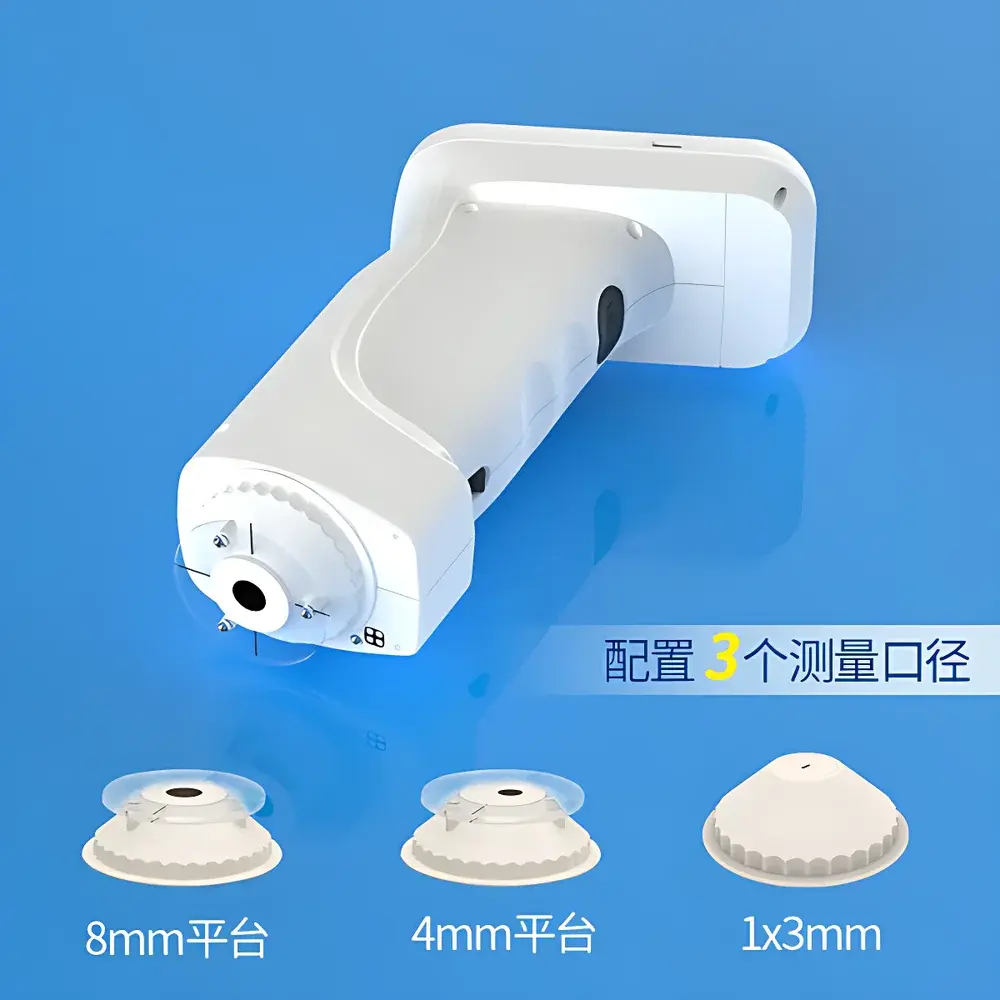
- Triple Aperture Configuration: Interchangeable apertures (8 mm, 4 mm, and 1 × 3 mm rectangular) support flexible sampling strategies—from large-area averaging on plastic panels to micro-area analysis on printed circuit board solder masks.
- Optical Viewfinder & Real-Time Targeting: Built-in CMOS camera enables precise spatial registration of measurement location, reducing operator-induced positioning error and improving inter-operator reproducibility.
- Non-Contact Auto-Calibration: Intelligent calibration base performs automated white tile verification without physical contact, minimizing wear on reference standards and preserving long-term accuracy stability.
- Comprehensive Color Space & Index Support: Calculates CIE LAB, LCH, XYZ, Yxy, CIE LUV, Hunter Lab, DIN 99, sRGB, and Munsell (C/2) coordinates—alongside derived metrics including whiteness (ASTM E313-00), yellowness (ASTM D1925), metamerism index (Mt), opacity, gloss-corrected color density (CMYK-A/T/E/M), and chromaticness (βxy).
Sample Compatibility & Compliance
The ST810 accommodates solid, textured, curved, and semi-opaque substrates—including injection-molded polymers, solvent-based inks, woven fabrics, ceramic glazes, and powder-coated metal surfaces. Its stable mechanical design and integrated stabilization plate allow consistent contact pressure during measurement, minimizing variability caused by surface topography. All optical components are sealed against particulate ingress, supporting operation in ambient production-floor environments (0–40°C, ≤85% RH, non-condensing). The device complies with electromagnetic compatibility (EMC) directives IEC 61326-1 and safety standard IEC 61010-1. Measurement traceability is maintained through factory calibration against NIST-traceable standards; optional annual recalibration services align with ISO/IEC 17025-accredited laboratories.
Software & Data Management
Data acquisition and analysis are supported via cross-platform applications compatible with Android, iOS, Windows, HarmonyOS, and WeChat Mini Programs—enabling real-time cloud synchronization, collaborative review, and audit-ready reporting. Local storage retains up to 500 standard references and 20,000 sample records (each storing concurrent SCI/SCE spectra). The included PC software supports advanced statistical process control (SPC), tolerance mapping (ellipsoidal ΔE*00 limits), batch comparison reports, and export to CSV, PDF, or XML formats compliant with enterprise LIMS integration. Audit trails—including user ID, timestamp, instrument serial number, calibration status, and environmental metadata—are logged per FDA 21 CFR Part 11 requirements when configured with electronic signature modules.
Applications
The ST810 serves as a primary color verification tool across supply chain tiers: raw material vendors use it for pigment lot acceptance; OEMs deploy it for incoming inspection of plastic housings and painted components; and Tier-1 suppliers apply it for in-line color matching during ink formulation, textile dyeing, and automotive trim assembly. Specific validated use cases include: spectral validation of PANTONE®-matched lacquers; quantification of metamerism shift under D65 vs. TL84 lighting; monitoring of yellowing index in aging polypropylene films (ASTM D1925); and evaluation of whiteness retention in detergent-treated cotton (AATCC Test Method 110). Its portability enables field verification of architectural coatings on façade mock-ups and forensic color documentation in heritage conservation projects.
FAQ
What is the recommended calibration frequency for routine QC use?
For daily production environments, perform non-contact white tile verification before each shift and full recalibration every 30 days or after 5,000 measurements—whichever occurs first.
Does the ST810 support compliance with ISO/IEC 17025 color measurement uncertainty budgets?
Yes—the instrument’s documented repeatability (ΔE*ab ≤ 0.01) and inter-instrument agreement (ΔE*ab ≤ 0.15) contribute directly to Type A uncertainty components; combined with certified reference material uncertainties, full GUM-compliant uncertainty statements can be generated using the supplied software.
Can spectral data be exported for third-party spectral analysis tools?
Yes—raw reflectance spectra (400–700 nm at 10 nm intervals) are exportable in ASCII format, compatible with MATLAB®, Python (NumPy/Pandas), and commercial packages such as OceanView and Color iQC.
Is the UV channel intensity adjustable or fixed?
The UV LED output is fixed-intensity and optimized for ASTM-compliant excitation of common FWAs; no user-adjustable UV power setting is provided to maintain measurement consistency and regulatory compliance.
How is measurement traceability maintained across multiple ST810 units in a global facility network?
Each unit ships with individual factory calibration certificates referencing NIST SRM 2020 and BCRA Series II tiles; inter-unit harmonization is achieved via cross-calibration protocols embedded in the PC software, generating correction matrices aligned to a master reference instrument.



