
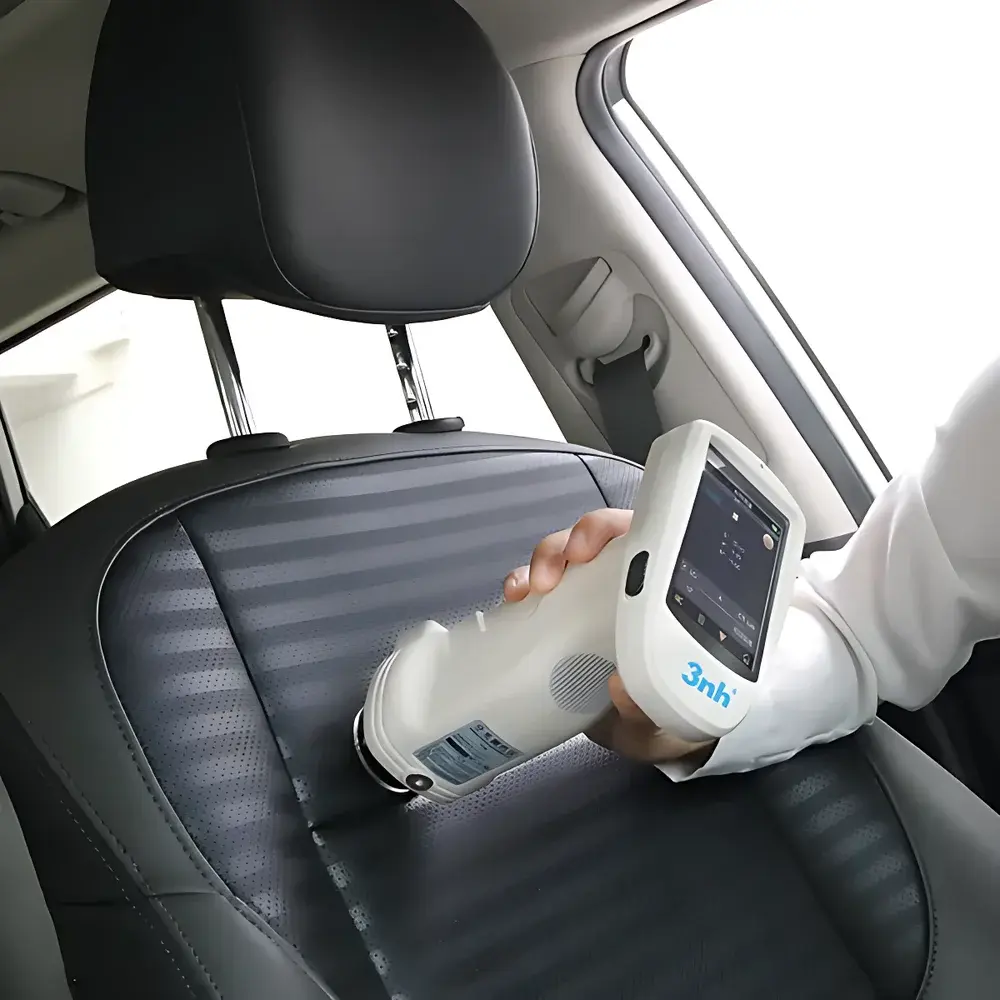
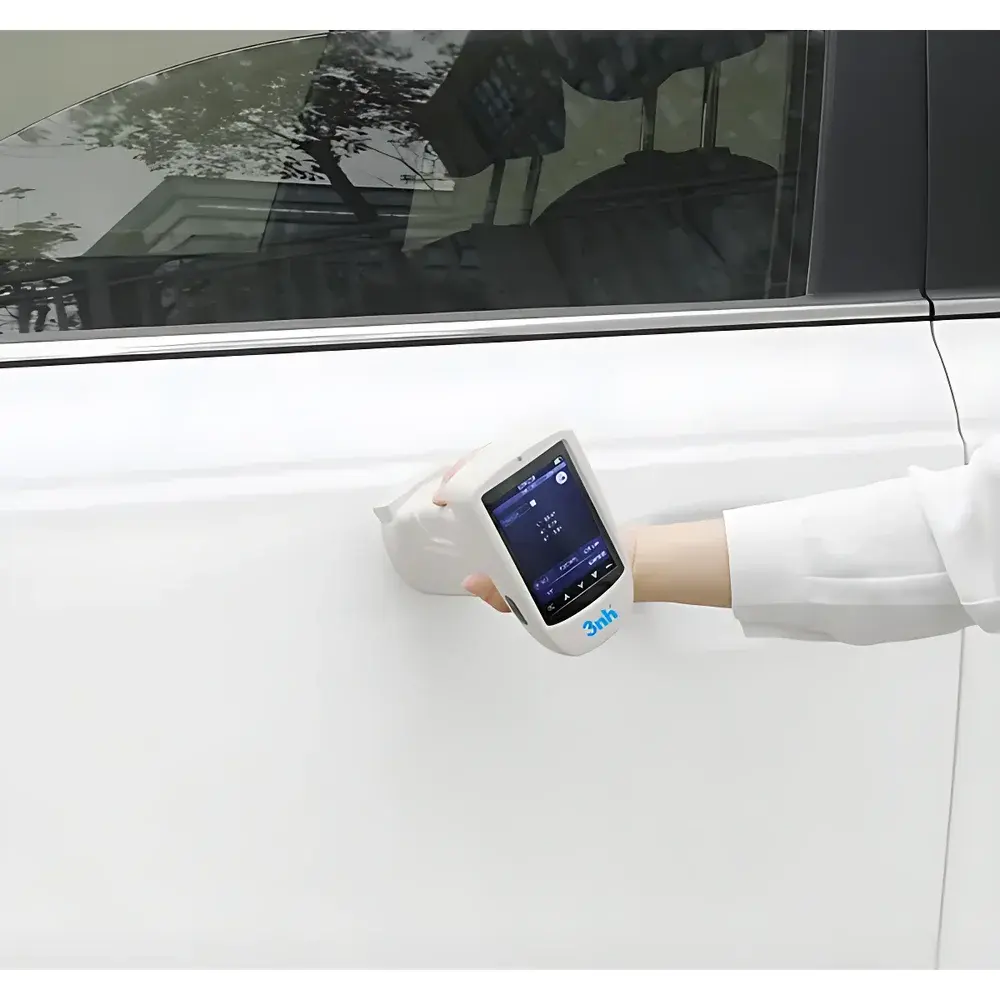
3nh Titan ST60 Portable Spectrophotometer
| Brand | 3nh |
|---|---|
| Origin | Guangdong, China |
| Manufacturer Type | Direct Manufacturer |
| Product Category | Spectrophotometer |
| Instrument Type | Portable |
| Optical Geometry | d/8° integrating sphere |
| Light Source | Full-spectrum LED array (360–700 nm) + UV LED |
| Spectral Range | 360–700 nm |
| Repeatability | ΔE*ab ≤ 0.025 (MAV/SCI, after warm-up & calibration |
| Reflectance Standard Deviation | ≤ 0.08% (400–700 nm: ≤ 0.18%) |
Overview
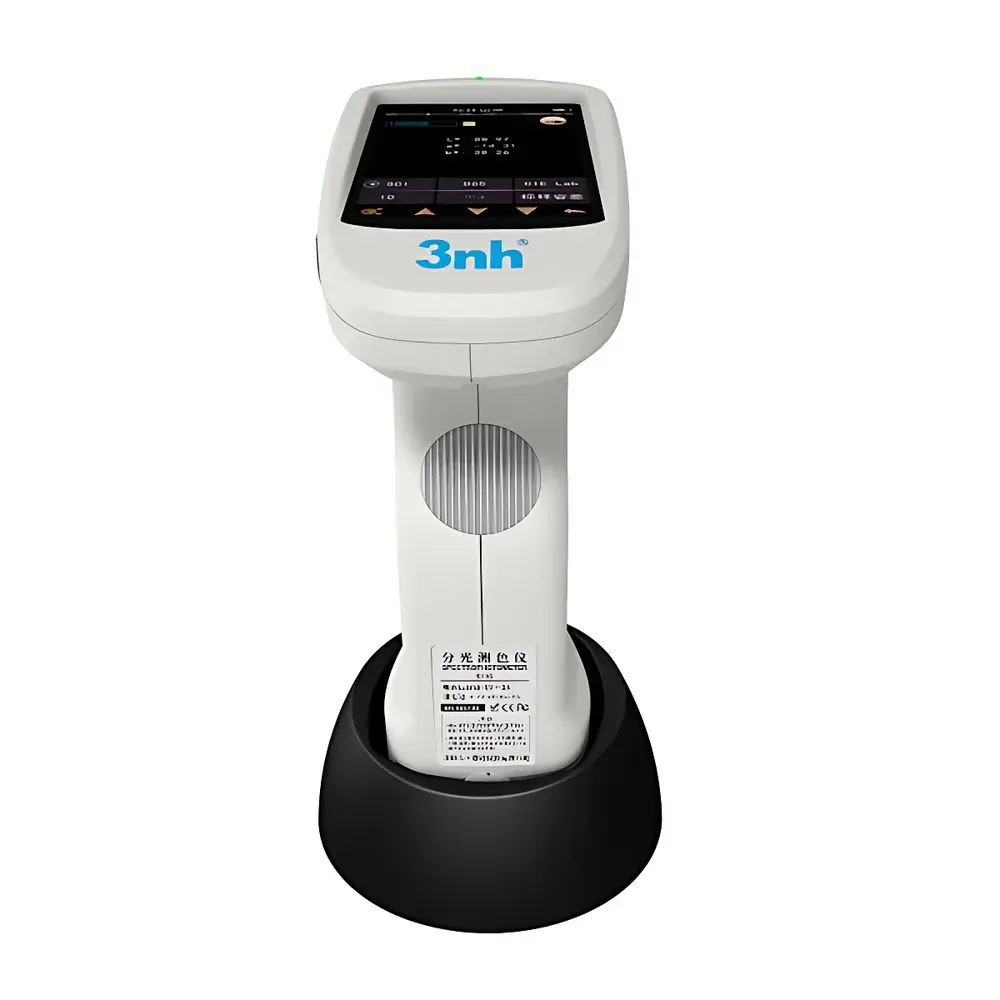
The 3nh Titan ST60 Portable Spectrophotometer is an industrial-grade, handheld color measurement instrument engineered for high-precision spectral reflectance analysis and color difference evaluation in demanding production and quality control environments. It operates on the fundamental principle of diffuse illumination and 8° viewing geometry (d/8°), compliant with CIE No. 15, ISO 7724-1, ASTM E1164, and GB/T 3978 standards. The instrument employs a dual-row 26-element silicon photodiode array sensor coupled with a planar diffraction grating optical path—core technologies developed under 3nh’s proprietary “Titan” spectrometric platform. This architecture enables simultaneous acquisition of full spectral data across 360–700 nm at 10 nm resolution, supporting both SCI (Specular Component Included) and SCE (Specular Component Excluded) modes in a single ~1.5-second measurement cycle. Its integrated UV-enhanced LED illumination system ensures accurate quantification of fluorescent materials, including optical brighteners in textiles, coatings, and paper—critical for industries requiring compliance with ISO 105-J03, AATCC Test Method 183, or ASTM D6530.
Key Features
- True d/8° optical geometry with dual-mode SCI/SCE measurement capability, fully compliant with international colorimetric standards.
- Full-spectrum LED illumination (360–700 nm) combined with dedicated UV LED, eliminating spectral gaps and enabling reliable fluorescence correction without mercury lamps or mechanical filters.
- Dual-row 26-channel photodiode array sensor—optimized for dynamic range linearity, low-light sensitivity, and resistance to saturation under high-reflectance conditions.
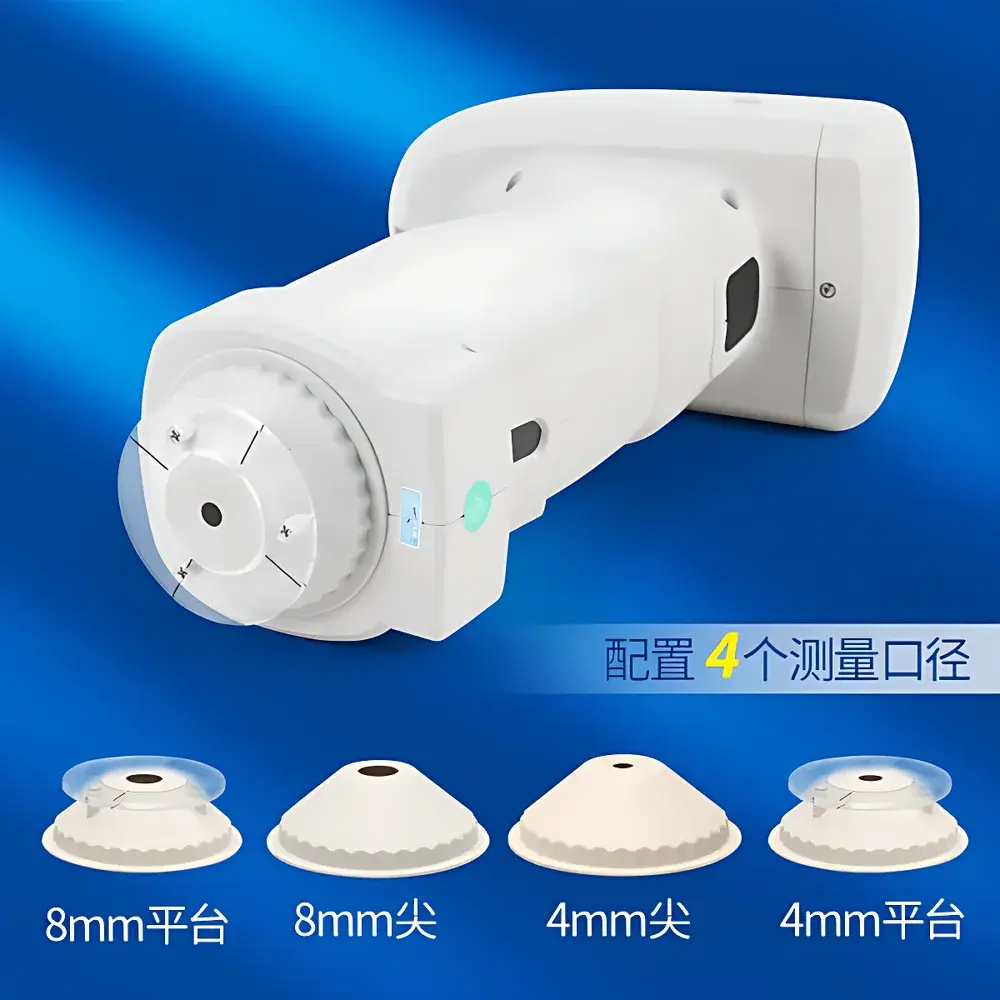
- Four interchangeable apertures: Ø8 mm flat, Ø8 mm pointed, Ø4 mm flat, and Ø4 mm pointed—supporting flexible sampling of curved, textured, small-area, or recessed surfaces.
- Real-time camera-assisted targeting system with live preview overlay, ensuring precise spatial registration of measurement area and minimizing operator-induced positioning error.
- Non-contact auto-calibration using certified ceramic white reference tile (traceable to NIM), with enhanced surface durability and long-term stability under routine lab or factory use.
- Capacitive 3.5-inch TFT display with intuitive touch interface, supporting multi-language operation (English, Simplified/Traditional Chinese) and direct on-device pass/fail assessment.
Sample Compatibility & Compliance
The Titan ST60 accommodates solid, opaque, translucent, and fluorescent samples across diverse substrates—including injection-molded plastics, painted automotive panels, woven fabrics, printed packaging, ceramic glazes, and coated metals. Its robust mechanical design (IP52-rated ingress protection) and stable thermal architecture (operational range: 0–40 °C, ≤85% RH non-condensing) support deployment in QC labs, production lines, and field audits. All optical and electronic components comply with RoHS Directive 2011/65/EU and CE marking requirements. Measurement traceability aligns with ISO/IEC 17025 principles when used with documented calibration procedures and reference standards (e.g., BCRA Series II tiles for inter-instrument agreement verification). Data integrity meets GLP/GMP documentation expectations through timestamped audit logs, user authentication, and exportable CSV/XLSX reports with embedded metadata (observer angle, illuminant, geometry, aperture).
Software & Data Management
The ST60 integrates natively with cross-platform software ecosystems: Windows desktop application (QM-Spectra), iOS and Android mobile apps, HarmonyOS-compatible interface, and cloud-connected WeChat Mini Program. All platforms support full spectral data export (ASCII .spc format), CIE-compliant color space conversion (CIELAB, CIELUV, DIN99, Hunter Lab, Munsell C/2), and advanced metrics including Whiteness Index (ASTM E313, ISO 11475), Yellowness Index (ASTM D1925), Metamerism Index (Mt), Color Strength (Tinting Power), Hiding Power, and Gloss (8°). Firmware updates, custom illuminant definition (up to 41 built-in sources), and report templating are managed via secure USB or Bluetooth® 5.0 connection. Audit trail functionality—including operator ID, measurement time/date, calibration history, and raw spectrum logs—supports compliance with FDA 21 CFR Part 11 where electronic records are subject to regulatory review.
Applications
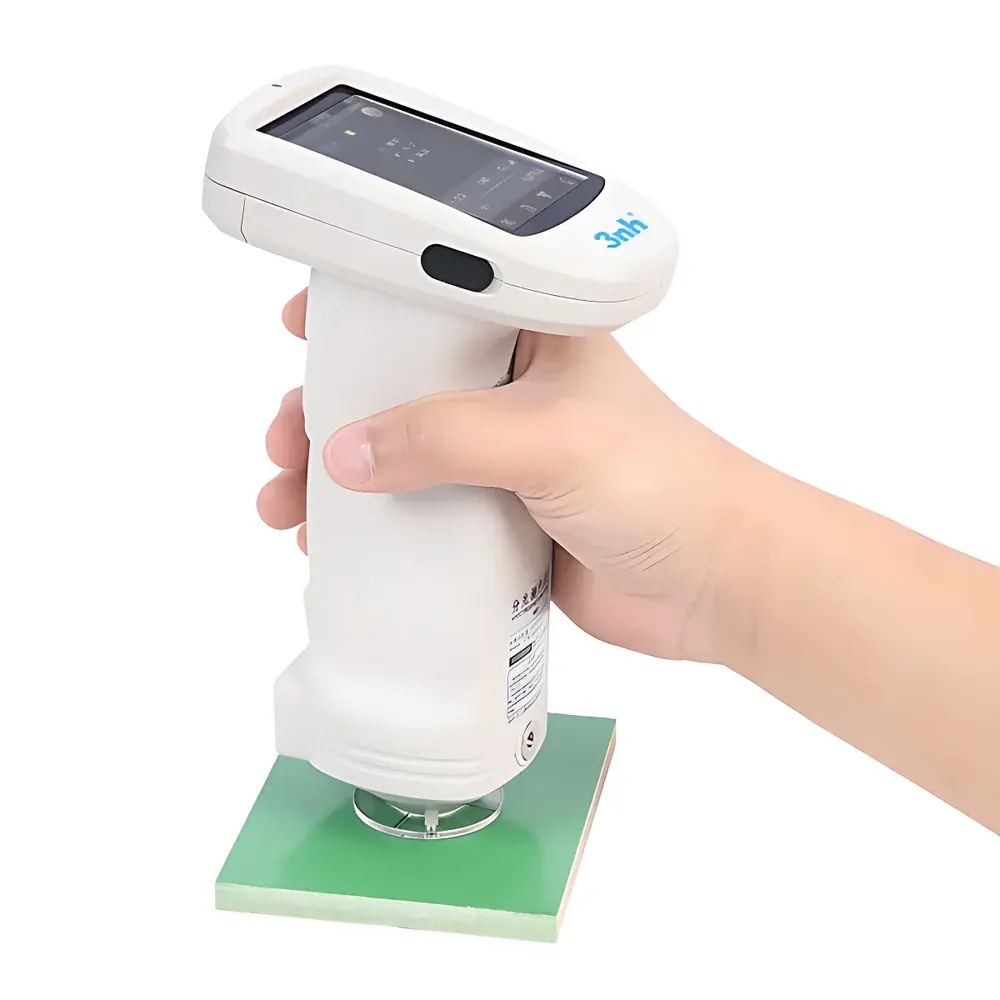
The Titan ST60 serves as a primary color verification tool in regulated and high-volume manufacturing sectors. In plastics and electronics, it validates color consistency across injection-molded housings and PCB conformal coatings under D65 and F11 lighting. For paint and ink formulation, its UV-enabled mode detects batch-to-batch variation in fluorescent pigments and optical brighteners—essential for automotive OEM specifications (e.g., GMW14872, Ford CETP). Textile and apparel QA teams rely on its 2°/10° observer switching and AATCC-compliant whiteness/yellowness algorithms for dye lot acceptance. Print and packaging operations use its CMYK density and ΔE00 tolerance mapping to enforce GRACoL or SWOP conformance. Ceramic manufacturers apply its high repeatability (ΔE*ab ≤ 0.025) and low inter-instrument variability (ΔE*ab ≤ 0.15 across units) to maintain glaze color fidelity across kiln runs and supplier tiers.
FAQ
Does the ST60 support fluorescence compensation for optical brightener detection?
Yes—the integrated UV LED source (peak ~365 nm) and full-spectrum detection enable quantitative fluorescence correction per ISO 105-J03 and AATCC TM183 protocols.
What is the maximum number of standard/standard+sample datasets the device can store internally?
It stores up to 1,000 standard references and 30,000 sample measurements (each containing synchronized SCI and SCE values) without external storage.
Is the instrument suitable for measuring curved or uneven surfaces?
Yes—four precision-machined apertures and real-time camera targeting allow reliable measurement on convex, concave, or textured geometries, provided the target area fully covers the selected aperture.
How is measurement traceability maintained across multiple ST60 units in a global supply chain?
Inter-instrument agreement is validated using BCRA Series II tiles; all units meet ΔE*ab ≤ 0.15 (MAV/SCI), enabling consistent color transfer between R&D, manufacturing, and vendor labs.
Can spectral data be exported for third-party color matching software (e.g., X-Rite Color iMatch, Datacolor MatchText)?
Yes—raw reflectance spectra (.spc) and CIE-compliant XYZ/LAB values are exportable in ASCII format, fully compatible with industry-standard formulation platforms.




